


Ideal land for bamboo pole production
After nearly 15 years of cultivation, To Lan Hamlet in Da Teh Commune has emerged as an ideal area for growing bamboo for pole production, thanks to its favorable soil and climate. Local authorities and businesses are now working to develop the area into a large-scale raw material zone connected with processing and export markets.
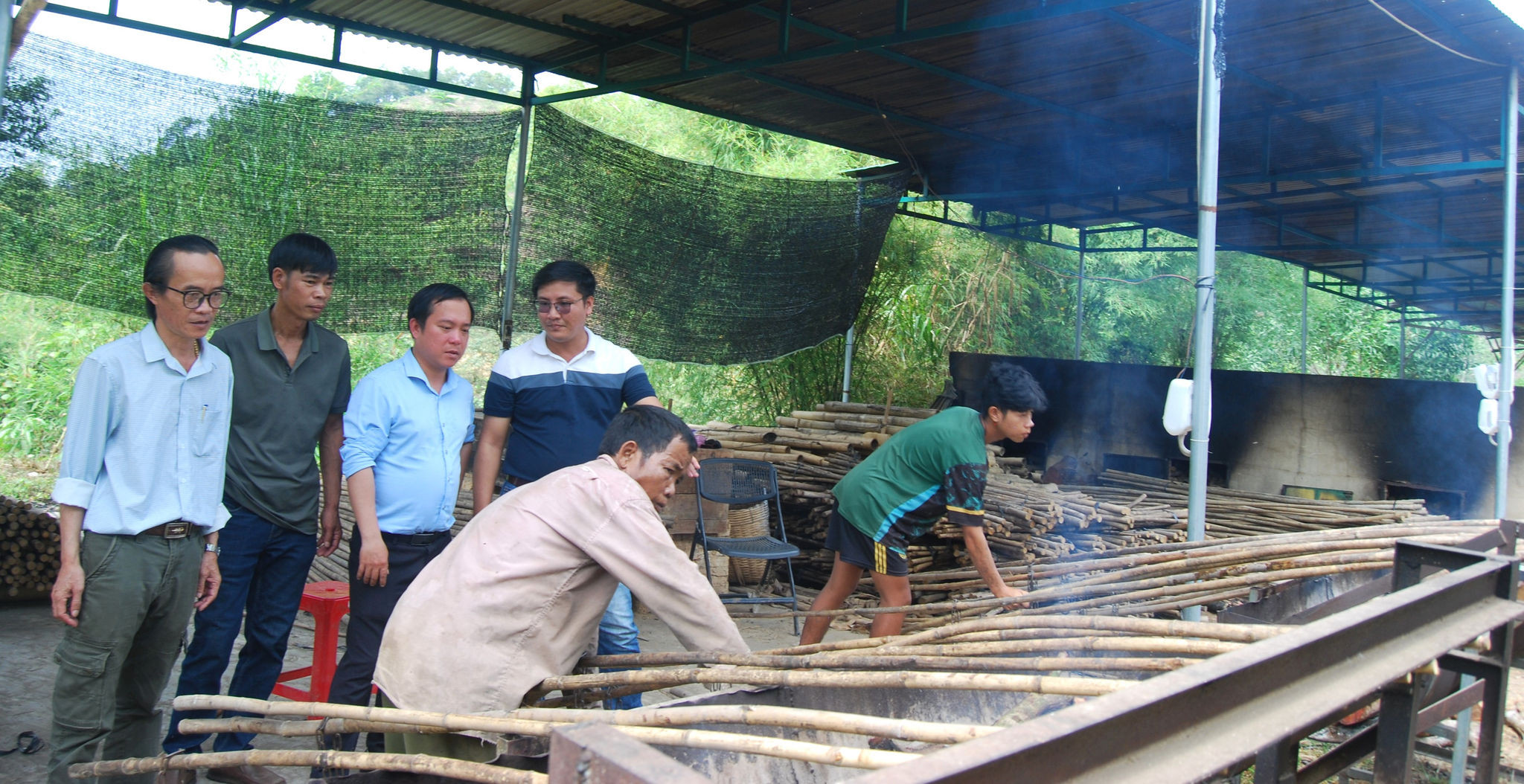
A value chain linking businesses, cooperatives and farmers
At a bamboo processing facility in To Lan Hamlet, hamlet head K’Mun says nearly 45 households are cultivating more than 58 hectares of bamboo. The area operates under a value chain model linking farmers, cooperatives, and businesses.
K’Mun’s one-hectare bamboo plantation, now more than five years old, produced around 2,000 harvestable bamboo poles during the latest dry season. A Ho Chi Minh City-based company has agreed to buy the entire output from participating households at prices 20–30% above market rates. Similar results have been achieved by other growers such as K’Mieu, whose family recently harvested nearly 2,000 mature bamboo poles from more than one hectare of land.
According to K’Mun, bamboo is propagated from branch cuttings at a density of about 500 cuttings per hectare. After five years, these the cuttings develop into around 500 clumps, each containing about 30 poles, with marketable poles reaching 6–8 meters in length. As of May 2026, purchase prices under contract range from VND 18,000 to 25,000 per pole. K’Mieu, director of the To Lan Bamboo Cooperative, says the project began nearly 15 years ago through sustainable livelihood programs aimed at supporting ethnic minority communities. Local agricultural authorities introduced bamboo cultivation as a suitable crop for hilly, well-drained land in the area.
What started as small-scale planting gradually expanded through technical improvements and market development. In 2021, the To Lan Bamboo Cooperative was established to organize centralized production and supply bamboo materials for greenhouse construction and high-tech agriculture in Vietnam. A year later, the cooperative partnered with a Ho Chi Minh City enterprise to expand deep processing operations and develop domestic and export markets for bamboo products.
Three stages of growth for bamboo products
Over the past five years, the To Lan bamboo production chain has focused on three key stages of development, according to businessman Nguy Van Tien, a representative of the partnership network.
The first stage centers on improving production processes and investing in modern technology to create high-quality processed bamboo products. The second focuses on expanding distribution through agricultural fairs and exhibitions across Vietnam. The final stage focuses on international markets through overseas partnerships, global trade exhibitions, and expanded exports across Asia, Europe, and the Americas.
Nguy Van Tien says bamboo grown in To Lan has strong competitive advantages thanks to the area’s favorable climate and hilly terrain, which produce durable, flexible, and high-quality materials. Demand for bamboo products continues to grow in both domestic and export markets, with participating households earning profits of more than VND 50 million per hectare each year. Products made from bamboo poles include furniture such as tables, chairs, beds, cabinets, and ladders, as well as fences, greenhouse frames, garden structures, and materials for restaurants, homestays, and eco-friendly buildings.
According to the Scientific Council of the Vietnam Sericulture and Ecotourism Cooperative Alliance, To Lan Hamlet in Da Teh Commune offers ideal conditions for developing high-quality bamboo production. The region’s tropical climate, with distinct rainy and dry seasons, supports rapid bamboo growth while improving the strength and durability of harvested poles.
Beyond economic value, bamboo cultivation also helps protect the environment by stabilizing soil, retaining water, and reducing erosion on degraded hillsides. The To Lan Bamboo Cooperative is now seeking to expand cultivation to an additional 50 hectares of degraded forest land in the area.