


K’ho Woman Preserves an Ancient Brocade-Weaving Tradition
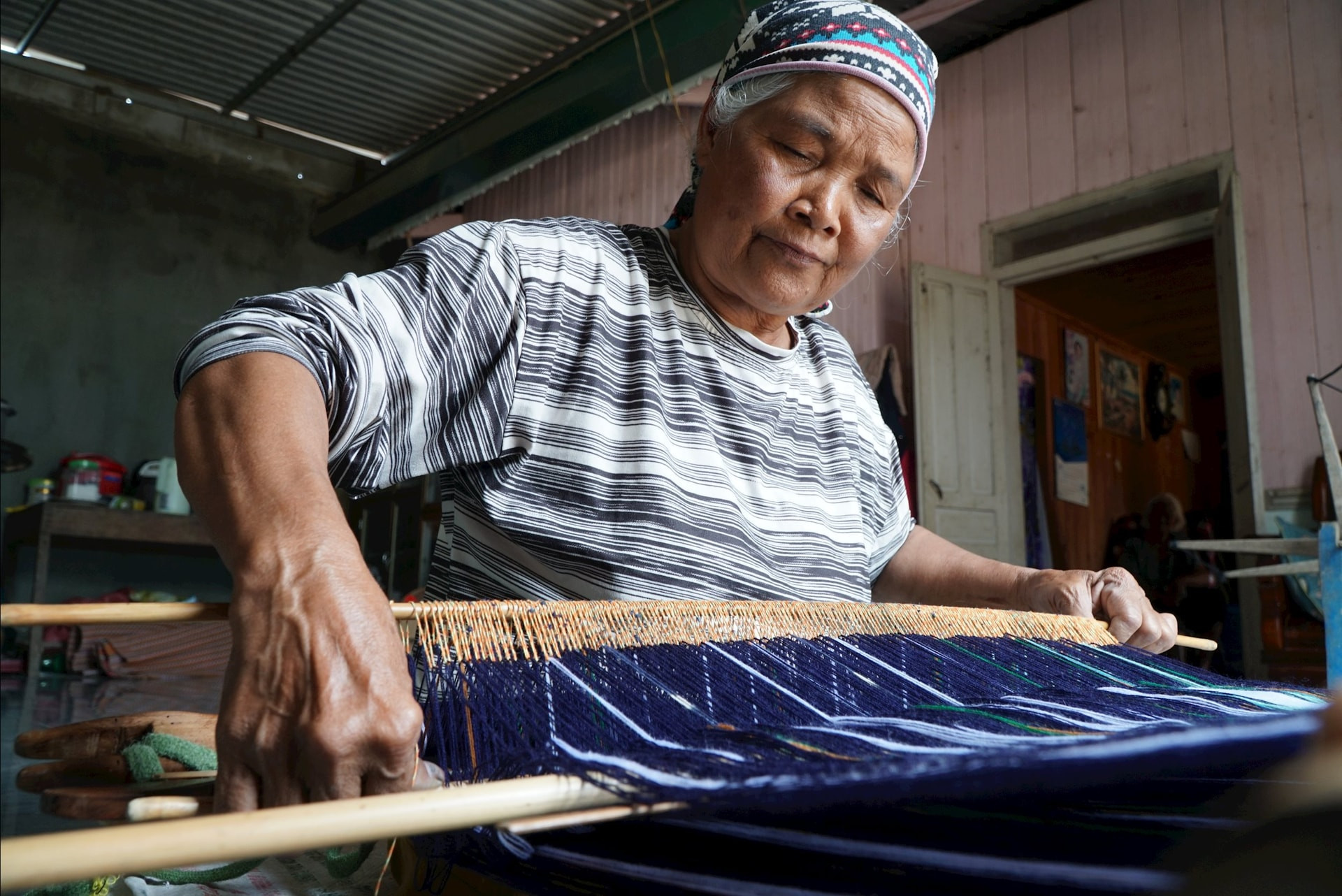
Deep in the mountains of Lam Dong, 73-year-old Long Ding K’Thin of Dam Pao Hamlet, Phu Son Lam Ha Commune, continues to sit by her traditional loom each day. Unlike many who now buy ready-made yarn, she insists on doing everything by hand — growing cotton, spinning the fiber, dyeing it with natural colors, and weaving traditional K’ho brocade cloth from start to finish.
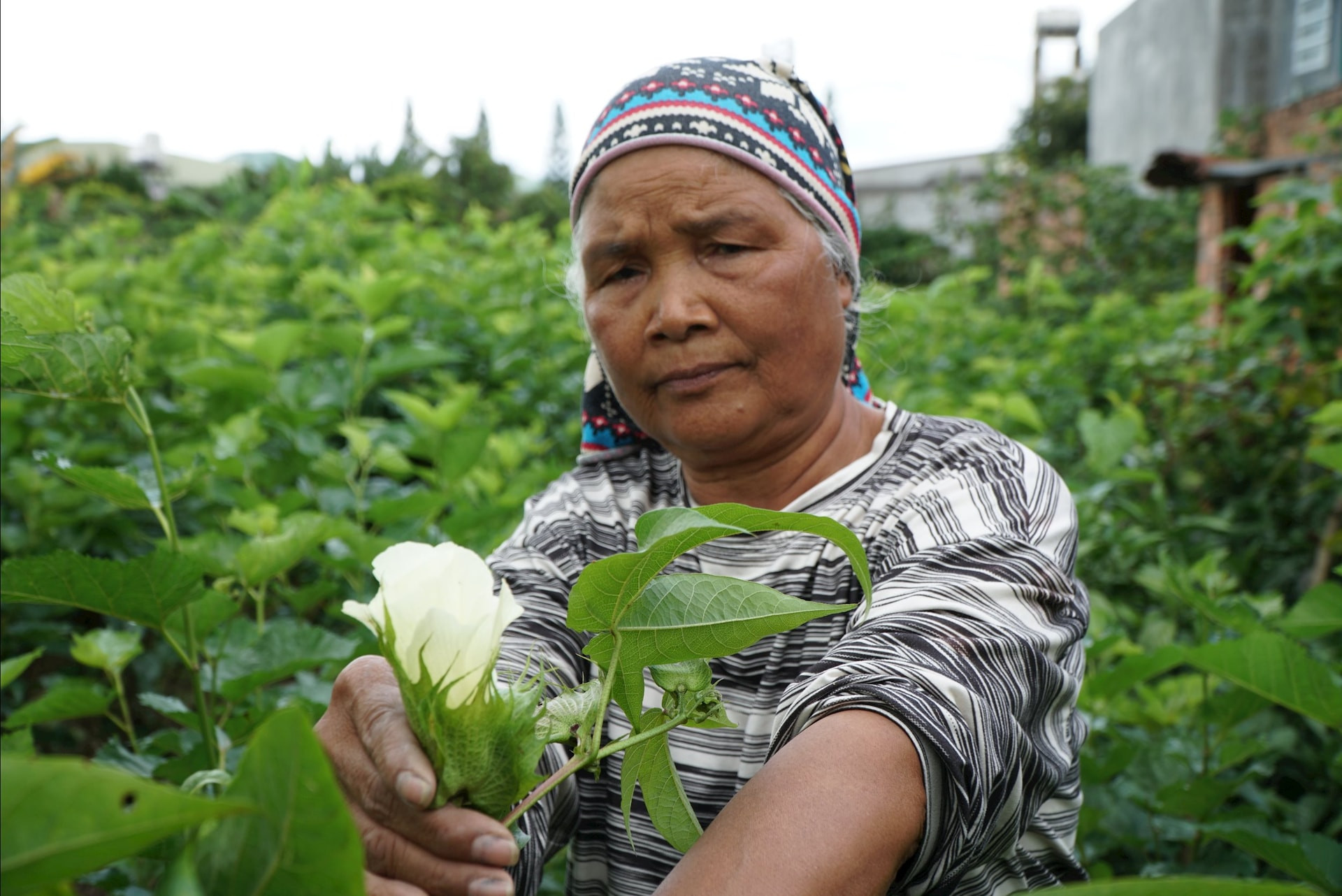
In a small garden behind her house, K’Thin maintains a dedicated plot for cotton plants. The crop requires little care — only patience. When the cotton bolls ripen and burst open into soft white fluff, she gently harvests and sun-dries them. The dried cotton is then hand-separated from the seeds and spun into yarn.
Natural dyes from the forest
For K’ho weavers, the dyes have always come from the forest. Black-blue from t’râm leaves. Yellow from turmeric. Red from curry seeds. Green from mango leaves.
“People now go to the market and buy wool yarn — it’s fast. But I prefer to make my own,” K’Thin says. “Hand-spun cotton is stronger — and it carries a soul.”
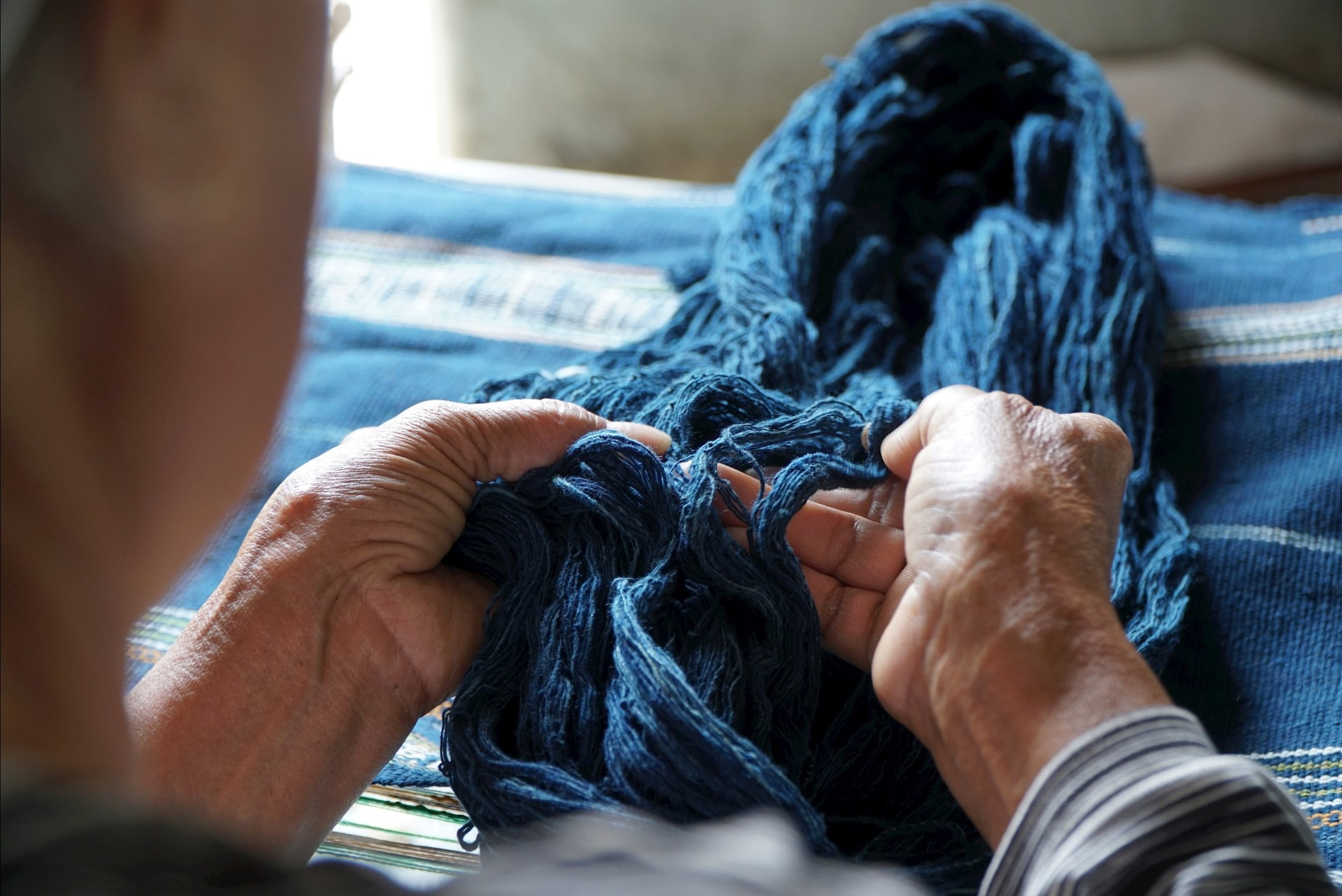
She is one of the few remaining artisans who still preserves the original K’ho dyeing formulas and taboos passed down through generations. During dyeing, she follows strict ancestral rules: no eating beef or buffalo, no outsiders allowed near the dyeing area, and even the artisan herself must refrain from bathing — practices many today may question, but which she believes ensure the color’s beauty and longevity.
To achieve deep, lasting hues, the yarn is soaked and dried repeatedly — some colors require three days and nights of processing to fully absorb the dye. This labor-intensive method results in yarn that holds its color vividly and resists fading even after washing.
Weaving memories of the mountains
Once the dyed fibers are ready, K’Thin begins weaving. Her hands move swiftly — across and along — and slowly, the brocade fabric takes shape. Each pattern reflects memories of the mountains: rice stalks, flowing streams, birds in flight — motifs tied to the K’ho worldview and their deep connection with nature.
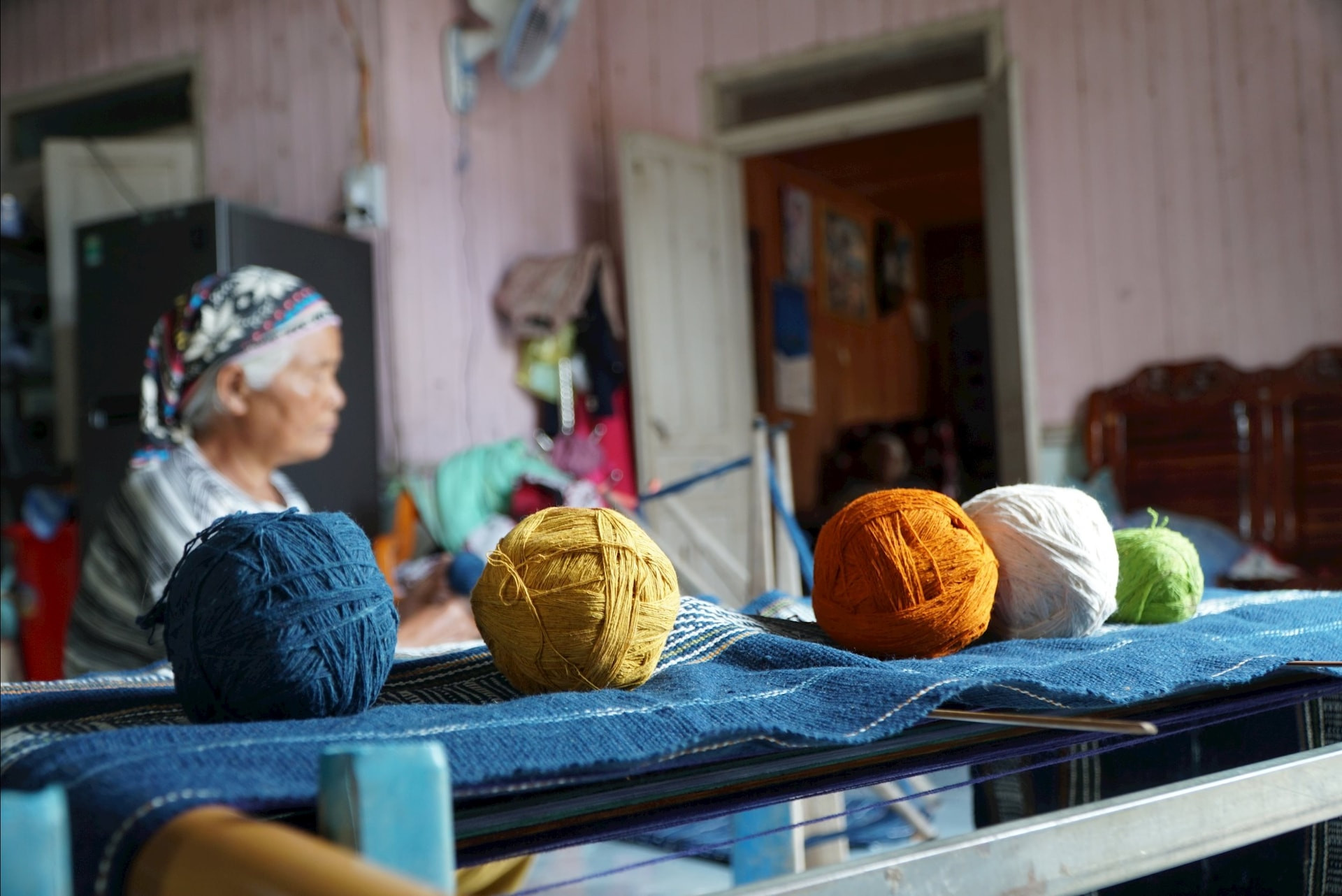
from local plants, fruits, and roots.
In 2011, Dam Pao was officially recognized as a traditional brocade weaving village. Over 100 residents still carry on the craft. Visitors — both domestic and international — come to experience spinning, dyeing, and weaving firsthand, while hearing stories from artisans like K’Thin. This has provided new income opportunities for the weavers.
A tradition finding new life
Today, a growing number of K’ho youth are turning back to brocade, wearing it proudly at weddings — sometimes modernized into áo dài and bridal gowns. “Seeing the younger generation wear brocade at their wedding makes me so happy,” says K’Thin. “It means the craft lives on — and is woven into their happiness.”
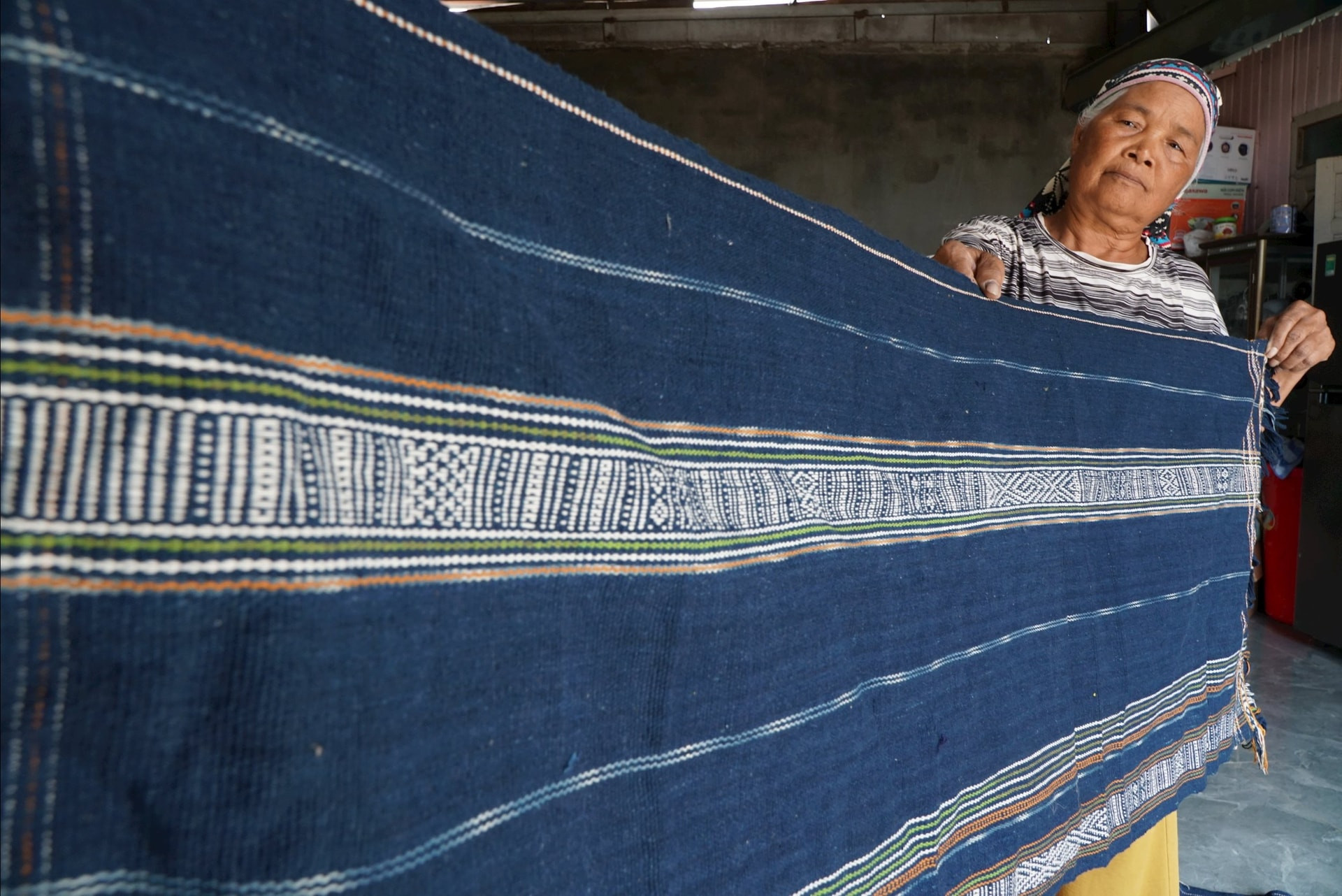
For K’Thin, each finished fabric is not just a product — but a living vessel of heritage and identity. Her unwavering dedication, even in old age, serves as a powerful reminder that tradition can endure alongside modern life — not as something nostalgic, but as a cultural bridge for the future.