


Keeping Ancestral Traditions Alive for the Next Generation
The revival of traditional festivals of the M’nong ethnic community has helped young people in Dam Rong 4 commune (Lam Dong Province) gain a deeper understanding of their ancestors’ spiritual life, while also fostering a strong appreciation for the values and beauty of their traditional culture.
A Journey Back to Cultural Roots
Having just returned from the Southeast Asia Gong Culture Festival, Bon Jrang Ka Sinh, a resident of Lieng Trang 1 hamlet, still radiates pride after standing on a large stage before thousands of spectators—an experience she once never imagined possible.
Sharing her emotions, Ka Sinh said:
“I felt incredibly small, yet more determined than ever to contribute to my community. Only through such experiences do I truly realize how vast our cultural heritage is. What I know now is just a fraction; there is still so much more to learn.”
Inspired by her love for xoang dance, Ka Sinh gradually became the choreographer for her hamlet. When she noticed that younger people were losing interest in traditional dances, she took the initiative to gather them and form a dance group. Alongside consulting elders to understand the meaning of each dance, she creatively incorporated movements closer to everyday life.
Today, the Gong and Xoang Dance Team of Lieng Trang 1 hamlet has 30 members who regularly practice and perform at important community events.
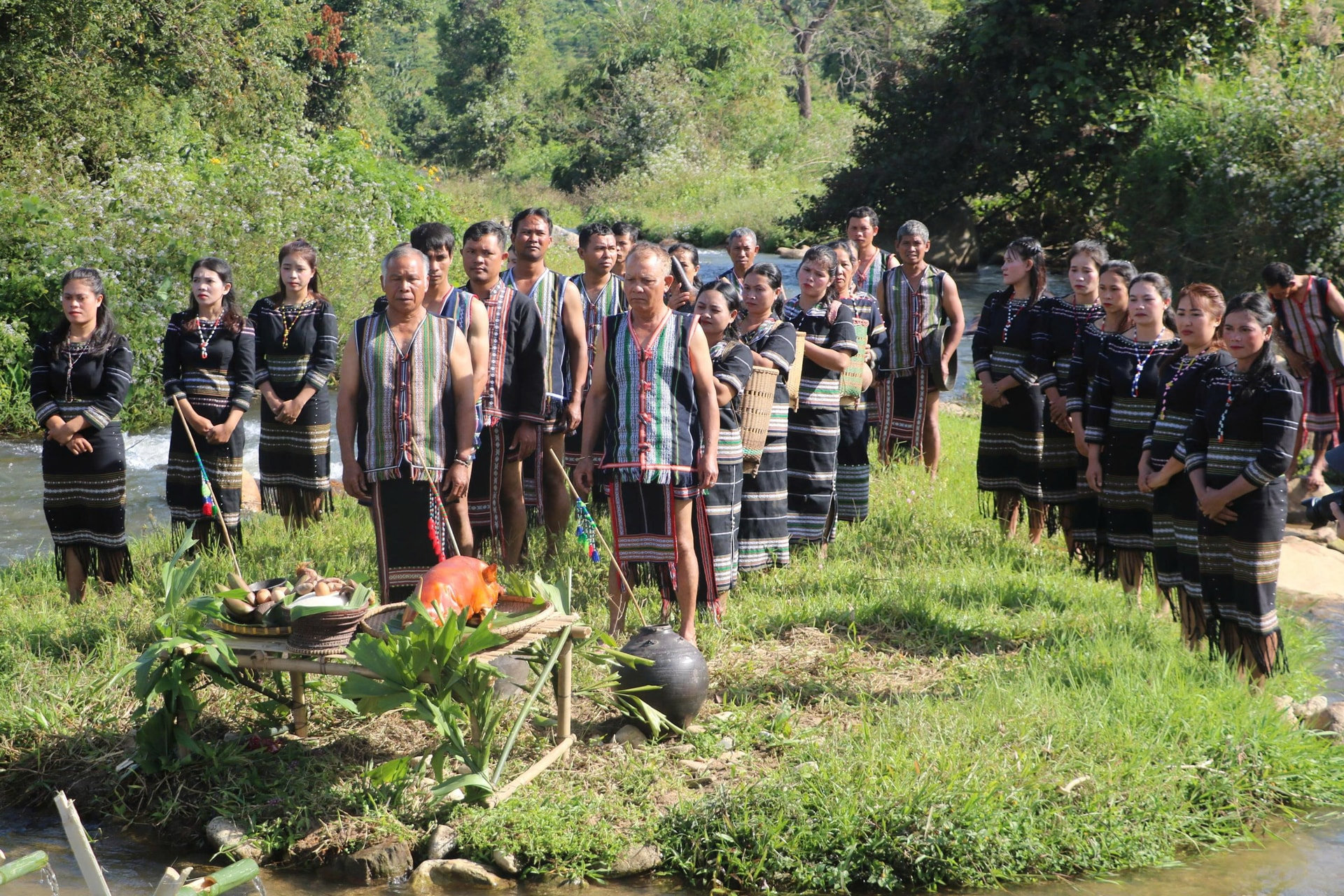
Like Ka Sinh, young teacher Jrang Cil Cao Trang vividly remembers her childhood days following her father and village elders through the fields during traditional agricultural rituals. As she grew older, such opportunities faded. It was only when she joined her father — Mr. Cil Neu — in practicing and restoring two major M’nong rituals, the Crop Prayer Ceremony and the Water Wharf Worship Ceremony, that Cao Trang truly gained a profound understanding of their procedures and meanings.
She herself has experienced two important rites: a traditional wedding ceremony and the ritual of expressing gratitude to parents from both families. Through these experiences, Cao Trang came to deeply appreciate the beauty of traditional customs and has made efforts to preserve those elements that remain relevant to modern family life.
“I am very happy to directly participate in restoring these festivals,” Cao Trang shared. “This is a rare opportunity for young people like me to access rituals that are gradually fading away. As the older generation ages, if young people do not step in, these cultural values may disappear entirely.”
Developing Cultural Tourism Products
According to Nguyen Van Quang, Vice Chairman of the People’s Committee of Dam Rong 4 commune, more than 93% of the local population consists of ethnic minorities, mainly the M’nong and K’ho peoples. In recent years, the commune has actively collected and restored numerous traditional cultural values related to festivals, community life, cuisine, and ethnic identity.
Alongside village elders, many young people have participated in these efforts, learning to play gongs, perform xoang dances, and take part in ritual practices.
Directly involved in preparations and serving as a ritual elder during the ceremonies, Mr. Cil Neu shared that these activities also allowed him to revisit the meanings of rituals he witnessed in his youth. According to him, beyond family - and community - related customs, the M’nong people in Dam Rong 4 have preserved many traditional ceremonies, especially those connected to agricultural practices such as rice cultivation.
These rituals, he explained, carry not only spiritual significance but also convey ancestral teachings — reminding future generations to cherish crops, protect water sources, preserve forests, safeguard the ecological environment, and maintain the lifeblood of their villages.
Mr. Nguyen Van Quang emphasized that the restoration of traditional rituals and festivals is not a one-time effort. The entire process is carefully documented and digitized. The locality views these activities not only as cultural preservation but also as a foundation for developing distinctive cultural tourism products.
The commune plans to allocate annual funding to support local people in organizing festivals in ways that align with contemporary living conditions. Through this approach, residents directly participate in creating cultural tourism offerings for visitors, while also contributing to economic development, poverty reduction, and sustainable community livelihoods.