


Keeping the Cham Pottery Tradition Alive Through Young Hands
There was once a time when Mai Thi Kim Khuyen was afraid of pottery-making because of its hardships. Yet the young woman from Binh Duc Village, Bac Binh Commune, eventually grew deeply attached to clay, kilns, and the cultural traditions of her Cham community.
For Khuyen, preserving the craft is not only about continuing her family’s profession, but also about safeguarding the “soul” of Cham culture amid the pace of modern life.
From Fear of the Craft to a Passion for Cham Pottery
At daybreak, the pottery firing ground in Binh Duc Village, Bac Binh Commune, is already glowing red with fire. On an open patch of land beside a small canal, Cham women swiftly pass unfinished pottery pieces to one another, carefully stacking them layer by layer in preparation for firing.
Mai Thi Kim Khuyen quickly pulls up her face covering before bending down to lay another layer of straw over the pottery pile. Beside her, her mother quietly watches the fire. Her hands, roughened by years of clay and wood smoke, continue pushing firewood deeper into the kiln — work she has done for decades. As the dry wood catches fire, crackling sounds mix with the pungent smell of smoke. Heat radiates intensely from the firing ground even before sunrise fully breaks.
Young people may bring new approaches, but the most important thing is still preserving the ‘soul’ of the craft.
Mai Thi Kim Khuyen
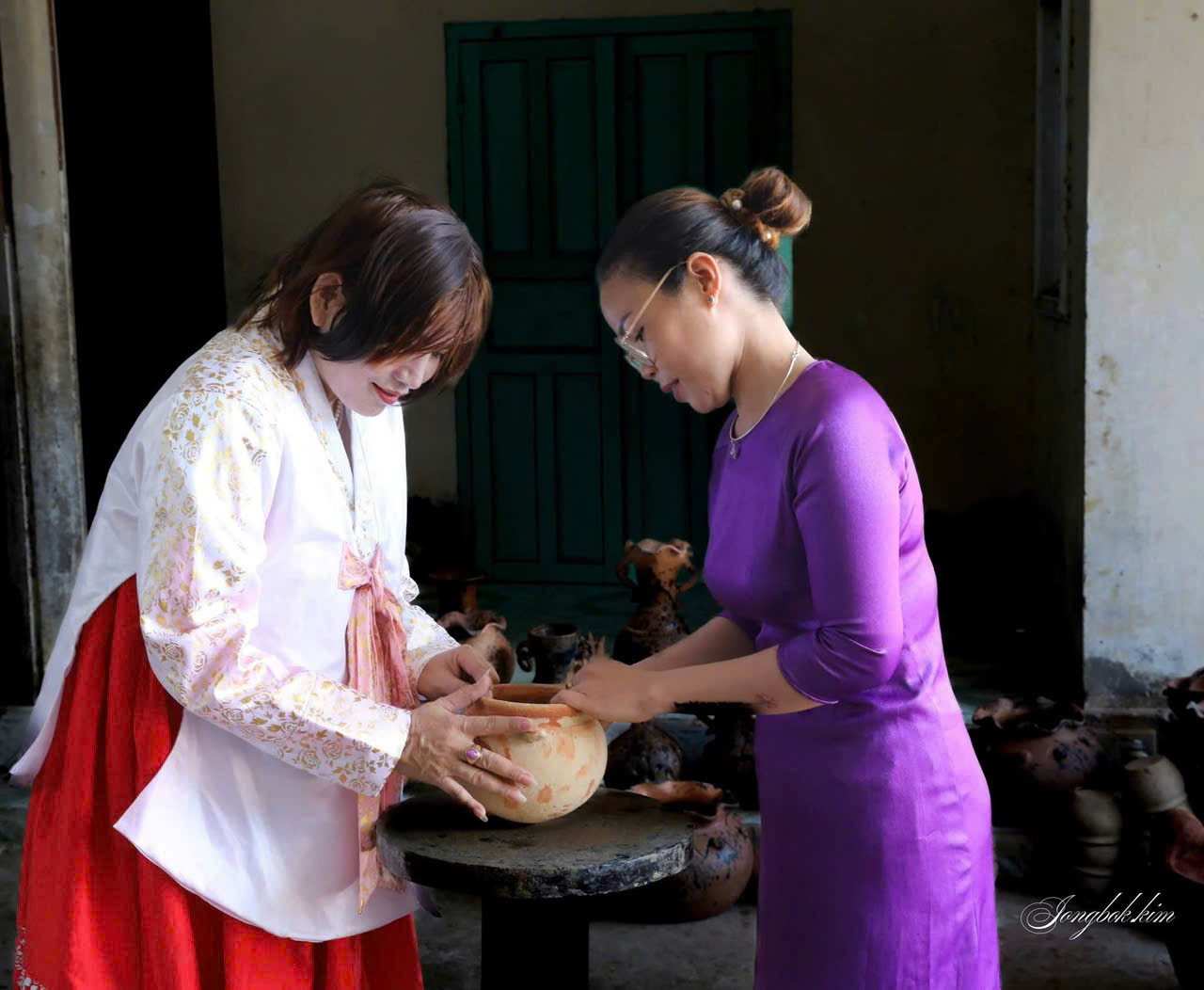
“When I was little, I feared pottery firing days the most,” Khuyen recalled with a smile. As she spoke, she moved around a fixed table, her hands gently shaping wet clay into a small vase. Unlike many other pottery traditions, Cham pottery does not use a spinning wheel. Artisans rely solely on skilled hands and rhythmic footwork as they circle around a stationary platform to shape each product. Khuyen learned those movements from her mother while growing up in the pottery village.
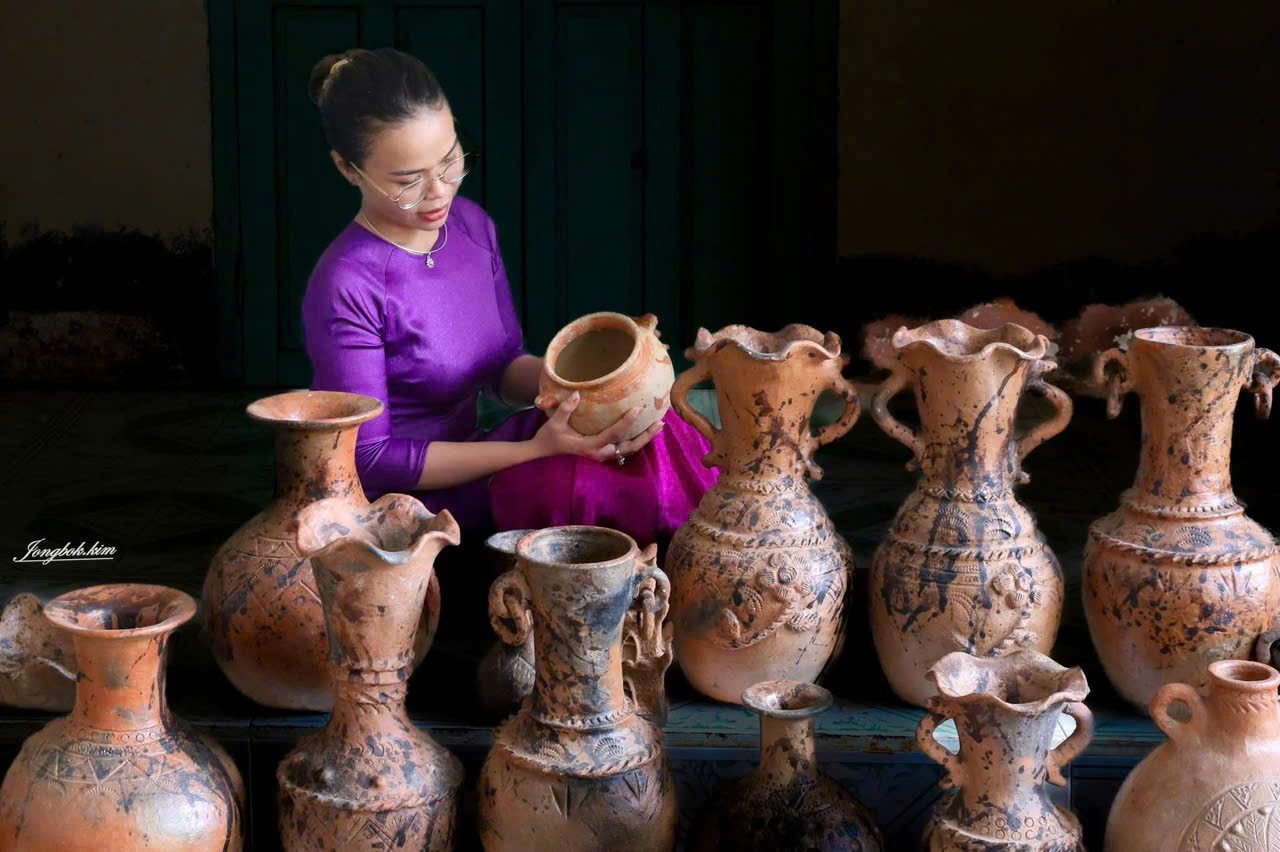
Binh Duc pottery village, also known as the Go pottery village of the Cham people, is among the few remaining craft villages in the southeastern part of the province that still preserve traditional handmade pottery almost entirely intact. Every stage — from selecting clay, mixing and kneading it to shaping and firing — is done completely by hand.
After the Cham pottery-making art was inscribed by UNESCO on the List of Intangible Cultural Heritage in Need of Urgent Safeguarding, the village gradually became vibrant again. More visitors began arriving to explore and experience pottery making. Shipments of pottery continuously left the village, while young people also started returning to their family craft, with Khuyen among them.
Born into a family with generations of pottery artisans, Khuyen grew up surrounded by clay, kilns, and long days assisting her mother. Yet what she remembers most vividly is the hardship of the profession. Under scorching sunlight, the entire family worked outdoors with hands and feet covered in clay. On firing days, everyone had to wake before dawn to transport pottery batches to the firing site. Whenever sudden storms arrived, families rushed to cover the pottery because rain could ruin an entire batch.
“Standing beside the blazing firing pile, sometimes the heat became so unbearable that I just wanted to run away or jump into the nearby canal to cool down,” Khuyen said. The hardship once convinced her she would never follow the profession. Like many young people, she once wanted to leave her hometown for a more stable and less demanding job.
However, years of working alongside her mother gradually changed her perspective. Khuyen still remembers a firing session under the blazing sun when everyone was exhausted but still took turns tending the fire. Amid the overwhelming heat, her mother remained meticulous in every step, from arranging the pottery to maintaining the temperature and monitoring the flames. Despite spending her days amid sun, wind, and smoke, she still treated every product with care.
That was when I realized pottery making is not simply manual labor. Creating a complete product requires tremendous patience and dedication.
Mai Thi Kim Khuyen
What once began as fear eventually turned into deep affection for the craft and admiration for those who had silently kept the pottery tradition alive for generations.
Preserving the “Soul” of Pottery Through a Young Mindset
After accompanying her mother to fairs, exhibitions, workshops, and tourism events, Khuyen decided to stay in the village and start a business based on pottery. With financial support from the employment support program of the Bac Binh Social Policy Bank Transaction Office, she and her family expanded production.
Previously focused mainly on household pottery, the young artisan began exploring artistic ceramic products targeting tourists and decorative markets. According to Khuyen, traditional pottery prioritizes functionality, while artistic pottery requires greater creativity, aesthetics, and storytelling behind each product.
Her early attempts at artistic pottery were not without setbacks. Some products took days to complete but still turned out misshapen because her hands were not steady enough. Other batches cracked or warped after firing due to excessive heat.
“There were times when I felt discouraged. But the more I worked, the more I understood that creating a beautiful product requires enormous time, effort, and patience,” she said.
The first time she introduced her products to tourists, Khuyen was so nervous she could barely sleep. “When I saw domestic and international visitors holding the products for a long time, asking about the process and the stories behind them, I felt truly happy and motivated,” she recalled.
Many tourists said they were drawn to Binh Duc Cham pottery because of its rustic beauty, simplicity, and rich cultural identity. Every handmade piece carries a unique shape, giving it a distinctive “soul.”
Today, Khuyen’s family is among the few households that both preserve traditional pottery production and develop artistic pottery lines serving tourism businesses, cafés, and resorts. Together with several young villagers, she also promotes products through YouTube, Facebook, Zalo, and e-commerce platforms. She has additionally connected with tourism tours and resorts to organize pottery-making experiences for visitors.
Currently, Binh Duc pottery village has 43 households maintaining the craft regularly with more than 60 workers. Another 60 households participate seasonally during holidays and Lunar New Year period.
Khuyen continues to reflect on how pottery can survive in modern life without losing its identity. “I want to preserve the core values of Binh Duc pottery while also creating new products suitable for current tastes,” she said.
Artisan Vo Thi Thuy Duyen watched the young woman carefully refining every detail of a product before remarking: “Very few young people are willing to continue the profession nowadays. Khuyen is among the few future young artisans who will preserve and further develop the village’s artistic pottery.”
The firing ground in Binh Duc remains glowing with fire on a regular basis. Khuyen bends down to sprinkle black liquid extracted from thi fruit onto newly fired pottery pieces still radiating heat. Gradually, dark patterns emerge across the deep reddish-brown clay surface, creating the distinctive signature of Binh Duc Cham pottery. The scent of wood smoke still lingers sharply in the air as the young artisan sits beside an improved spinning table, her hands moving steadily in familiar circles, much like her mother once did.
According to leaders of the Bac Binh Commune People’s Committee, the locality is supporting villagers in maintaining the craft through vocational training, loan assistance, firing-site planning, and encouraging young people to promote products on digital platforms.