Lam Dong accelerates AI adoption in public administration
Van Tam•28/03/2026 12:17
As part of Viet Nam’s national digital transformation agenda, Lam Dong Province is scaling up the application of software platforms and artificial intelligence (AI) in public administration, aiming to build a modern, transparent and service-oriented government for citizens and businesses.
Lam Dong is piloting AI solutions toward a data-driven administration
Building an integrated digital foundation
According to the Provincial People’s Committee Party Committee, the synchronized deployment of digital platforms has significantly improved governance and administrative operations. A key highlight is the unified E-office system, implemented from provincial to commune levels, enabling seamless electronic document exchange.
The system currently supports more than 30,000 user accounts across 169 agencies and units, helping reduce processing time and enhance transparency in administrative procedures.
In parallel, the Intelligent Operations Center (IOC) enables provincial leaders to monitor and analyze socio-economic indicators in real time, improving the quality and timeliness of decision-making. Additional tools such as the electronic reporting system (LRIS), task monitoring platforms and paperless meeting solutions have also become integral to daily operations.
At the grassroots level, digital transformation is delivering tangible benefits. Phan Thi Hoai Thanh, Deputy Secretary of the Party Committee of D’ran Commune, noted that administrative workflows have been significantly streamlined: “Previously, document processing required multiple physical transfers, which was time-consuming. With the E-office system and digital signatures, most procedures are now handled online, reducing errors and making progress easier to track.”
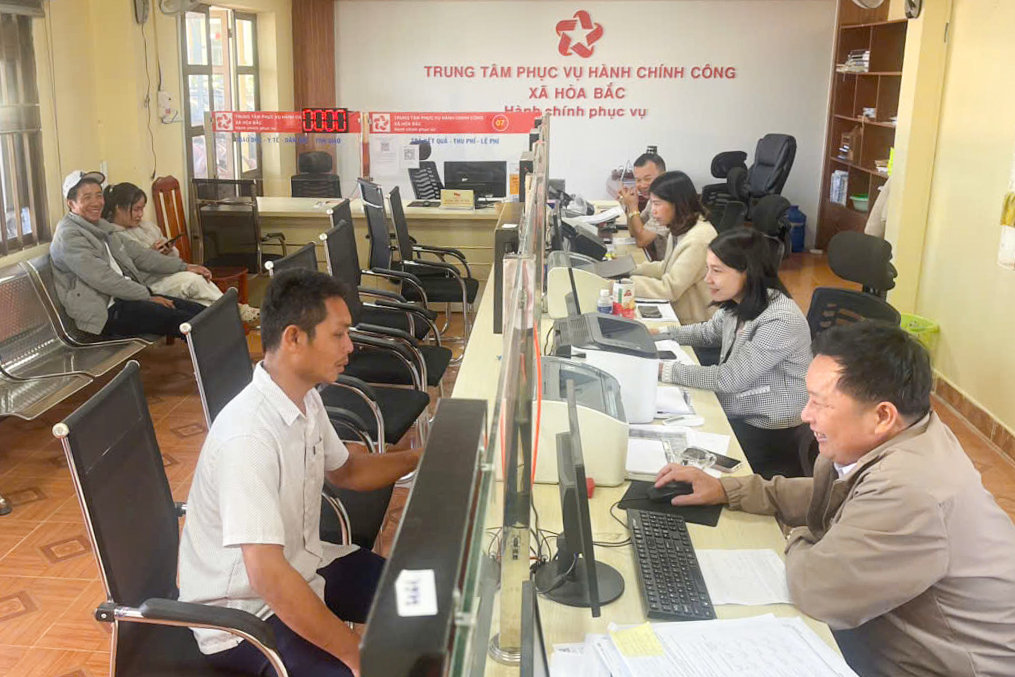
Beyond supporting public officials, the province’s administrative procedure information system has made public services more accessible. Standardized and digitized processes allow citizens and businesses to track application status in real time and evaluate service quality.
K’Tu, Head of La On Village in Hoa Bac Commune, shared: “People can now complete administrative procedures online without repeated travel. We can track the progress and know exactly when results are available. It’s both convenient and transparent.”
Notably, Lam Dong is gradually developing a province-wide shared data system. Sectoral databases in areas such as public investment, civil service management, land, infrastructure and ethnic and religious affairs are being deployed in a coordinated manner, moving toward full data integration for governance and administration.
Piloting AI toward a digital government
According to Pham Thi Minh Hien, Deputy Director of the Department of Science and Technology, building a centralized and standardized data system is a critical foundation for digital government development.
“Once data is standardized, sector-specific datasets—including land, minerals, forestry, agriculture, environmental monitoring, remote sensing and hydrometeorology—can be fully updated and integrated. This is a key step in developing application modules to support provincial governance,” she said.
In practice, Lam Dong has begun piloting AI applications in public administration. AI-powered tools are being used to support legal document retrieval, information synthesis and policy recommendations, helping improve advisory quality and reduce workload pressure on public officials.
At the same time, the province is investing in building digital capacity. In 2025 alone, more than 10,000 civil servants and public employees received training in digital technologies and AI applications.
“
Digital transformation has become an integral part of daily life, contributing to better living standards and greater public awareness.
K’Tu, Head of La On Village in Hoa Bac Commune
According to provincial authorities, accelerating digital and AI adoption not only enhances administrative reform but also lays the groundwork for transitioning from traditional governance to a data- and technology-driven model.
In the coming period, Lam Dong will continue to upgrade digital infrastructure, expand AI applications across sectors and foster an innovation ecosystem involving technology enterprises, research institutes and universities.
With coordinated and decisive actions, the province is steadily advancing toward a modern, professional administration that better serves both citizens and businesses.