


Lam Dong expands cooperation with South Korea
Lam Dong is stepping up connections with South Korean partners to attract investment, expand markets, develop high-tech agriculture and deep processing, enhance the value of agricultural products and meet export standards.
Expanding Cooperation Opportunities
Building on the upgrading of Vietnam–South Korea relations to a Comprehensive Strategic Partnership in December 2022, Lam Dong Province is strengthening its connections with South Korean localities, associations, and businesses, aiming for practical, effective, and sustainable cooperation programs.
Dr. Tran Hai Linh, Chairman of the Vietnam–Korea Business and Investment Association (VKBIA), said that South Korea is currently the largest foreign investor in Vietnam, with cumulative registered investment capital reaching approximately $102.6 billion across 10,567 projects as of the end of July 2026. Meanwhile, bilateral trade relations continue to develop, opening up numerous opportunities for Vietnamese localities to strengthen ties with the South Korean business community.
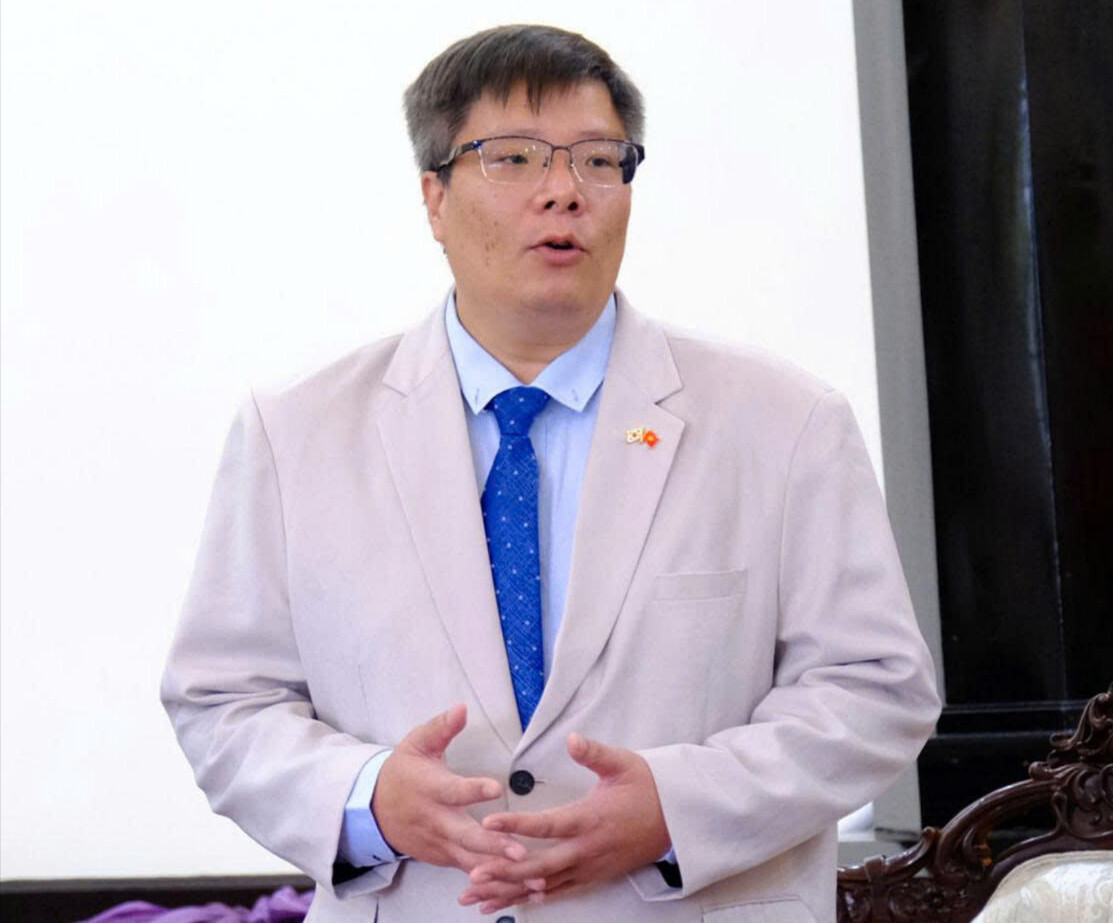
Lam Dong holds numerous advantages in high-tech agriculture, tourism, and resources. If it effectively connects with South Korea's strengths in technology, management, and markets, both sides will unlock substantive cooperation opportunities, generating sustainable value for businesses and the locality.
Dr. Tran Hai Linh, Chairman of VKBIA
For Lam Dong, the merger of the three provinces of Lam Dong, Dak Nong and Binh Thuan on July 1, 2025, has created an expansive development area connecting the highlands with the coast, creating favorable conditions to leverage strengths in high-tech agriculture, processing industries, energy, logistics, resort tourism, and the marine economy.
According to Nguyen Ngoc Phuc, Vice Chairman of the Lam Dong Provincial People's Committee, in the new development phase, Lam Dong identifies international cooperation, attracting investment and expanding markets as key tasks, with South Korea being one of the partners to which the province attaches particular importance.
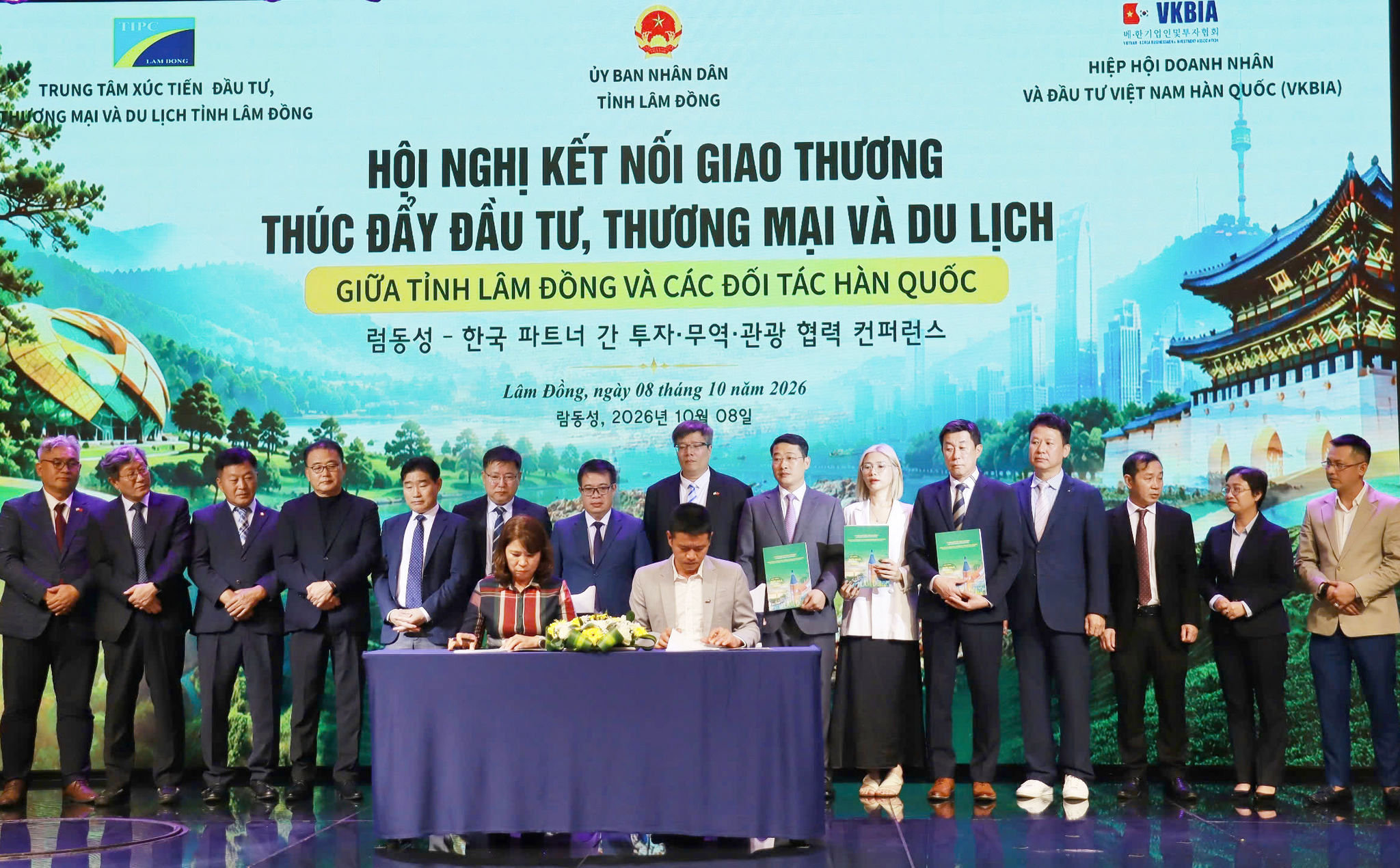
To date, Lam Dong has 38 projects involving South Korean investors, with a total registered capital of approximately $204.16 million, operating in the fields of industry, tourism, agriculture and forestry, and trade and services.
In 2025, the province's export turnover to South Korea reached $46.29 million; in the first nine months of 2026 alone, it reached $56.15 million, exceeding the total for the previous year. Key export items include alumina and aluminum hydroxide, green coffee beans, vegetables and fruits, garments, and fresh flowers.
Building on these results, the province aims to expand cooperation in deep processing of agricultural products, post-harvest technology, preservation, and cold-chain logistics; logistics, green energy, supporting industries, innovation, and high-quality tourism. The province also hopes to explore the possibility of establishing a Vietnam–South Korea industrial zone and cluster, creating a space to connect businesses and promote interconnected investment projects.
In the trade sector, Lam Dong expects South Korean associations and businesses to help bring coffee, durian, avocado, dragon fruit, macadamia, tea, vegetables, flowers, seafood, and OCOP products into South Korea's retail and e-commerce systems. Establishing connections with distribution systems such as Lotte, GS25, E-Mart, K-mart, and companies affiliated with the BGF Group is identified as a strategic direction to expand market access for local agricultural products.
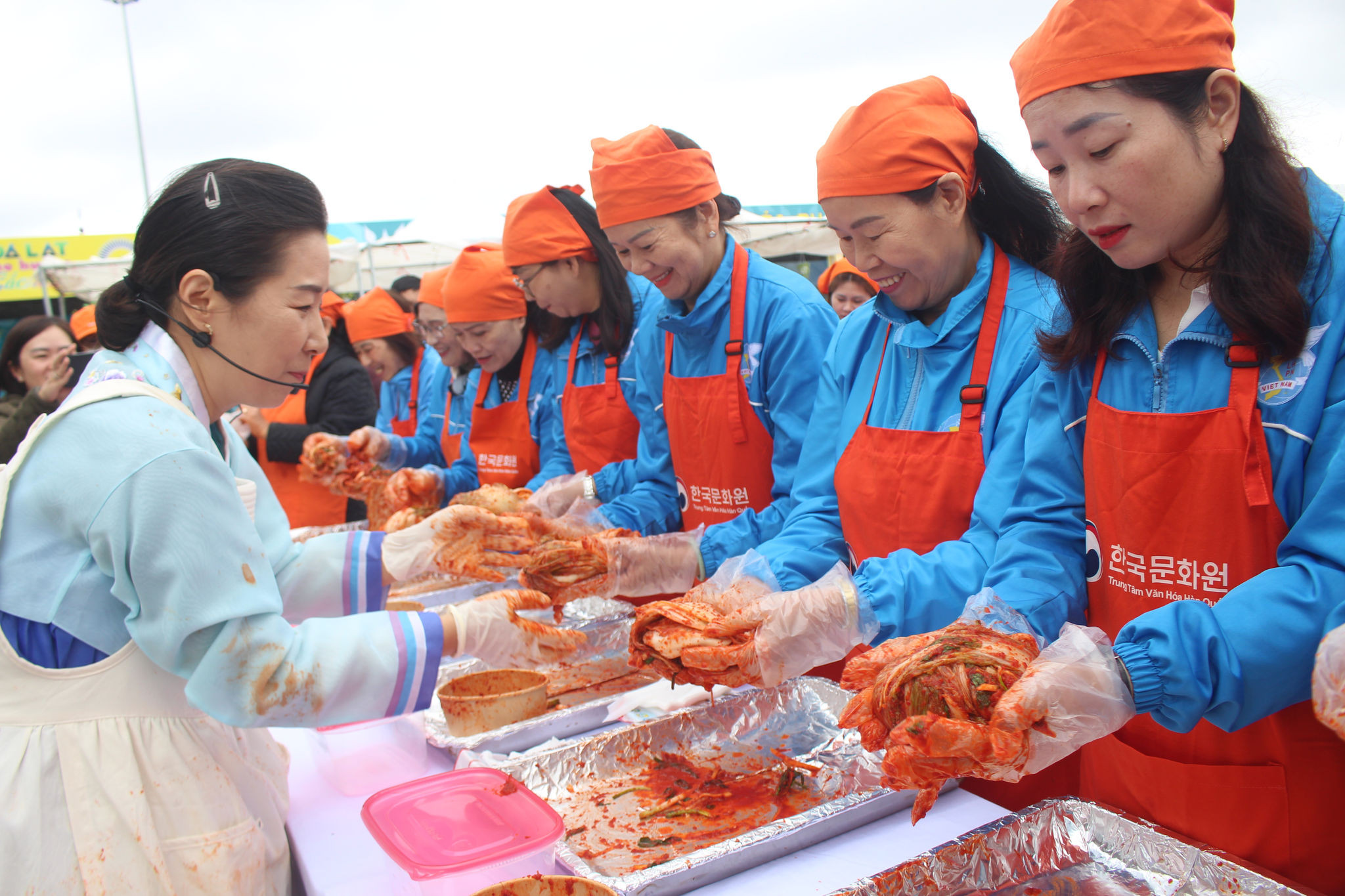
Alongside this, the province is also focusing on cooperation in investment in agricultural product processing, developing the mulberry and silk industries, and applying weaving and dyeing technologies to enhance the value of silk products; supporting the transfer of new varieties, developing smart agriculture, and applying IoT, organic, and circular production technologies.
Training programs and capacity building for research centers and disease-free seedling nurseries are also expected to contribute to improving production quality...
Lettuce Enters Demanding Markets
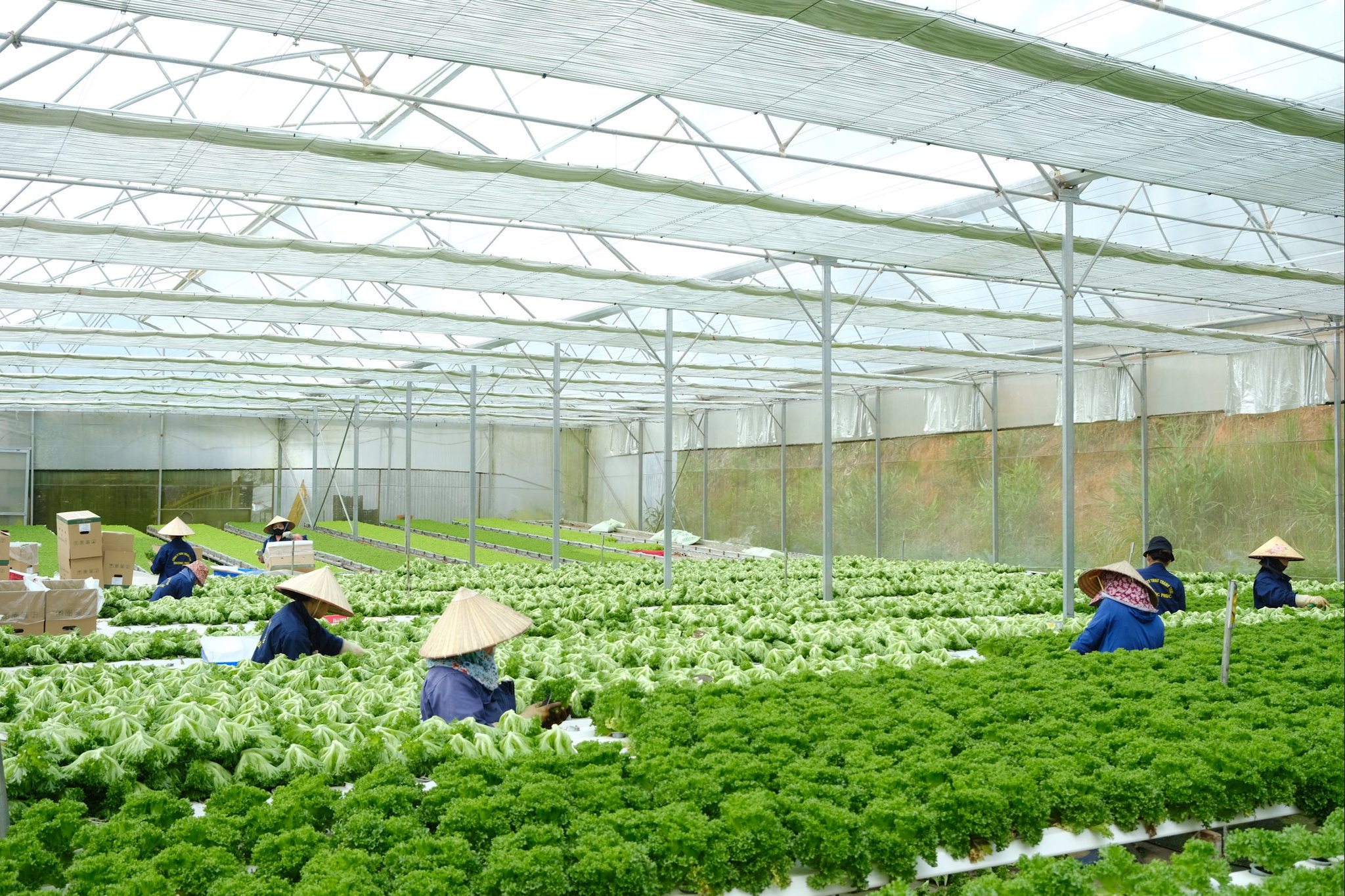
In Lac Duong Commune, Truong Phuc Farm Co., Ltd., managed by Mr. To Quang Dzung, is one of the leading enterprises in lettuce production and exports to the South Korean market.
With more than 3 hectares devoted to hydroponic vegetable cultivation, including 2 hectares dedicated to lettuce, the farm maintains continuous production, achieving 11 to 12 harvests per year. Thanks to the favorable temperate climate and a controlled production process, the average lettuce yield ranges from 2.5 to 4 tons per 1,000 square meters; some harvests exceed 4 tons, creating a stable supply that meets the volume requirements of the export market.
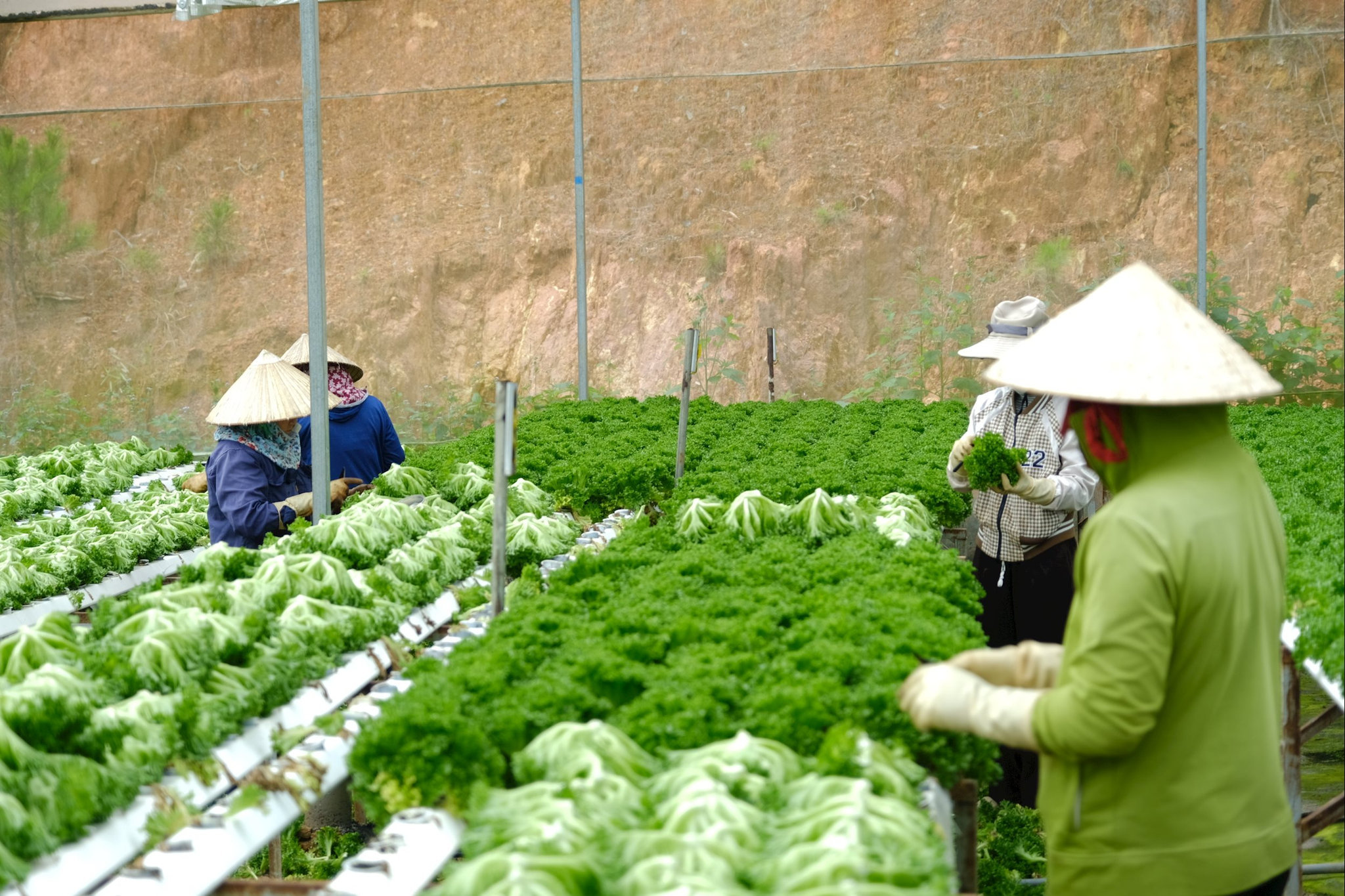
Truong Phuc's journey to international markets began in 2015. From an export volume of just over 10 tons in 2016, the enterprise's lettuce exports have reached approximately 180 tons in 2026, equivalent to thirty 20-foot containers.
With a stable selling price of about $2.3 per kg, the enterprise earns an average profit of around VND 33,000 per kg after deducting costs, with total revenue exceeding VND 4.5 billion. These figures demonstrate that exporting not only expands the market for its products but also contributes to enhancing production value, encouraging the enterprise to invest more systematically in cultivation and preservation processes.
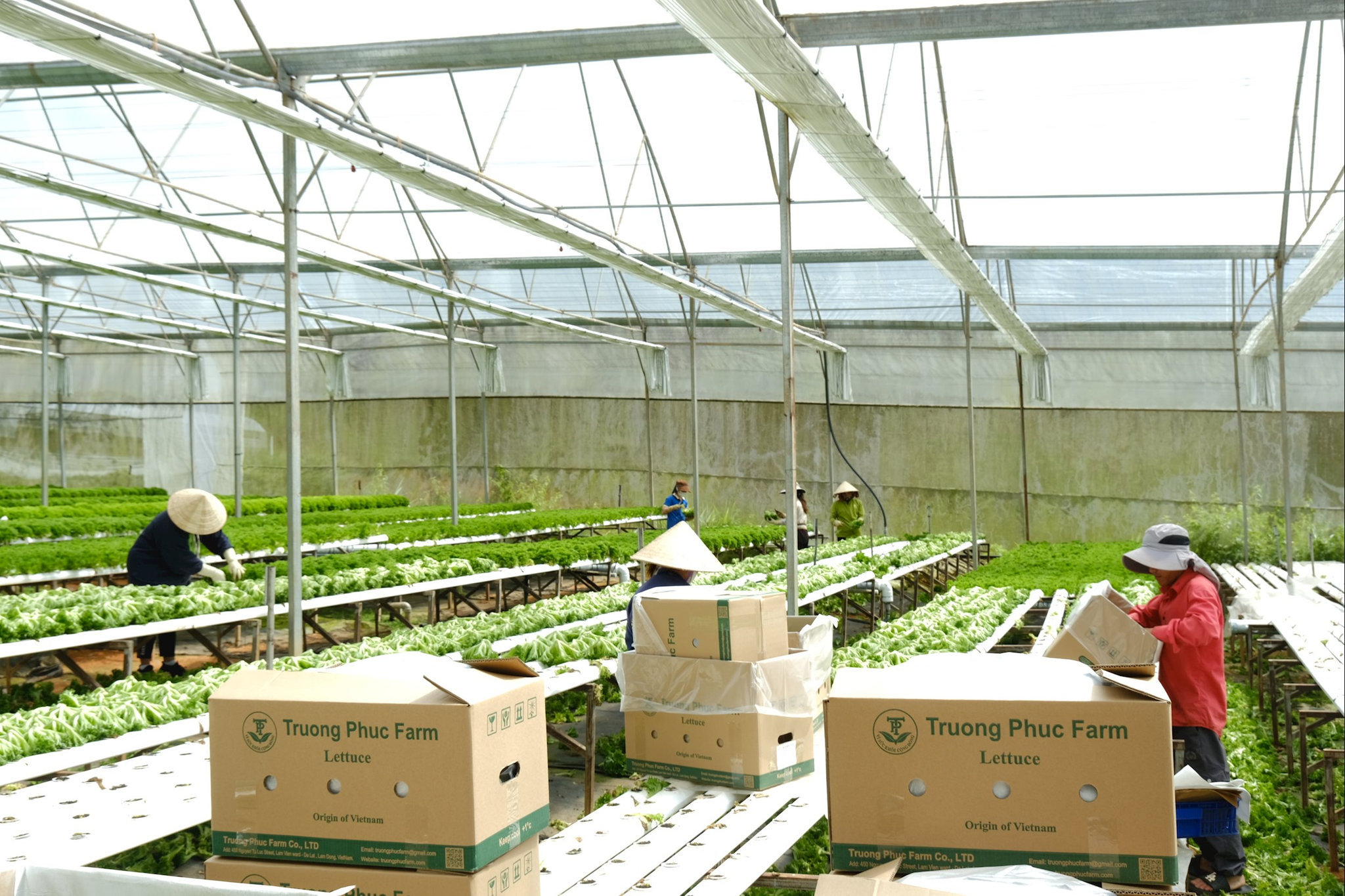
However, to bring products into South Korea—a market with strict requirements regarding food safety and agricultural product quality—businesses must meet standards from the very beginning of the production process. The South Korean side has sent numerous delegations of experts to the farm to conduct inspections and collect soil, water, and vegetable samples for analysis. Only when the results meet safety requirements are the stages of sowing, crop care, harvesting, preliminary processing, and packaging carried out under the regular supervision of the partners.
This experience shows that climatic advantages and production conditions are only the initial foundation. To maintain access to the export market, businesses must ensure coordination throughout the entire process, from controlling cultivation areas and raw material quality to preliminary processing, packaging, and post-harvest preservation.
For fresh vegetables, storage time and conditions play a crucial role in maintaining product quality during transportation to foreign markets. Therefore, investment in post-harvest technology and suitable storage systems, along with the organization of production according to the importer's requirements, must receive attention alongside expanding acreage and enhancing productivity.
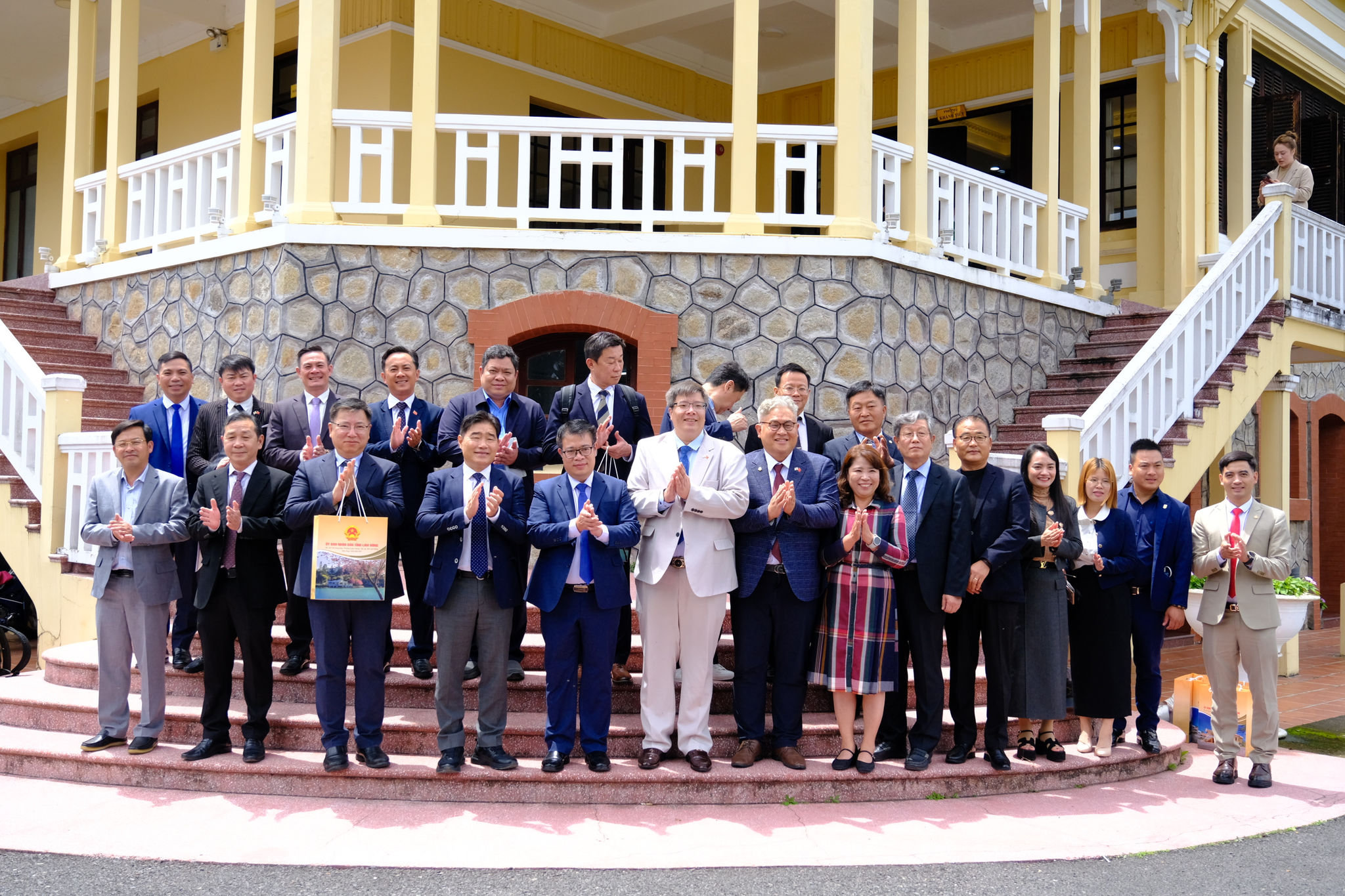
Truong Phuc's model also suggests a direction for cooperation among enterprises, cooperatives, research institutions, and South Korean partners. Through cooperation in technology transfer, technical training, variety development, the application of smart agriculture, and connections with distribution systems, Lam Dong's agricultural products have more opportunities to improve in quality, develop stronger brands, and participate more deeply in the international supply chain.
From lettuce exports in Lac Duong to broader cooperation plans in agricultural product processing, logistics, green energy, and tourism, Lam Dong has a foundation for turning potential into concrete cooperation programs. Importantly, these connections must be followed by feasible projects, clear coordination mechanisms, and the substantive participation of businesses from both sides.
With the government providing support, associations serving as bridges, and enterprises taking the lead, Lam Dong–South Korea cooperation is expected to go beyond expanding relations to opening up new markets, enhancing product value, promoting technological innovation, and contributing meaningfully to the province's socio-economic development.