


Lam Dong Province Establishes a New Marine Aquaculture Ecosystem
Lam Dong Province is accelerating its strategy to develop a modern marine aquaculture ecosystem, transforming offshore farming into a high-tech, commodity-oriented production sector. The province aims to achieve breakthroughs in productivity, output, and value-added value while ensuring environmental sustainability and creating stable livelihoods for coastal communities.
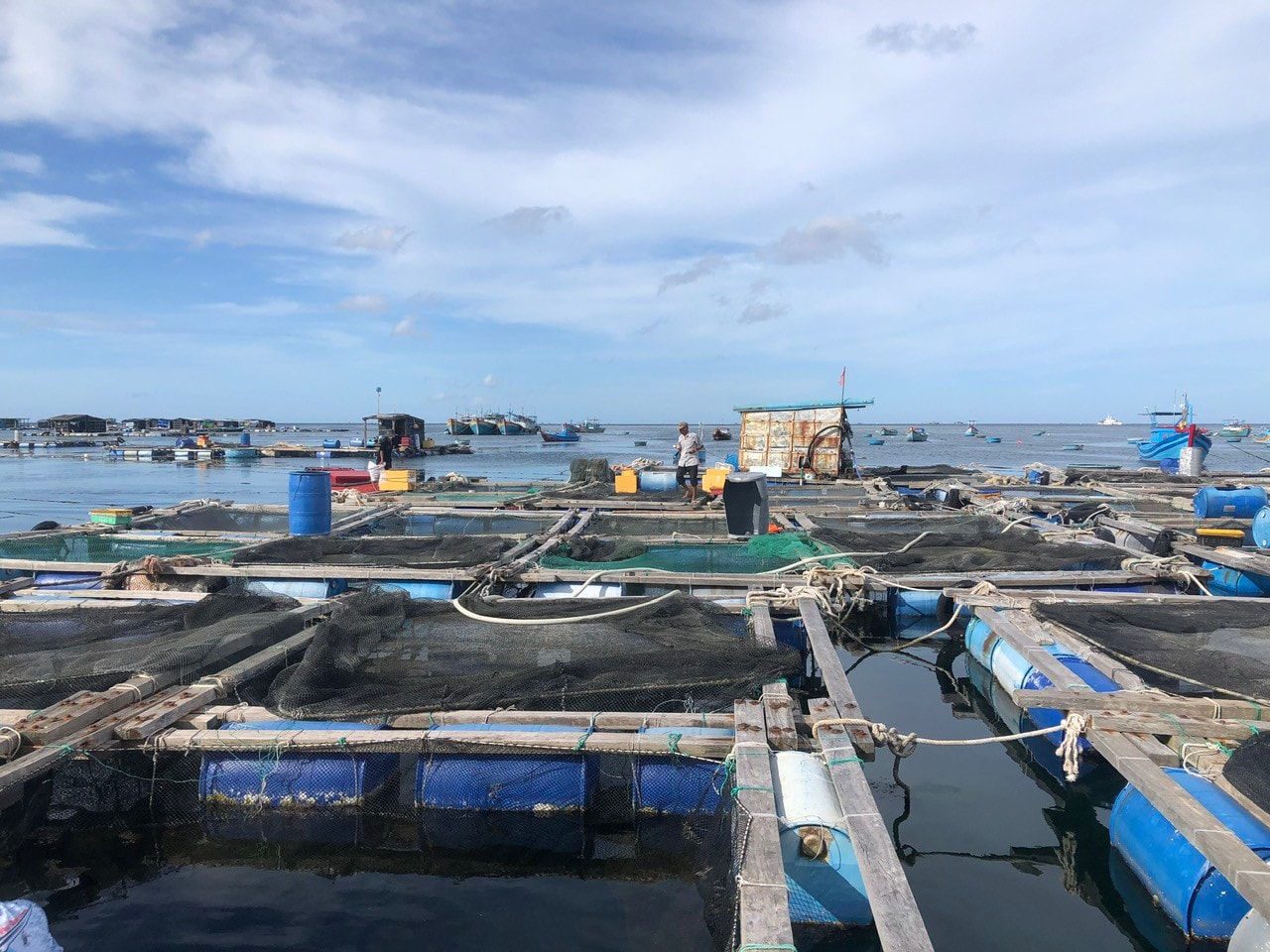
A key component of this strategy is the continued transition of 3,000 fishermen from nearshore capture fisheries to marine aquaculture, bolstering the restructuring of the fishery sector toward sustainability and enhanced economic efficiency.
Building a National Marine Seed Production Hub
According to provincial authorities, by 2030 Lam Dong will expand aquaculture areas in enclosed and semi-enclosed bays to approximately 150 hectares, ensuring farming structures occupy no more than 10% of the sea surface.
The province also plans to:
- Develop at least one 200-hectare marine industrial zone.
- Allocate around 5,000 hectares along the Tan Thanh coastline for specialty seafood conservation and farming.
- Reserve 6,880 hectares within the service–administrative subdivision of Hon Cau Marine Protected Area.
- Establish Lam Dong as one of Viet Nam’s key centers for marine seed production, converting shrimp hatcheries into facilities for marine fish and specialty seafood fingerlings, and attracting large-scale, high-tech enterprises to invest in approximately 50 hectares of seed production.
Expanding Industrial-Scale Offshore Aquaculture
In enclosed and semi-enclosed waters, pilot ecosystems are being developed across 20 hectares in Phu Quy 1 and 20 hectares in Mui Ke Ga, focusing on species such as grouper, cobia, golden pompano, red drum, and lobster.
In offshore areas, particularly Phu Quy 2 and Phu Quy 3, Lam Dong will expand industrial-scale marine farming to 1,000 hectares using HDPE floating cages, flexible semi-submersible cages, and multi-layer farming technologies. Species diversification includes grouper, cobia, croaker, seabass, golden pompano, and red drum, alongside Pacific oysters and high-value seaweed cultivated using advanced longline systems.
Additional development zones include:
- Vinh Hao 1 and Vinh Hao 2 (20–30 hectares)
- La Gan (160 hectares)
- Hon Cau 1 (500 hectares)
- La Gan 2 and La Gan 3 (1,000 hectares each)
- Hoa Thang proposed zone (2,000 hectares), applying multi-species and multi-layer offshore farming models
From Fragmented Production to Integrated Governance
The Department of Agriculture and Environment emphasized a decisive transition from small-scale, fragmented operations to comprehensive regional management.
In nearshore and island areas, the province will standardize HDPE cages, industrial feed, and advanced monitoring equipment, while establishing community-based models to oversee environmental protection. Meanwhile, offshore farming will be organized into industrial clusters with minimum project scales of 100 hectares, subject to stringent investment approvals and marine zoning regulations.
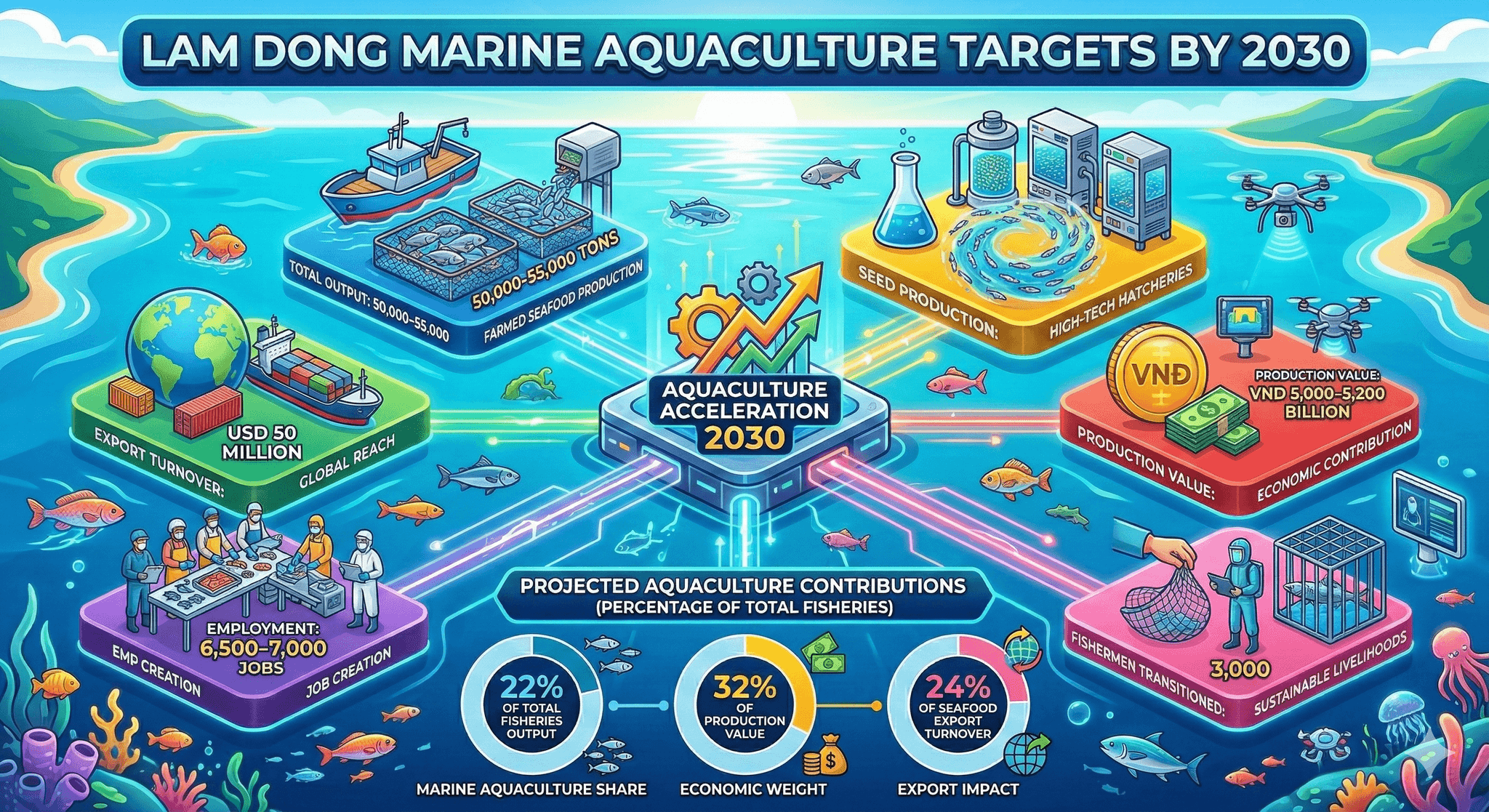
With synchronized planning, technological innovation, and integrated governance, Lam Dong is shaping a high-tech marine aquaculture ecosystem that supports economic growth, strengthens export capacity, and advances the province’s sustainable blue economy strategy toward 2030.