


Lam Dong Stays Committed to Its Double-Digit Growth Target in 2026
Despite ongoing challenges facing both the national economy and Lam Dong Province, particularly those stemming from geopolitical tensions in several parts of the world, local authorities and sectors remain determined to achieve double-digit growth in 2026.
In the first quarter of 2026, departments, sectors, and localities closely followed the growth scenario and focused on implementing socio-economic development tasks and solutions across their respective areas. As a result, the province recorded several positive outcomes. Specifically, GRDP growth is estimated at 7.47%, while state budget revenue reached approximately VND 10.619 trillion, equivalent to 33% of the target assigned by the Central Government.
Persistent challenges impacting growth momentum
Despite these gains, a number of difficulties and challenges remain, with some targets yet to be met, affecting overall growth momentum. The global situation continues to evolve in a complex and unpredictable manner, particularly ongoing conflicts in the Middle East, which have disrupted supply chains, constrained energy supplies, and driven up fuel prices and production costs.
These factors have directly impacted production, business activities, and people’s livelihoods, posing significant challenges to the province’s double-digit growth scenario.
Firm commitment to growth alongside macroeconomic stability
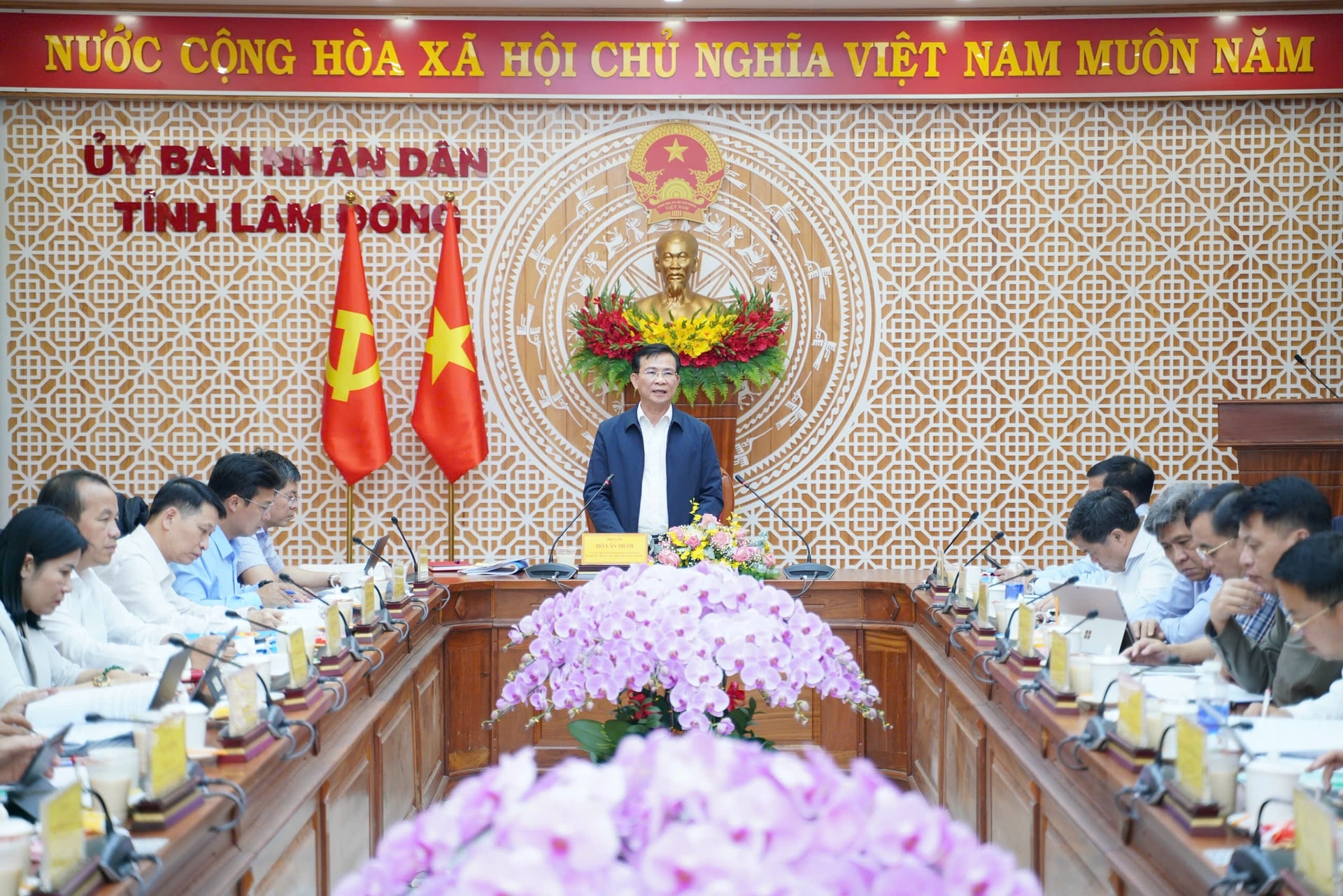
Recently, Chairman of the Lam Dong People’s Committee Ho Van Muoi chaired a meeting with members of the provincial People’s Committee to identify solutions and address bottlenecks to achieve double-digit growth in 2026.
The Chairman emphasized the need to remain steadfast in achieving this target while ensuring macroeconomic stability, controlling inflation, and maintaining major economic balances. These efforts aim to build momentum and create favorable conditions not only for 2026 but also for the years ahead.
To achieve this goal, he called for stronger momentum from new growth drivers, quicker action to remove business bottlenecks, and deeper administrative reforms to improve the investment climate. He also stressed the need to speed up long-delayed projects in renewable energy, infrastructure, real estate, trade and services, in order to unlock resources and spur growth.
Implementing synchronized solutions to realize growth targets
To achieve the target of 10% growth or higher, Resolution No. 01/2026 outlines not only an overall economic growth scenario but also specific plans for each locality within the province.
Authorities are required to continue closely adhering to the province’s double-digit growth scenario for 2026, while accelerating the disbursement of public investment capital. Progress will be reviewed quarterly to allow for timely and flexible adjustments, with the goal of achieving 100% disbursement of the 2026 capital plan.
At the same time, leaders at all levels—including heads of agencies, units, project owners and local authorities—have been told to strengthen their responsibility in directing implementation, promptly address difficulties within their remit, and report unresolved issues to higher authorities for consideration.
Focusing on key drivers and a sustainable growth model
The province will implement proactive, flexible, and effective governance, with clear priorities and focus areas. Detailed disbursement plans will be developed for each project and task, with strict adherence to weekly, monthly, and quarterly schedules. Leaders will be assigned to monitor progress and promptly address emerging issues.
Particular emphasis will be placed on promoting and attracting investment, especially for key and large-scale projects in sectors such as mining and energy. At the same time, Lam Dong will advance the development of high-value agriculture based on science and technology, innovation, and digital transformation.
All solutions must be implemented in a coordinated yet focused manner, effectively addressing bottlenecks while stimulating and maximizing growth drivers with spillover effects across the economy.
In parallel, the province will establish and implement a new growth model as a foundation for rapid and sustainable development, driven by improvements in productivity, quality, and competitiveness, with science and technology, innovation, and digital transformation serving as core pillars, thereby ensuring the efficient use of resources.