


Lam Dong Strengthens Accountability to Accelerate Public Investment Disbursement
Facing delays in key infrastructure projects due to land clearance and material shortages, Lam Dong is pushing agencies and contractors to speed up public investment disbursement in 2026.
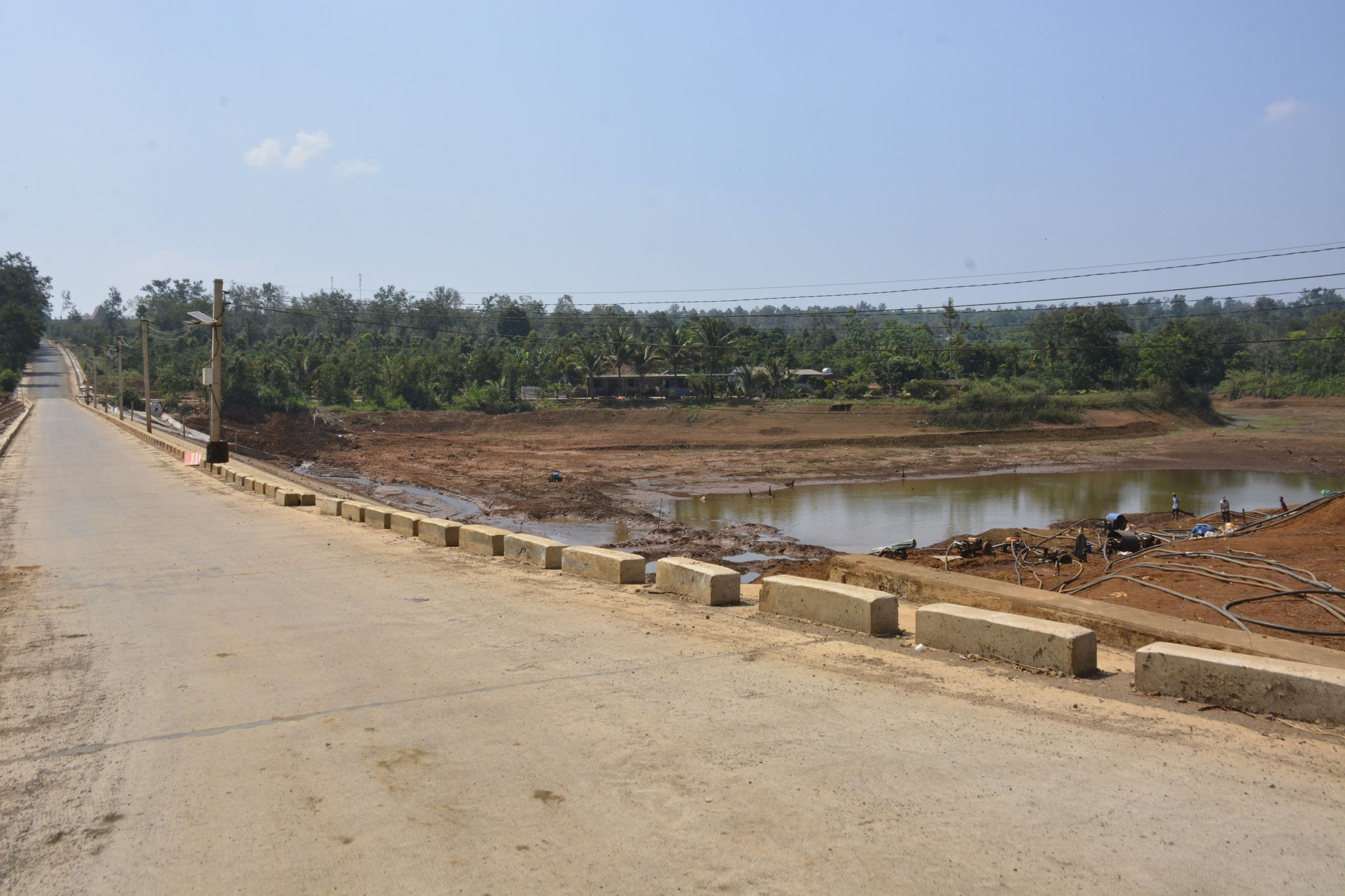
Removing Obstacles for Coastal Projects
Authorities in eastern Lam Dong are working to resolve difficulties facing several major public investment projects, particularly transport infrastructure and social housing developments, in an effort to accelerate construction progress and capital disbursement.
One example is the DT719B coastal road project connecting Hon Lan and Tan Hai, where Project Management Board No. 2 has urged contractors to mobilize additional manpower, machinery, and equipment to speed up construction.
Officials warned that contractors failing to meet deadlines would face penalties in accordance with contractual provisions.
At the same time, the Department of Agriculture and Environment is coordinating with relevant agencies to complete land handover procedures for another key project — the new DT719B coastal road section linking Phan Thiet with Ke Ga.
Several other projects, including the residential area south of Le Duan Street, Van Thanh Bridge, the Ca Ty River embankment project, and the Ca Ty River apartment complex, are also facing delays caused mainly by compensation and site clearance issues.
The residential project south of Le Duan Street, with a total investment of approximately VND 464 billion, includes four roads stretching nearly 895 meters. However, construction has yet to begin due to unresolved compensation and resettlement procedures.
Provincial Vice Chairmen Vo Ngoc Hiep and Nguyen Minh recently chaired meetings with departments and local authorities to address these challenges.
Provincial leaders called on local authorities to strengthen communication efforts and encourage residents to cooperate in handing over land for construction. Project Management Board No. 2 was also instructed to review workloads carefully and maximize construction activities in areas where land has already been cleared.
For the Le Duan Street residential project, provincial authorities stressed that sufficient funding had already been allocated following the provincial merger process. However, coordination among agencies and local authorities remained inconsistent and lacked urgency.
The province reaffirmed its determination to continue implementing the project with the highest level of commitment.
Accelerating Key Projects in Western Lam Dong
In western Lam Dong, public investment disbursement had reached only 9.1% as of May 17.
Project Management Board No. 3 and affiliated regional management boards are overseeing 232 projects with a combined investment capital exceeding VND 3.7 trillion. Of this amount, nearly VND 2.6 trillion was allocated to Board No. 3, while regional boards received more than VND 1.1 trillion.
Total disbursed capital so far stands at more than VND 340 billion.
Several major projects in the western region — including the Dao Nghia–Quang Khe road phase two, upgrades to Provincial Road No. 5, and the March 23 Square project — continue to face site clearance difficulties.
Changes in land pricing regulations and shortages of construction materials have also negatively affected construction schedules and disbursement rates.
For the Dao Nghia–Quang Khe road project, several sections passing through Dong Gia Nghia Ward remain stalled due to unresolved issues regarding land origin and management responsibility.
.jpeg)
Meanwhile, the March 23 Square project in Bac Gia Nghia Ward is still facing delays because several households have yet to hand over land, although they have already received compensation payments, citing disagreements over compensation rates.
Tightening Responsibility and Increasing Pressure
During a working session on May 17 with Project Management Board No. 3 and local authorities, Standing Vice Chairman of the Provincial People’s Committee Le Trong Yen emphasized that the western region’s disbursement rate remained lower than other areas of the province.
He noted that although clear guidance and conclusions had already been issued for many obstacles, implementation at the local level had yet to yield concrete results.
Le Trong Yen urged agencies and local authorities to tackle problems directly at their roots instead of repeatedly delaying unresolved issues.
For matters already covered by legal regulations and previous provincial guidance — such as determining land origins — local governments were instructed to proactively handle responsibilities within their authority.
He also stressed the need for close and scientific coordination among departments and local authorities, with the legitimate rights and interests of residents placed at the center of all decisions.
According to the provincial target, public investment disbursement must reach 50% by June 30. Leaders of project management boards and localities failing to meet the target will be required to explain their shortcomings and undergo accountability reviews before provincial authorities and the public.
To support the province’s “double-digit” growth target, local governments are being required to take direct responsibility for land clearance and project implementation progress. At the same time, Lam Dong plans to cut investment capital allocations for projects unable to fully absorb planned funding in 2026, while also reviewing the capacity of underperforming investors, project management boards, and contractors. The province aims to accelerate public investment projects across both eastern and western Lam Dong, creating stronger momentum for economic growth and infrastructure development.