

Lam Dong targets industry as a pillar of economic growth
Lam Dong Province is expected to soon issue a specialized resolution on industrial development in the province through 2030, with the goal of turning industry into a key economic pillar and a major driver of growth.
Focusing on developing potential and advantageous sectors
Drawing on its inherent strengths and local advantages, Lam Dong has in recent years prioritized the development of key industrial sectors, helping drive a positive shift in the province’s economic structure. These include energy, mining and mineral processing, and manufacturing fields such as the processing of agricultural, forestry and seafood products, beverage production, textiles, garments, and footwear.
Over the 2021–2025 period, the energy sector continued to play a vital role in the province’s socio-economic development by contributing to power supply for the southern key economic region and supporting national energy security.
During the same period, the manufacturing and processing industry recorded strong growth, while the mineral processing sector received greater investment for deeper processing through modern production lines.
As a result, industrial products from Lam Dong have made notable contributions to export turnover, reaching approximately 6.86 billion USD. Among these exports, heavy industry and mineral products account for about 27%, while light industry and handicrafts make up about 22% of the province’s export value. Key products include alumina, aluminum hydroxide, garments and textile materials, footwear, and MDF boards.
Turning industry into a key economic sector
To guide development in the new stage, the Department of Industry and Trade is currently implementing related tasks and is expected to advise the provincial People’s Committee to submit a resolution on industrial development through 2030 to the Provincial Party Committee in the third quarter of this year.
The resolution is expected to position industry as a key economic pillar and a major driver of Lam Dong’s growth, while prioritizing the development of industries with competitive advantages, advanced technology, and environmentally friendly production.
At the same time, the province will continue to prioritize the development of manufacturing and processing industries and renewable energy, turning them into key drivers of economic restructuring by increasing the share of industry and services.
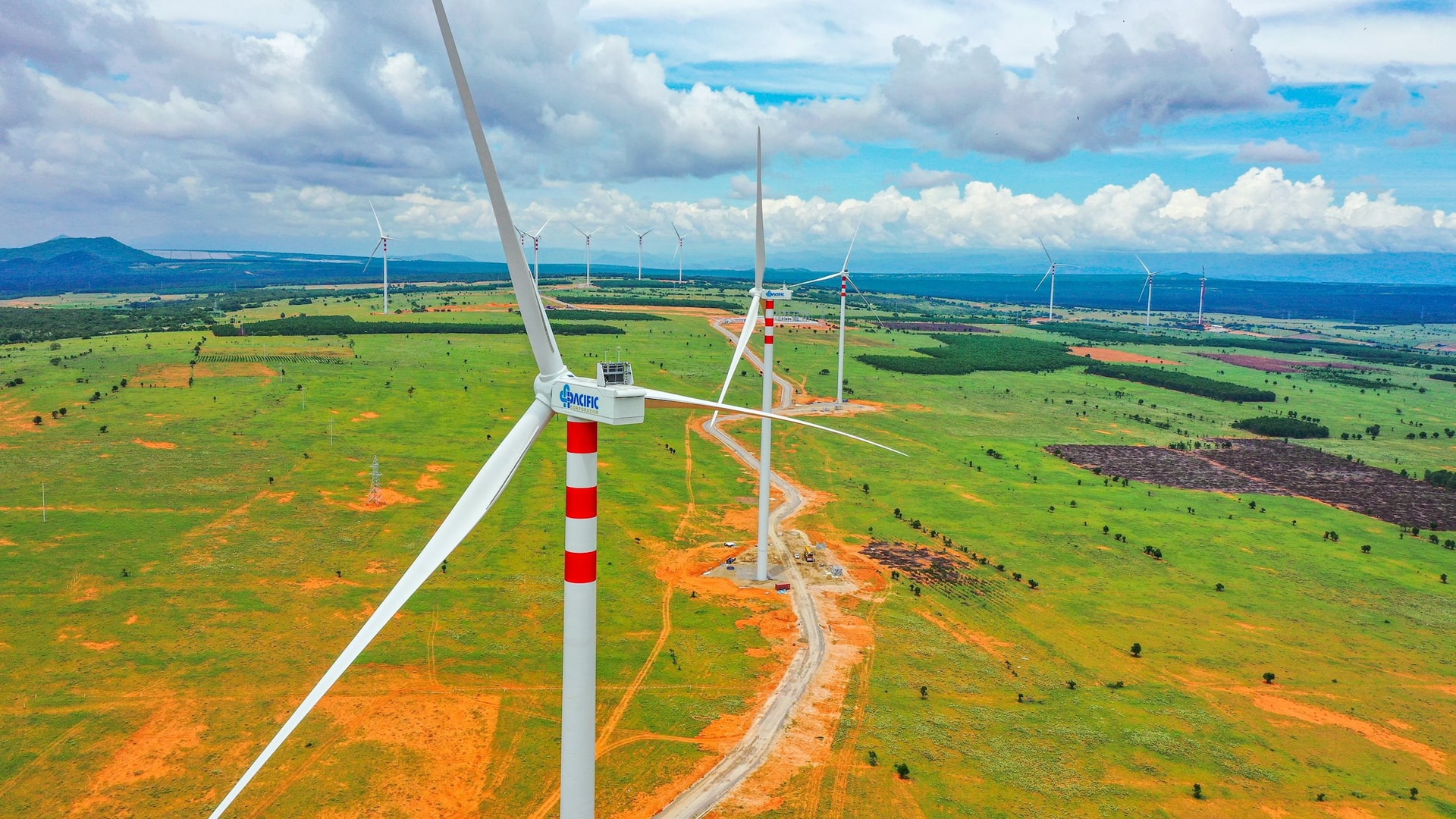
In sectors with competitive advantages, Lam Dong plans to accelerate the development of renewable, new and green energy by attracting investment in wind, solar, pumped-storage hydropower and offshore wind projects to produce hydrogen and green ammonia for domestic use and export.
In addition, the province will focus on deep processing of key agricultural and seafood products with high added value to meet export standards and quality requirements.
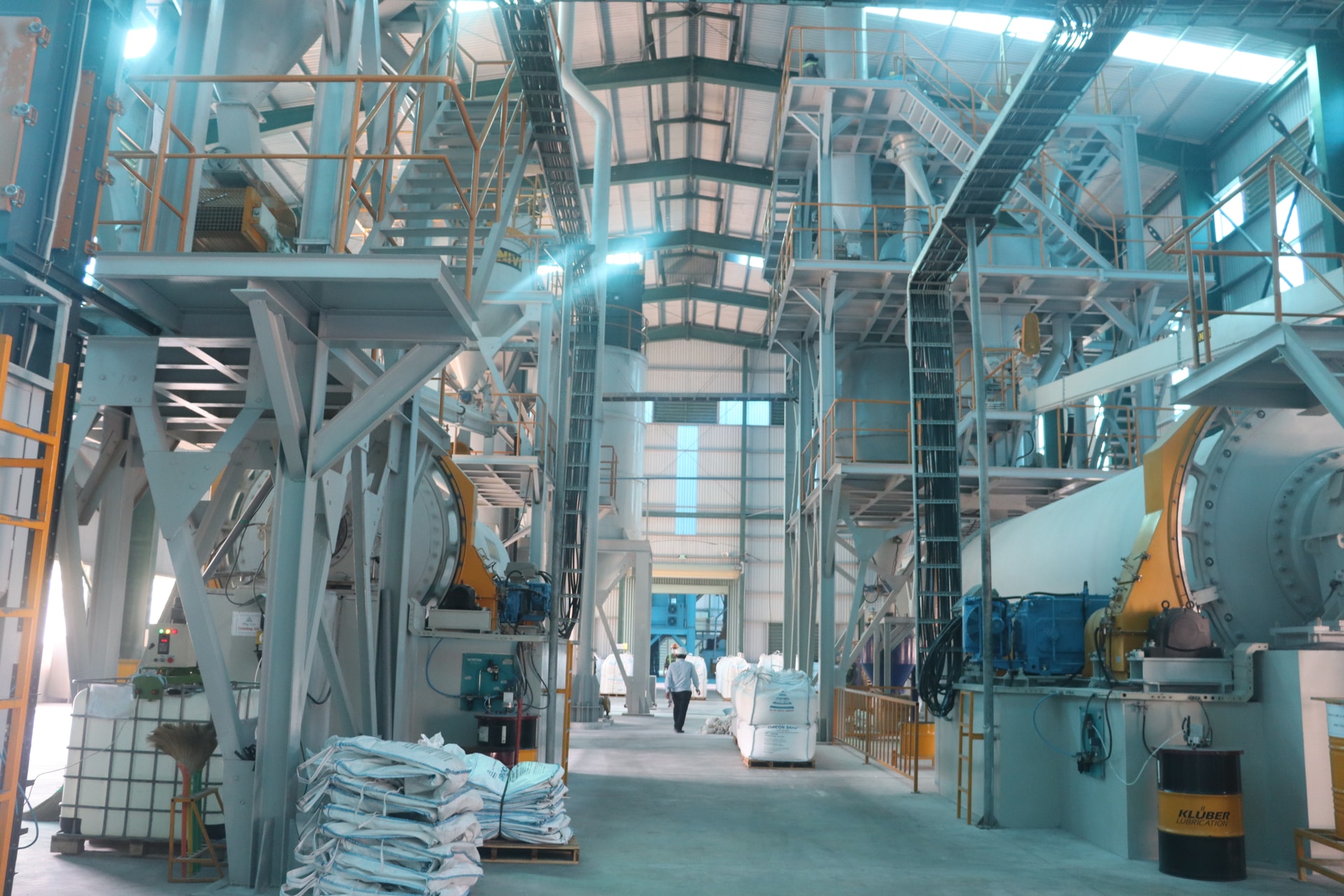
Priority will also be given to sustainable development of the alumina processing industry, aluminum production, and aluminum-based products, while expanding titanium mining associated with processing plants using advanced technology and modern, environmentally friendly equipment.
At the same time, the province will continue rolling out investment incentives to attract projects in high-tech industrial products, electrical equipment, electronic components, machinery assembly, automobiles and motorcycles.
Prioritizing breakthrough sectors
To meet industrial development requirements by 2030, Lam Dong will strengthen investment attraction in infrastructure to raise the occupancy rate of industrial parks and industrial clusters in the province.
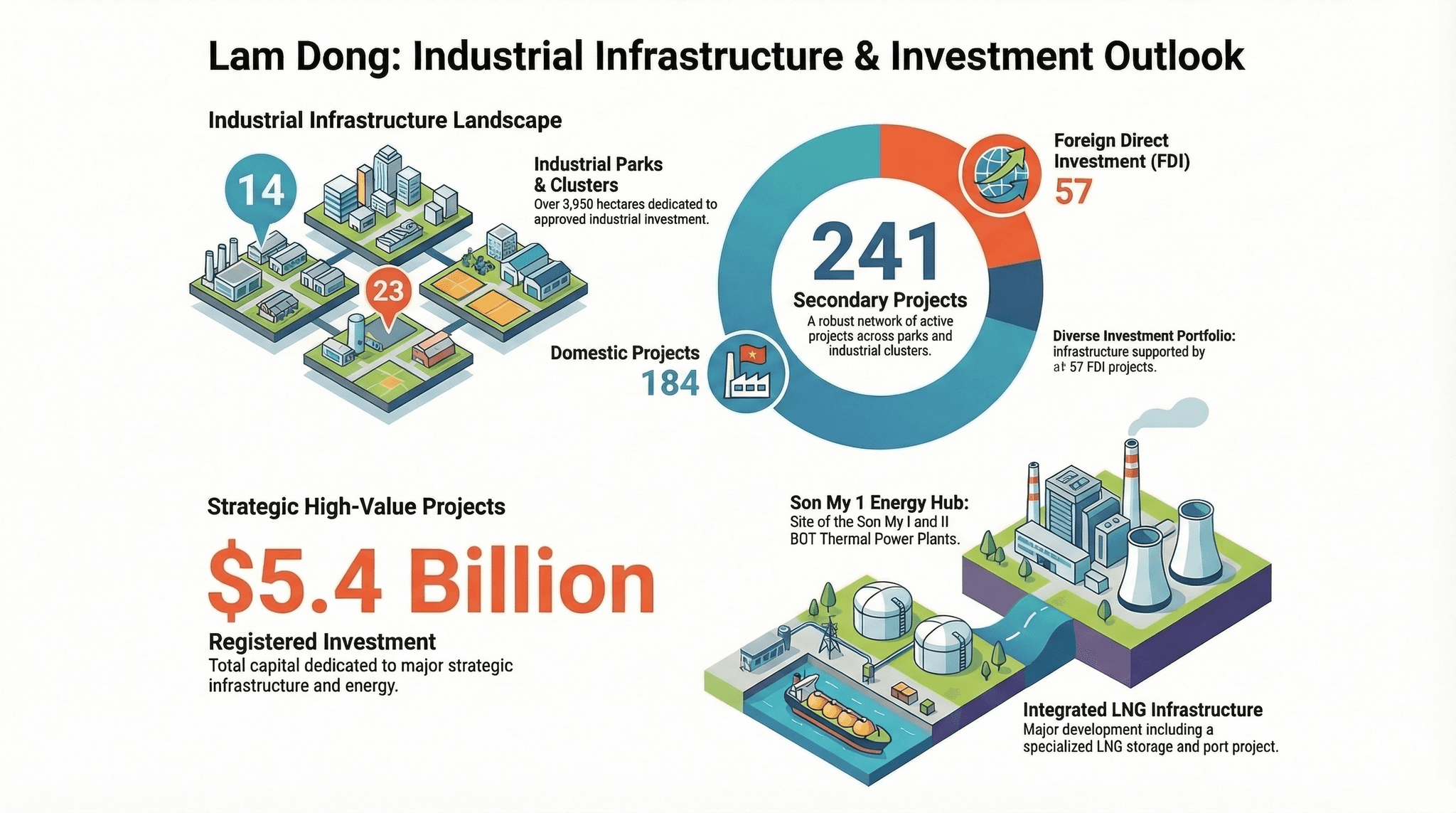
The province also plans to develop additional industrial zones and clusters in areas with favorable conditions, aiming to establish 29 industrial parks with a total area of 9,411.35 hectares and 83 industrial clusters covering approximately 3,276.25 hectares.
During this period, the province also plans to implement several breakthrough industrial programs, including the establishment of a national-scale center for bauxite mining and processing, alumina, and aluminum production, as well as the Son My Power Center.
Investment will also be accelerated to form an industrial, urban, service, logistics, seaport, and LNG storage complex in the Ham Tan – La Gi area, connected with the Son My general port.
Through these projects, Lam Dong aims to turn industry into a key economic pillar, targeting a 13.71% increase in the industrial production index by 2030 compared to the previous year, while maintaining average annual growth of around 6.11% in electricity output.