


Lam Dong Toward 2050: Awakening Identity, Shaping Prosperity
The adjusted provincial master plan for the 2021–2030 period, with a vision to 2050, announced by the Lam Dong Provincial People’s Committee under Decision No. 2786/QD-UBND, has drawn considerable public attention. The plan is viewed as an overarching blueprint for shaping Lam Dong’s new development profile after the administrative merger. It reflects a forward-looking approach that promotes comprehensive development, preserves cultural identity, advances a circular economy and places people’s happiness at the heart of prosperity.
From a Connectivity Arc to a Green Economic Model
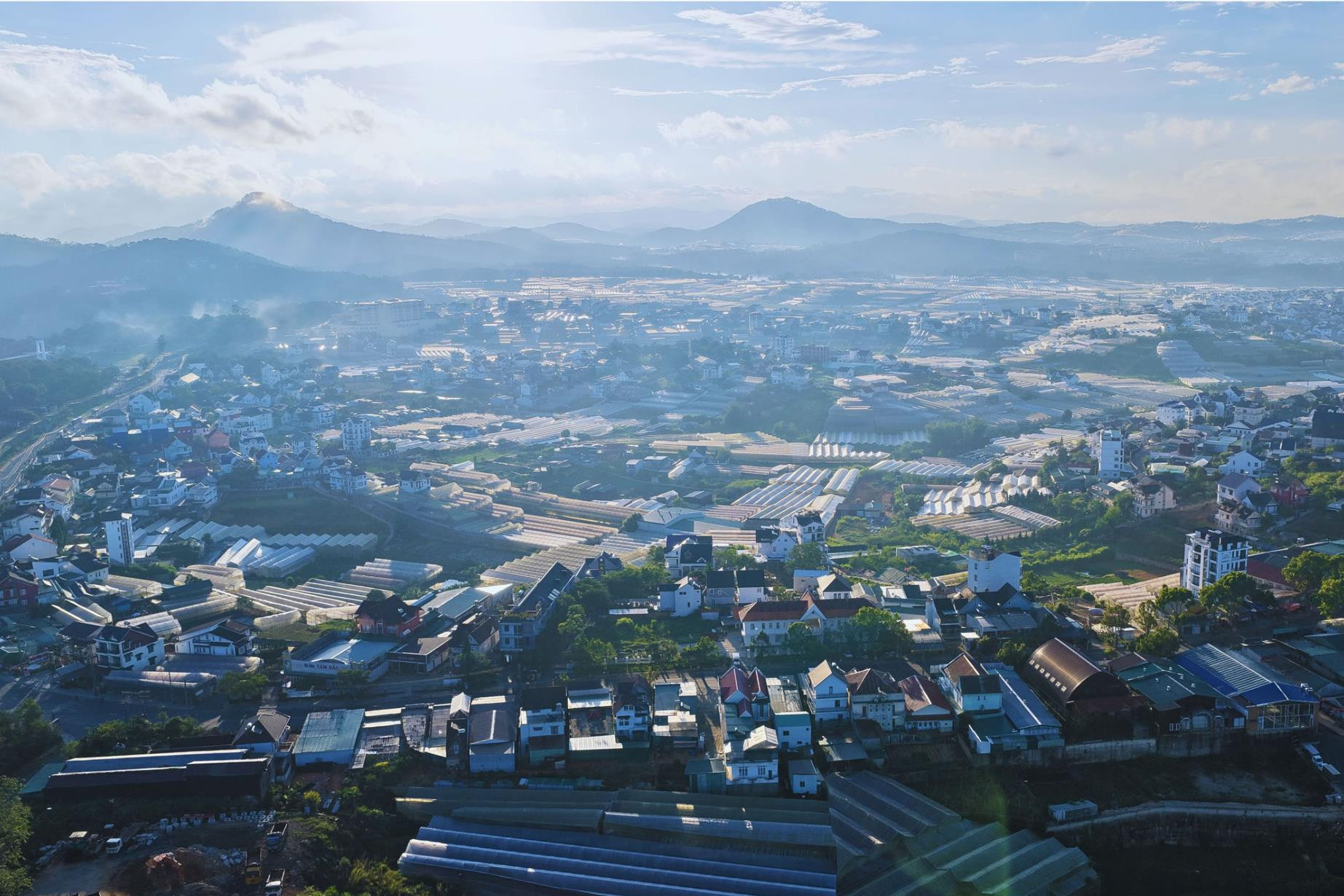
Planning experts say the new master plan marks a profound shift in thinking about spatial organization. Under the adjusted plan, Lam Dong is positioned within an integrated development framework, serving as both a growth nucleus and a vital bridge linking the South Central Coast, the Central Highlands and the Southern Key Economic Zone.
The plan creates a distinctive spatial structure underpinned by economic corridors and interregional infrastructure systems. In particular, stronger links with coastal areas through key East–West expressways are expected to form a dynamic development axis, facilitating greater flows of goods and services from the highlands to the sea.
In the Central Highlands, the new growth model is driven by science and technology, innovation and green transformation. Under the plan, Lam Dong aims to achieve average annual GRDP growth of 10–10.5% in the 2026–2030 period and raise GRDP per capita to around VND 210 million, equivalent to USD 8,000, by 2030. These targets are ambitious but attainable as the province restructures its economy and seeks to increase the digital economy’s share of GRDP to around 30% by 2030.
To realize these broad development goals, the adjusted plan identifies strategic transport infrastructure as a key driver. Priority will be given to completing and bringing into operation intra-provincial expressways, while accelerating the development of the East–West expressway axis linking Phan Thiet, Bao Loc and Gia Nghia. These projects are expected to help remove logistics bottlenecks and strengthen regional connectivity.
At the same time, Lam Dong plans to improve connectivity to Lien Khuong International Airport, restore the historic Thap Cham–Da Lat tourist rack railway, and study railway routes linking the province with national seaports. These initiatives are intended to support the mineral deep-processing industry and create new momentum for tourism development.
Easing Urban Pressure, Preserving Heritage
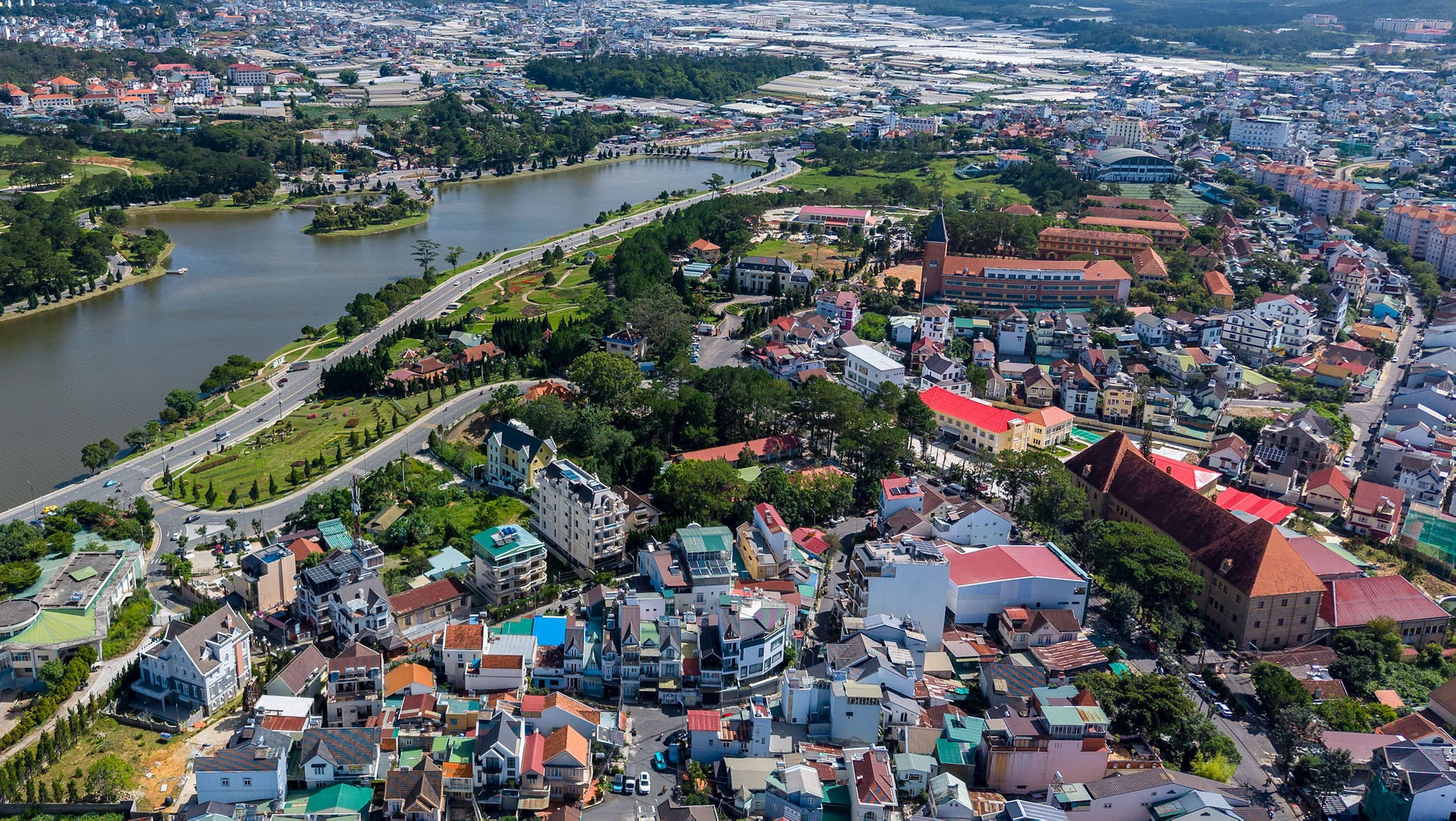
The urban system is also structured in tiers, with at least 38 urban areas planned by 2030. Da Lat will continue to be positioned as an international resort-tourism destination, while satellite urban areas will be assigned clear functions to ease pressure on the urban core and create a green, smart and identity-rich urban network.
Speaking from an artist’s perspective, Hoang Anh, an artist in Da Lat, expressed his hope that ecological spaces and distinctive architecture would be preserved. “Da Lat–Lam Dong captivates people with its forests, mist and the cultural depth of its indigenous communities. I am pleased to see that this plan does not pursue development at the expense of the environment, but instead protects forest ecosystems, controls the expansion of agricultural greenhouses and guides the development of satellite urban networks to reduce pressure on Da Lat,” he said.
The new plan emphasizes value-chain linkages and the enhancement of specialty product brands alongside digital transformation and smart tourism. When the East–West expressway is completed, more tourists will come, and our highland coffee beans will reach more distant markets. I believe Lam Dong will open a new chapter and develop more sustainably.
Pham Anh Dung, owner of a coffee shop in the Hoa Binh area of Da Lat.
The new plan continues to guide the development of agriculture, forestry and fisheries in a comprehensive, modern and sustainable direction. The province will focus on completing the high-tech agricultural zone and innovation center on the Di Linh Plateau, positioning them as core drivers of smart, organic agriculture that is well adapted to climate change.
Notably, the plan marks a shift from resource exploitation to multipurpose development. It calls for strict protection of natural forests and an increase in forest cover to more than 46.2%, alongside the development of forest-based carbon credit markets and organic farming.
People at the Heart of All Growth Indicators
Looking at long-term targets—such as GRDP growth, per capita income reaching USD 8,000 and the digital economy accounting for 30% of GRDP—it is clear that people’s happiness is the foundation of every growth indicator set out in the adjusted plan.
After learning about the master plan, local residents expressed great expectations. Pham Anh Dung, the owner of a coffee shop in the historic Hoa Binh area of Da Lat, said: “What service and tourism businesses like ours expect most is seamless infrastructure. I also see that the new plan emphasizes value-chain linkages and the enhancement of specialty product brands alongside digital transformation and smart tourism. When the East–West expressway is completed, more tourists will come, and highland coffee beans will reach more distant markets. I believe Lam Dong will turn a new page and develop more sustainably.”
Expectations for this historic master plan are not limited to the business community or artists. Thu Huong, a teacher who has spent many years teaching in local classrooms, also expressed her hopes. “What draws my attention most in the plan are the indicators related to human development, education and social welfare. The goal of raising the proportion of public preschools and general-education schools meeting national standards to 73–75%, while training high-quality human resources suited to the digital economy, is encouraging for educators like us. When children have access to modern education, livelihoods are secured and poverty is eliminated, that is the true prosperity local residents aspire to,” she said.
Beyond redefining the province’s position, Decision No. 2786/QD-UBND reflects the present generation’s responsibility to future generations.