


Memories of the Longhouse and the Aspiration to Preserve Ancient Buôr Village
Nestled peacefully along the Serepok River, Buôr Village in Cư Jút Commune stands as one of the oldest E De settlements in western Lam Dong. The village traces its roots back to 1893–1894, when the French built the Serepok Bridge spanning the mighty river. Today, Buôr is home to 207 households with over 1,100 residents, of which 99% are Ê Đê.
Echoes of the Past
According to village elders, Buôr was founded by Ma Nu and Ê Tai, later passed down to Ae Hgan. The village once had a legendary hunter and leader, Ybuêc Ktul, who led forest expeditions until his passing, marking the end of traditional hunting days.
In 1965, under the former administration’s strategic relocation plan, E De families were resettled near the Serepok Bridge area to form Nui Hamlet. After national reunification in 1975, the E De community returned, rebuilding their lives and reestablishing the area into four villages: Nui, Buôr, Trum, and Ea Pô.
Recognizing its cultural and historical importance, in 2008, the Ministry of Culture, Sports and Tourism (MoCST) officially designated Buôr Village as an ancient E De settlement to be preserved and revitalized. The same year, the MoCST launched a 6.7-billion-VND conservation project, including the construction of a community cultural house, internal roads, the restoration of ancient wells and water wharfs, and the reconstruction of three traditional longhouses.
The Soul of the E De Home
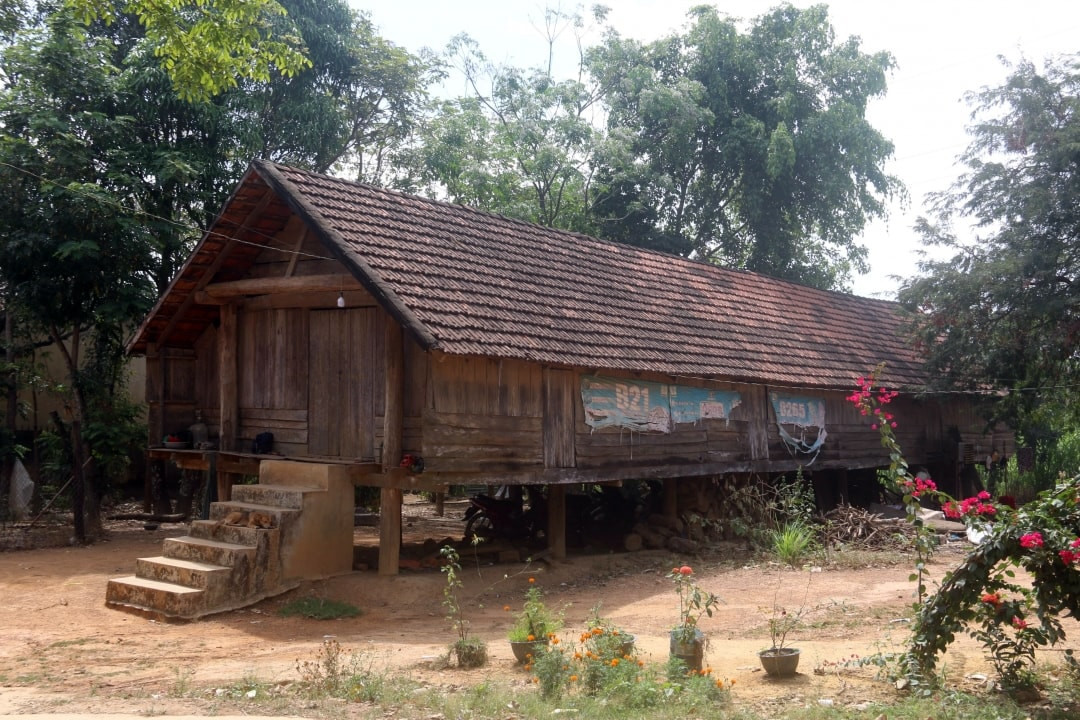
For the E De, the longhouse is more than a dwelling — it is a symbol of matrilineal heritage, community, and cultural pride. The longer the house, the larger the family, often spanning several generations under one roof. Some reached over 50 meters in length, housing up to 20 people.
Elder Y Khia’s family, for instance, still lives in a traditional longhouse where ten members share daily life and labor together.
Buôr Village also preserves many Kpan benches — wooden platforms over 20 meters long used during gong performances at festivals. Traditional rituals such as new house blessings, water wharf ceremonies, Kpan processions, and grave-abandoning rites are faithfully practiced, showcasing the Ê Đê’s matrilineal customs, rich oral epics, cuisine, and music.
Women and elders continue to brew rice wine, weave bamboo crafts, make musical instruments, and create brocade textiles, ensuring ancestral skills are passed on.
Between Preservation and Change
Despite these efforts, the image of the E De longhouse is fading. Over time, many structures have deteriorated or been sold, some fetching high prices. Once boasting more than 20 longhouses, Buôr now has virtually none left.
Village head H’Banh shared: “Life has changed, and our people have adapted. The traditional longhouses have gradually been replaced by modern brick houses — clean, tall, and convenient. It’s sad, but inevitable. We hope to receive more support from local authorities to restore our festivals, expand gong performance spaces, and develop traditional weaving alongside eco-cultural tourism. That is how Buôr can both preserve its identity and move forward with the times.”
Buôr’s story is not just about memory and loss — it is about resilience and renewal, the enduring desire of the E De people to keep their cultural soul alive while embracing a changing world.