


Nam Ban Lam Ha seeks to unlock its development potential
Nam Ban Lam Ha Commune on April 22 held a working session with Novaland Group, experts and neighboring localities to discuss investment attraction and future development planning.
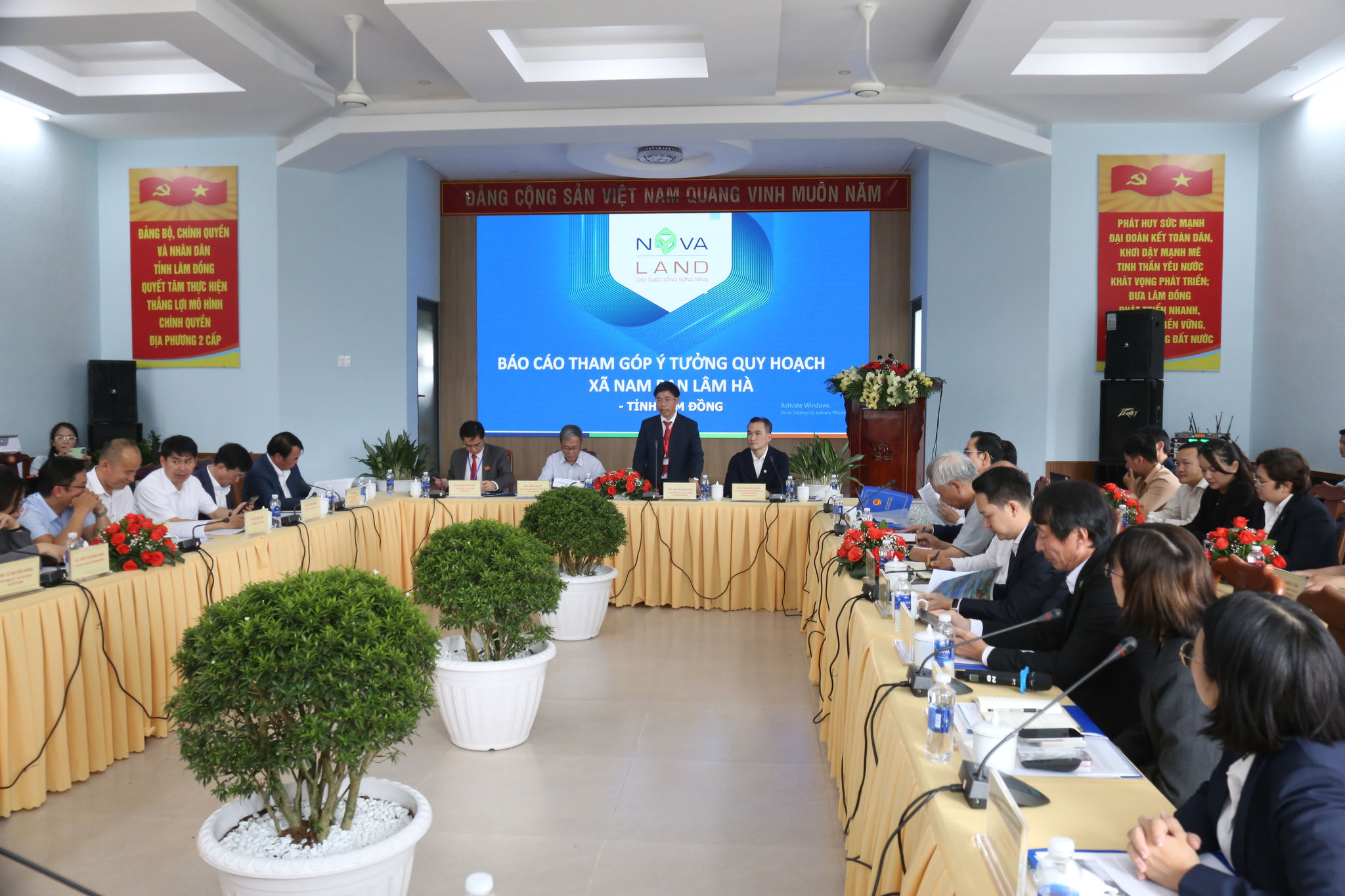
The event brought together representatives from provincial departments, researchers and planning experts, including officials from finance, architecture, urban planning and academia.
At the meeting, local authorities presented an overview of Nam Ban Lam Ha, a newly established administrative unit formed by merging Nam Ban Town with Dong Thanh, Me Linh and Gia Lam communes.
With a natural area of over 117 km2 and a population exceeding 32,700, the locality is considered to have strong advantages in geographical position, natural conditions and regional connectivity.
Located at the northwestern gateway of Da Lat’s administrative center, the area is connected to key transport routes such as provincial road 725, national highways 20 and 27, and is close to Lien Khuong International Airport.
The commune also features favorable natural conditions, including a temperate highland climate, fertile basalt soil and scenic landmarks such as Elephant Waterfall and Cam Ly Stream, creating potential for high-tech agriculture combined with eco-tourism.
Based on these advantages, delegates agreed that Nam Ban Lam Ha could develop into a modern integrated urban area built on three main pillars: urban development, tourism, and science-technology innovation.
.jpg)
To enhance regional connectivity, the locality has proposed a strategic transport route linking Elephant Waterfall along provincial road 725 to national highways 20 and 27, as well as the Lien Khuong – Prenn expressway. Once completed, the route is expected to shorten travel time to Lien Khuong Airport to under 10 km and ease traffic pressure on central Da Lat.
At the meeting, Novaland Group proposed developing a smart urban area combined with a multi-functional resort complex in nearby Hiep Thanh, with an estimated scale of 5,000–7,000 hectares.
The project is envisioned to include digital urban zones, innovation centers, high-end resorts, sports-entertainment complexes, and healthcare and wellness facilities.
.jpg)
Planning experts also contributed recommendations to ensure sustainable development, focusing on long-term, interdisciplinary approaches.
According to experts, the locality could develop along four pillars by 2035 with a vision to 2050: smart eco-urban development, high-tech agriculture, green tourism and strengthened regional connectivity.
Notably, tourism development is expected to focus on agri-tourism and wellness tourism, leveraging natural resources while ensuring sustainability.
From an international investment perspective, Novaland representatives highlighted the area’s potential to attract the “silver economy” segment, as retirees from countries such as South Korea, Japan and Europe increasingly seek high-quality living environments.
They noted that early infrastructure investment would help create long-term competitive advantages and position the locality as a model destination for this demographic.
.jpg)
Local leaders emphasized that developing a master plan toward 2050 is a key strategic task following the administrative merger, serving as a foundation to attract investment and drive growth.
Authorities committed to incorporating expert feedback and working with consultants to finalize a practical, feasible development plan.
Based on this, Nam Ban, Lam Ha, aims to gradually turn the plan into concrete investment projects, unlock its growth potential and strengthen its position as an attractive destination in the region.