


New Model Tracks Plastic Waste in Seas
Nha Trang, Vietnam — Scientists at the Institute of Oceanography under the Vietnam Academy of Science and Technology have successfully developed a technology to track the sources and movement of ocean plastic waste, a step seen as vital to addressing growing marine pollution.
Every year, Vietnam’s seas receive hundreds of thousands of tons of plastic, much of it carried by rivers from inland sources. Plastic debris — including bags, bottles, fishing nets, and larger fragments known as macroplastic debris (MPD) — poses a significant threat to marine ecosystems and presents health risks to humans.
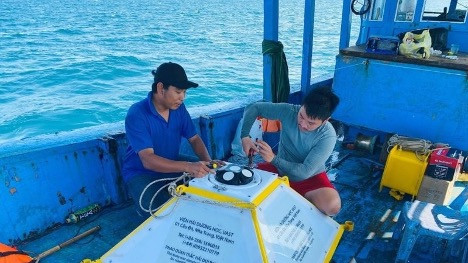
Led by researcher Nguyen Duc Thinh, the team launched a project to study the transport and dispersion of macro plastic waste in estuaries and coastal areas of south-central Vietnam, focusing on Nha Trang Bay. Using floating GPS-equipped drifters, hydrodynamic modeling (Delft3D), and meteorological-oceanographic data, the researchers simulated how plastic waste travels and accumulates under monsoon conditions.
The project produced VAST-PlasticDrift, a model capable of predicting where ocean plastic will move and gather. Results highlighted high-risk accumulation zones, including Nha Phu Lagoon, Bai Dai, and Nha Trang Beach in Khanh Hoa Province. Field surveys revealed severe MPD pollution, with nearly half of the surveyed sites rated as heavily polluted.
This is the first time in Vietnam that field surveys, real-time drifting buoys, and advanced modeling have been combined to trace ocean plastic. Findings have been published in Ocean Science (SCI-Q1, IF 5.9).
The study provides a scientific basis for future plastic management policies, with potential applications in the Red River and Mekong River estuaries. Researchers say the results will not only support Vietnam’s marine conservation efforts but also strengthen international cooperation on ocean sustainability.