


Nha Trang–Da Lat Expressway expected to boost regional connectivity and economic growth
Authorities have approved plans to invest in the Nha Trang–Da Lat Expressway under a public-private partnership (PPP) model, a major infrastructure project expected to strengthen connectivity between the South Central Coast and the Central Highlands while accelerating the development of the region’s strategic expressway network.
The investment policy was unanimously approved at a special session of the Khanh Hoa Provincial People’s Council.
According to project documents presented at the meeting, the expressway will stretch approximately 80.8 kilometers, feature four lanes and have a design speed of 80 to 100 kilometers per hour. Total investment is estimated at more than 25 trillion VND.
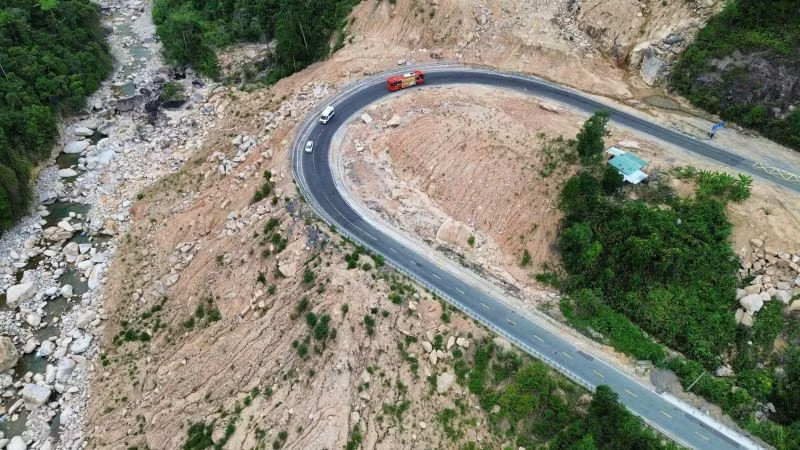
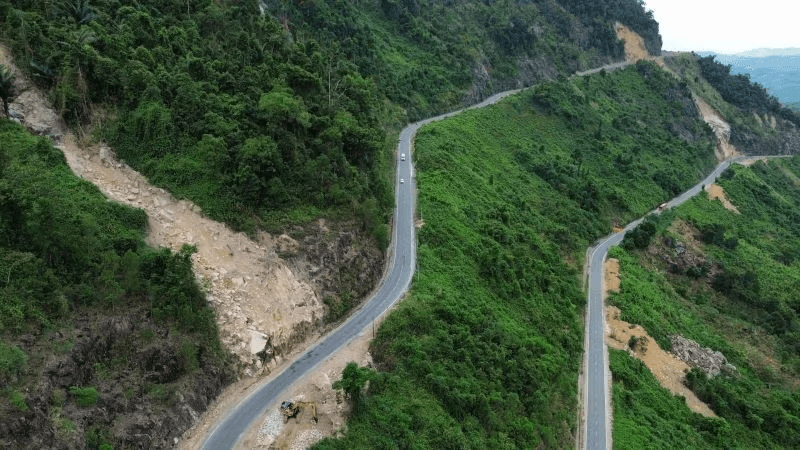
Currently, National Highway 27C serves as the only direct road connecting Nha Trang and Da Lat. The route passes through the nearly 30-kilometer-long Khanh Le Pass, an area known for steep terrain, sharp curves and frequent landslides during the rainy season.
At the end of 2025, a serious landslide on the pass left several people dead and injured while cutting off traffic between Khanh Hoa and Lam Dong for an extended period. The disruption heavily affected passenger transport, freight movement and regional logistics activities.

According to authorities, the current capacity of National Highway 27C — classified as a Grade III-IV mountainous road — is approximately 10,000 passenger car units per day. Traffic volume is projected to reach between 9,800 and 10,900 PCU per day by 2029-2030, nearing overload conditions.
Against that backdrop, officials say construction of a new expressway has become essential to reduce pressure on the existing route, improve transportation safety and minimize disruptions caused by natural disasters.
Strategic expressway network taking shape
Chau Ngo Anh Nhan, director of Khanh Hoa Province’s Department of Finance, said the Nha Trang–Da Lat Expressway is considered a project of national importance, with its investment policy approved by the National Assembly.
The route is expected to form a strategic east-west transport corridor linking the Central Highlands with the South Central Coast while connecting economic centers, seaports and the national north-south transport system.
According to Nhan, once completed, the expressway will connect directly with the Van Phong–Nha Trang section of the eastern North-South Expressway and the Khanh Hoa–Buon Ma Thuot Expressway, which is currently under development.
“The interconnection of these strategic transport routes will form a continuous expressway network along both the north-south and east-west axes,” Nhan said. “This will open up a new transport corridor from the Central Highlands to the South Central Coast seaport network.”
He added that the Khanh Hoa–Buon Ma Thuot Expressway will serve as a gateway connecting the Central Highlands with coastal ports in Khanh Hoa, while the Nha Trang–Da Lat Expressway will connect Lam Dong’s tourism and high-tech agricultural centers with coastal economic zones.
Authorities expect the integrated expressway system to create a major logistics and economic development corridor across the region. Agricultural products, coffee, vegetables and flowers from the Central Highlands could be transported more quickly to ports in Van Phong, Nha Trang and Cam Ranh for export, reducing dependence on mountainous national highways vulnerable to congestion and landslides.
Tourism and regional development opportunities
Beyond freight transportation, the expressway system is also expected to support urban expansion, industrial development and interregional tourism.
In particular, the “sea-to-highlands” tourism corridor between Nha Trang and Da Lat is projected to become a major tourism axis as travel time between the two destinations could be reduced to about 1.5 to 2 hours, compared with the current 3.5 to 4 hours.
Under regional development plans, Khanh Hoa is being positioned as a major marine economy, logistics and seaport services center for the South Central Coast, while the Central Highlands focuses on agriculture, renewable energy and processing industries.
Officials say synchronized expressway infrastructure will provide the foundation for connecting these development zones and building a more sustainable interregional economic value chain.
According to the approved proposal, the Nha Trang–Da Lat Expressway project is expected to mobilize approximately 8.772 trillion VND from private investors under the BOT model, accounting for 35% of total investment capital.
The remaining 16.286 trillion VND, equivalent to 65%, will come from public funding sources. Khanh Hoa Province is expected to contribute 1.5 trillion VND, while Lam Dong Province will provide VND 768 billion. Central government support of about VND 14.018 trillion has been proposed under the 2026–2030 medium-term public investment plan.