


Nhan Co: All schools meet national standards
Over the years, Nhan Co has consistently focused on investing in educational facilities and improving the quality of its teaching staff. To date, all six schools across all educational levels in the commune have met national standards, with one school achieving level 2 national standards.
All schools meet national standards
In the 2026–2027 school year, Hoa Mai Kindergarten has 19 classes with 390 children and 49 administrators, teachers, and staff members. All of the school's teachers meet the required qualification standards. The school has a spacious, clean, and attractive campus, along with a relatively comprehensive range of classrooms and specialized rooms, such as art, computer, and physical education rooms, creating favorable conditions for children to learn and play.

Pham Thi To Hai, Principal of Hoa Mai Kindergarten, said that the school has achieved Level 2 national standards. Notably, the school has been selected by the Department of Education and Training to participate in a pilot implementation of the new preschool education curriculum. This provides an opportunity for the school to adopt advanced educational methods and gradually introduce innovations in childcare and early childhood education.
Beyond the preschool level, the quality of education at all educational levels in Nhan Co Commune has also gradually improved. According to officials from the Nhan Co Commune People's Committee, the fact that all six schools have met national standards is particularly significant, providing a stronger foundation for the locality to effectively implement its annual educational tasks.

At the preschool level, educational institutions strictly implement the prescribed curriculum, focusing on improving the quality of childcare and education. The enrollment rate among five-year-old children has reached 100%, helping sustain universal preschool education for this age group.
At the primary level, student enrollment, retention and curriculum completion rates met the set targets. The overall quality of education remains stable, and the proportion of high-performing students has gradually increased. Results from the past school year show that 762 students completed the curriculum with excellent results, accounting for 27.8%; 847 students completed it with good results, accounting for 30.9%; 1,089 students completed the curriculum, accounting for 39.7%; and 44 students did not complete the curriculum, accounting for 1.6%.
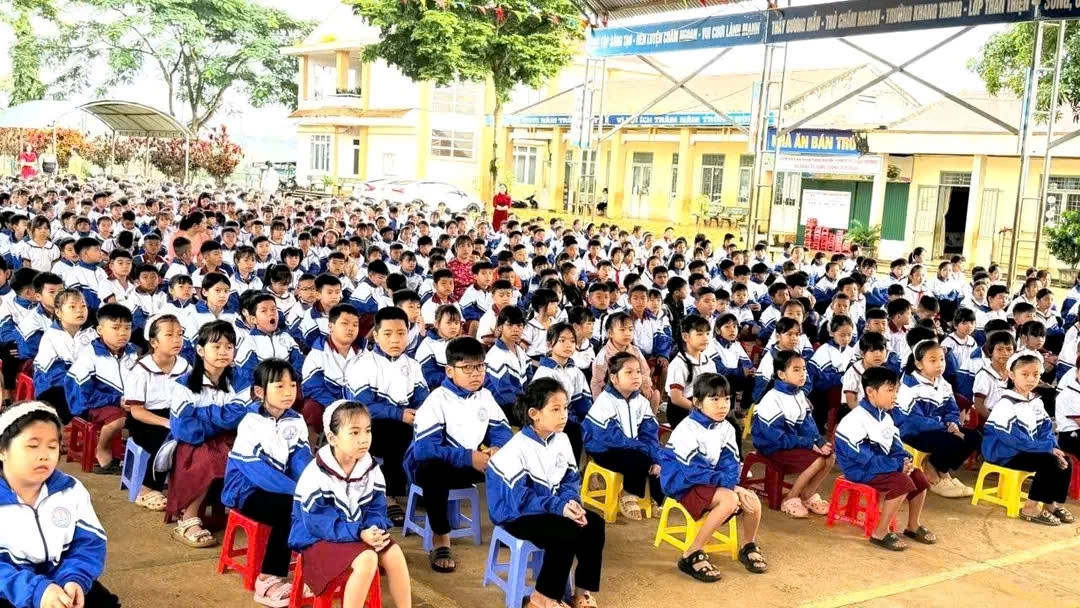
At the lower secondary level, schools strictly implement the curriculum and academic-year plans, effectively implementing the 2018 General Education Curriculum according to the prescribed roadmap. Student conduct results show that 1,804 students were rated good, accounting for 90.4%; 205 students were rated fair, accounting for 9.25%; 22 students were rated satisfactory, accounting for 0.33%; and no students were rated unsatisfactory.
Regarding academic performance, 427 students were rated good, accounting for 21.65%; 795 students were rated fair, accounting for 42.71%; 714 students were rated satisfactory, accounting for 31.35%; and 95 students were rated unsatisfactory, accounting for 4.24%. Particular attention has been paid to fostering gifted students and providing additional support for struggling students; the lower secondary school graduation rate reached 100%.
In addition, Nhan Co Commune is currently home to the Pham Van Dong High School Branch (formerly Truong Chinh High School before the merger), which has 30 classrooms along with a relatively comprehensive range of specialized rooms and recreational areas.
The school currently has 64 administrators, teachers, and staff members, and 1,041 students across 25 classes. In the 2025–2026 school year, the graduation rate exceeded 98%; notably, 37 students won prizes in provincial-level competitions for excellent students.
Continuing to Build a Foundation for Educational Development
According to Tran Cong Dung, Chairman of the Nhan Co Commune People's Committee, in the 2026–2027 school year, the locality is focusing on the coordinated implementation of key educational tasks and measures.
First and foremost, Nhan Co Commune continues to ensure equitable access to quality education for learners. The locality focuses on fully and promptly implementing support policies for students, especially those from ethnic minority groups and disadvantaged backgrounds.
At the same time, it strengthens coordination among schools, families, and the wider community to care for and support students, providing them with better conditions and greater motivation to make progress in their studies.

Secondly, the locality focuses on developing its teaching and educational management workforce to meet the requirements of educational reform. Professional development, pedagogical training, information technology skills, and digital transformation continue to receive close attention.
The locality also strictly implements performance evaluations and classifications of public employees, contributing to building a workforce characterized by strong professional ethics, responsibility, and dedication to the profession.
Thirdly, Nhan Co Commune is improving the efficiency of state budget spending while mobilizing resources to invest in educational facilities and improve the quality of education. The locality will regularly assess the condition of schools and classrooms and proactively propose timely repairs, upgrades, and additional teaching equipment to meet the requirements of educational reform.
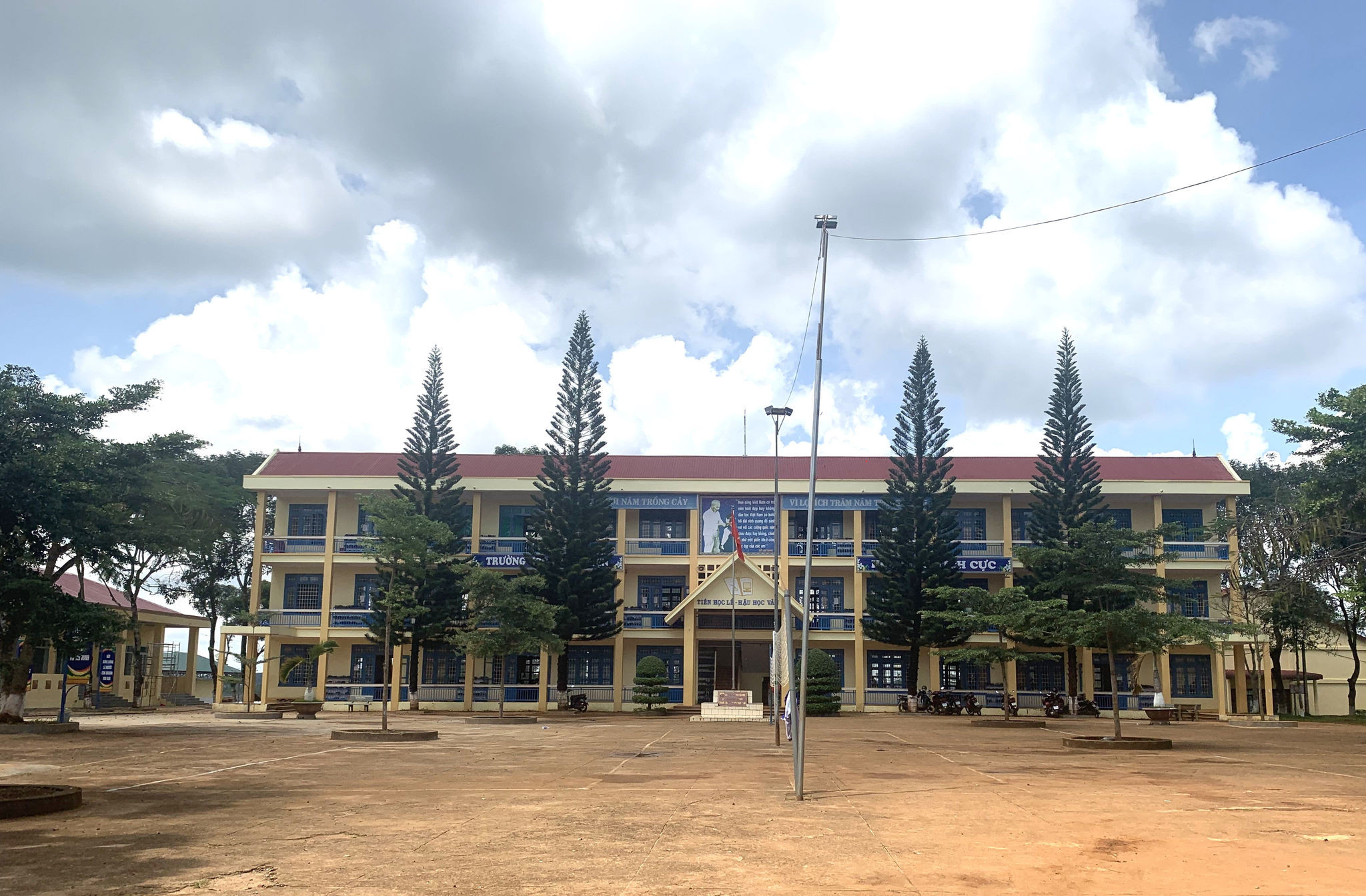
Alongside this, the locality continues to focus on improving the quality of education in line with its human resource development goals. Career guidance and educational pathway planning for students after lower secondary school are prioritized based on each student's abilities and strengths, while taking into account local socio-economic development needs.
With all six schools meeting national standards and continued attention to teaching staff, facilities, and educational quality, Nhan Co Commune is gradually building a stable, safe learning environment that meets the requirements of educational reform. This also provides a foundation for the locality to further improve the quality of education, creating opportunities for every student to learn, develop their skills, and grow.