


Orchards Welcome Visitors
Agritourism not only helps diversify the province’s tourism offerings but also enables farmers to retain the value of agricultural products, create on-site livelihoods, and redistribute visitor flows from urban areas to rural communities.
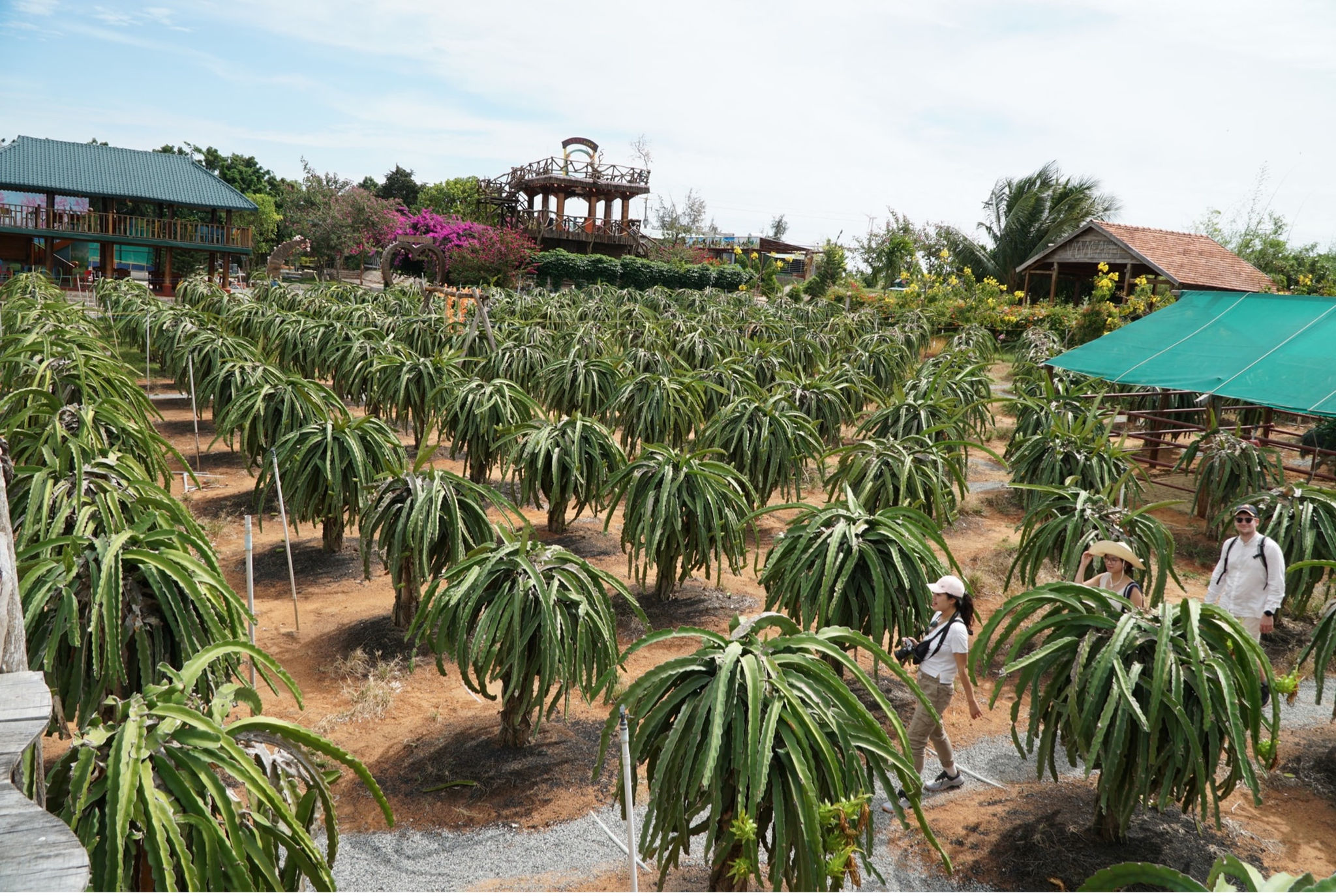
When the sunlight covers the ripening grape trellises in Hong Lam Hamlet, Hoa Thang Commune, beneath the lush green canopy, a group of tourists leisurely captures photos. They bend down to cut grape clusters still dusted with a natural white bloom, enjoying the fresh fruit in the vineyard. Nearby, dragon fruit gardens in full bloom have turned into popular check-in spots. The orchard landscape creates an atmosphere distinctly different from familiar tourist attractions. Not many people knew that land long devoted to agriculture could become a vibrant part of Lam Dong’s agritourism scene.
Duong Minh Quang, who comes from a farming family, inherited a two-hectare plot of land from his parents. For decades, this plot was planted with farm crops or fruit trees, depending on market demand. The traditional farming approach focused on growing crops for sale: a good harvest allowed farmers to save a little capital, while a poor one often meant facing heavy losses. Most of the value of agricultural products left the farm immediately after harvest.
In recent years, Quang has taken a different approach by diversifying his land with dragon fruit, grapes and apples, while opening the gates to visitors. The site remains an authentic working farm, enhanced with simple pathways and a few check-in spots that allow visitors to experience agricultural life firsthand.
Visitors do more than just take photos—they pick grapes, dragon fruit, and apples and enjoy them fresh in the garden. A 50,000 VND entrance fee, including a drink made from seasonal fruit, helps cover operating costs and provides a stable income for the garden owner.
Using fruit grown on-site, Quang also produces homemade grape wine for visitors. The bottle is not just a product but part of the experience, connecting buyers to the land, the grower, and the story behind it. As a result, value is measured not by quantity, but by the richness of the experience.
Quang noted that farming based solely on selling produce is unstable. “We need to keep visitors longer and keep the value here on this land,” he said.
Preserving Agricultural Value Through On-Site Experiences
In 2025, Lam Dong welcomed more than 20.7 million visitors, generating about 56.8 trillion VND in tourism revenue. Beyond economic growth, tourism has helped spread visitor flows from urban centers to rural and agricultural areas.
Agritourism brings visitors closer to farms and farmers, encouraging hands-on experiences and on-site consumption. Agricultural products become part of the journey—as experiences, souvenirs, and locally purchased goods—allowing more value to remain at the source.
For farmers, this approach enables active participation in tourism without relying on large investment. By telling the story of their land through gardens, products, and experiences, they retain value locally rather than losing it to intermediaries.
As gardens become destinations, agriculture creates local employment and stabilizes rural livelihoods. According to the 2025 socio-economic report, Lam Dong’s agriculture, forestry, and fisheries sector grew by about 5.5%, with an average output value of 195 million VND per hectare—a figure expected to rise as agriculture shifts from volume-based production to value creation.