


Part 1: Where Cultural Regions Meet
The rituals of coastal communities, patterns on Ma brocade, and the sounds of Da Lat’s artistic life each tell their own stories about Lam Dong’s culture. Each cultural value was born from a particular land and community, passed down through generations, and is now seeking to become more closely connected with contemporary life.
From Coastal Beliefs to Festival Season in Lam Dong
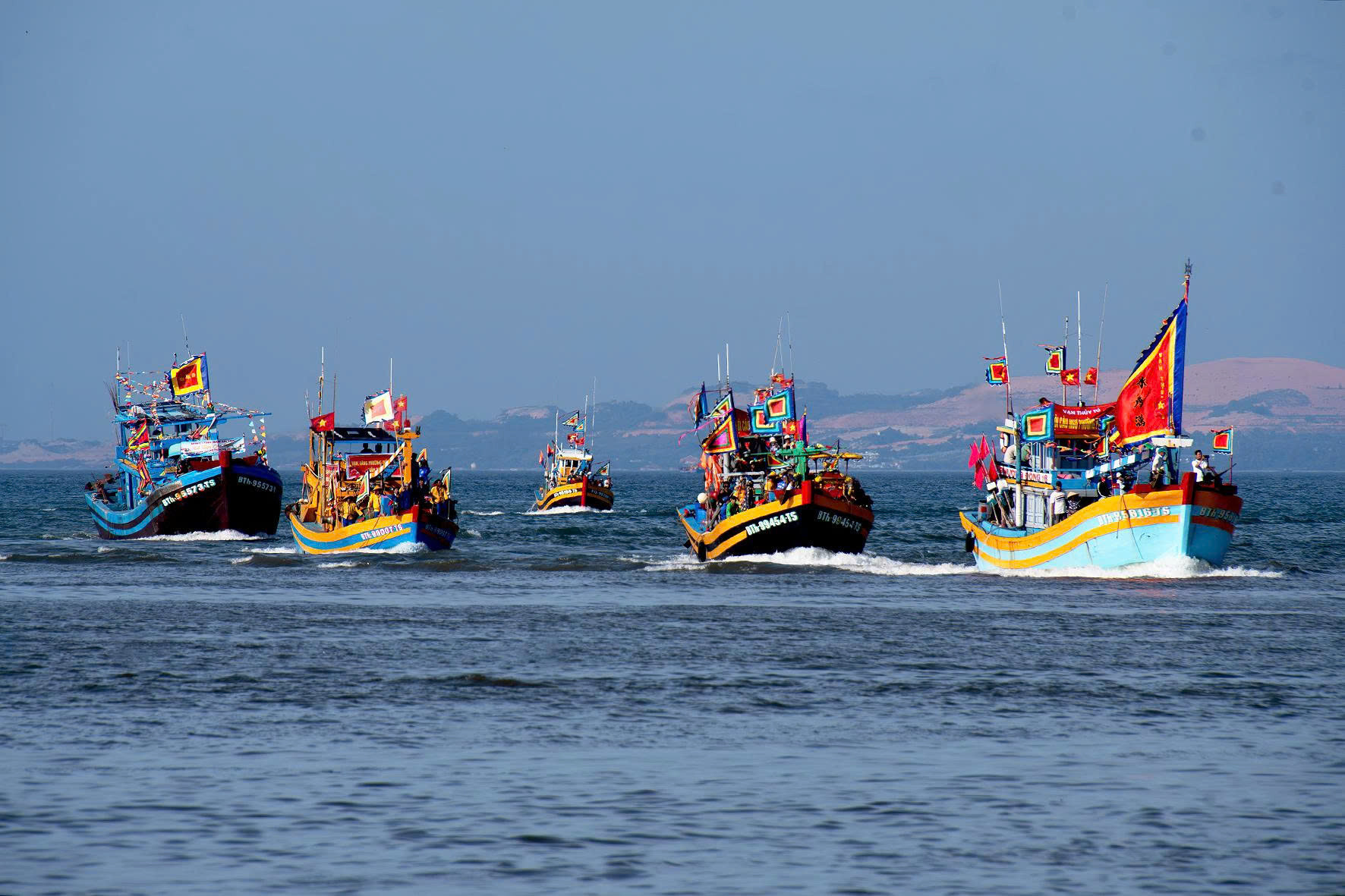
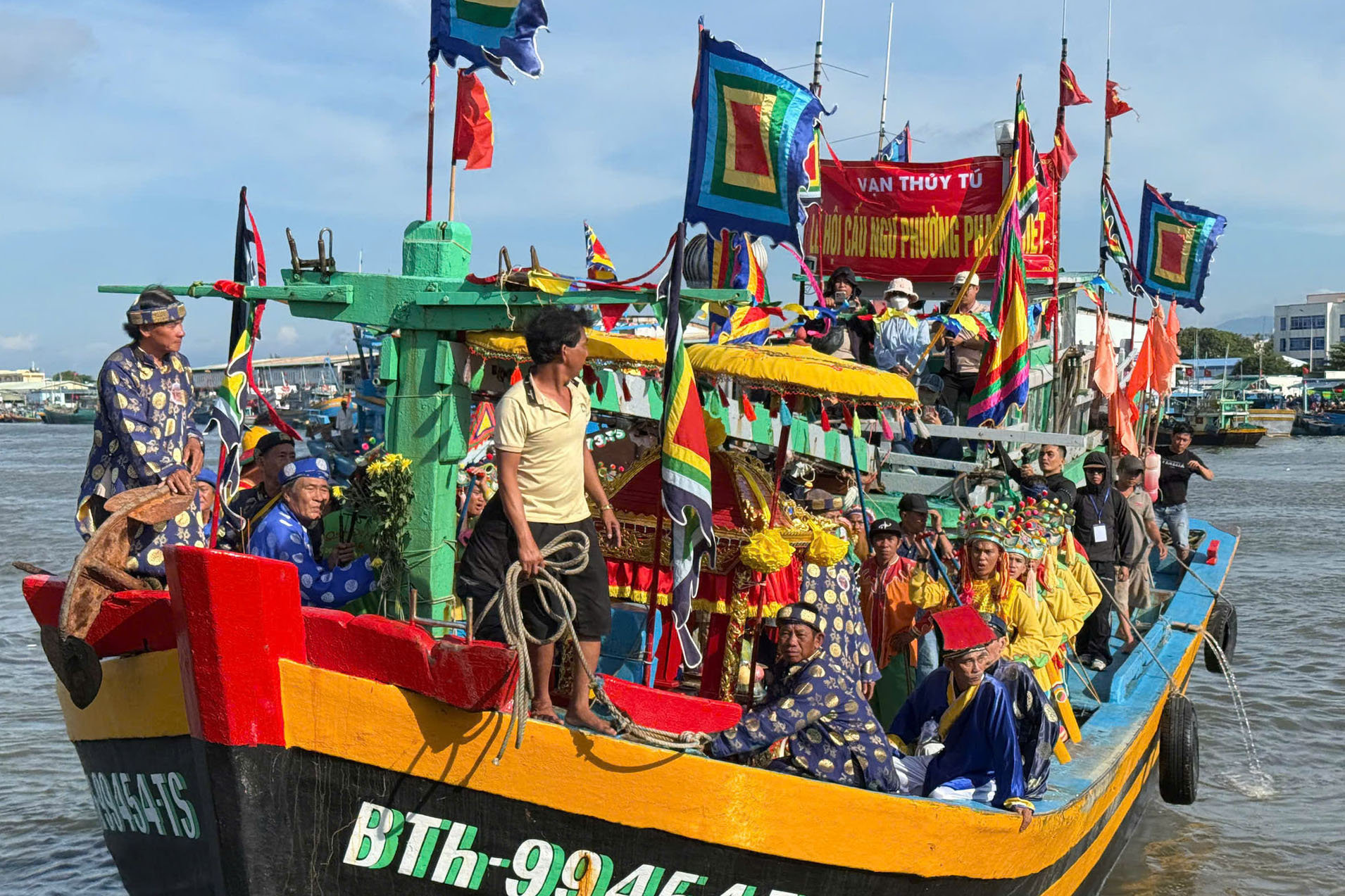
At the Cau Ngu Festival recently held in Phan Thiet, the ceremonial procession set out from Van Thuy Tu early in the morning, heading down to the harbor before boarding boats to go out to sea. The boats traveled about 3 km before stopping at Hon Lao. There, the procession performed a ritual inviting Ong Nam Hai from the open sea back to the 'van'. At sea, the sounds of gongs, drums and ceremonial music rang out continuously. The ritual was solemn, yet also carried the lively spirit of a festival day. After the invitation ritual, the procession escorted Ong Nam Hai back and paraded along the roads beside the Ca Ty River before returning to Van Thuy Tu.
This is one of the important rituals of the Cau Ngu Festival, which is closely associated with the spiritual life of coastal fishing communities. From the voyages of fishing boats, the belief in worshipping Ong Nam Hai took shape and was passed down through generations, expressing hopes for favorable and safe trips at sea. But the Cau Ngu Festival is about more than rituals.
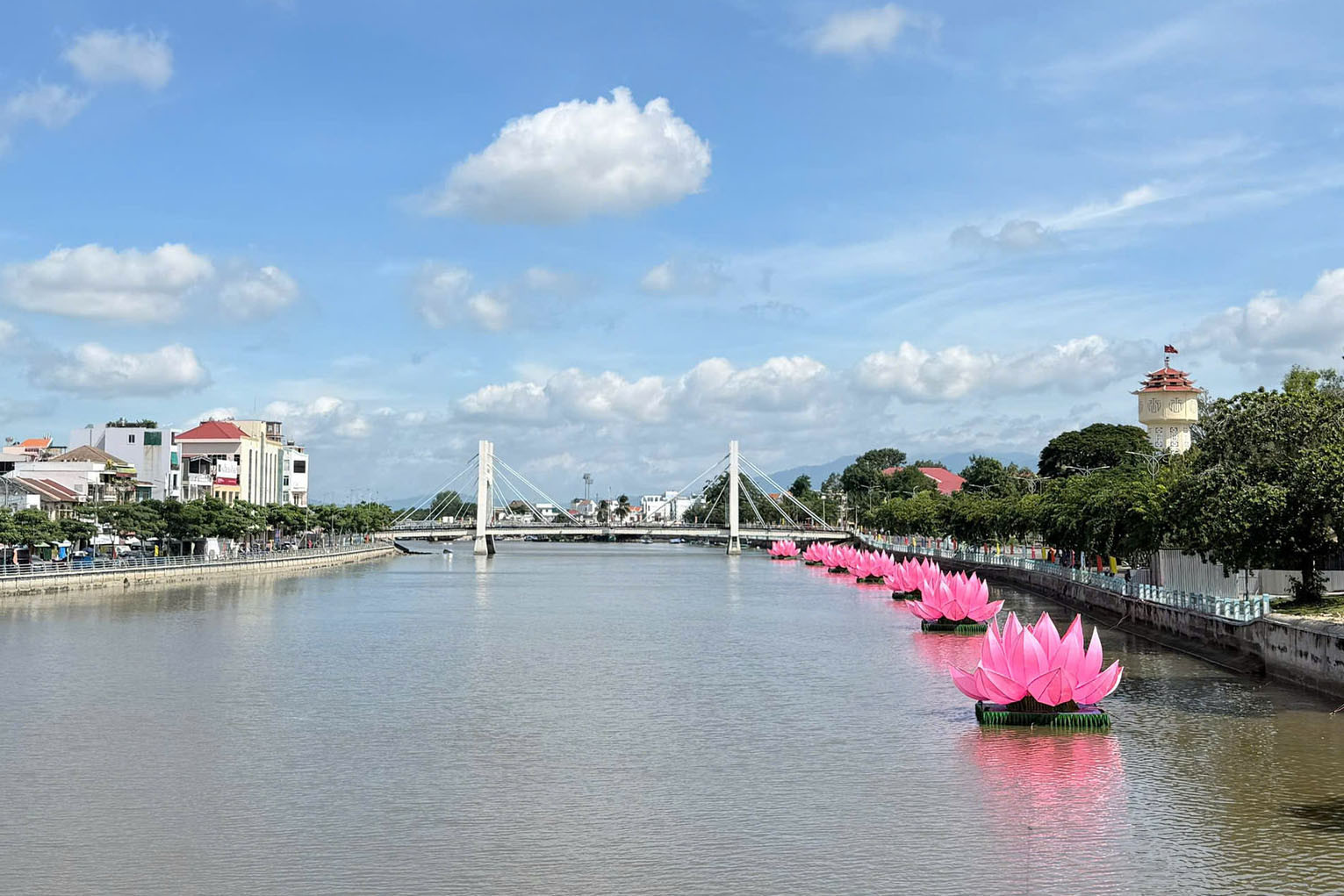
At Van Thuy Tu, rituals such as the Tien Yet ceremony, the commemoration of the sắc and the ceremony honoring the souls of the deceased are conducted according to local customs. The festive activities include hat boi, bai choi singing, folk games, cultural and artistic activities, and traditional cuisine. Local residents take part, while visitors also have the opportunity to immerse themselves in the festival atmosphere. At night, the lantern-floating ceremony takes place on the Ca Ty River. Around 500 lanterns are released onto the river. After the solemn rituals during the day, the glow of the lanterns creates a gentle, reflective moment amid the festival season.
Through these rituals, the story of the sea is told in the way of the local community. It is a story about the fishing profession, beliefs and the hopes entrusted to each voyage before boats head out to sea. Older generations pass the rituals on to younger ones, while young people continue to participate in processions and other festival activities. Every year, when the festival season arrives, local residents have the opportunity to return to Van Thuy Tu and take part in rituals that have long been familiar to the community. Visitors to Phan Thiet also gain another way to understand the coastal land through the spiritual life of its people.
Keeping the Craft and Culture Alive in Everyday Life
Looking from the sea toward the highlands, cultural values are also being preserved in very familiar ways. In Dak Nia, Ma culture is reflected in every pattern and color on brocade fabric and in the hands of women who remain closely connected to their looms.
H’Binh (born in 1987), head of the traditional brocade weaving cooperative group in Dak Nia residential area, Dong Gia Nghia Ward, learned the craft from her mother when she was just 12. After nearly 30 years of working with the loom, she has witnessed changes in the traditional craft of the Ma people as lifestyles have evolved. In the past, Ma girls would grow up familiar with the loom, learning how to create patterns, combine colors and make products for their families. Today, many girls aged 19 - 20 no longer sit at the loom every day. Blankets, skirts and clothing can be purchased ready-made for VND 1 - 3 million, making them a more convenient option than weaving by hand.
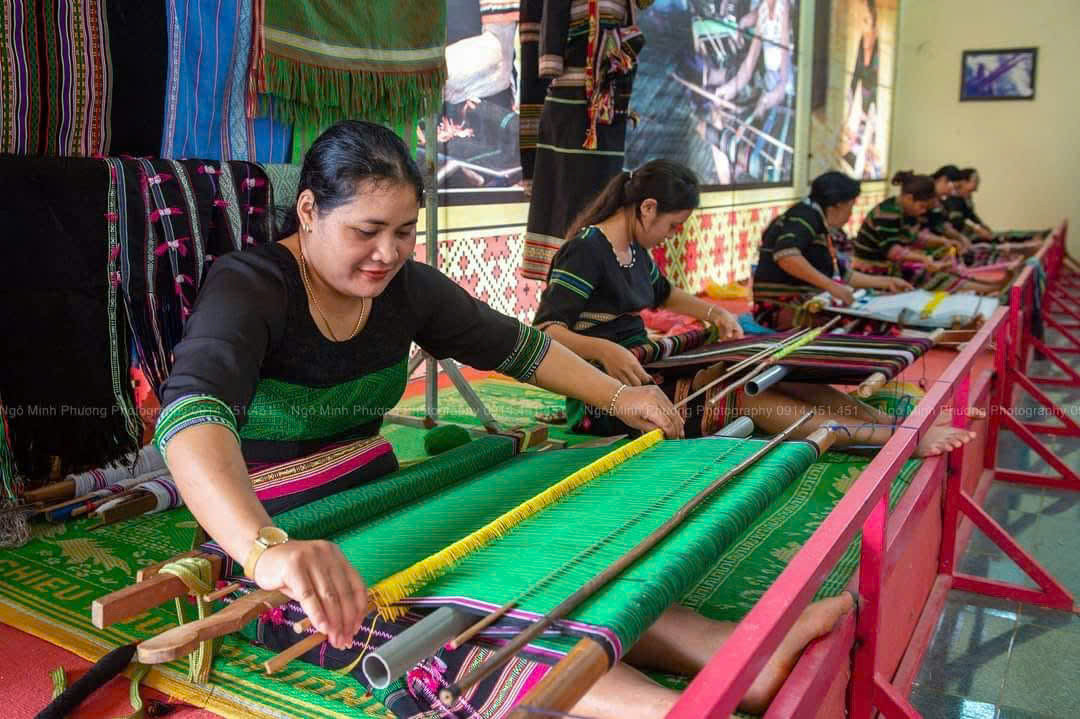
H’Binh’s mother was a veteran brocade weaver among the Ma people and taught her the craft from an early age. She passed away just over a month ago, bringing to a close the journey of a generation closely associated with the loom. For H’Binh, however, the craft continues. Her daughter, H’Nhan, now 20, has learned weaving from her mother for more than a decade. From an early age, H’Nhan became familiar with the loom, Ma patterns and the ways of combining colors.
I only hope that my children and grandchildren will continue to preserve the craft passed down by their ancestors. Seeing the women still interested in weaving makes me forget all the hardships and fatigue.
H’Binh, Head of the Dak Nia Traditional Brocade Weaving Cooperative Group, Dong Gia Nghia Ward
There was a time when H’Binh thought Ma brocade might eventually be preserved only within families. In recent years, however, Ma brocade has gained more opportunities to return to everyday life.
“I learned the craft from my mother when I was 12, and it has now been nearly 30 years. At one point, it seemed that brocade would remain confined to families, but in recent years, thanks to efforts to preserve cultural values, including the Vietnam Brocade Culture Festivals held in the western part of Lam Dong, Ma brocade has had an opportunity to revive,” H’Binh said.
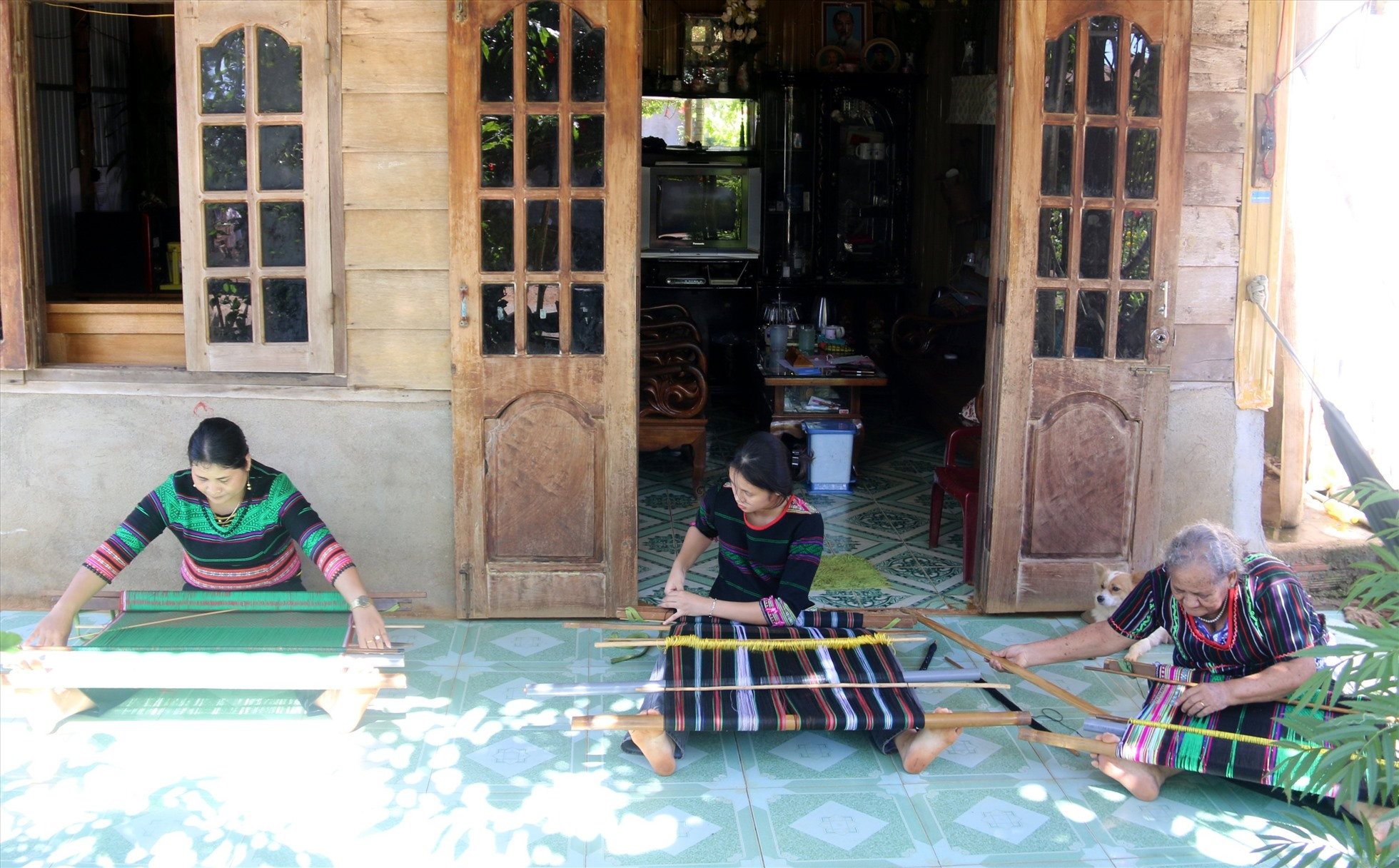
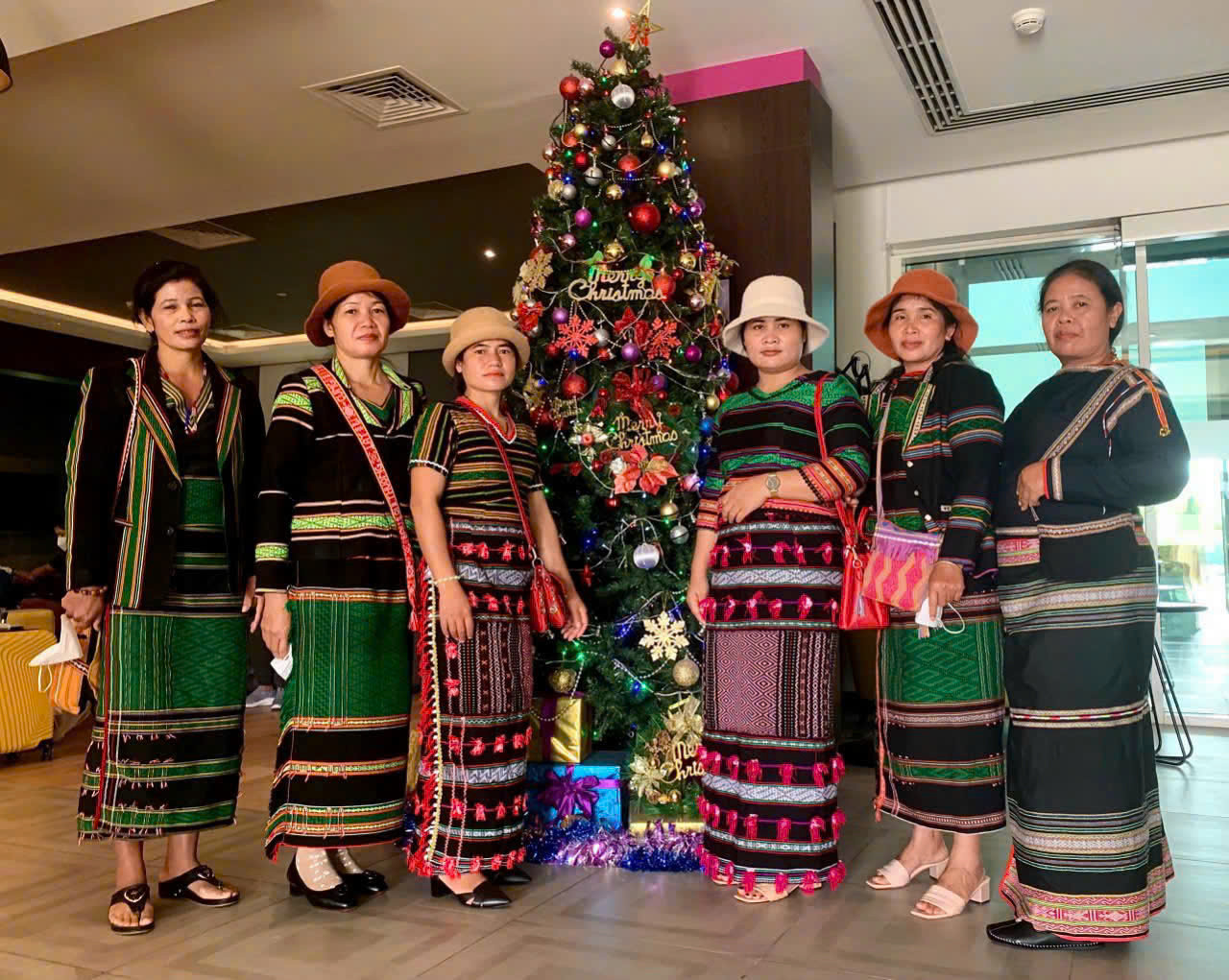
Brocade is becoming more closely connected with everyday life. From traditional fabrics, the Ma people make loincloths, skirts, shawls and handbags; Ma patterns have also been incorporated into fashion designs. As more people seek to buy the products, H’Binh and many other women in Dak Nia have gained more opportunities to maintain the weaving craft. For many years, whenever the locality organizes brocade weaving classes, H’Binh is invited to teach. The pay is not much, but she is happy to see women in the commune becoming interested in weaving.
For her, preserving the craft also means preserving the patterns, weaving techniques and memories of the Ma people. When brocade is worn or used in bags, scarves and new products, those cultural values continue to have a presence in everyday life.
When Culture Is Passed On in New Ways
If culture in Phan Thiet is passed down through the festivals and beliefs of coastal communities, and in Dak Nia weaving preserves the patterns of the Ma community, then in Da Lat, music is adding another way for artistic values to reach the public.
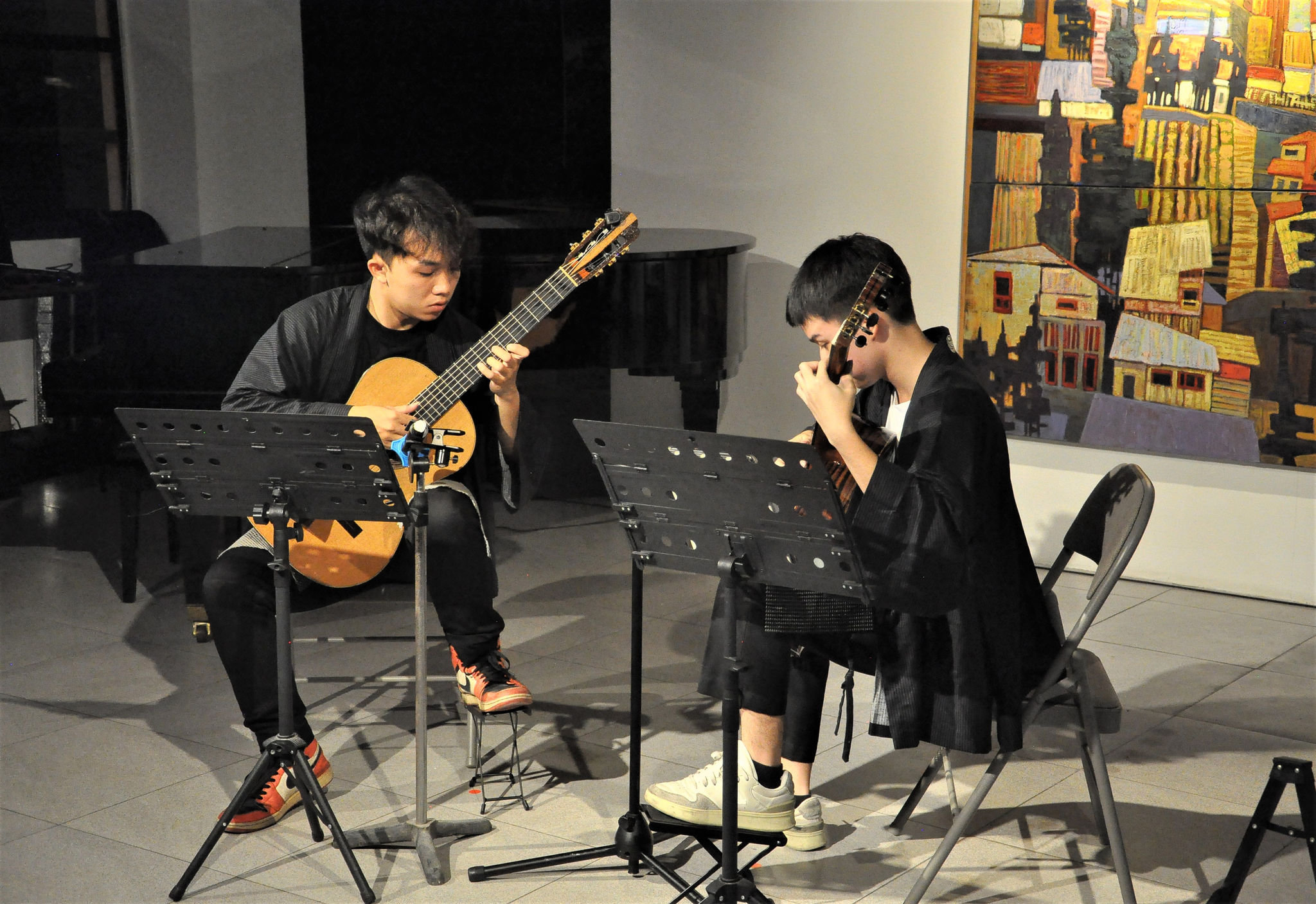
In late July 2026, the Pho Ben Doi Da Lat Art Creative Center organized a classical guitar performance by Sunny Guitar Duo, featuring Vietnamese artist Tran Phan Thuan Nguyen and young Thai artist Nutthachai Chaivanich. It was Nutthachai Chaivanich’s first visit to and performance in Da Lat.
“This is our first time coming to Da Lat and performing here. Da Lat is very beautiful,” he said.
According to Nguyen Trung Hien, Director of the Pho Ben Doi Da Lat Art Creative Center, the program was carefully developed and organized to bring artistic performances closer to local audiences. In the coming period, the center plans to work with music conservatories and domestic art training institutions to introduce performances by artists to audiences in Da Lat.
From a festival of coastal communities and a Ma loom to the sound of classical guitar in Da Lat, cultural values are being passed on in many different ways. Some values are preserved through community rituals, others live on through traditional crafts, while still others continue through contemporary artistic activities.
The new Lam Dong has the sea, the highlands and urban areas with their own distinctive identities. Each region has stories told in different ways. As these stories continue to be told and practiced, culture has more opportunities to remain present in everyday life. And when these values move beyond their communities into tourism, products and experiences, the story can continue in another direction: how can culture become a destination, a product and an economic value while still preserving its identity?
Resolution No. 80-NQ/TW identifies the people as the creators and beneficiaries of cultural values, while also setting out the requirement to harmonize preservation and development. Looking at the stories from Lam Dong, this begins with very concrete things: communities continuing to participate in festivals, people with traditional skills continuing to pass them on, young people continuing to learn, and artists continuing to have opportunities to meet the public.