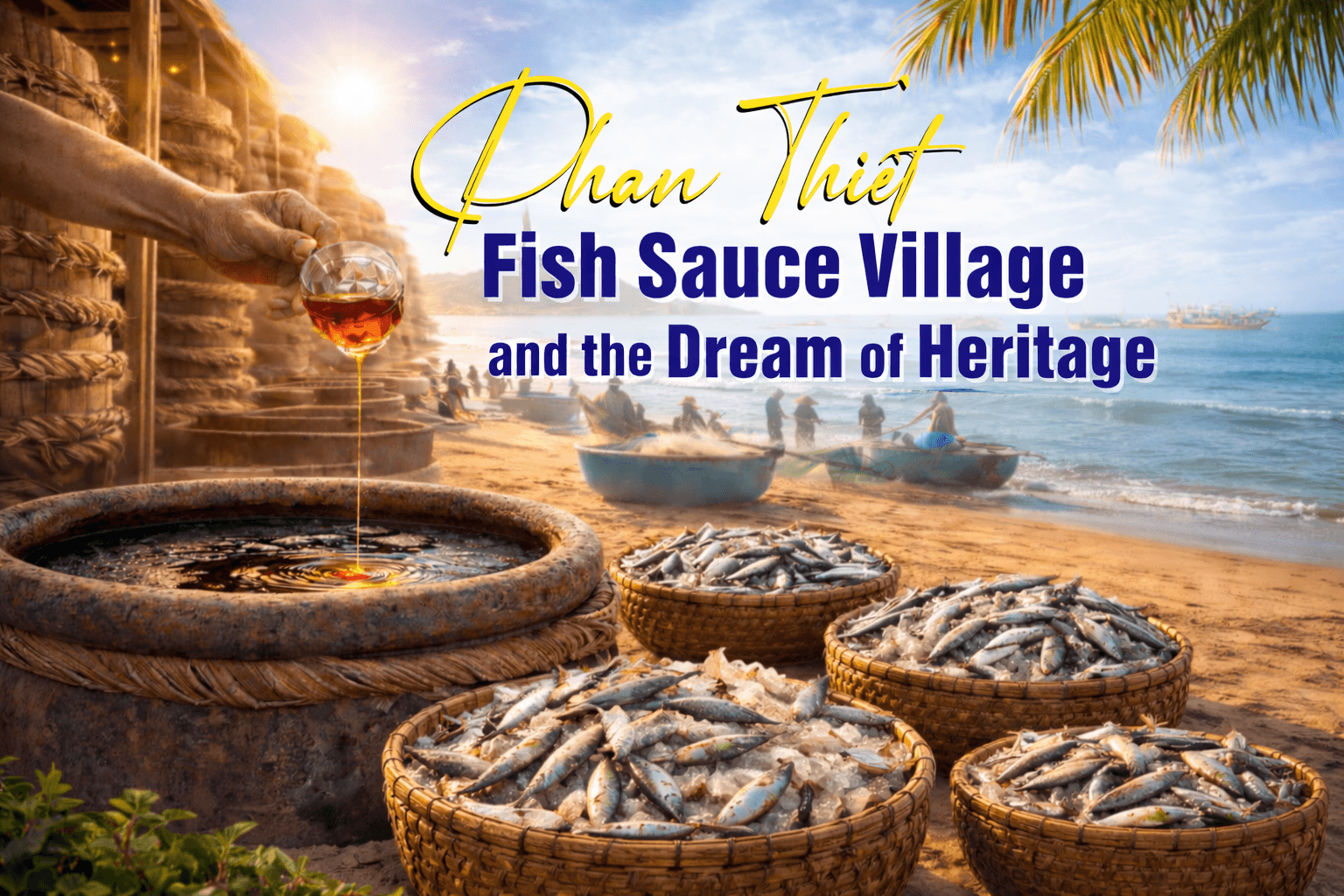
Phan Thiet Fish Sauce Village and the Dream of Heritage.
Quang Nhan•21/03/2026 09:43
For more than three centuries of development, the traditional fish sauce-making craft in Phan Thiet (Lam Dong) has not only sustained generations of coastal residents butalso crystallized into a distinctive cultural identity of the region. Currently, local authorities are completing a dossier to propose the recognition of “Phan Thiet Traditional Fish Sauce Craft” as a National Intangible Cultural Heritage, opening new prospects for preserving and promoting the value of this traditional craft village.
FFor more than three centuries of development, the traditional fish sauce-making craft in Phan Thiet (Lam Dong) has not only sustained generations of coastal residents but also crystallized into a distinctive cultural identity of the region. Currently, local authorities are compiling a dossier to propose the recognition of “Phan Thiet Traditional Fish Sauce Craft” as a National Intangible Cultural Heritage, opening new prospects for preserving and promoting the value of this traditional craft village.
Phan Thiet fish sauce is not only a livelihood but also a cultural identity of coastal fishermen in Lam Dong
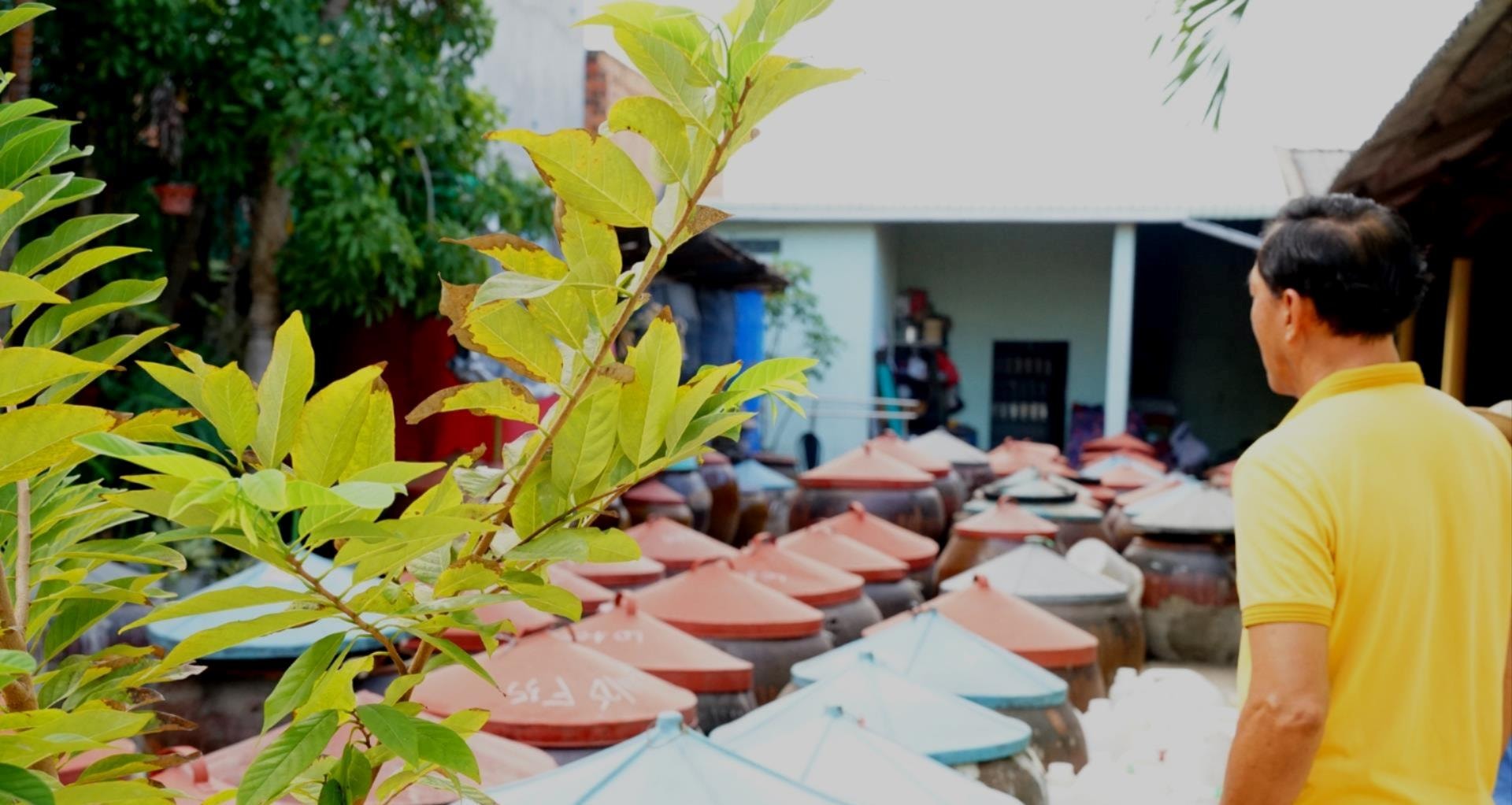
In the early days of the year, many traditional fish sauce production facilities in Phu Hai and Phu Thuy wards have continued to operate steadily. Bathed in sunlight and salt-laden breezes, hundreds of earthen jars and wooden barrels are arranged in long rows, containing fish and salt undergoing a fermentation process that lasts for many months.
A well-known fish sauce facility in Phu Thuy Ward, Lam Dong Province
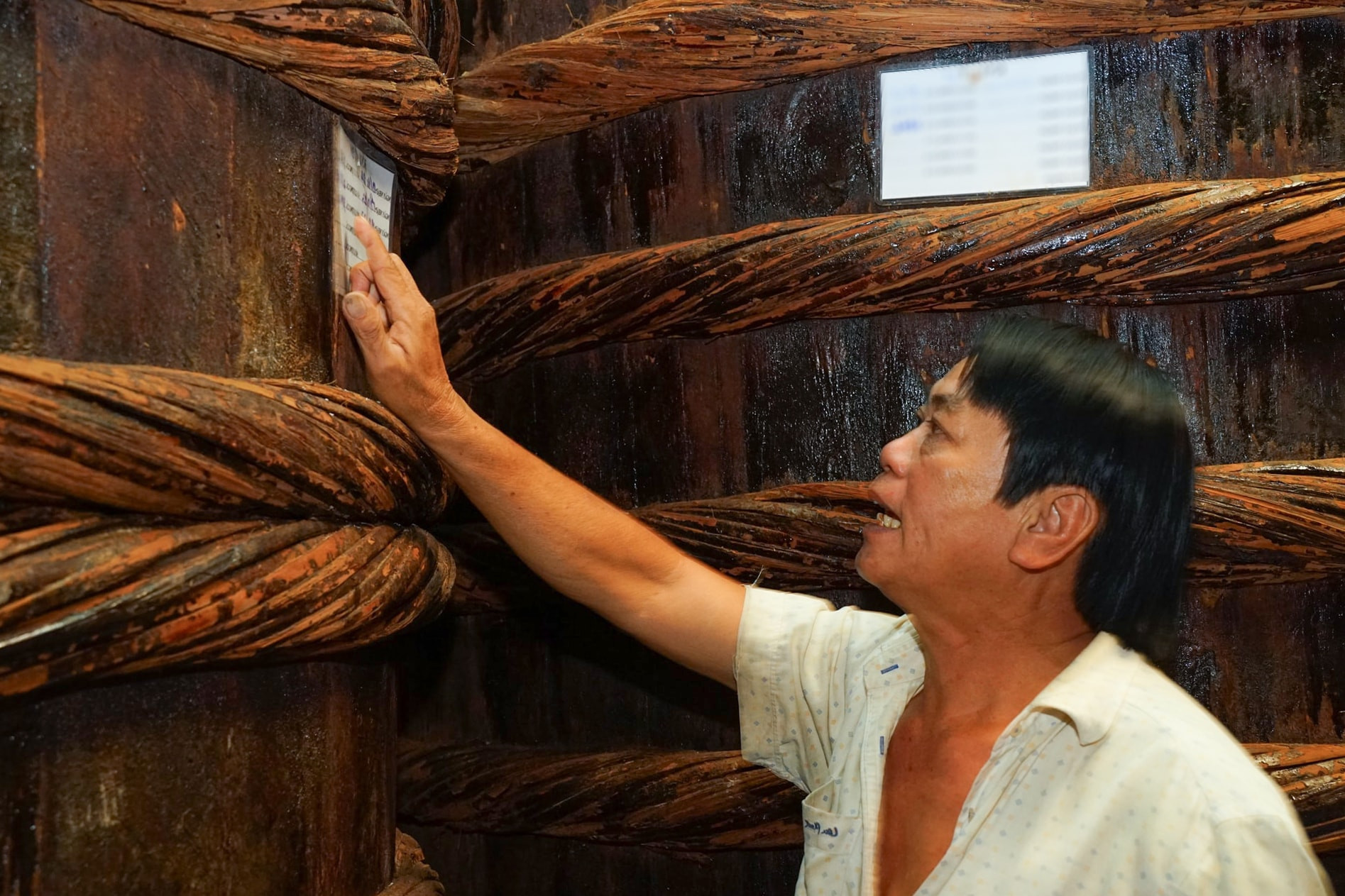
Mr. Huynh Thien Huan, who owns a fish sauce production facility in Phu Thuy Ward, is the third generation of his family to uphold the traditional craft of making fish sauce. Passing down family secrets from his father, Mr. Huan continues to use the long standing method of fermentation in clay jars—a technique well-known in the craft village for many years.
Mr. Huan said producing a high-quality batch of fish sauce requires careful attention from the very first stage, from selecting the fish and mixing it with salt to closely managing the fermentation process. Fresh anchovies are mixed with salt according to a traditional family formula, stirred thoroughly, and then transferred into large containers. The mixture is covered with bamboo grids, layered with salt, secured with another grid, and weighted down with stones to keep it tightly compressed.
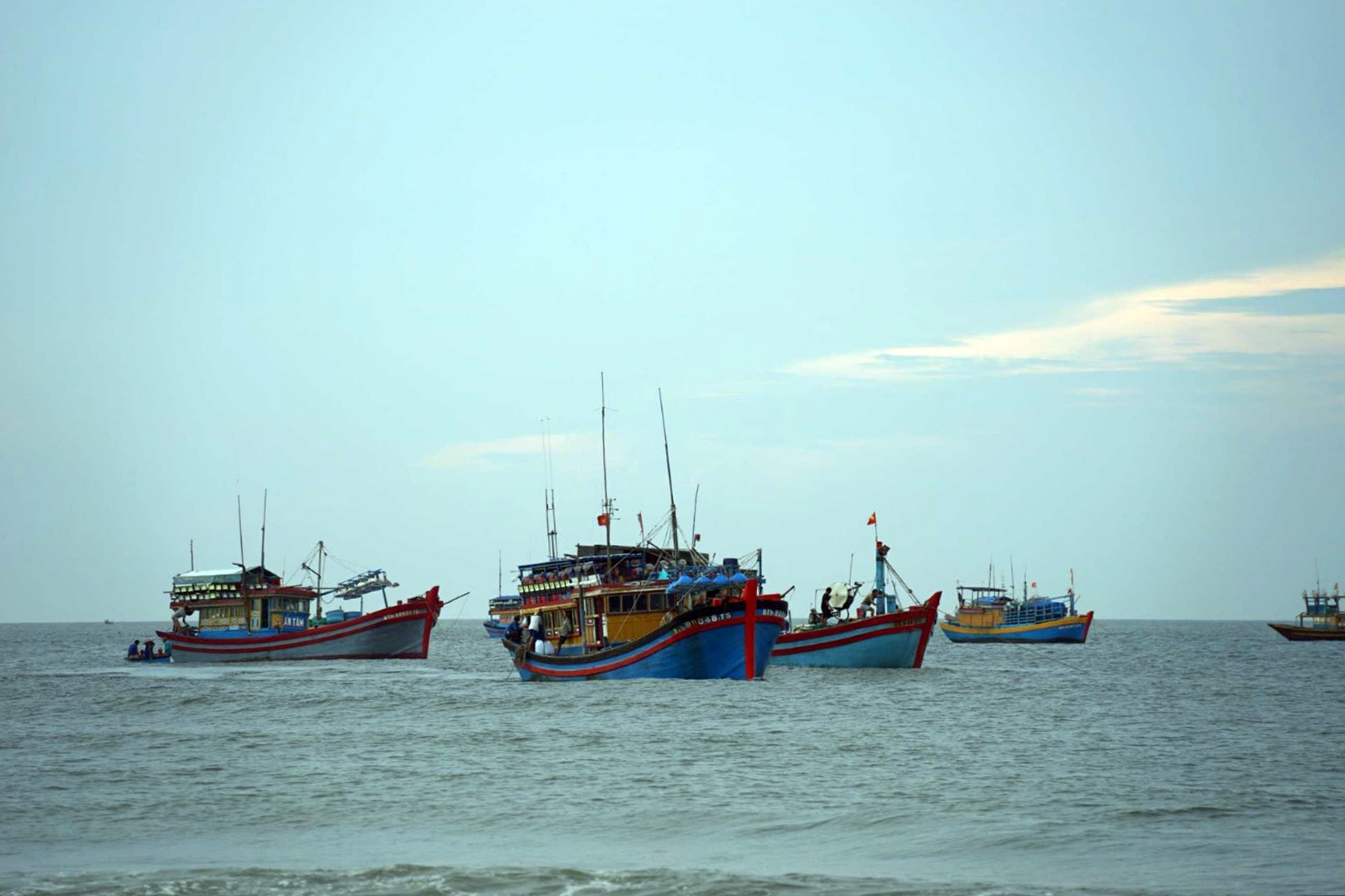
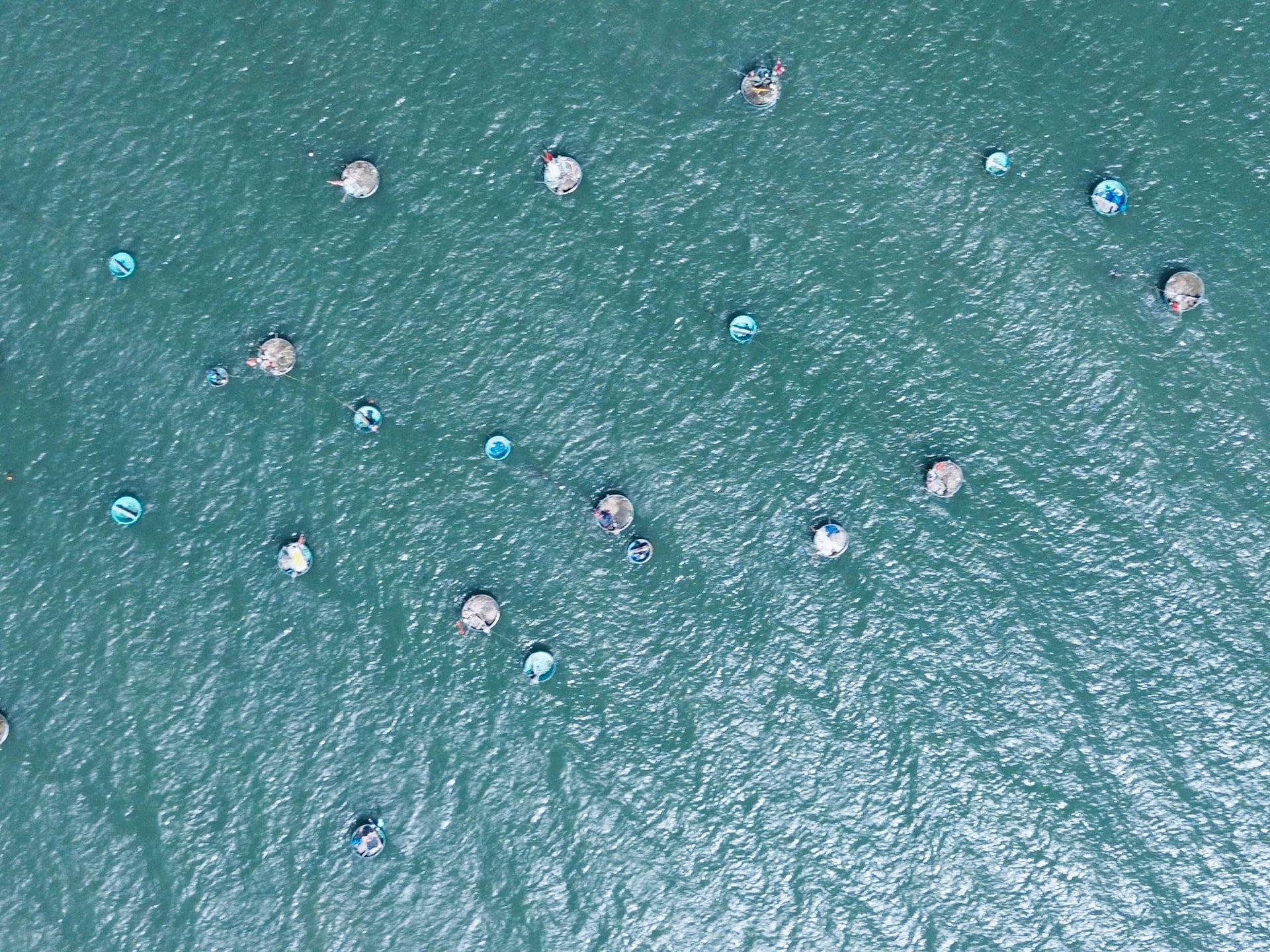
Bustling mornings at the fishing village of Mui Ne with its abundant seafood resources, have helped sustain a traditional craft village that has existed for more than 300 years.
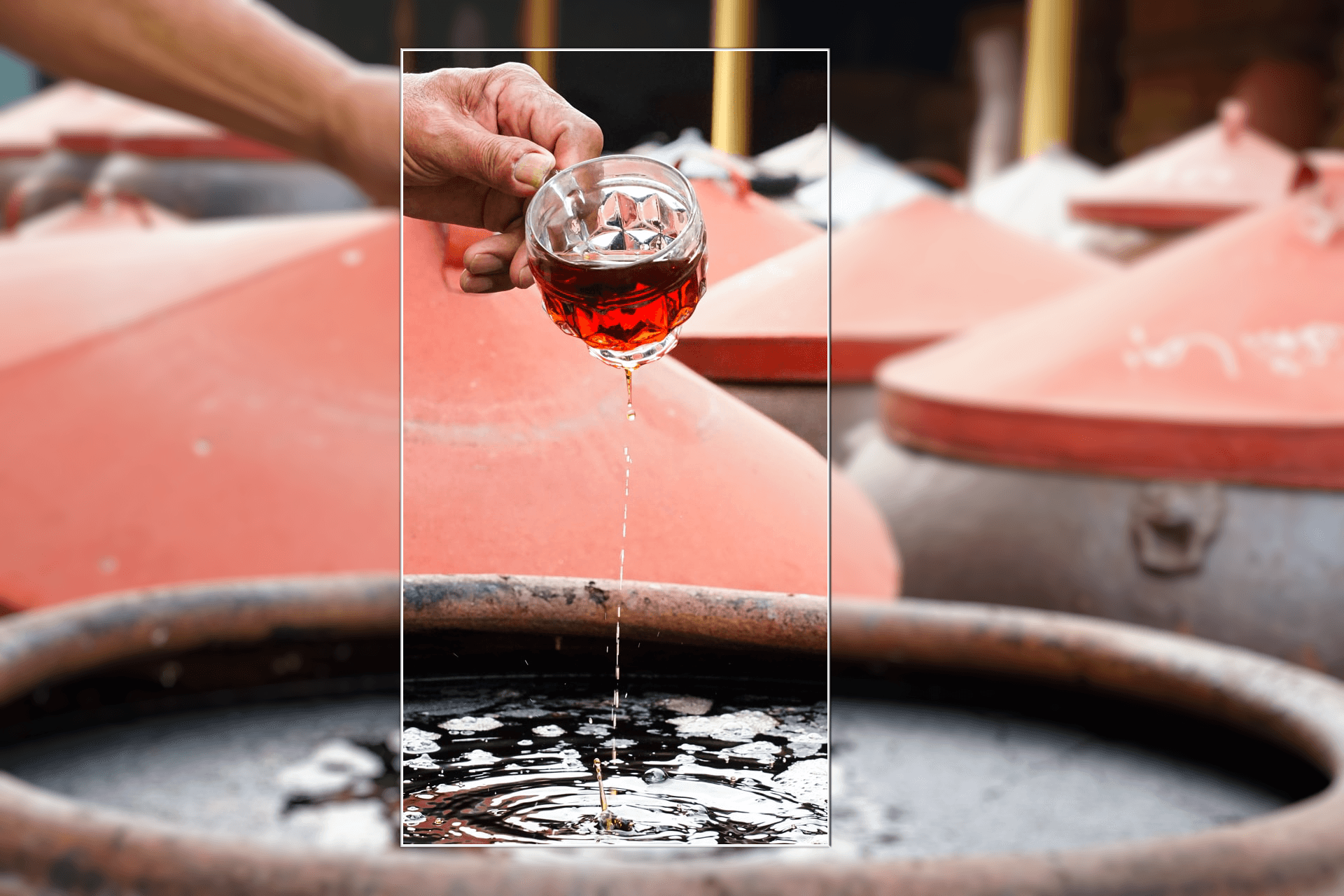
The mixture ferments in large jars under the sun, with natural heat helping speed up the aging process. After 8 to 18 months, the fish sauce develops a color ranging from straw yellow to deep amber and gives off its distinctive savory aroma. This careful process yields "nuoc mam nhi," the first-press fish sauce, followed by "nuoc mam ngang," a second extraction drawn through further brining.
“Making fish sauce is a labor-intensive process. It requires patience for many months, sometimes even a full year, before the product reaches the desired quality. But it is the aroma of the first drops of nuoc mam nhi that has kept me devoted to my family’s craft,” Mr. Huan said.
Workers are busy at fish sauce production workshops.
According to historical records, the craft of making fish sauce in Phan Thiet emerged in the late 17th century. Initially, fish sauce was produced primarily for household consumption. Due to the abundance of fish, high protein levels, and favorable climatic conditions, this practice gradually evolved into a traditional craft village.
By the late 19th and early 20th centuries, several large-scale production establishments, locally known as “ham ho,” had emerged. Merchant sailing vessels once crowded the Ca Ty and Phu Hai rivers to purchase fish sauce and transport it to markets across southern Vietnam.
The eastern waters of Lam Dong Province provide fresh anchovies for fish sauce production.
Although there have been numerous changes throughout the years, the traditional craft of fish sauce production in Phan Thiet has been preserved by various businesses and families. This product is not only enjoyed locally but is also exported to foreign markets.
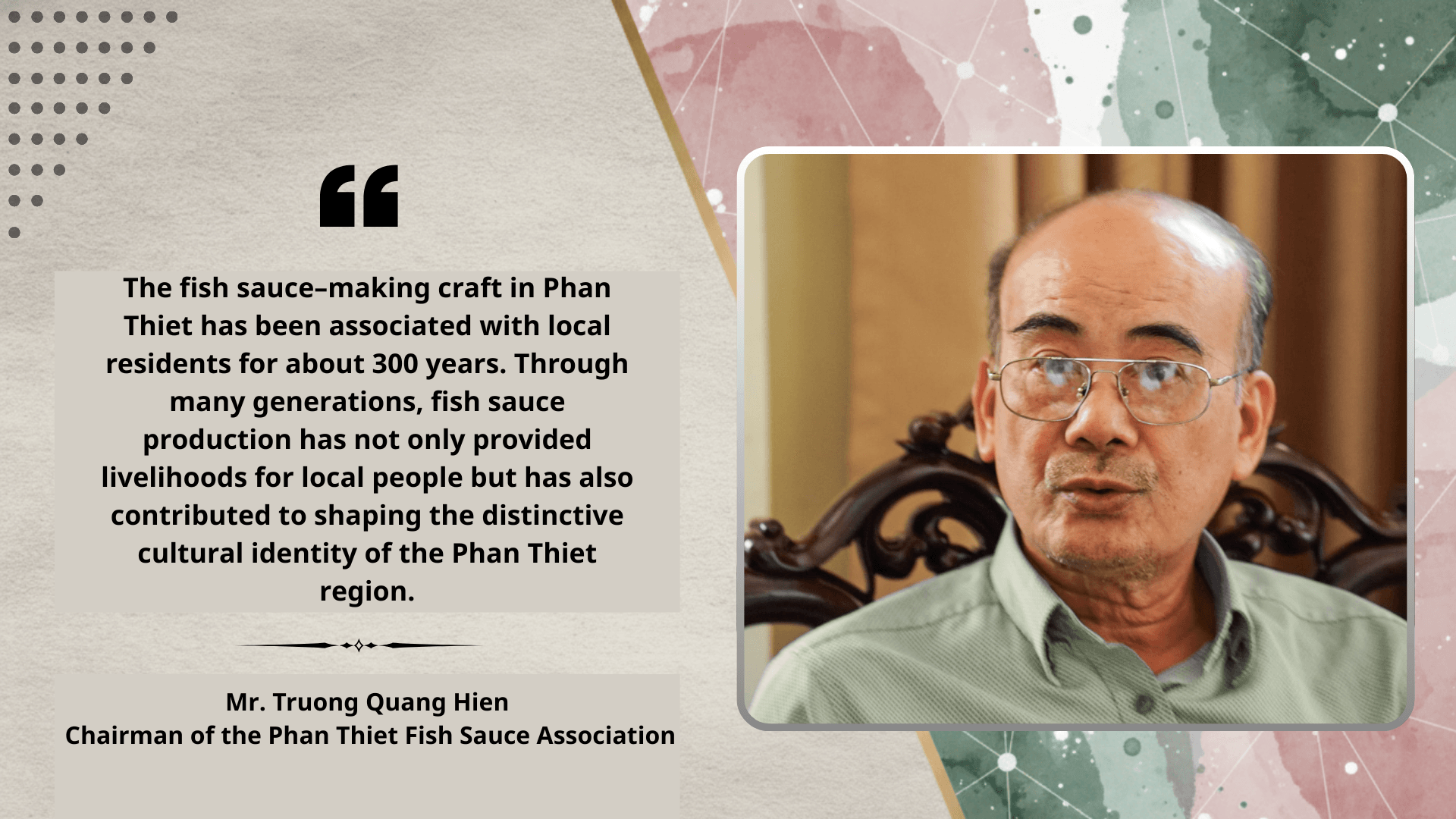
Mr. Truong Quang Hien, Chairman of the Phan Thiet Fish Sauce Association.
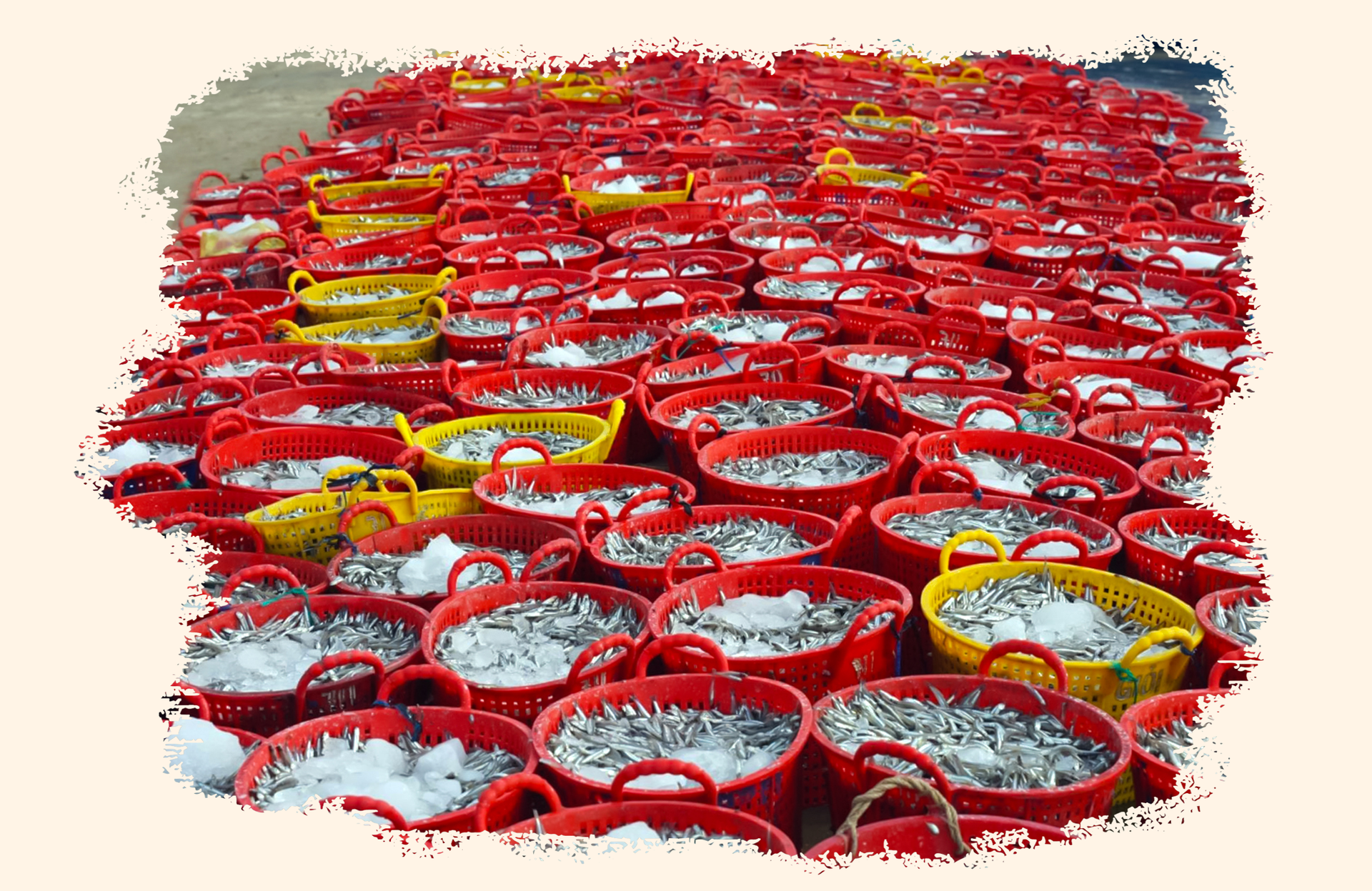
According to local producers, the main ingredients used to make fish sauce are anchovies, mackerel, and coarse sea salt. Fish caught between the fourth and ninth lunar months are generally considered the best, as their higher fat content contributes to a higher protein content in the finished product.
In recent years, many producers have expanded capacity and adopted modern technologies to improve both productivity and product quality. Even so, many establishments remain committed to traditional artisanal methods, seeing them as essential to preserving the distinctive value of local fish sauce.
Fresh fish batches are transported and weighed at the fish sauce workshops.
According to data from the Phan Thiet Fish Sauce Association, the annual output for the 2021–2024 period was estimated at between 20 and 30 million liters, yielding approximately VND 1 trillion in revenue. At present, there are around 200 production households in the area, mainly located in the Phan Thiet, Phu Thuy, and Mui Ne wards, providing steady employment for hundreds of workers and seasonal jobs for thousands more.
Each fishing season brings development, and the traditional fish sauce-making craft in Phan Thiet (Lam Dong) has not only sustained generations of coastal residents but also provided a livelihood for local fishermen.
Moreover, the fish sauce sector uses approximately 22,000 tons of fish annually, supporting the livelihoods of fishermen and enhancing the marine economic value chain. Numerous establishments have also integrated production with tourism, enabling visitors to witness and engage in the traditional fish sauce-making process, thus drawing in tourists curious about local culinary traditions.
Nevertheless, urbanization and tourism development have prompted some practitioners to pursue different careers. Consequently, the number of skilled artisans who maintain traditional methods is steadily declining.
To address this issue, the Phan Thiet Fish Sauce Association has suggested that the “Phan Thiet Traditional Fish Sauce Craft” be included in the National Intangible Cultural Heritage List.
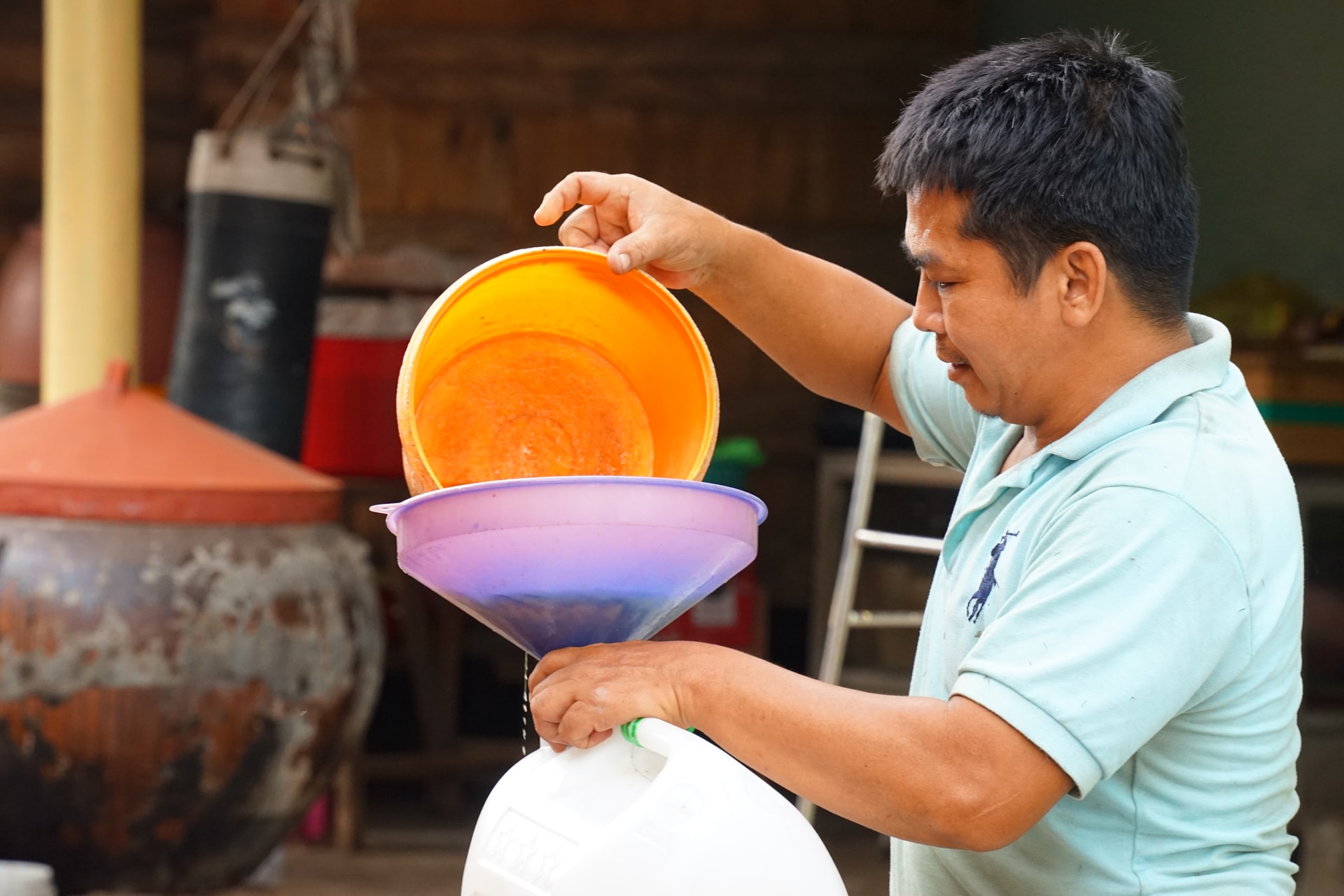
Bottling fish sauce Traditional Phan Thiet fish sauce is made from black anchovies, which are high in protein
According to the Department of Culture, Sports and Tourism of Lam Dong Province, after reviewing the historical formation, processing methods**,** and values of the fish sauce craft, and comparing them with heritage inventory materials currently preserved at the Provincial Museum, the craft meets the criteria for the preparation of a scientific dossier to be submitted to the Ministry of Culture, Sports and Tourism for evaluation.
Transporting fish to fish sauce production workshops
“
There is a strong commitment to preserving the traditional fish sauce-making craft in Phan Thiet and promoting it as a distinctive cultural hallmark of the region. In doing so, the unique flavor of Phan Thiet fish sauce can gain wider recognition.



.png)

.jpeg)

.jpeg)



.jpg)