


Preserving a fading wool-knitting tradition in Da Lat
Amid the pace of modern life, Da Lat’s traditional hand-knitting craft is gradually fading. The once-familiar image of women sitting patiently beside balls of yarn, their hands moving deftly through each stitch, is becoming increasingly rare.
Weaving scarves and sweaters with skillful hands
Wool knitting became a traditional occupation for Da Lat women throughout the 20th century. In the cold weather, women with knitting needles and crochet hooks, skillfully working yarn with practiced hands, became a familiar sight.
From colourful skeins of yarn, they created sweaters, scarves, hats, gloves, and socks, both to keep their families warm and to sell to visitors. Many families made a living from this craft. With only their hands and a crochet hook, many women were able to earn enough to support their households and put their children through school.
Work was typically fragmented: one person knitted the body of a sweater, while others specialized in the collar, sleeves, or hemming. The shop owner then assembled the components into a finished product. This division of labor enabled many women to make use of their spare time to earn extra income.
Ms. Anh, a longtime artisan on Ngo Quyen Street in Cam Ly - Da Lat Ward recalled: “There was a time when orders surged so rapidly that we had to knit day and night. Just by glancing at a pattern’s stitch counts, our hands moved instinctively. Back then, the entire neighborhood knitted.”
Many students who came to Da Lat to study also relied on knitting for part-time work, helping them afford their daily expenses and continue their education through difficult years. In the evenings, they would sit together with balls of yarn and patterns, carefully working each stitch until their hands became familiar and steady. The sweaters and scarves they knitted on commission helped pay for their studies.
Each handmade wool product carries the unique touch of its maker, from colour combinations and knitting styles to small decorative details. Some artisans skillfully create flowers, strawberries, birds, or tiny animals, turning them into distinctive souvenirs. In Da Lat’s year-round cool climate, wool products are not only useful items but also simple yet meaningful gifts for visitors.
However, at the beginning of the 21st century, spinning machines, knitting machines, and knitwear factories in Da Lat began producing more uniform, more diverse, and more affordable products. Industrial goods gradually replaced handmade wool items, which require much more time and effort. As a result, the sight of Da Lat women gathering by their front porches—chatting, selling goods, and knitting all at once—has become increasingly rare.
Searching for a way to keep the craft alive
In recent years, hand-knitting in Da Lat has gradually declined as cheap industrial products dominate the market, making handmade goods difficult to compete with. Ms Anh said many people have left the profession because the income does not match the labour involved: a detailed knitted sweater can take an entire week to complete, yet the payment is only a few hundred thousand dong, discouraging younger generations from pursuing the trade.
Similarly, Ms Thanh Hue, who lives on Huyen Tran Cong Chua Street in Xuan Huong - Da Lat Ward, and was once known for her finely crafted wool products, has had to switch to janitorial work for a more stable income. “I still love the craft, but making a living from it is just too hard,” she shared.
Beyond economic pressures, consumer tastes have also changed. Today, warm clothing is made from a wide range of materials, including padded fabrics, fleece, and synthetic fur, which are lightweight, practical, quick-drying, and affordable. As a result, wool products, especially handmade ones, are finding it increasingly hard to compete.
However, some people persist in keeping the craft alive, though only on a small scale. They mainly knit to order for friends, acquaintances, or customers who appreciate handmade products. One of them is Ngo Hieu, a young woman passionate about crochet. Knitting is not her main job, but rather a source of joy after office hours. She said: “After a stressful day at work, sitting down to crochet each strand of yarn helps me relax. Many of my friends thought the products were beautiful and started placing orders, so I began making more.”
Each of her creations—such as handbags, laptop holders, hats, and fashion accessories—resembles a work of art and can take many days to finish. Thanks to their unique designs and aesthetic appeal, her products are popular among stylish customers.
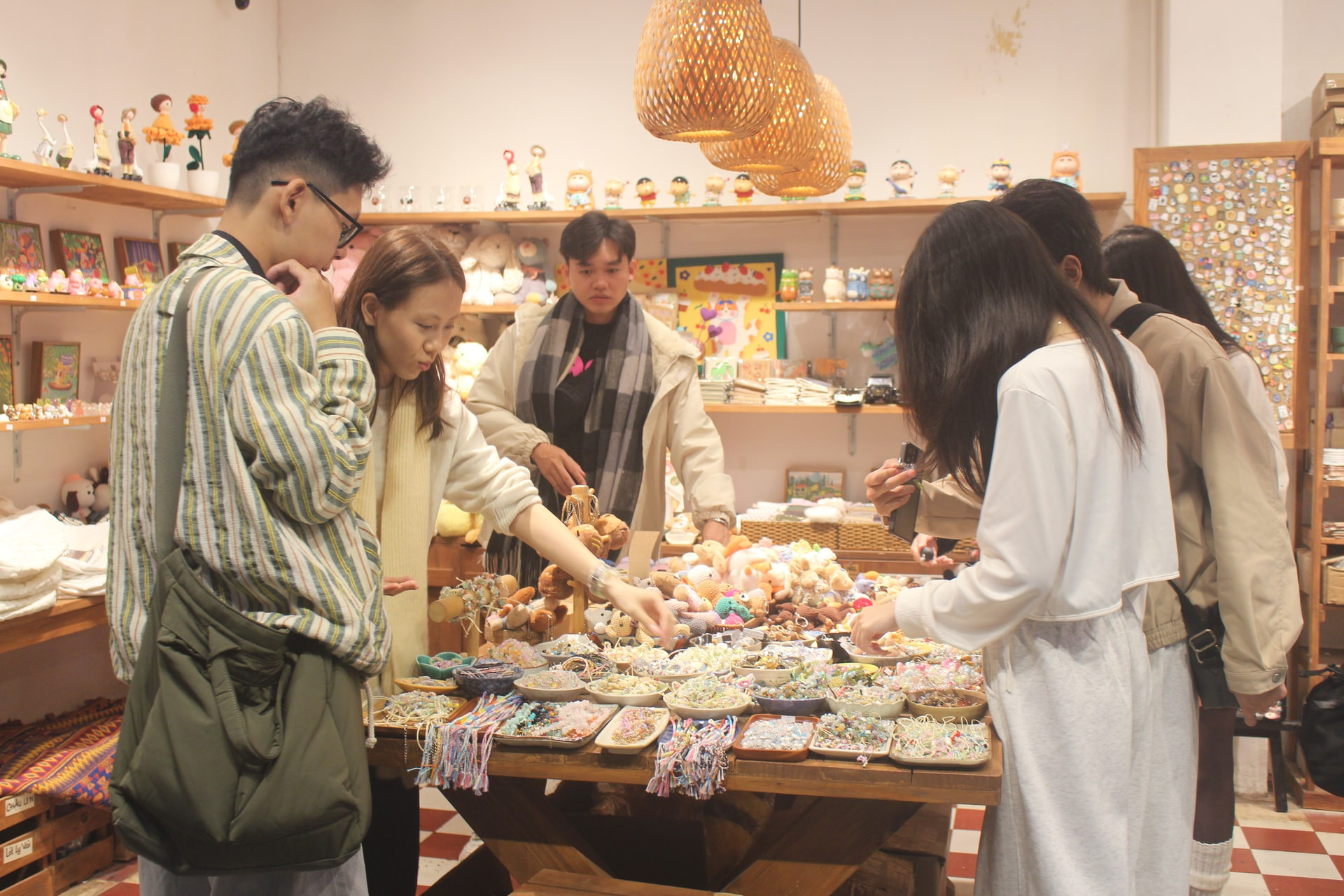
Many artisans in Da Lat are now seeking new ways to keep the craft alive. Instead of focusing solely on traditional wool garments, they are shifting toward handmade souvenirs such as crocheted flowers, keychains, handbags, and wallets. Wool flowers, in particular, are valued for their durability and intricate detail, and are becoming increasingly popular as gifts.
At the same time, incorporating wool into fashion design—including dresses, ao dai, and performance accessories—has opened up new creative possibilities. With greater investment in design and a fusion of modern aesthetics, these wool products are poised to become signature tourism offerings.
According to dedicated artisans, preserving wool knitting in Da Lat requires recognising it as part of the city’s cultural heritage. Cultural and tourism authorities could support the creation of product display spaces and interactive workshops where visitors can watch and try knitting for themselves.
At the same time, training classes for young people, combined with modern design and e-commerce, could help expand the market. When positioned as one-of-a-kind handmade products with cultural and artistic value, wool items may find their place in the premium gift and fashion market rather than competing with low-cost goods.