


Preserving Cultural Depth Through Traditional Ethnic Festivals
Lam Dong is preserving traditional ethnic festivals as a cultural treasures to support sustainable tourism and safeguard indigenous identity.
.jpg)
Preserving Traditional Festivals
Lam Dong is currently home to more than 3.87 million people, including over 683,000 ethnic minority residents, accounting for 17.6% of the population.
The diversity and cultural convergence of Central Highlands ethnic groups such as the K’ho, M’nong, Ma, Churu, Ede and Raglai, together with coastal communities including the Cham and Hoa, as well as migrant groups like the Tay, Nung, Thai, Dao and H’mong, have created a rich cultural heritage, including a vibrant system of traditional festivals.
The province currently hosts 97 festivals, including 82 traditional festivals, five cultural festivals and 10 religious festivals. These celebrations not only reflect the spiritual life of local communities but also preserve valuable indigenous knowledge.
Festivals range from the Cau Ngu (Whale Worship) Festival at Van Thuy Tu of coastal fishing communities and the Kate Festival of the Cham people, to Nhô Wer rituals of the K’ho (Sre subgroup), Bok Chu Bur ceremonies of the Churu people, New Rice Festivals of the Ma people, New Rice Offering ceremonies of the Ede community and Water Source Worship rituals of the M’nong people. Most are closely connected to agricultural cycles and beliefs in nature.
Ten representative festivals have been proposed for focused preservation and restoration, including the Kate Festival of the Cham people, the Hung Kings Commemoration Festival, Nhô Lir Bong (New Rice Celebration) of the K’ho, Mơ Nhum Bok Koh (Ripe Rice Festival) of the Churu, Huă Êsay Mrao (New Rice Offering) of the Ede, Prap Vrê (Forest Spirit Worship) of the Ma, Tăm Blang M’prang Bon of the M’nong, the Long Tong (Going to the Fields) Festival of the Tay and Nung people, as well as the Southeast Asian Gong Festival and the Vietnam Brocade Culture Festival.
In recent years, festival management and organization have received greater attention. Many traditional festivals have been documented, restored and recreated in ways that respect customs, traditions and beliefs while meeting the cultural and spiritual needs of local communities.
These festivals have also become highlights for tourism development and cultural promotion in Lam Dong.
Risks of Cultural Erosion
Despite these efforts, many traditional festivals face the risk of disappearing due to changing production patterns, socio-economic development and the influence of outside cultures.
.jpg)
Many folk festivals that once took place regularly in villages and communities are no longer practiced. Some traditional ceremonies still survive but are maintained only in a few villages, often by elderly artisans who remain the sole keepers of ritual knowledge and ceremonial practices, while younger generations rarely inherit these traditions.
The aging of artisans — regarded as “living cultural treasures” — has become another concern, especially as support policies remain limited. Cultural transmission efforts face numerous obstacles, including insufficient resources and declining interest among younger generations.
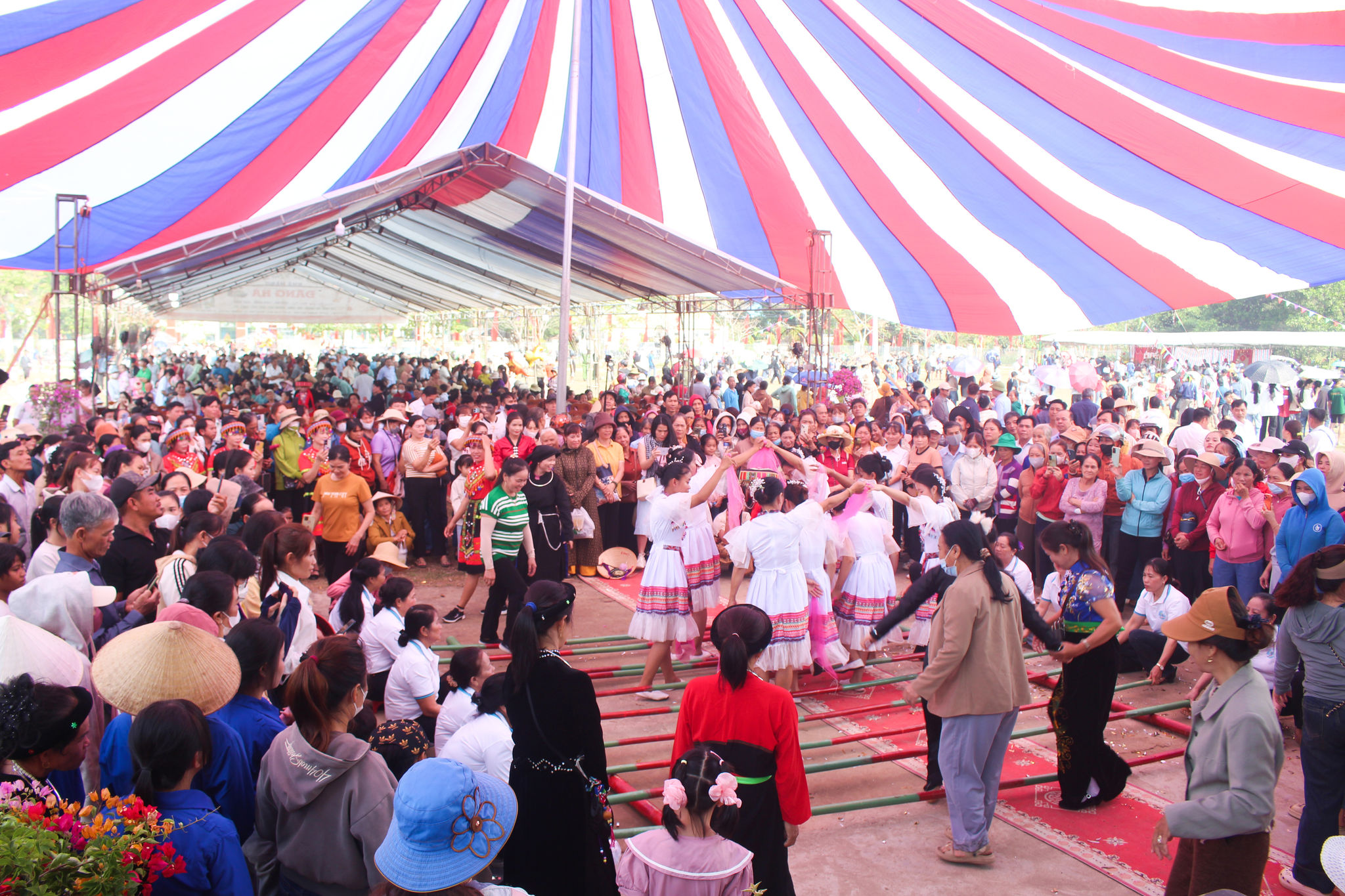
In response to these challenges, the provincial Department of Culture, Sports and Tourism has proposed selecting several representative festivals for restoration and annual provincial-level organization to ensure focused and effective preservation efforts.
These festivals were chosen not only for their cultural significance to ethnic minority communities but also for their strong tourism potential.
Local authorities in communes, wards and special administrative zones are also being encouraged to review and select representative traditional festivals to organize annually in connection with tourism activities.
Encouraging Youth Participation
In the coming years, the province plans to focus on educating younger generations, encouraging artisans to pass on traditional knowledge and strengthening public awareness about preserving traditional festivals.
Authorities aim to create more opportunities for young people to directly participate in and experience festivals rather than simply observe them.
At the same time, efforts to combine festivals with tourism will be carefully managed to avoid superstition, inappropriate practices and excessive commercialization that could erode cultural identity.
To strengthen preservation efforts, the province is implementing multiple measures, including increasing investment resources, promoting social participation, improving the capacity of grassroots cultural staff and researching and publishing materials related to traditional festivals.
More importantly, cultural preservation must begin within families and village communities so that each individual fully recognizes the value of ethnic heritage and actively contributes to preserving and promoting it.
Preserving traditional festivals is not merely about maintaining their form, but more importantly about creating an environment where heritage can continue to live within the community.
Nguyen Van Loc, Director of the Department of Culture, Sports and Tourism