


Preserving Traditional Brocade Weaving Through Innovative Approaches
Rooted in community life, Cham and M'nong brocade weaving is being preserved through diverse methods. While Cham artisans strive to pass down the craft and introduce products, young M'nong women are finding ways to innovate designs, promote their products on social media and connect with the market. These efforts provide the weaving profession with additional opportunities to endure in contemporary life.
Preserving the Craft Through Dedicated Keepers
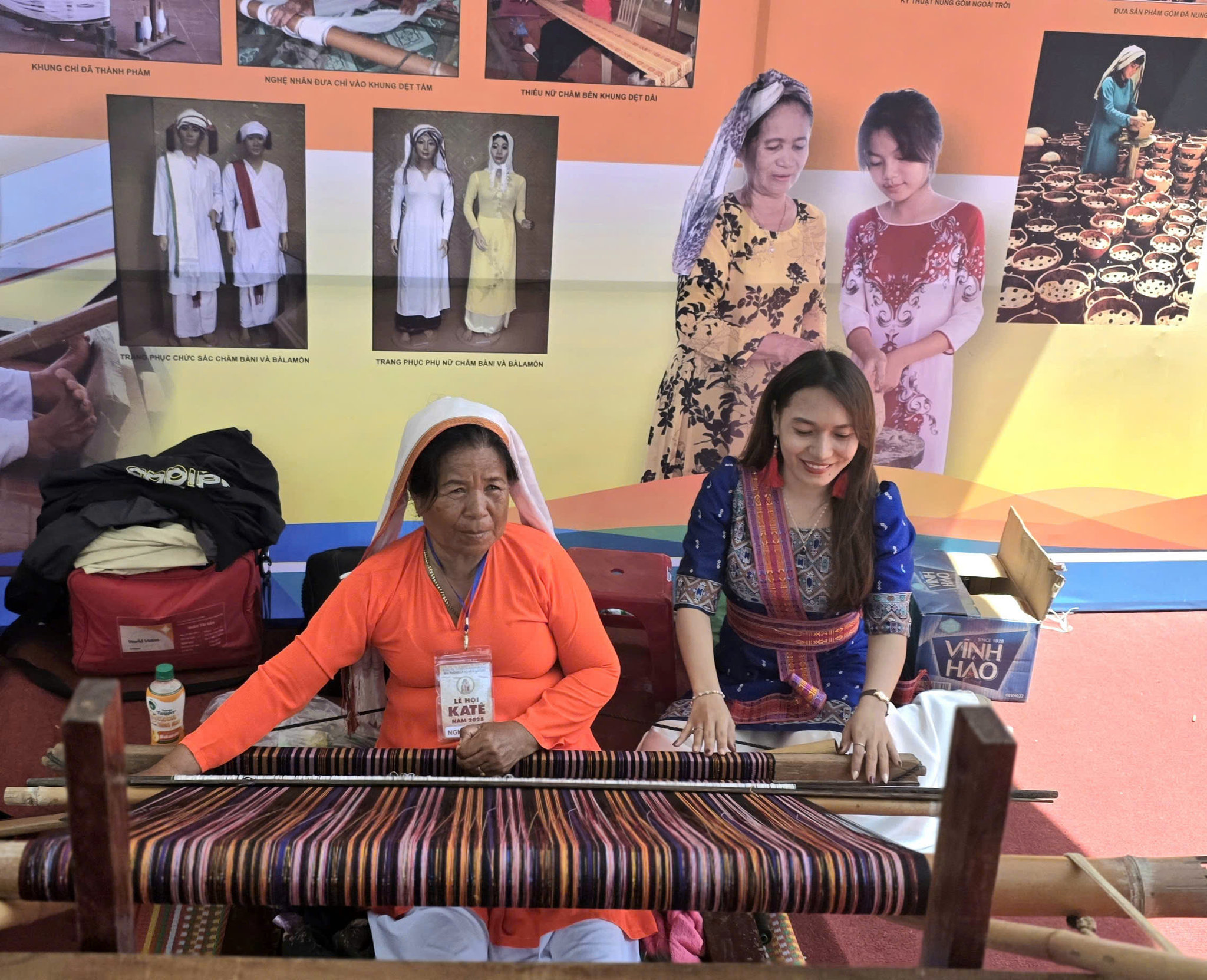
The brocade weaving craft of the Cham ethnic minority was once intertwined with the community's daily life, attire, and cultural activities. However, the prevalence of affordable and convenient industrial fabrics has made it increasingly difficult to sustain the traditional craft. In the southeastern region of the province, only a few elderly Bani Muslim Cham women in Bac Binh and Ham Thuan Bac communes still maintain ties to the craft.
In Lam Giang village, Ham Thuan Bac commune, Ma Thi Thuan, born in 1962, a brocade weaving artisan, remains devoted to her loom. Thuan explains that completing a piece of fabric requires multiple stages, including yarn twisting, frame setting, pattern creation, and weaving. Each step demands patience and meticulousness. Some products take many days or even weeks to finish. Meanwhile, industrial fabrics are increasingly diverse, inexpensive, and readily available. This is one of the reasons why young people today show less enthusiasm for hand-weaving.
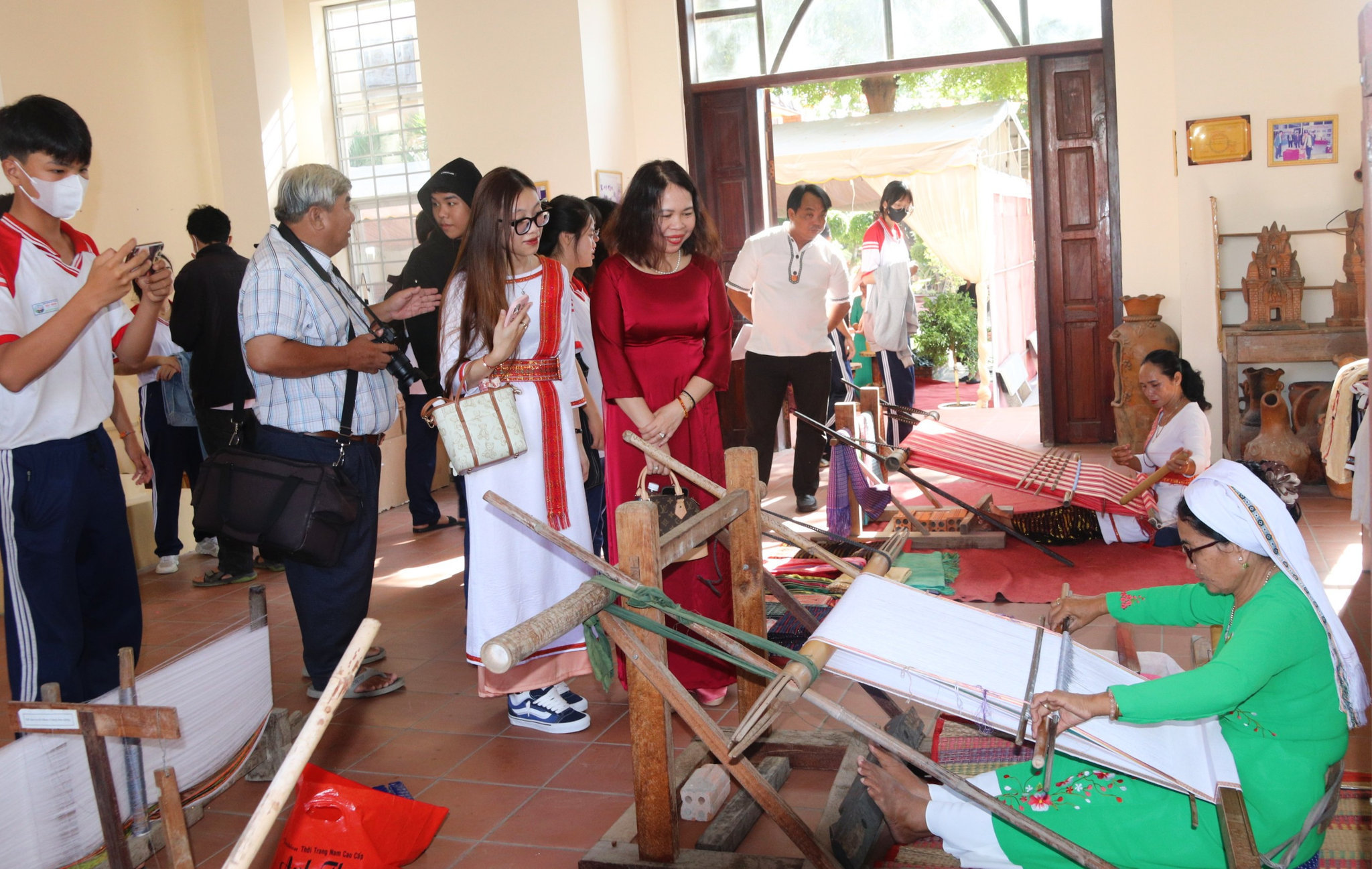
Alongside the efforts of artisans, the provincial museum and local authorities are actively introducing and promoting the craft through cultural preservation activities. During festivals and New Year celebrations, the Cham Cultural Exhibition Center and the Po Sah Inu tower historical site regularly invite artisans to demonstrate brocade weaving, allowing residents and visitors to directly explore the steps involved in making the products.
The patterns on Cham brocade not only hold decorative value but also embody the cultural symbols of the community. Therefore, every weaving demonstration serves as an opportunity to introduce the story of Cham culture to the public. Nevertheless, for the craft to survive in the long term, preservation must go hand in hand with market outlets for products and income for the artisans. This is also the direction that M'nong brocade weavers are proactively pursuing.
Bringing Brocade from Hamlets to the Market
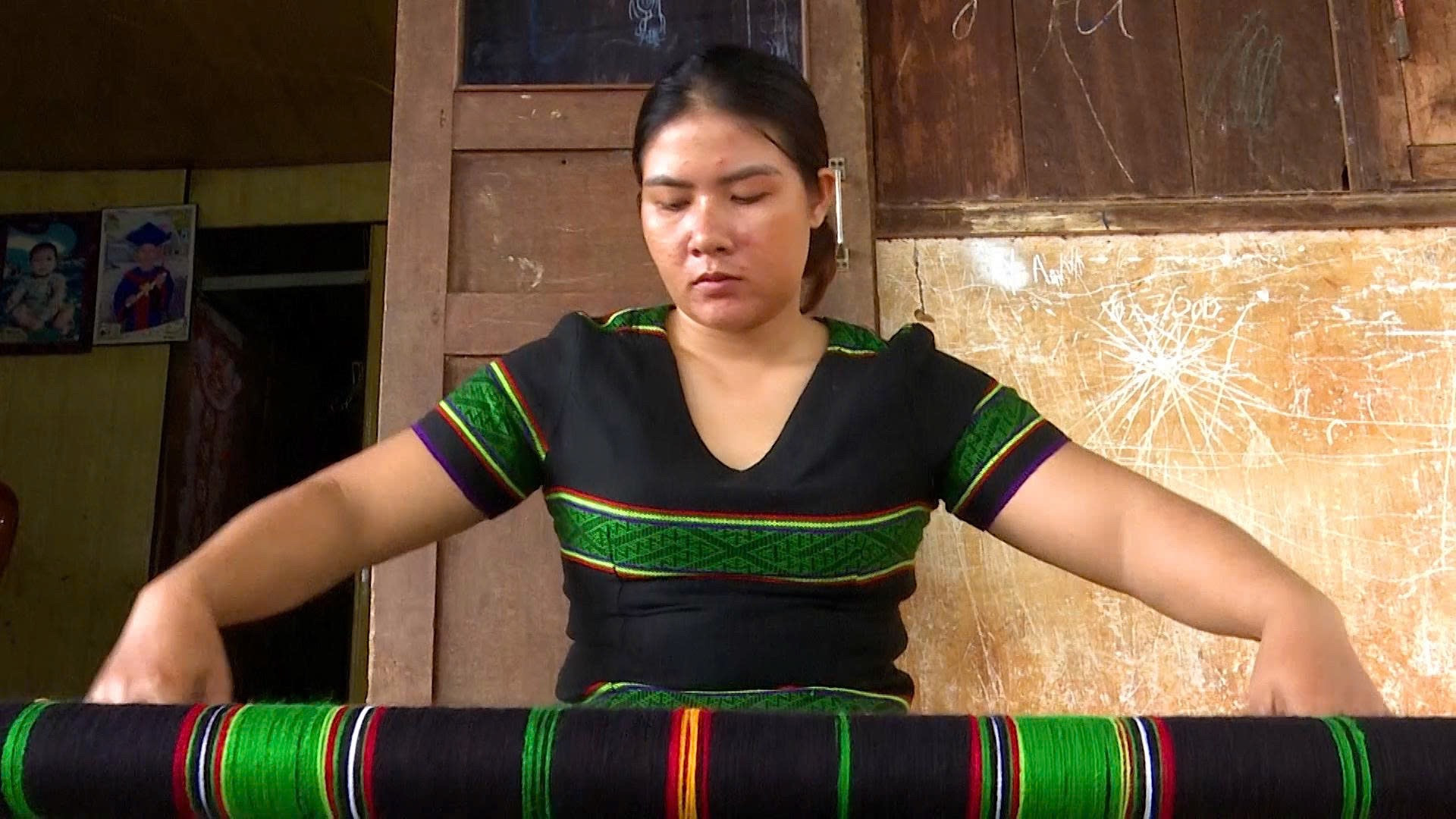
Born in 1998 in Ol Bu Tung - Bu Dach hamlet, Quang Tin commune, Thi Sop, an M'nong woman, grew up alongside the looms, shuttles, and intricate yarn techniques of her people. At the age of 12, Thi Sop was taught how to weave by her mother, and her love for brocade grew steadily over time.
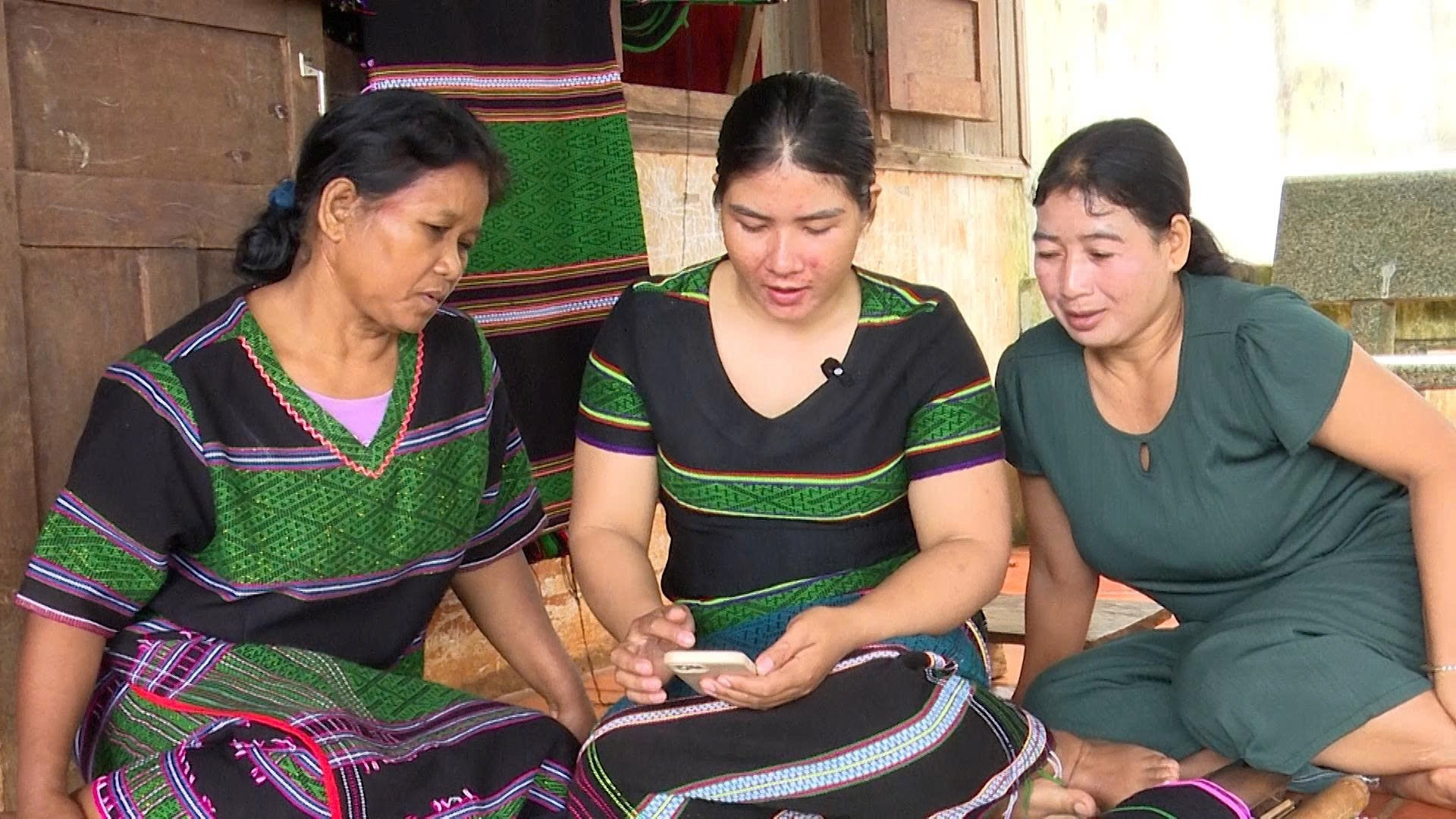
Thi Sop has always been concerned with how to preserve and develop the craft. In 2019, she began building her brocade brand. Thi Sop realized that if she merely wove and waited for customers to find her, the craft would struggle to grow. She began utilizing Facebook, Zalo, and TikTok to showcase products, spanning from the weaving process to finished textiles. Her carefully curated images and videos help distant customers better understand the journey of crafting a handmade item.
Beyond promotion, she seeks to innovate products on traditional foundations. Thi Sop explores additional pattern designs in digital libraries of Central Highlands brocade, selects suitable motifs, and combines them with M'nong weaving techniques. Consequently, her products feature enhanced diversity in color, pattern, and style. Her work has expanded progressively. Thi Sop's home has transformed into a supplier of brocade fabrics, apparel, and yarn. It also serves as a gathering place for women in the hamlet to weave together and share experiences. Currently, ten women are engaged in weaving alongside her.
Proactively securing orders helps establish product outlets and generates income for weavers. Thi Sop shares that the work yields approximately 10 million VND per month for her while creating additional employment for women in the hamlet. Thi Thuy, who has worked closely with Thi Sop for over five years, earns a supplementary monthly income ranging from 4 to 5 million VND or more. "Thanks to Thi Sop's diligence and proficiency in utilizing social media for product promotion, the fabrics we make have become better known. More orders mean more income and greater motivation for us to continue weaving", Thuy shares.
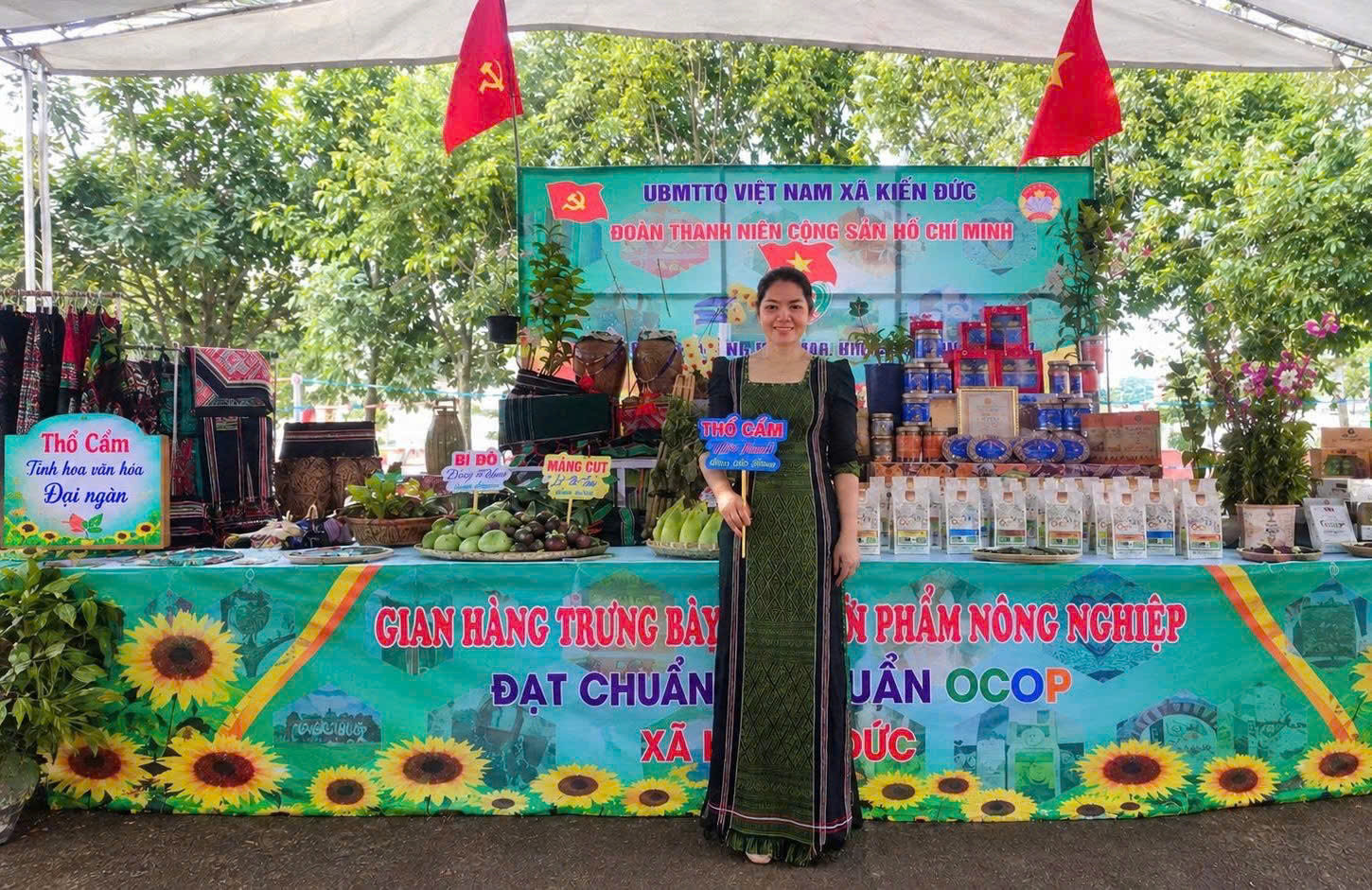
Bringing Brocade Closer to Consumers
Also choosing to innovate brocade, Ms. Thi Thanh, born in 1993, an M'nong woman in Dak B'lao, Kien Duc commune, opened a traditional clothing tailoring shop at home. Utilizing familiar materials, she designs and tailors modernized dresses and shirts, alongside crafting bags, purses, hair bows, and keychains. Thanh retains the materials and patterns of M'nong brocade in every item while modifying styles to better suit contemporary usage needs. She also takes her products to fairs and competitions organized by the Women's Union and the Youth Union to introduce them and explore market opportunities. "I want brocade to be used not only on traditional occasions but also in daily life. When more people use these products, the culture behind them also becomes more widely known", Thanh shares.
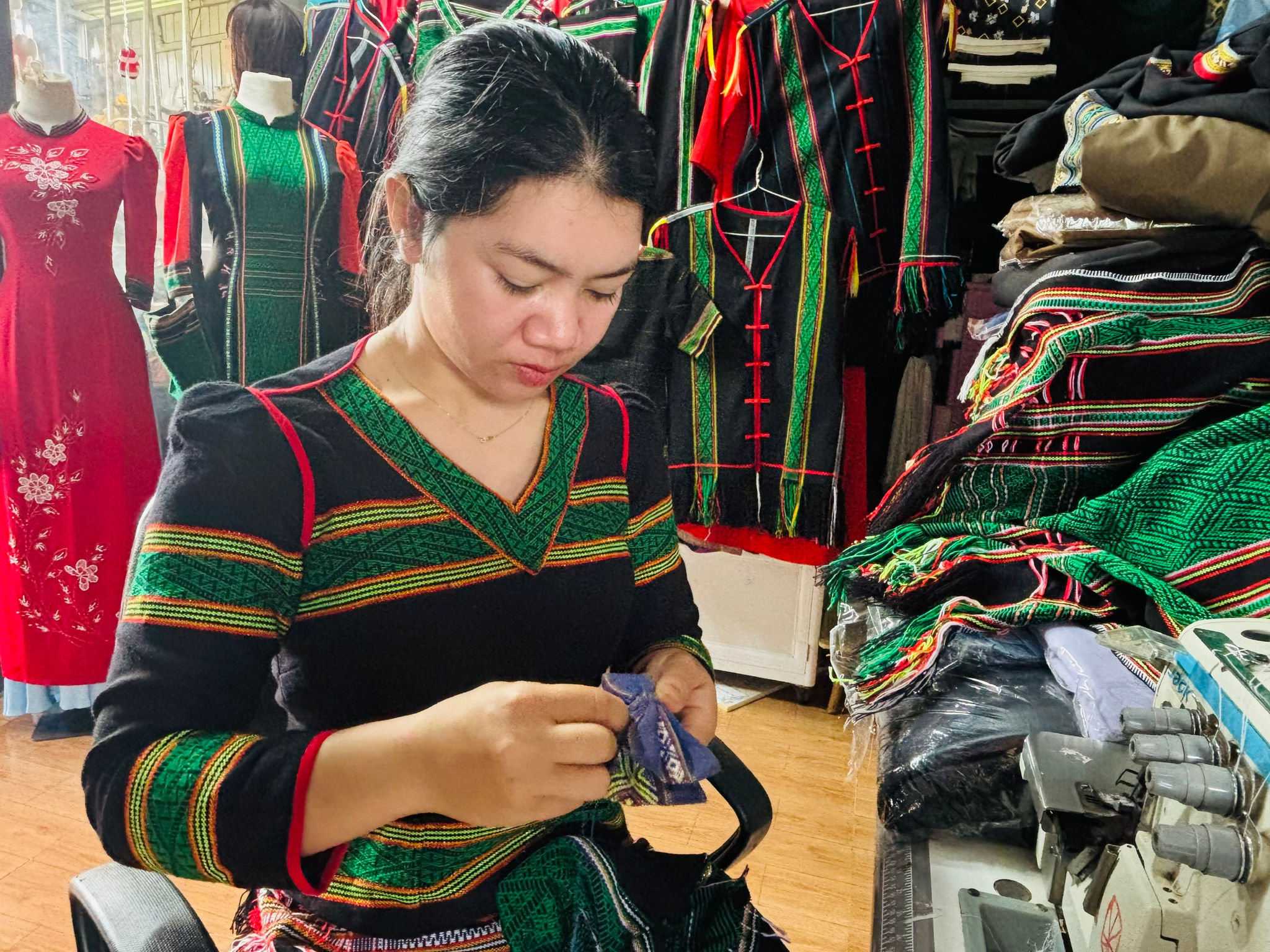
According to Le Thi Truc Linh, Deputy Director of the Department of Culture, Sports and Tourism, for heritage to truly thrive within the community, preservation must be closely connected to the daily lives of residents, including efforts to create economic value from cultural products. "Brocade represents fundamentally cultural values transmitted across generations by the community. When residents, particularly the younger generation, preserve traditional patterns and materials while creating products that meet market demand, the value of the heritage can be further enhanced. This approach also enables culture to create additional livelihoods, motivating residents to sustain the craft", Linh states.
From the looms of Cham villages to M'nong hamlets, the weaving trade is sustained through various avenues. Some preserve the craft by teaching the younger generation, others focus on promotion, and some create innovative products. When brocade successfully maintains its core values while securing a foothold in modern life, the traditional craft has a better chance of being passed down to future generations.
To preserve the craft, we must help the younger generation understand the value of the patterns and techniques passed down by our ancestors, thereby fostering a conscious commitment to learning and continuing practice.
Artisan Ma Thi Thuan