

Prime Minister Calls for Accelerated Implementation of Key Railway Projects
On March 3, Prime Minister Pham Minh Chinh, Head of the Steering Committee for Key National Railway Projects, chaired the Committee’s seventh meeting.
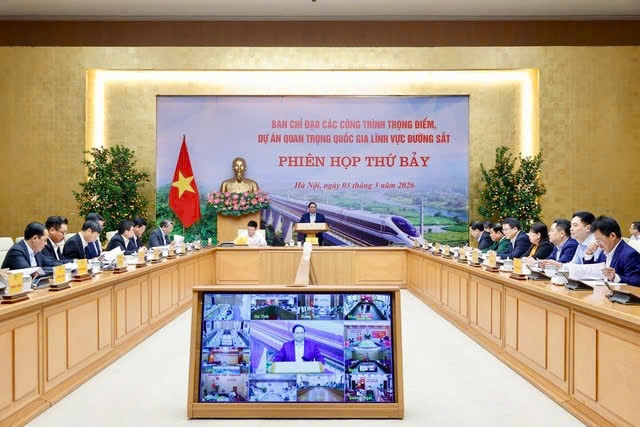
The meeting was held in person at the Government Headquarters and connected virtually with 18 provinces and cities hosting railway projects. Participants included Deputy Prime Minister Ho Duc Phoc, leaders of ministries and central agencies, members of the Steering Committee, and chairpersons of provincial and municipal People’s Committees.
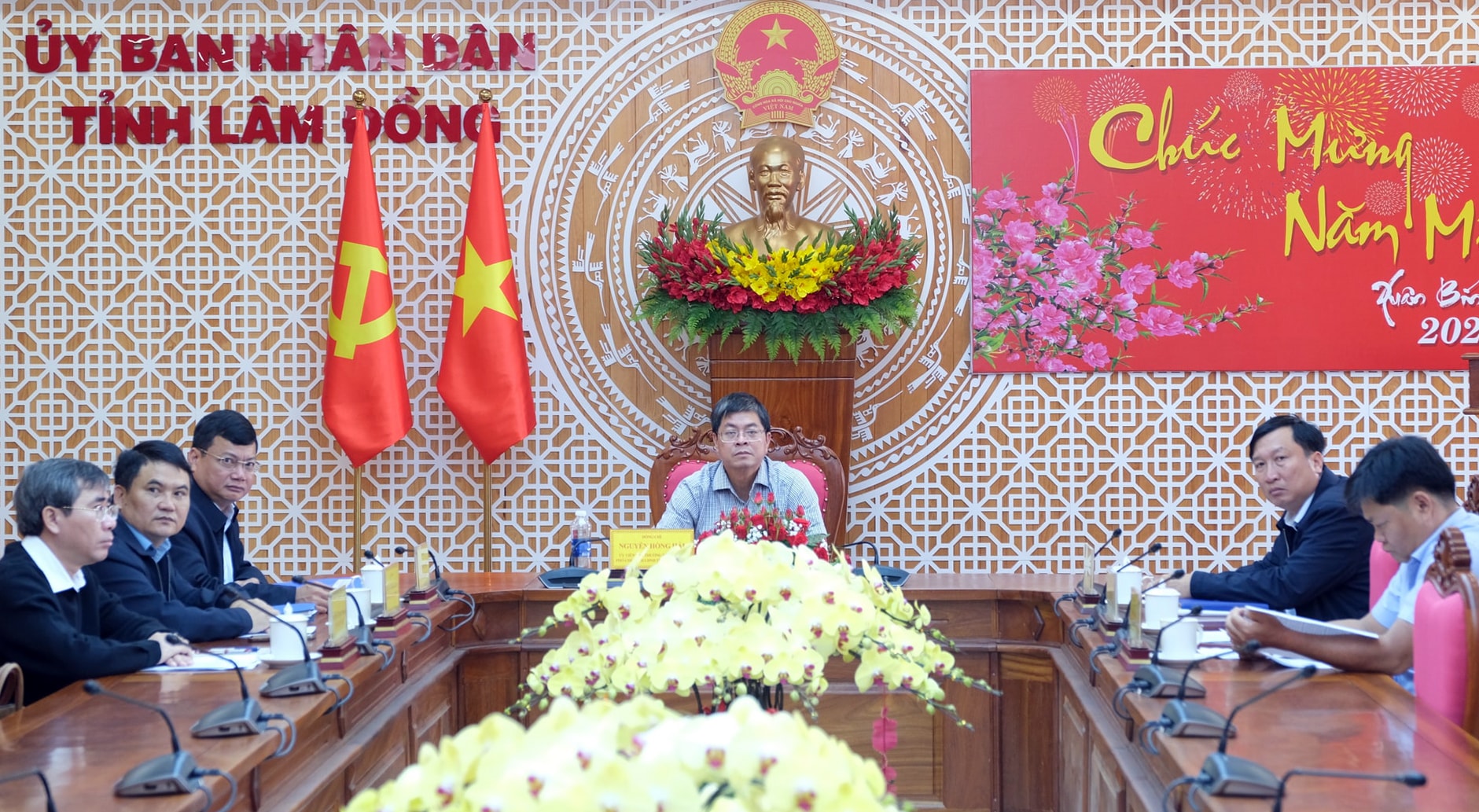
At the Lam Dong provincial bridge point, Mr. Nguyen Hong Hai, Member of the Provincial Party Standing Committee and Vice Chairman of the Provincial People’s Committee, attended the meeting together with representatives of relevant departments and agencies.
In his remarks, Prime Minister Pham Minh Chinh emphasized the strategic role of railways in socio-economic development as well as national defense and security. He stated that implementing railway projects would contribute to achieving five major objectives:
- Creating a foundation for GDP growth of 10% or higher from 2026 onward;
- Reducing logistics costs and improving the competitiveness of Vietnamese goods;
- Alleviating traffic congestion in major urban areas;
- Opening new development space for urban zones, industrial parks, and economic areas;
- Promoting supporting industries and developing the railway industry ecosystem.
.jpg)
The Prime Minister noted that the Politburo and the Secretariat, particularly the General Secretary, have recently provided strong and consistent direction for railway development. Positive progress has been recorded, including changes in awareness, governance approaches, and implementation methods, especially the expanded participation of the private sector to mobilize resources in line with Resolution No. 68-NQ/TW.
However, he stressed that railway projects are large-scale, technically complex, and traverse challenging terrain and geological conditions. Greater determination and stronger anti-corruption and anti-negative measures are therefore required to meet implementation targets.
The Prime Minister directed that railway projects must follow the principles of the “five transformations”: digital transformation, green development, efficiency optimization, smart governance, and harmonized interests among the State, the people, and enterprises. At the same time, implementation must adhere to the “four no’s”: no wasting even a day, no delaying even a week, no missing opportunities within a month, and no complacency or passivity over the course of a year.
At the meeting, the Prime Minister called for abandoning the mindset that “the first lunar month is for festivities,” urging agencies and localities to focus immediately on reviewing tasks assigned at the Steering Committee’s sixth meeting, including implementation progress, emerging bottlenecks, lessons learned, and solutions for the next phase.
He also requested accelerated implementation of key projects, including:
- Component Projects 1 and 2 of the Lao Cai – Hanoi – Hai Phong railway;
- Railway connections between Vietnam and China;
- Surveys and feasibility studies for the North–South high-speed railway;
- Urban railway systems in Hanoi and Ho Chi Minh City;
- The Gia Binh – Ha Long and Lang Son – Hanoi railway lines;
- Development of a national railway industrial complex.