

Agriculture: A Pillar of Lam Dong’s Economy
Despite economic volatility, agriculture remains a key pillar of Lam Dong’s economy, supporting growth, employment, and regional development.
Opportunities to increase development
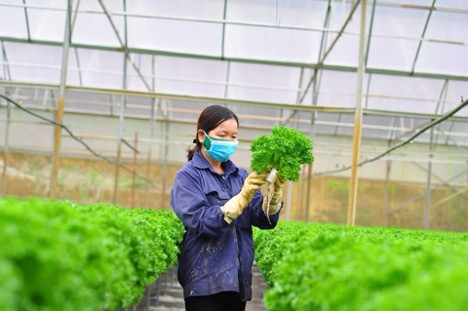
Following the administrative merger, Lam Dong has become Vietnam’s largest province by area, covering 24,233 km² with a population of over 3.8 million. Combined with favorable climate conditions, fertile soils, and diverse forest–marine resources, the province holds significant advantages for developing high-tech, multi-value agriculture linked to processing industries, eco-tourism, and logistics.
According to the Department of Agriculture and Environment, agriculture is shifting from extensive growth toward intensive, smart, safe, and eco-friendly development. Lam Dong currently has more than 107,000 hectares of high-tech agricultural production, hundreds of thousands of hectares under safe production standards, along with 954 export area codes covering over 45,000 hectares, and 339 certified packing facilities meeting HACCP and ISO 22000 standards.
The collective economy continues to expand, with 1,157 cooperatives, 416 production–consumption linkage chains, and 914 OCOP products, gradually shaping a green, modern, and integrated agricultural ecosystem.
To ensure sustainable agricultural development, Lam Dong must move from a production-based mindset to an agricultural economic model, while attracting greater investment to improve farmers’ livelihoods and social welfare
Mr. Le Trong Yen, Standing Vice Chairman of the Lam Dong Provincial People’s Committee
The province will continue restructuring agriculture alongside a renewed growth model, focusing on high-efficiency, ecological, organic, and large-scale production to increase added value. Climate-resilient specialized zones will be developed, while technology, innovation, and digital transformation will be accelerated to enhance productivity, quality, and competitiveness. Furthermore, agricultural development will be closely linked with the processing industry, promoting mechanization, automation, and modernization throughout the value chain.
Positive developments across multiple subsectors
Alongside crop production, forestry, fisheries, land management, and environmental protection have seen significant positive changes. The forestry sector continues to play a particularly important role in protecting the ecological environment and supporting people’s livelihoods. The province currently has more than 1.13 million hectares of forest, with a forest coverage rate of 46.72%, higher than the national average. During the 2020–2025 period, nearly 19,800 hectares of concentrated forests were newly planted, including an additional 3,318 hectares in the first nine months of 2025 alone.
Payments for forest environmental services have proven effective, generating over VND 450 billion annually and supporting more than 20,500 households, contributing to both livelihood improvement and forest protection.
The livestock sector is shifting toward large-scale, biosecure, and environmentally friendly farming zones, while fisheries have been restructured toward modern and sustainable development. Total seafood catch during 2020–2025 reached approximately 1.4 million tons, ranking among the top three nationwide. Furthermore, aquaculture is expanding high-value marine species using intensive and high-tech methods. Seafood export turnover in 2025 is estimated to exceed USD 250 million, up more than 57% compared to 2020.
Low-Emission, High-Tech Agriculture as the Way Forward
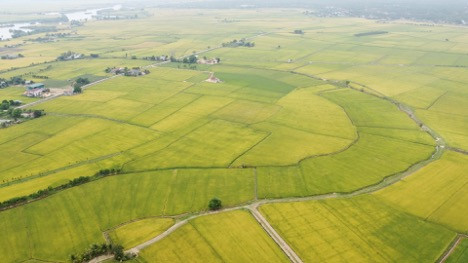
Given local conditions, Lam Dong has identified low-emission, high-tech agriculture as an inevitable development path. The province is accelerating the development of logistics systems, storage infrastructure, and agricultural services in key production zones, linked with multimodal transport and integrated e-commerce platforms.
Vision Toward 2030
Alongside achievements, the province faces mounting challenges from climate change, environmental pressures, and stringent export requirements regarding carbon footprints, traceability, and food safety. Notably, Lam Dong generates around 4.8 million tons of agricultural by-products, while reuse rates remain modest.
Reaffirming agriculture as a strategic pillar, Lam Dong has set clear targets for 2030, including:
- Average annual growth of 5–5.5% in agriculture–forestry–fisheries
- Maintaining forest coverage above 46.72%
- Expanding high-tech agricultural areas to over 150,000 hectares
To achieve these goals, the province will restructure agriculture toward a green, high-tech, circular economy, strengthen climate adaptation, sustainably manage land and water resources, protect and develop forests linked with carbon credits, and accelerate digital transformation.
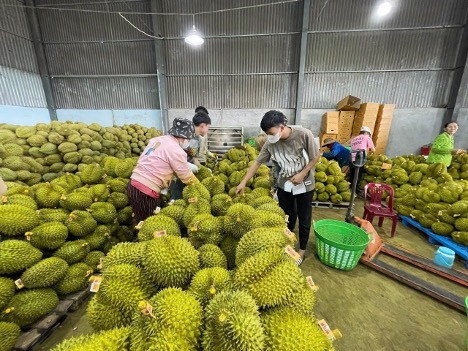
During the 2026–2030 period, Lam Dong will reorganize production around integrated value chains—production, processing, and consumption—targeting deep processing for 70% of key agricultural outputs. The application of digital technologies, automation, water-saving irrigation, and smart sensors is expected to cut irrigation water use by 20–30% and reduce agricultural inputs and greenhouse gas emissions by 25%.
With strong political determination and coordinated action across the entire system, Lam Dong’s agriculture is set to continue affirming its role as a solid economic pillar, laying a firm foundation for rapid and sustainable development in the next phase.