

Lam Dong Expands Toward the Sea, Redefining Growth Space for Breakthrough Development
With a dual-track strategy of accelerating key coastal projects while preparing a large-scale southern coastal economic zone, Lam Dong Province is actively repositioning its development geography—unlocking a new growth engine tied to the sea.
Forming a New Growth Pole Along the Coast
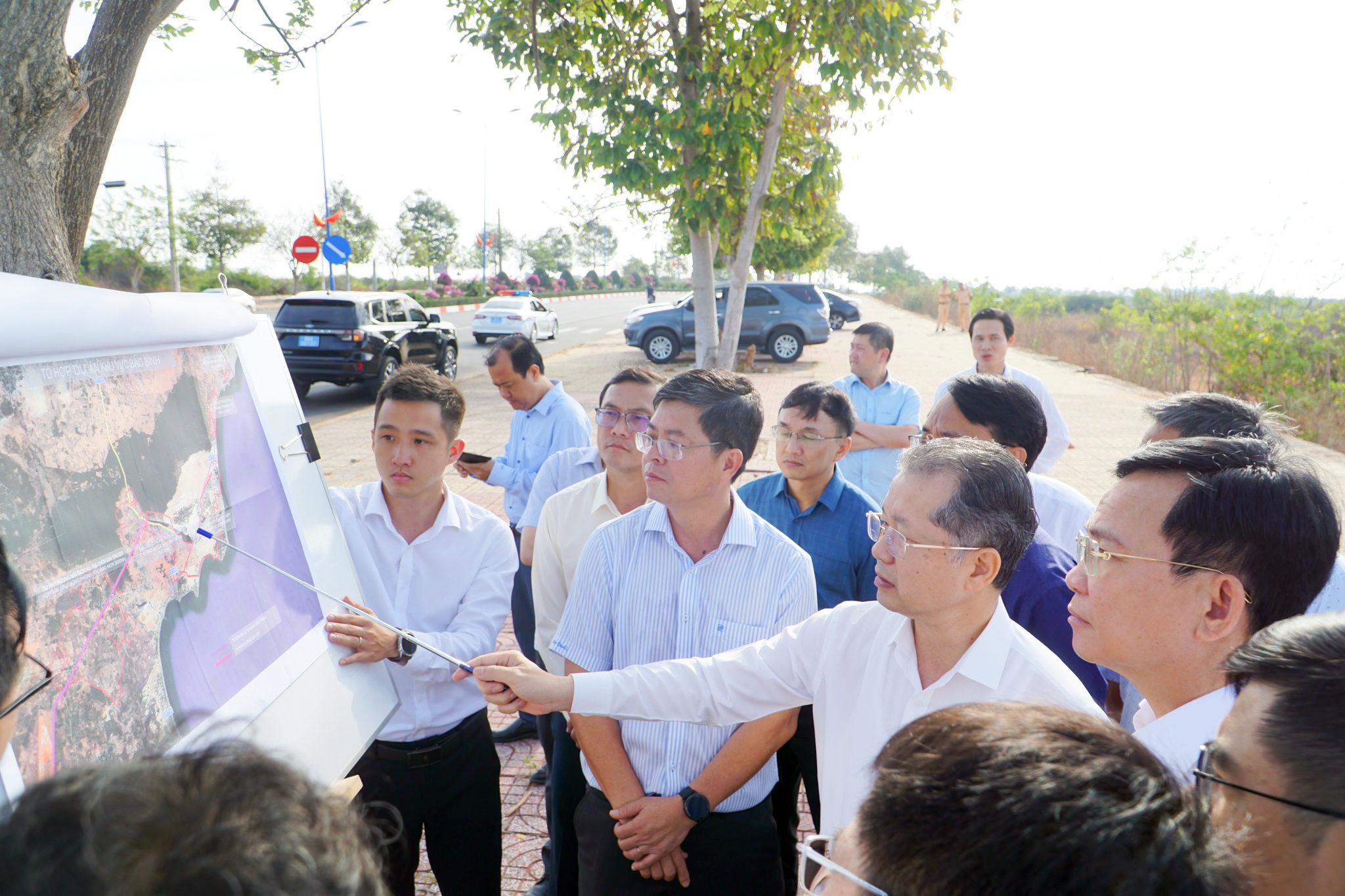
Following administrative restructuring, Lam Dong has become Vietnam’s largest province by area, spanning over 24,000 square kilometers, with 103 communes, 20 wards, and the Phu Quy Special Zone. The province borders Dak Lak, Dong Nai, Khanh Hoa, Ho Chi Minh City, Cambodia, and features a 192-kilometer coastline.
Building on this expanded footprint, Lam Dong is moving beyond its traditional strengths in high-tech agriculture and eco-tourism to accelerate the development of its coastal corridor, which is increasingly viewed as a strategic frontier for rapid economic growth.
Authorities have identified 19 key projects along the coastal belt, covering more than 22,038 hectares. These projects stretch from the DT706B axis (Vo Nguyen Giap Road) through Bung Thi – Ta Cu to Hoa Thang, focusing on urban development, tourism, infrastructure, and services, with total investment reaching tens of trillions of dong.
.jpg)
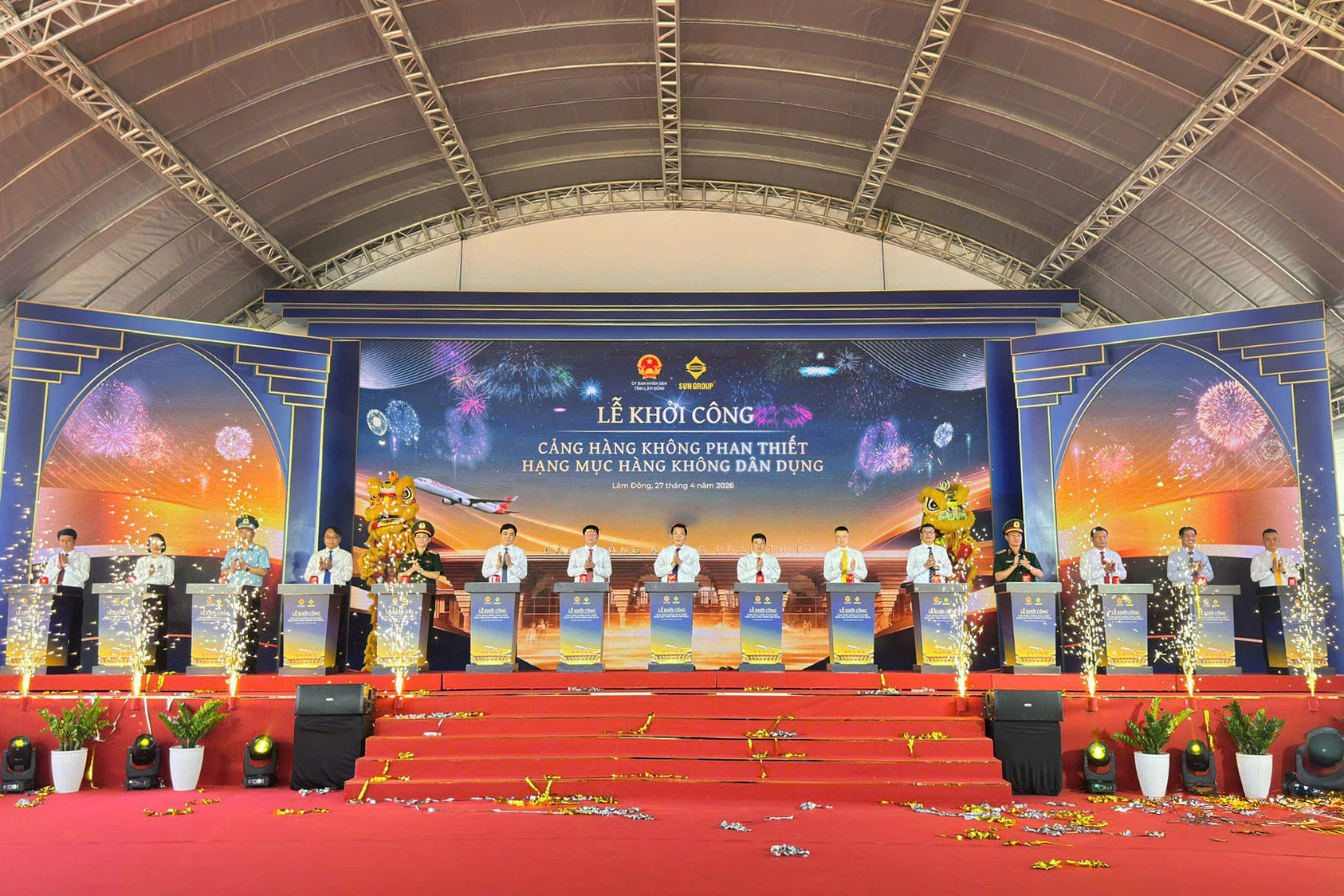
Two major projects, with combined investment exceeding VND 16 trillion, or approximately $630 million, already have investors in place. Notably, the civil aviation component of Phan Thiet Airport officially broke ground in late April 2026.
An additional four projects, totaling over VND 61.6 trillion ($2.4 billion), are currently in the investor selection phase, laying the groundwork for the next wave of development.
Parallel to these efforts, Lam Dong is finalizing plans for a southern coastal economic zone covering approximately 75,000 hectares—including 67,000 hectares of land and 8,000 hectares of sea area—across six localities: Son My, Ham Tan, Tan Minh, Tan Hai, Phuoc Hoi, and La Gi.
Designed as one of Vietnam’s largest coastal economic zones, the area is expected to develop as a multi-sector hub integrating industry, seaports and logistics, urban services, energy, and coastal tourism.
Industrial land alone is projected to account for between 11,987 and nearly 14,000 hectares—over 18.6% of the total area—providing significant capacity to attract large-scale manufacturing projects.
A centerpiece of the plan is the Son My port complex, envisioned as a major logistics hub capable of handling 5.8–6.4 million tons of cargo annually, integrated with an LNG terminal and a 4,500 MW power center.
From Highland Strengths to a Maritime Growth Engine
Long recognized as a hub for high-tech agriculture and highland tourism, Lam Dong is now transitioning toward a more integrated economic structure—linking highlands, coastal zones, industry, logistics, and services into a unified growth model.
“The establishment of the southern coastal economic zone, together with key projects, will create a breakthrough in investment attraction, drive double-digit growth, and form a new growth pole with strong spillover effects across the provincial economy,” said Chairman of the Lam Dong People’s Committee Ho Van Muoi.
This emerging development space is reinforced by expanding regional transport infrastructure, including the North–South Expressway, National Highways 1A and 55, and coastal routes—enhancing connectivity with major economic centers.
From the southern coastal zone, distances are highly competitive: approximately 60 km to Cai Mep Port, 90 km to Long Thanh International Airport, and 150 km to Ho Chi Minh City. This positions Lam Dong as a strategic gateway within Vietnam’s southern key economic region.
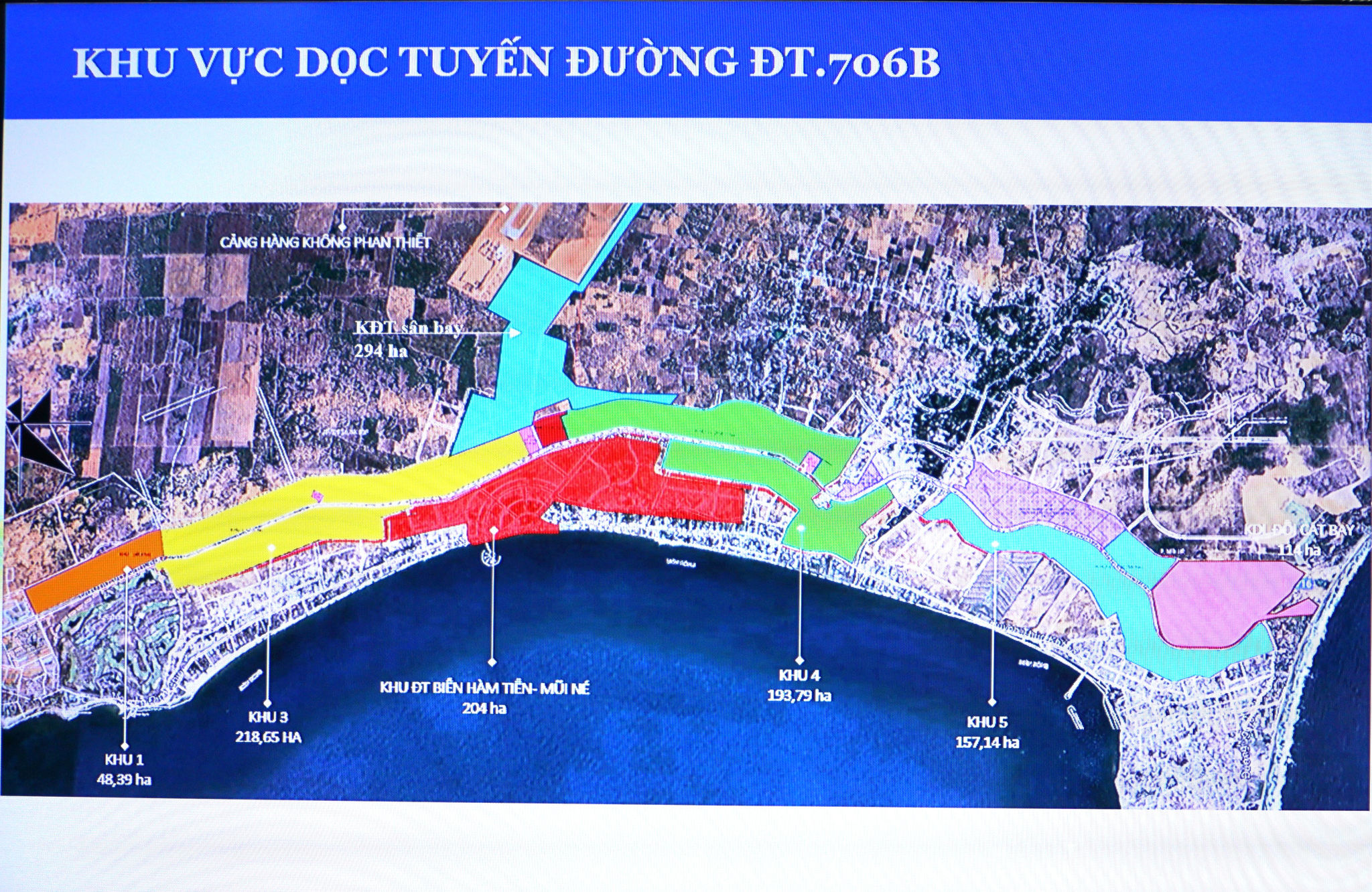
At a recent working session, Chief Justice Nguyen Van Quang emphasized that Lam Dong holds significant potential for rapid and sustainable development, particularly in tourism, high-tech agriculture, and the emerging marine economy.
He highlighted that the province’s spatial planning—integrating industrial zones, urban areas, logistics hubs, energy centers, tourism complexes, and non-tariff zones—demonstrates strong strategic vision and provides a solid foundation for attracting large-scale investment.
Population projections further underscore the scale of transformation: the southern coastal area is expected to reach around 300,000 residents by 2030 and 400,000 by 2050, driving demand for urban infrastructure, services, and a skilled workforce.
With clear strategic direction and major projects underway, Lam Dong’s coastal economy is poised to become a powerful new growth pole—enhancing competitiveness and elevating the province’s role within regional and national economic networks.