

Developing the Rehabilitation System: Improving Quality of Life for People with Disabilities
Lam Dong Province is implementing a comprehensive rehabilitation development program to ensure people with disabilities have equitable, continuous access to quality healthcare services.
Advancing Specialized Rehabilitation Services
The Lam Dong Provincial People's Committee has issued a plan to implement the Rehabilitation Development Program for the 2023–2030 period, with a vision toward 2050.
By 2030, the province aims to strengthen and expand its specialized healthcare network, with a strong focus on early disability prevention. More than 90% of children from birth to six years old are expected to receive screening and early intervention for congenital disabilities.
To meet growing treatment demands, healthcare infrastructure will be upgraded across the province. All provincial general and specialized hospitals, as well as all regional medical centers, will be required to establish rehabilitation departments or traditional medicine and rehabilitation departments.
The Provincial Rehabilitation Hospital is expected to become the leading specialized rehabilitation facility, capable of performing at least 90% of approved technical procedures and achieving a “good” quality rating or higher under Ministry of Health standards.
In addition, the provincial health sector plans to expand advanced rehabilitation services for stroke patients, including physical therapy, speech therapy, electrotherapy, and assistive device support. Lam Dong also aims to achieve a minimum ratio of 0.5 rehabilitation healthcare workers per 10,000 residents while strengthening continuous professional training for medical staff.
According to Trinh Van Quyet, Deputy Director of the provincial Department of Health, the sector is actively implementing development plans for traditional medicine and rehabilitation in the new phase. The department is reviewing professional operations before and after the provincial merger and discussing technical cooperation and technology transfer with central hospitals and medical institutions in Ho Chi Minh City.
The Department of Health has assigned the Pham Ngoc Thach Traditional Medicine Hospital and the Provincial Rehabilitation Hospital to lead the development of future strategic plans for both sectors.
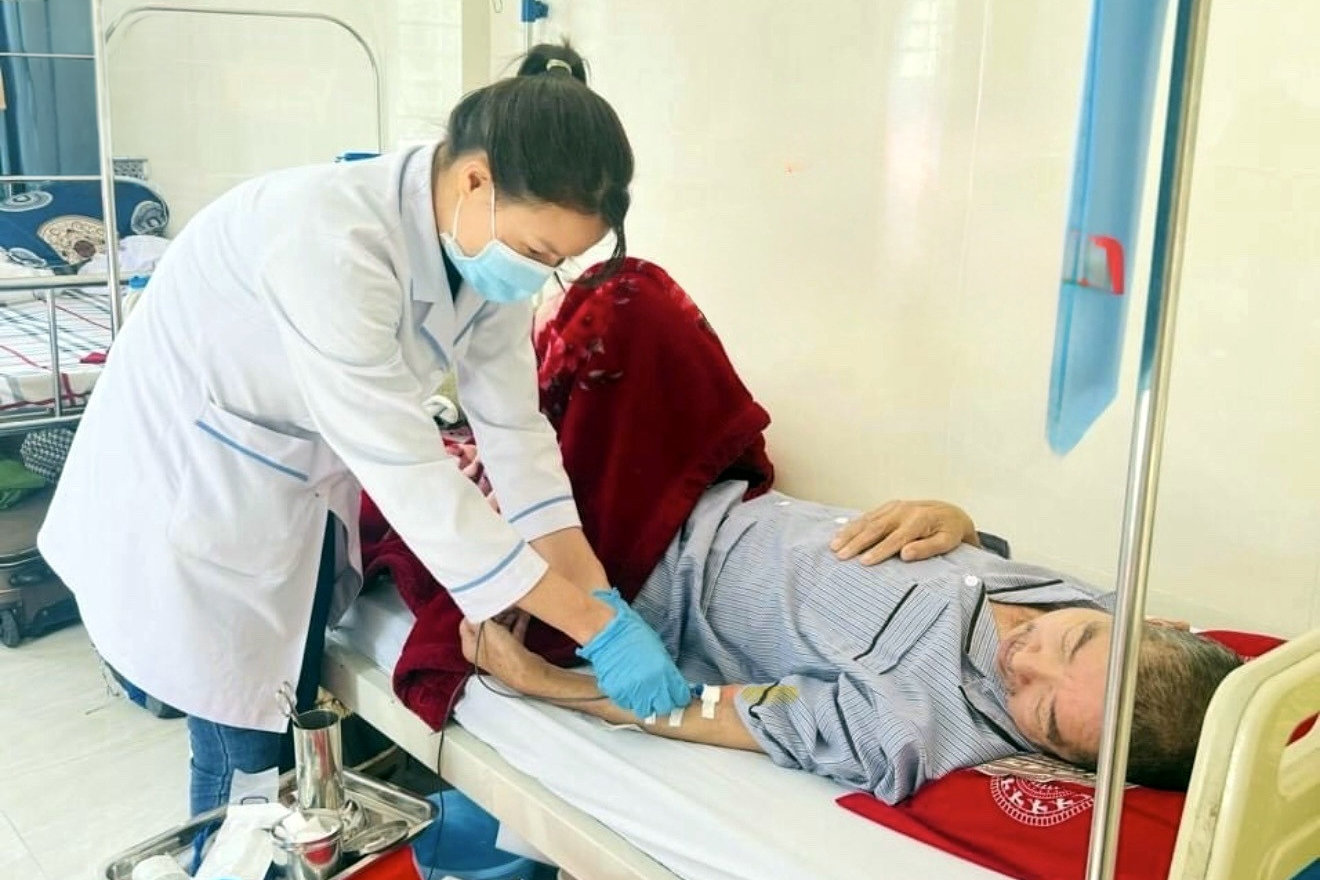
Patients receive intravascular laser therapy at the Provincial Rehabilitation Hospital.
Pham Thi Van Anh, Director of the Provincial Rehabilitation Hospital, said the hospital has launched a cooperation program with the Wonkwang University Oriental Medicine Hospital in South Korea for the 2026–2028 period to accelerate the transfer of advanced rehabilitation technologies.
As the province’s leading rehabilitation institution, the hospital has successfully combined modern medical technologies with traditional medicine to provide comprehensive treatment for both adults and children.
Over the next three years, the international partnership will prioritize key specialties such as electroacupuncture, advanced post-stroke rehabilitation, speech therapy for children with autism, and occupational therapy. The cooperation is expected to enhance the capabilities of healthcare professionals while providing residents and visitors with access to cutting-edge treatment methods.
Expanding Community-Based Rehabilitation
A key component of Lam Dong’s strategy is bringing rehabilitation services closer to residents through a Community-Based Rehabilitation (CBR) model.
The province aims for 100% of communes, wards, and special administrative zones to fully implement the model by 2030. Priority services will target vulnerable groups and beneficiaries of social policies, including war veterans, Agent Orange/dioxin victims, older adults, people with mental health conditions, and children with autism.
Looking toward 2050, rehabilitation services are expected to become increasingly socialized, with participation from both public and private institutions. Community-based rehabilitation will be integrated with broader social services, creating a comprehensive support network for people with disabilities.
To ensure effective implementation, the Provincial People's Committee has directed government agencies to clearly define responsibilities and strengthen inter-sectoral coordination.
This collaborative approach is expected to help Lam Dong build a more inclusive, equitable, and compassionate living environment, enabling people with disabilities to confidently integrate into society and improve their quality of life.