

Policy Support Boosts Cooperative Development in Lam Dong
Lam Dong’s collective economy and cooperative sector are showing renewed momentum. Many cooperatives have boldly adopted high-tech applications, joined production value chains, developed OCOP products, and expanded their markets.
.jpg)
Empowering Cooperatives to Grow
In the province's agricultural regions, from advanced vegetable and flower farms in Da Lat to the cultivation of dragon fruit, cashew, macadamia, and silk production in other areas, numerous cooperatives are increasingly demonstrating their importance as vital forces in production networks, uniting farmers and increasing the value of agricultural goods.
Cooperatives like Vuon Nha Da Lat, Tan Tien, Thanh Thai, and Hoang Nguyen have actively transformed their operations, broadened their markets, enhanced the quality of their products, and gradually built their own brands.
A significant factor behind this transformation has been the synchronized execution of support initiatives in recent years. Between 2021 and 2025, the industry and trade sector provided assistance to 15 agricultural cooperatives to enhance their machinery and production equipment, with total funding amounting to nearly VND 5.8 billion. This assistance has empowered numerous cooperatives to embrace new technologies, streamline production processes, and boost both productivity and product competitiveness.
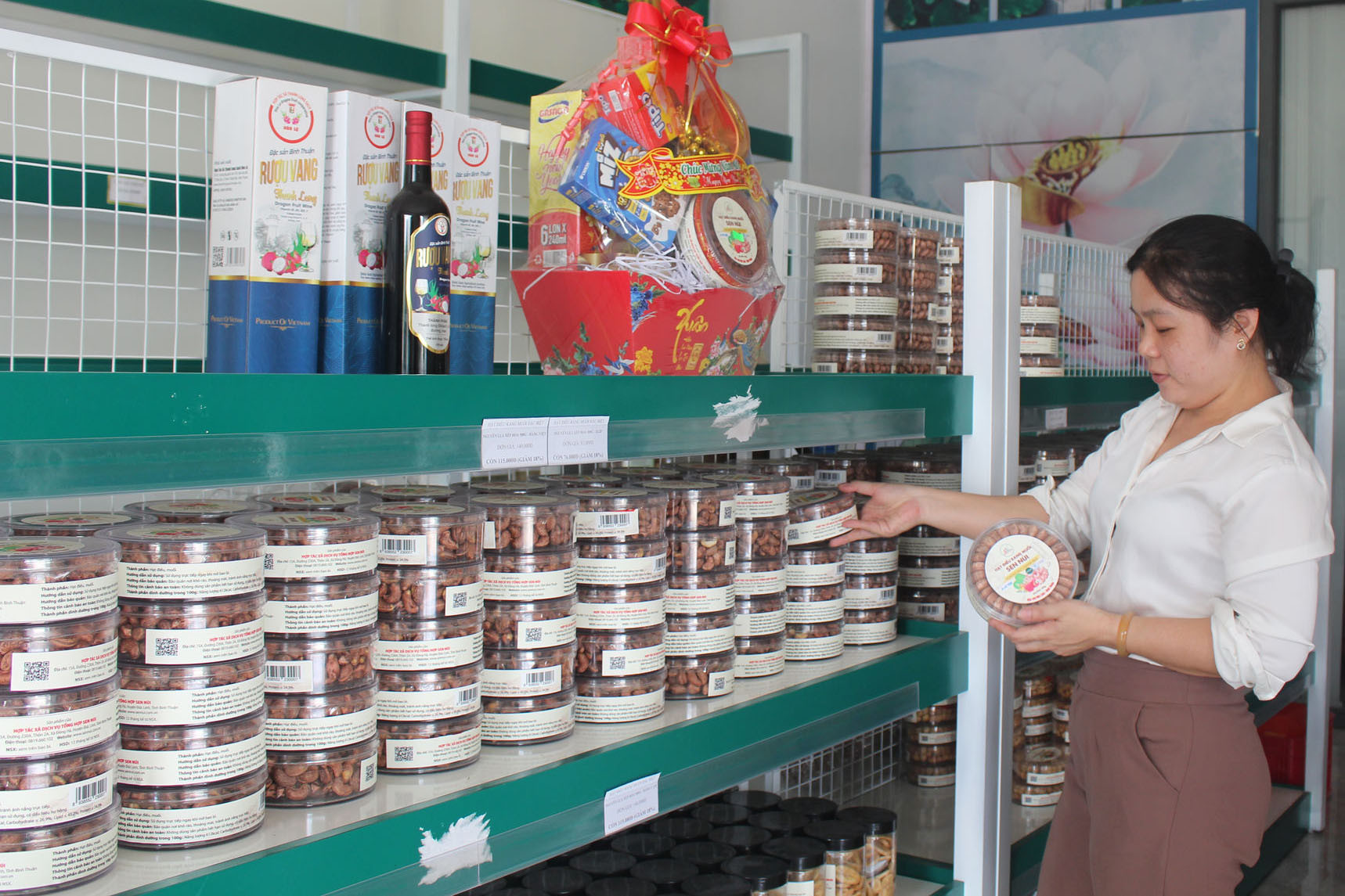
Additionally, efforts to enhance trade promotion activities have been ongoing. A total of 127 cooperative participations have been facilitated at trade fairs, exhibitions, and supply-demand connection events both within and outside the province, while 32 cooperatives were supported in competitions recognizing outstanding rural industrial products.
Numerous OCOP products and local specialties have been advertised via digital platforms and e-commerce marketplaces, opening up new avenues for reaching consumers.
The agricultural sector continues to play a pivotal role in supporting cooperatives by developing raw material regions, issuing growing area codes, implementing product traceability systems, advancing OCOP product development, and enhancing management capabilities. These initiatives are aiding many cooperatives in progressively meeting the increasingly rigorous demands of both domestic and export markets.
.jpg)
Policies Must Align with Practical Needs
Although there are positive outcomes, cooperatives still encounter various obstacles, especially in marketing their products and creating sustainable value chains.
An example of this is the Hoai Duc Agricultural Trade and Services Cooperative, which currently manages the cultivation of around 50 hectares of Dan Kha green-skinned pomelos involving 15 farming households. This product has been certified as a three-star OCOP products and is being cultivated according to safe agricultural practices, aiming to obtain VietGAP certification.
Nguyen Van Hung, director of the cooperative, mentioned that the organization has consistently taken part in supply-demand matching events and product promotion activities in localities like Can Tho and Da Nang. Nonetheless, the majority of its products are still sold through wholesale markets, traders, and a limited number of small businesses.
Hung added that, in addition to product exhibitions and promotional efforts, the cooperative aspires to develop long-term market connections with purchasing, processing, and distribution companies. Having stable market access would allow the cooperative to invest in production that complies with higher standards such as VietGAP and GlobalGAP, thereby enhancing product quality and increasing added value.
Insights from various cooperatives indicate that, alongside market-related obstacles, many organizations continue to face difficulties in securing capital, recruiting skilled personnel, improving management capacity, and advancing digital transformation. These challenges remain common across the collective economy as it adapts to increasingly competitive markets.
Support policies introduced in recent years have significantly contributed to cooperative growth, helping many organizations upgrade technology, expand market access, and increase product value.
Nevertheless, to unlock the full potential of the collective economy, there is a need for ongoing refinement of policies to ensure they are more closely aligned with real-world requirements, particularly addressing key areas such as market connections, digital advancement, management skill development, and brand enhancement.
When policies effectively address real needs and are implemented in a coordinated manner, cooperatives will not only improve their production and business performance but also become an important driving force for rural economic development and the advancement of a modern, sustainable agricultural sector.
Lam Dong’s Collective Economy by the Numbers
The province has a total of 12 cooperative unions with a combined charter capital of VND 25.5 billion and is home to 1,230 cooperatives operating in various fields. Out of these, 976 are classified as agricultural cooperatives, making up nearly 80 percent of the overall figure. The cooperative sector generates total revenues of about VND 2.575 trillion, with an average profit of VND 289 million for each cooperative annually. The average yearly income for employees working in cooperatives is approximately VND 75 million per individual.
Currently, Lam Dong has 109 cooperatives along with 20 cooperative groups that have a total of 191 OCOP products rated between three and four stars. Moreover, 235 cooperatives and cooperative groups are involved in value-chain collaborations that include over 14,000 farming households.