

Keeping the Brocade Weaving Tradition Alive in the Highlands of Lam Dong
From Pi Nao Village to the foothills of Lang Biang Mountain, the rhythmic sound of weaving looms continues to echo each day, helping preserve the traditional brocade weaving craft of ethnic communities. Beyond safeguarding cultural identity, the craft is also creating sustainable livelihoods for local women and residents.
Preserving Cultural Heritage Through Traditional Weaving
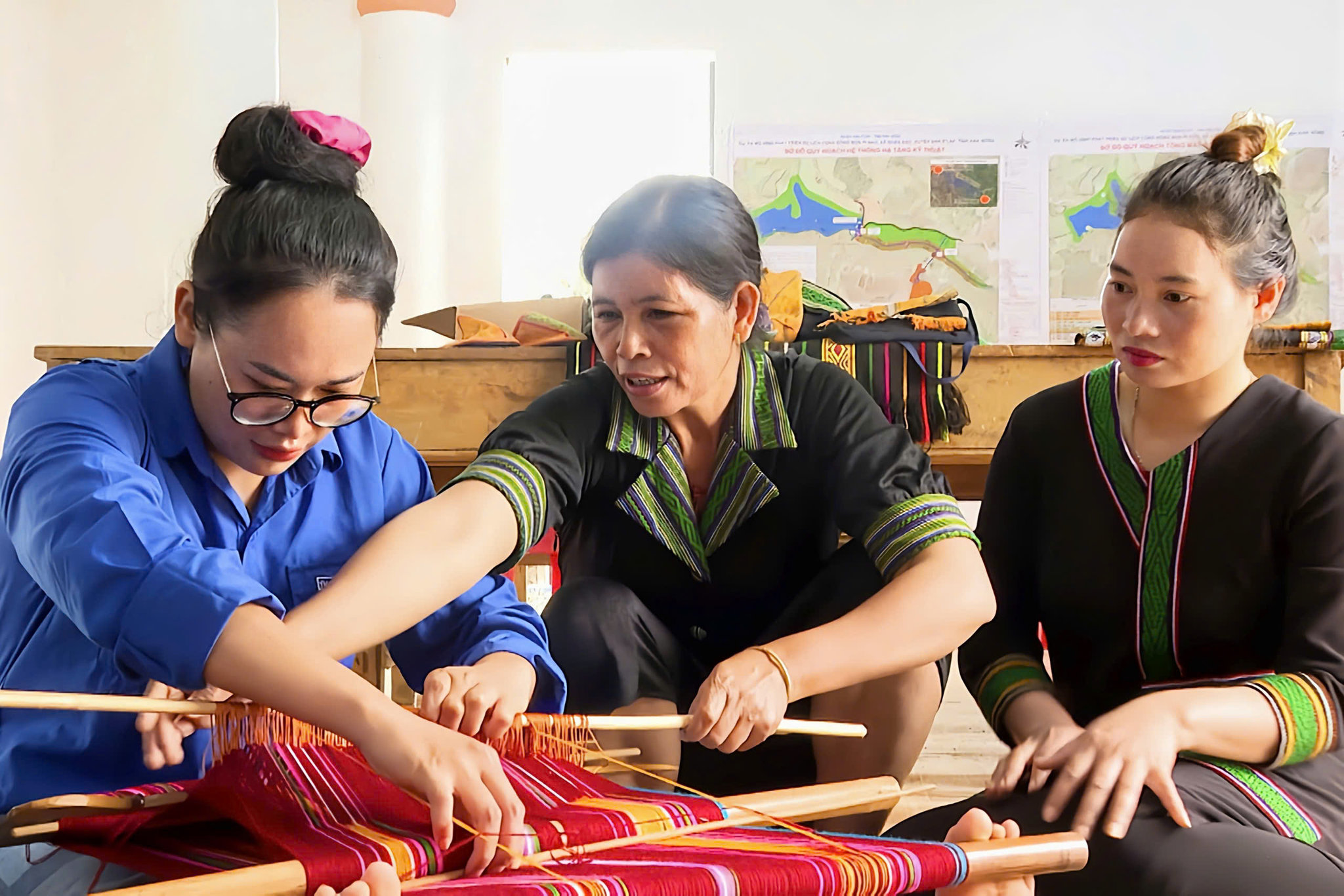
These days, as the late afternoon sunlight casts a golden glow over the houses of Pi Nao Village in Nhan Co Commune, the steady clatter of weaving looms can still be heard from the community cultural house. More than signaling the creation of new fabrics, these sounds reflect the enduring vitality of the Mnong people's traditional brocade weaving craft.
One of the key figures keeping this tradition alive is artisan H’Yon, Secretary of the Party Cell of Pi Nao Village. With more than 40 years of experience at the loom, she is regarded as one of the most knowledgeable individuals in traditional weaving techniques and the meanings behind each pattern.
Brocade weaving is not simply about creating products for daily use. It is also a way of preserving the history, customs and traditions of the Mnong ethnic group. Every motif woven into the fabric carries a unique meaning, reflecting labor, nature and the spiritual beliefs of the community.
Artisan H’Yon, Secretary of the Party Cell of Pi Nao Village.
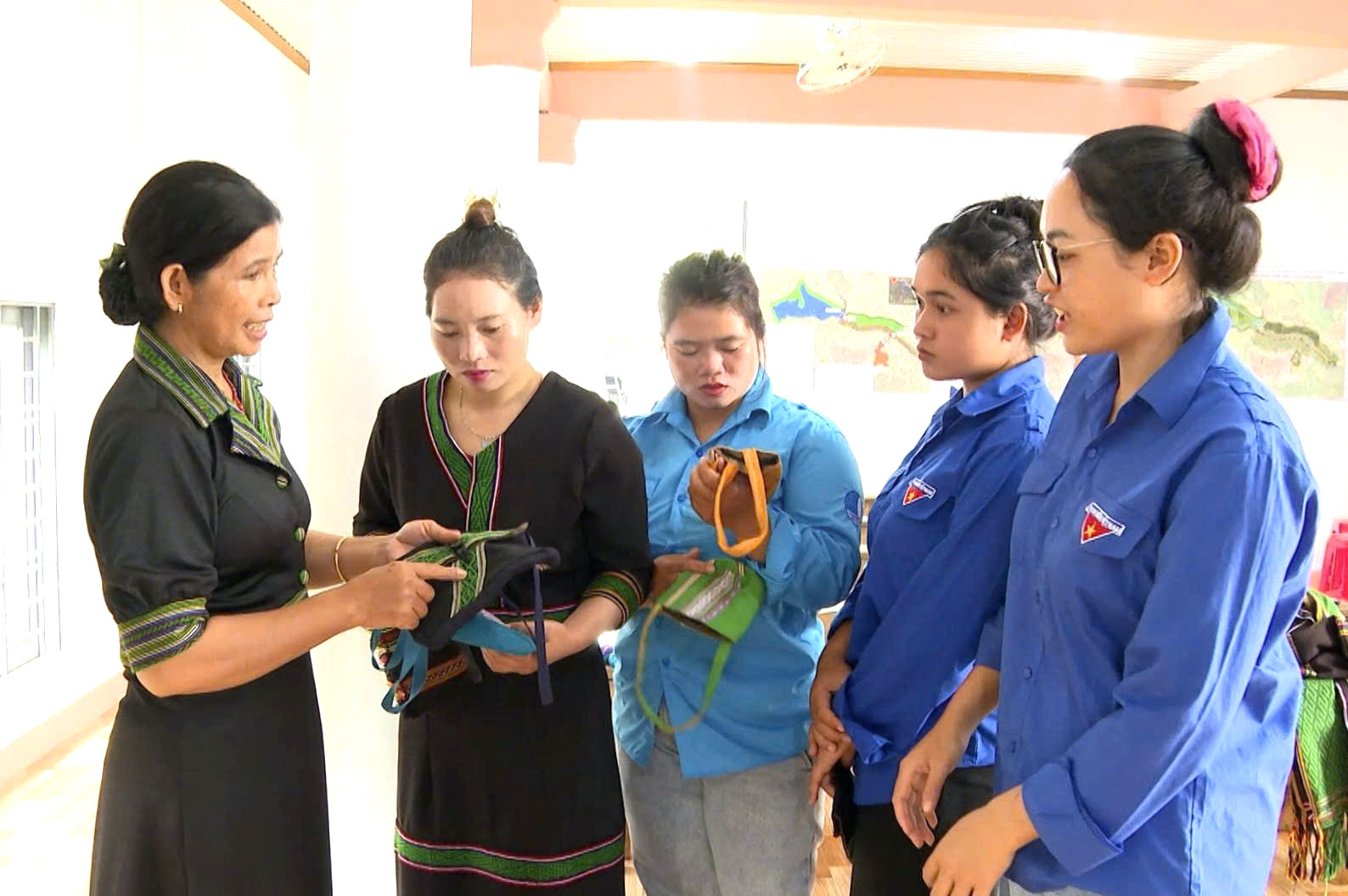
Artisan H’Yon established the Pi Nao Brocade Weaving Cooperative Group to preserve the craft and provide opportunities for younger generations to learn traditional weaving. Beyond teaching technical skills, she also shares stories behind each pattern, helping young people better understand their cultural heritage. This combination of vocational training and cultural transmission has created a strong attraction for learners.
H’Hoa, a young woman participating in weaving classes, said that weaving initially appeared simple, but practical experience revealed the patience and meticulousness required. Every pattern follows its own set of rules, and even small mistakes can affect the final product.
In addition to fabrics and traditional costumes, local women have expanded their creations to include handbags, wallets, scarves, ties, sandals and souvenirs featuring brocade patterns. These products not only serve practical needs but have also become popular gifts among visitors to Pi Nao Village. This approach is helping integrate traditional weaving with community-based tourism while generating additional income for local residents.
Weaving New Opportunities Beneath Lang Biang Mountain
In Dang Gia Det B Village and Pang Tieng Village in Lang Biang–Da Lat Ward, weaving remains an integral part of daily life and a source of pride for the local ethnic community.
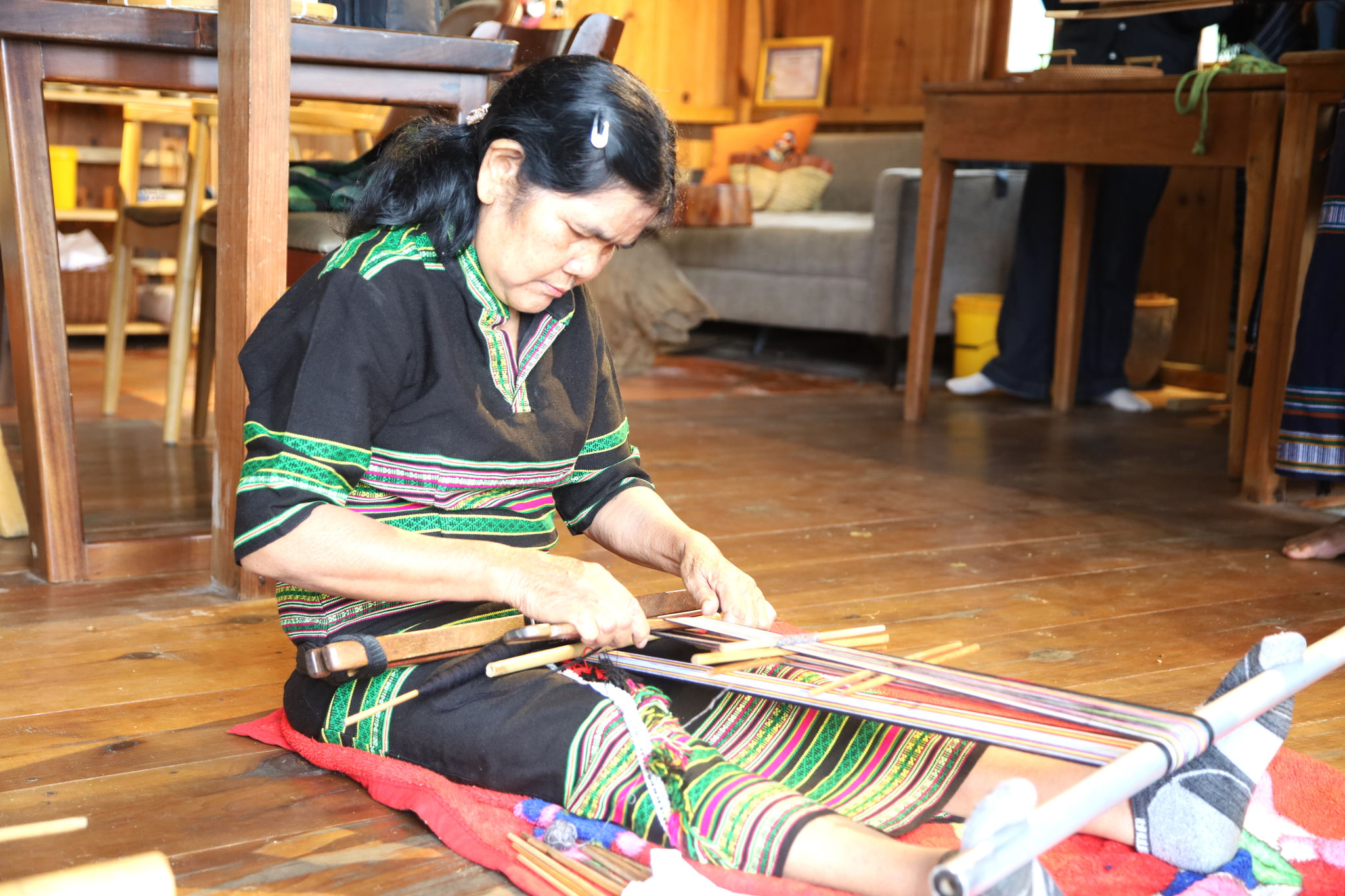
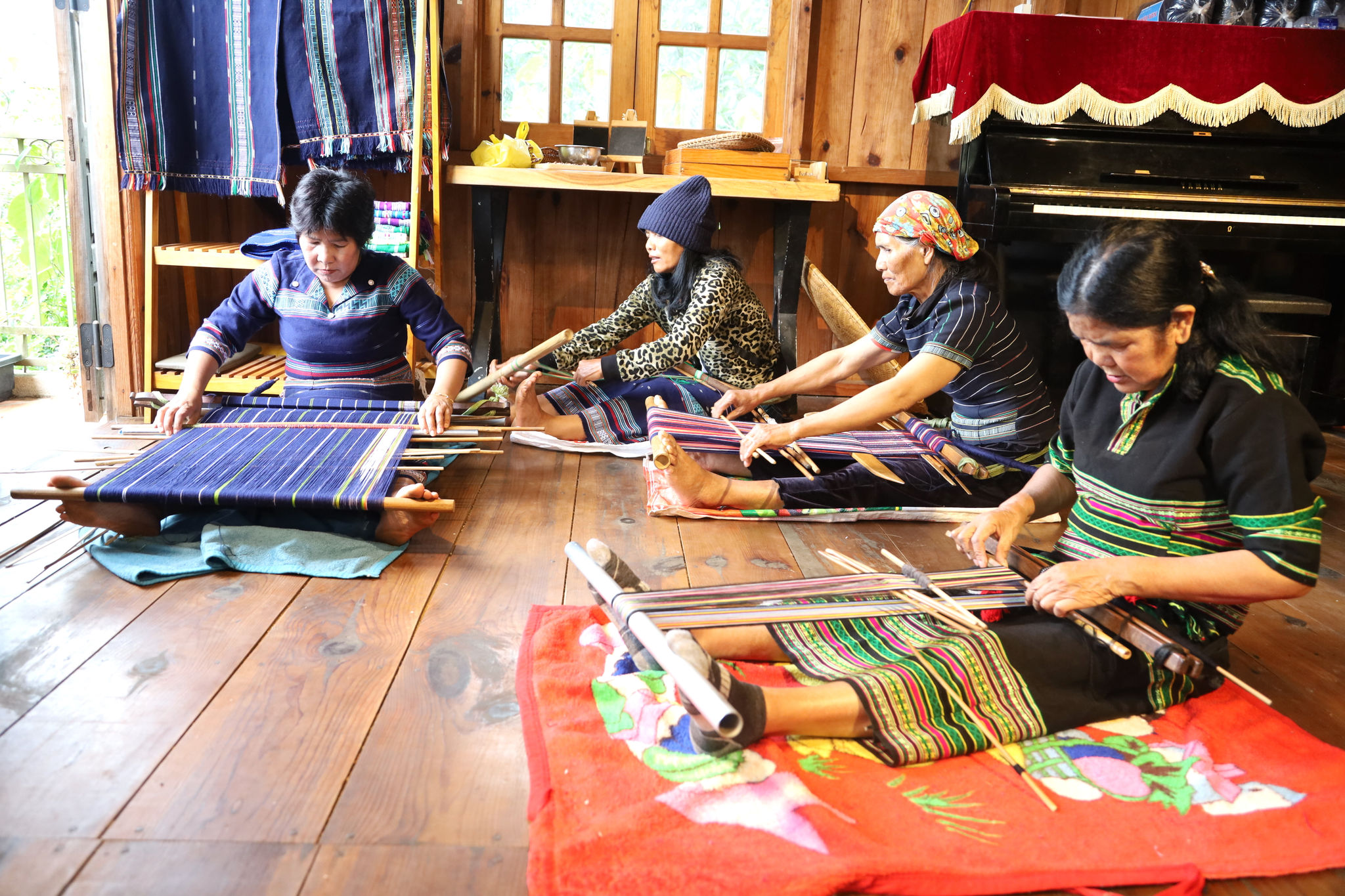
According to Bon Yo Lien, Chairwoman of the Women’s Union of Lang Biang–Da Lat Ward, around 80 people in the two villages are proficient in weaving traditional patterns. They represent an important force in preserving and passing the craft on to future generations.
Among those who have dedicated many years to the profession is Ro Ong K Gro of Dang Gia Det B Village. Since childhood, she has been taught by her mother and grandmother how to weave and preserve Cil ethnic cultural traditions. Over the years, weaving has become an indispensable part of her life.
According to Ro Ong K Gro, local people now primarily weave products based on customer orders. Completing a brocade piece requires approximately three consecutive days of work. Each product sells for between VND 650,000 and VND 700,000, depending on its size and the complexity of its patterns.
To meet market demand, local artisans have expanded beyond traditional products to create headbands, handbags, bracelets, ties, bookmarks, shawls and even brocade applications on traditional ao dai dresses. This diversification has enabled the craft to reach a wider customer base.
People who practice weaving regularly can currently earn around VND 6 million per month. Although not a high income, it provides a stable source of revenue that helps improve the living conditions of many families.
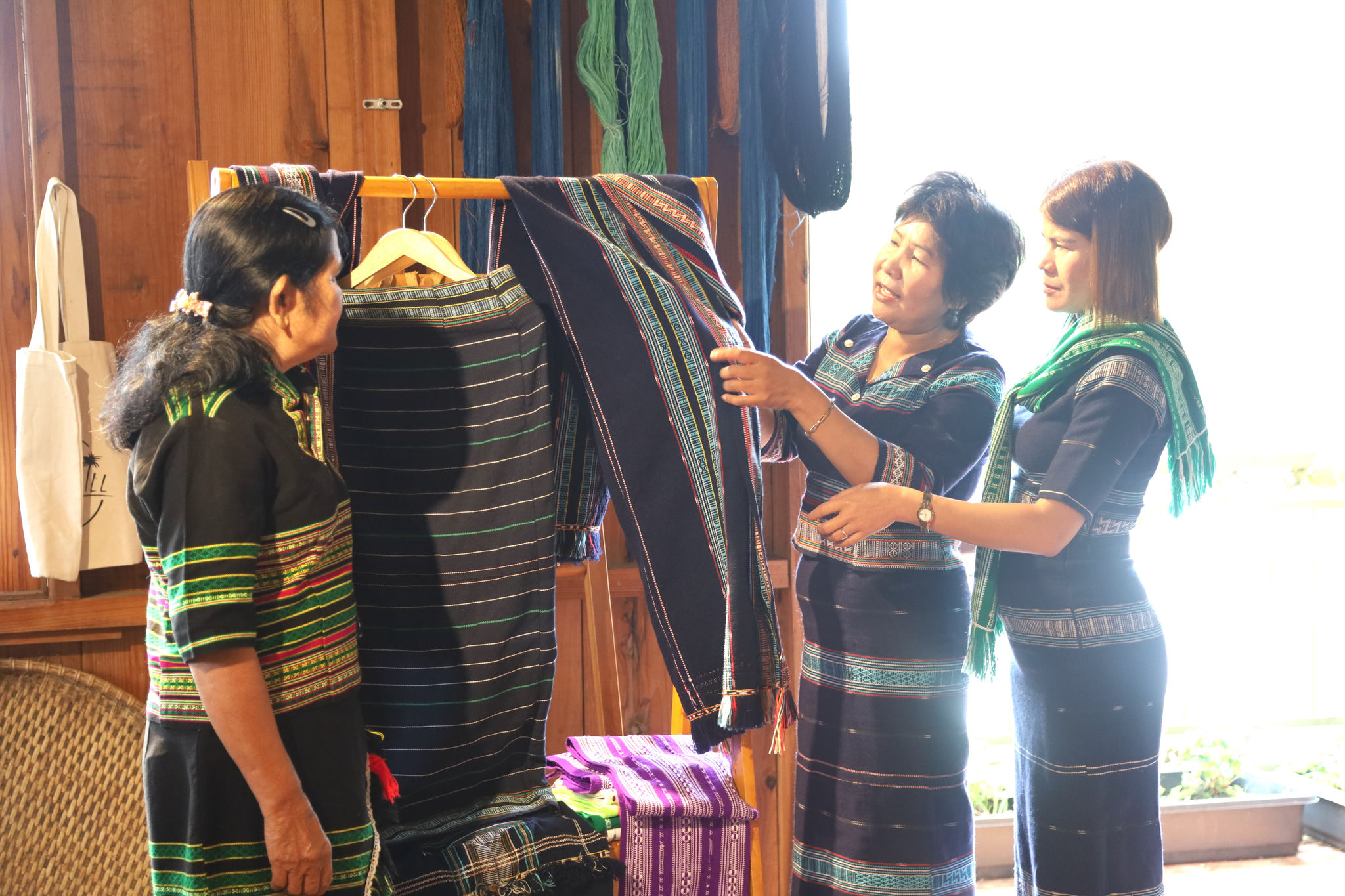
What is particularly valuable is that weaving in Lang Biang–Da Lat ward continues to be passed down within families. Grandmothers and mothers continue teaching younger generations how to weave, create patterns and preserve traditional cultural values. Thanks to this continuity, the sound of weaving looms still resonates throughout many homes beneath Lang Biang Mountain.
Amid the passage of time, local women remain dedicated to their looms, weaving the traditional colors and identity of their ethnic communities. Their efforts are helping brocade weaving endure and evolve, becoming a bridge that brings Lam Dong’s ethnic cultures closer to broader audiences.
According to Bon Yo Lien, preserving and developing the brocade weaving profession requires not only the dedication of artisans and local residents, but also stronger efforts to promote products, connect with community tourism and expand consumer markets.
The Women’s Union of the ward will continue coordinating with relevant organizations to provide vocational training courses, encourage women and young people to learn weaving and support the development of products that align with market demand.
We hope brocade weaving will not only preserve ethnic cultural identity but also become a sustainable livelihood that improves incomes for women and local communities.
Bon Yo Lien, Chairwoman of the Women’s Union of Lang Biang–Da Lat Ward