

Maximizing Revenue from Every Farm
More farms in Lam Dong are adopting sustainable agricultural practices to reduce production costs, maximize returns and deliver safer higher quality products while protecting consumers and the environment.
Expanding Smart Farming Solutions
A decade ago, Nguyen Duc Huy, who was born in 1984 and has a master's degree in biology, resigned from his government position to return to his family's 2,000-square-meter farm located in Lam Vien - Da Lat Ward. There, he started implementing Good Agricultural Practices (GAP) for European tomato varieties. Along with his colleagues, he created and improved an Internet of Things (IoT) based farming system that has been effectively optimized over the years.
The system employs a network of sensors to track light intensity, humidity, irrigation, nutrient levels, and growing media conditions within each planting bed. The gathered information is sent to a central server for storage, analysis, and automated crop management via a smartphone application. Right from the initial harvest, the smart farming solution resulted in significantly higher yields and higher quality tomatoes compared to traditional production methods.
Starting with an initial 2,000-square-meter pilot farm, Huy and his team have expanded the model over the last ten years to more than three hectares, growing over 30 varieties of vegetables, fruits, and herbs across seven farms in Lam Dong's central agricultural region. He is now broadening GAP production while incorporating global e-commerce platforms to secure consistent daily market access for farm products.
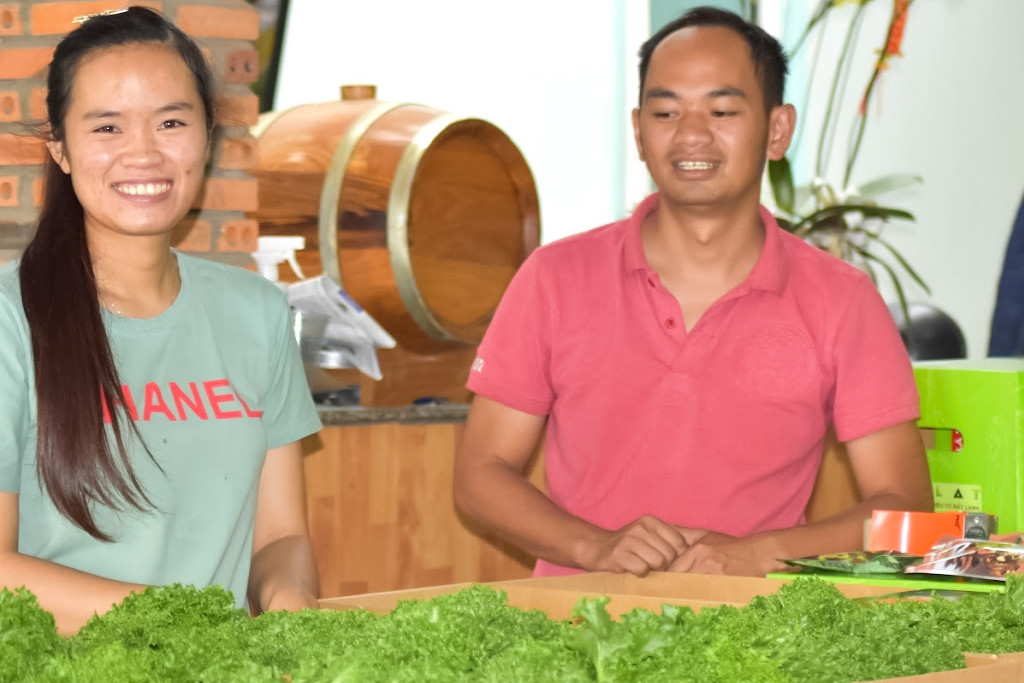
Truong Thi Hong Hanh manages a farm in Don Duong Commune that collaborates with 15 farming households over an area of more than 10 hectares, while complying with VietGAP standards. The farm has cut production inputs by 30 to 50 percent and has boosted yields by over 30 percent.
Hong Hanh stated, "Our farm uses drip irrigation along with automated fertigation to grow high-quality vegetables on media that allows for complete product traceability and registered planting area codes. This system ensures that our products meet the distribution standards of supermarkets across the country. Our main offerings consist of Sweet Palermo peppers, baby peppers, fruit tomatoes, chestnut squash, butternut squash, and red radishes. By the end of 2026, we aim to finish a processing facility that will be capable of washing, grading, and packaging in accordance with HACCP food safety standards, while also listing all our products on international e-commerce platforms."
Thirty GAP-Certified Units
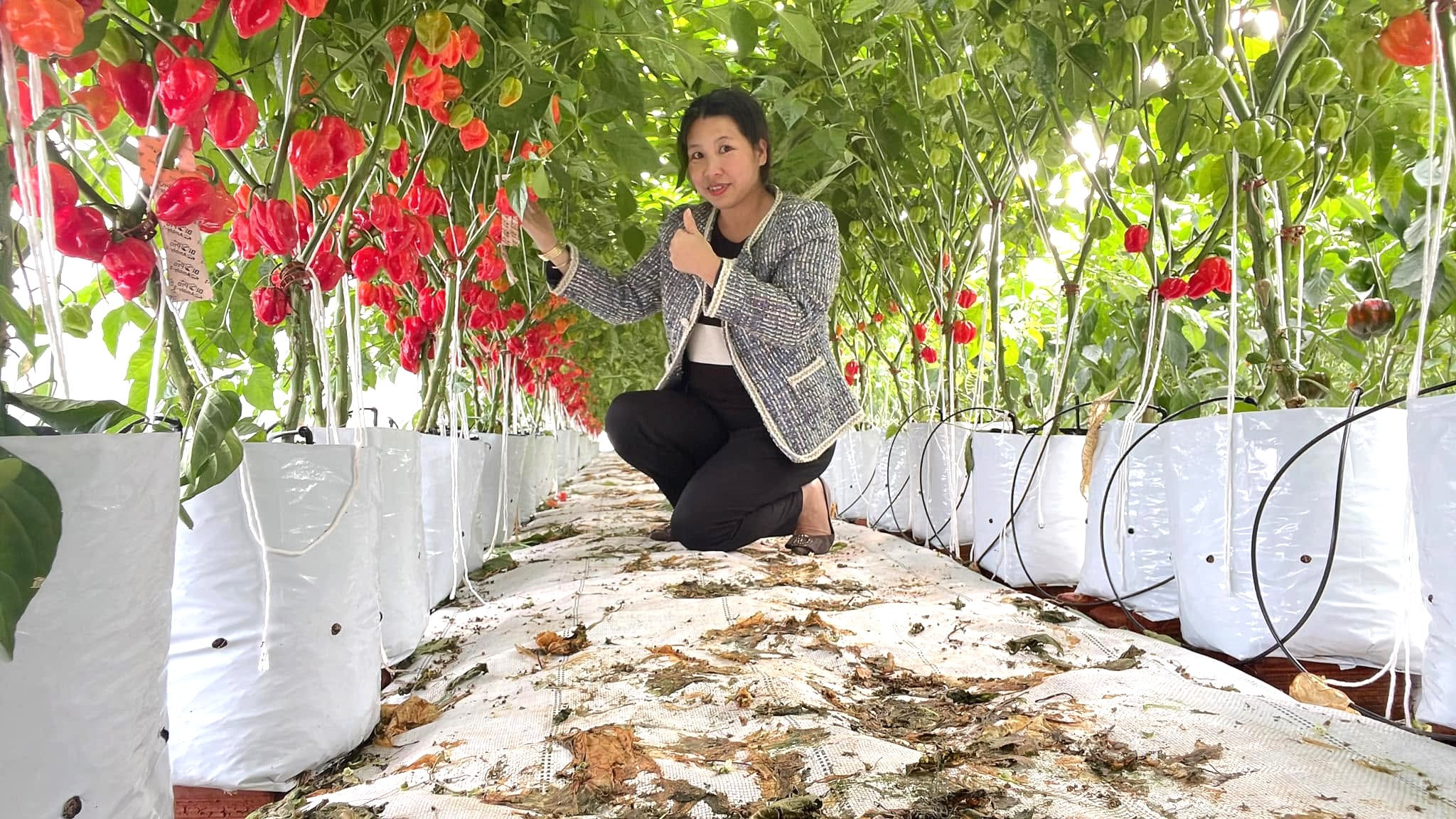
Another significant example is the farm owned by Nguyen Nhu Thuy in Dinh Van Lam Ha Commune, where cutting-edge European hydroponic water recycling technology has enhanced profitability.
On nearly one hectare dedicated to the production of high-quality sweet peppers, the farm utilizes a fully automated system that gathers, treats, and disinfects recirculating hydroponic water before mixing it with filtered groundwater and delivering nutrient-rich water back to the crops. This system is equipped with smart monitoring technology that automatically regulates crop growth and cultivation conditions based on the advancements the farm has developed and refined over many years.
Thuy noted, "For every 1,000 square meters of sweet peppers, each production cycle lasts between 10 and 11 months. By utilizing IoT technology along with recirculating hydroponic nutrient system, we are able to save approximately 35 million VND in fertilizer expenses and close to one million VND in electricity costs each season."
This model has now been implemented at eight nearby farms, spanning seven hectares dedicated to sweet pepper cultivation.
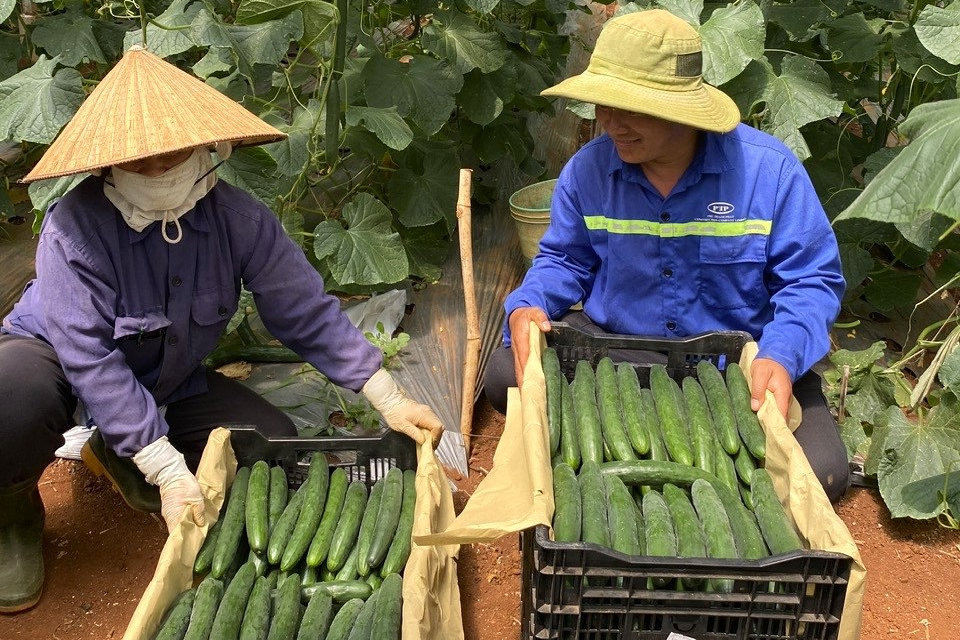
As reported by the Lam Dong Department of Agriculture and Environment, the province has recognized 30 Good Agricultural Practice units that qualify for ongoing government support programs, which include the three farms mentioned above.
Dinh Thi Hanh, Vice Chairwoman of the Lam Dong Cooperative Alliance, stated, "The province is home to 970 agricultural cooperatives, which make up almost 80 percent of all cooperatives. A growing number of these cooperatives are engaged in the production and marketing of fruits, vegetables, and other agricultural products, yielding greater profits than traditional farming methods, while also establishing integrated value chains that generate employment and ensure stable incomes for their members."
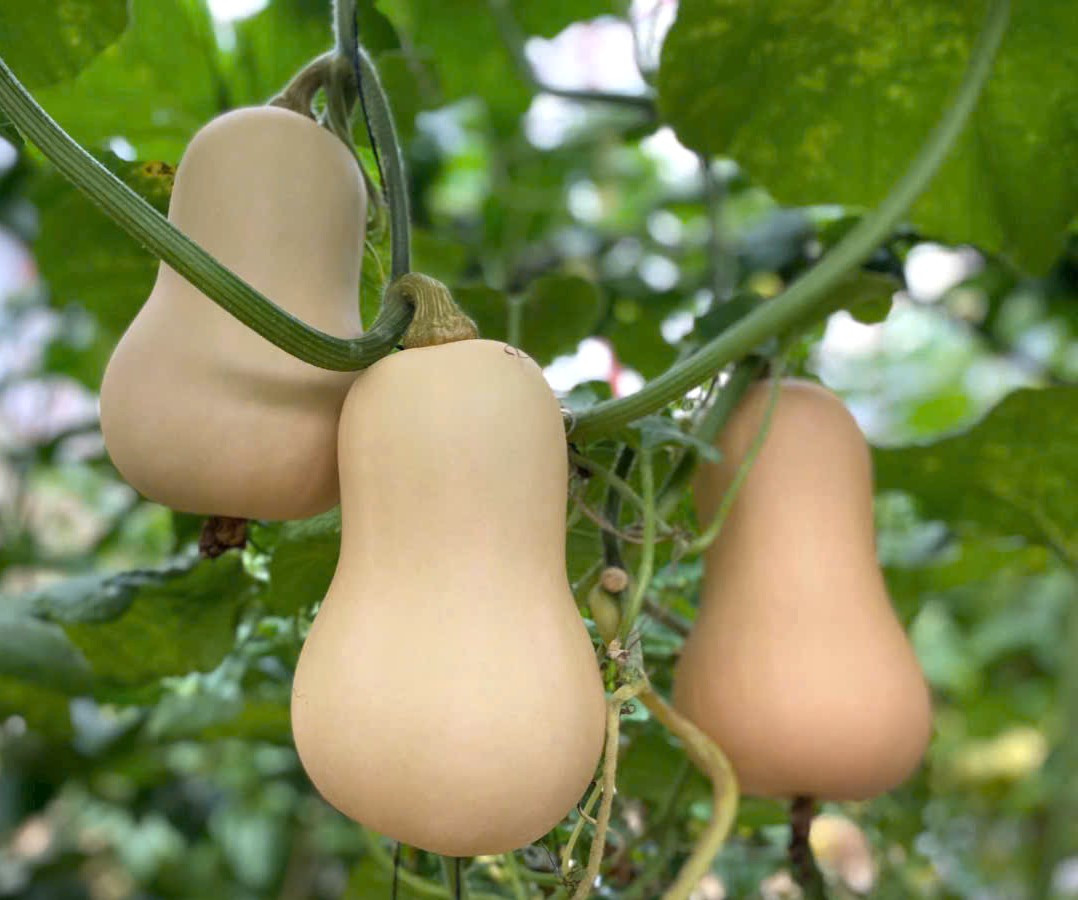
The province now has 970 agricultural cooperatives accounting for nearly 80 percent of all cooperatives. More cooperatives are achieving higher revenues through vegetable and fruit production while developing integrated value chains creating employment and generating stable incomes for member households.
Dinh Thi Hanh, Vice Chairwoman of the Lam Dong Cooperative Alliance