

Lam Dong Collects DNA Samples from Unidentified Martyrs’ Graves
On July 13, at Lam Dong Martyrs' Cemetery in Cam Ly - Da Lat Ward, the Lam Dong Provincial Steering Committee 515 launched a program to collect biological samples from unidentified martyrs' remains for DNA analysis and identification.
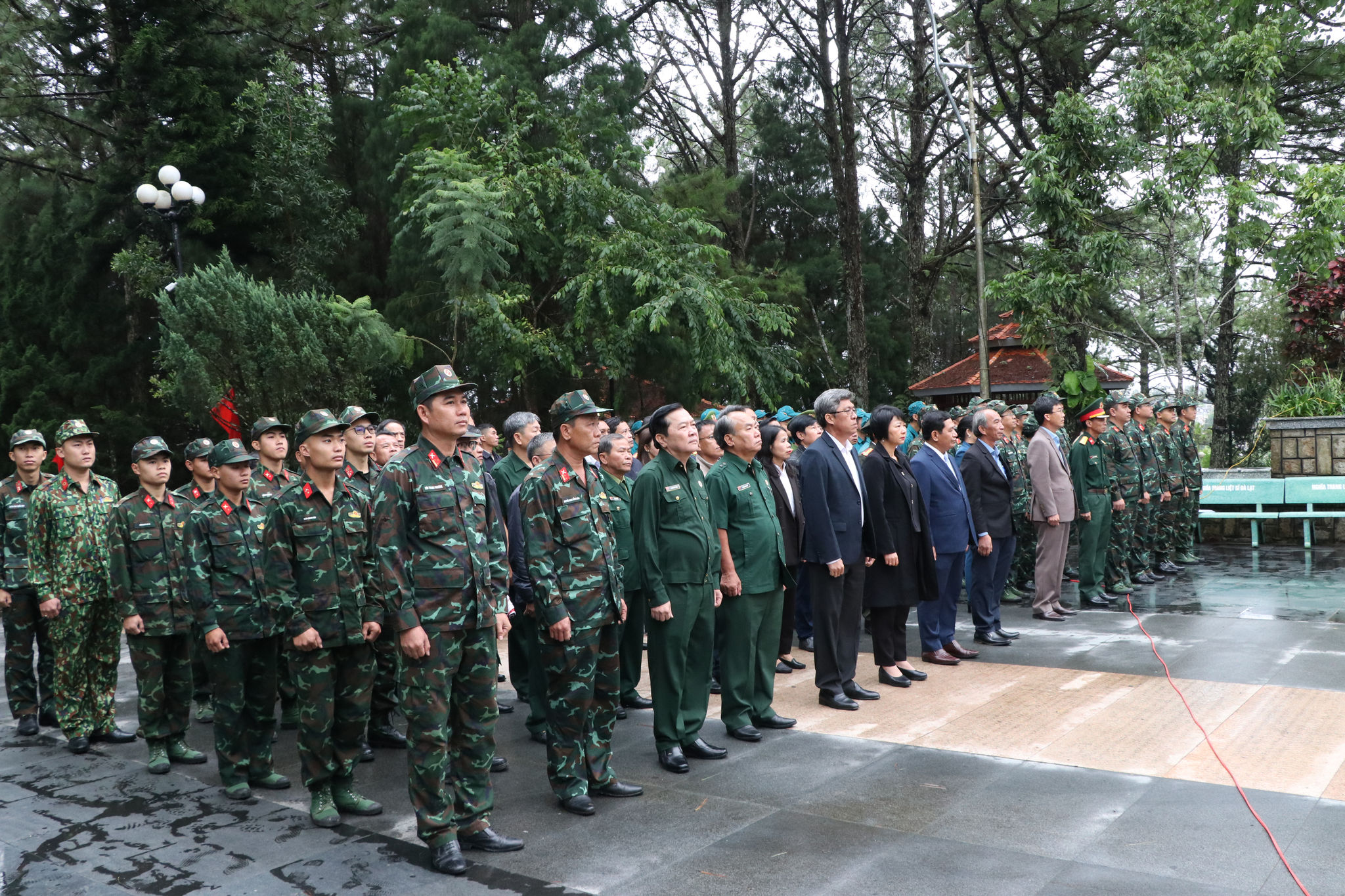
Attending the ceremony were Pham Thi Phuc, Deputy Secretary of the Provincial Party Committee and President of the Vietnam Fatherland Front Committee of Lam Dong Province; K' Mak, Member of the Provincial Party Standing Committee and Vice Chairman of the Provincial People's Council; Nguyen Minh, Provincial Party Committee Member and Vice Chairman of the Provincial People's Committee; along with leaders of provincial departments, agencies and local authorities in the Da Lat area.
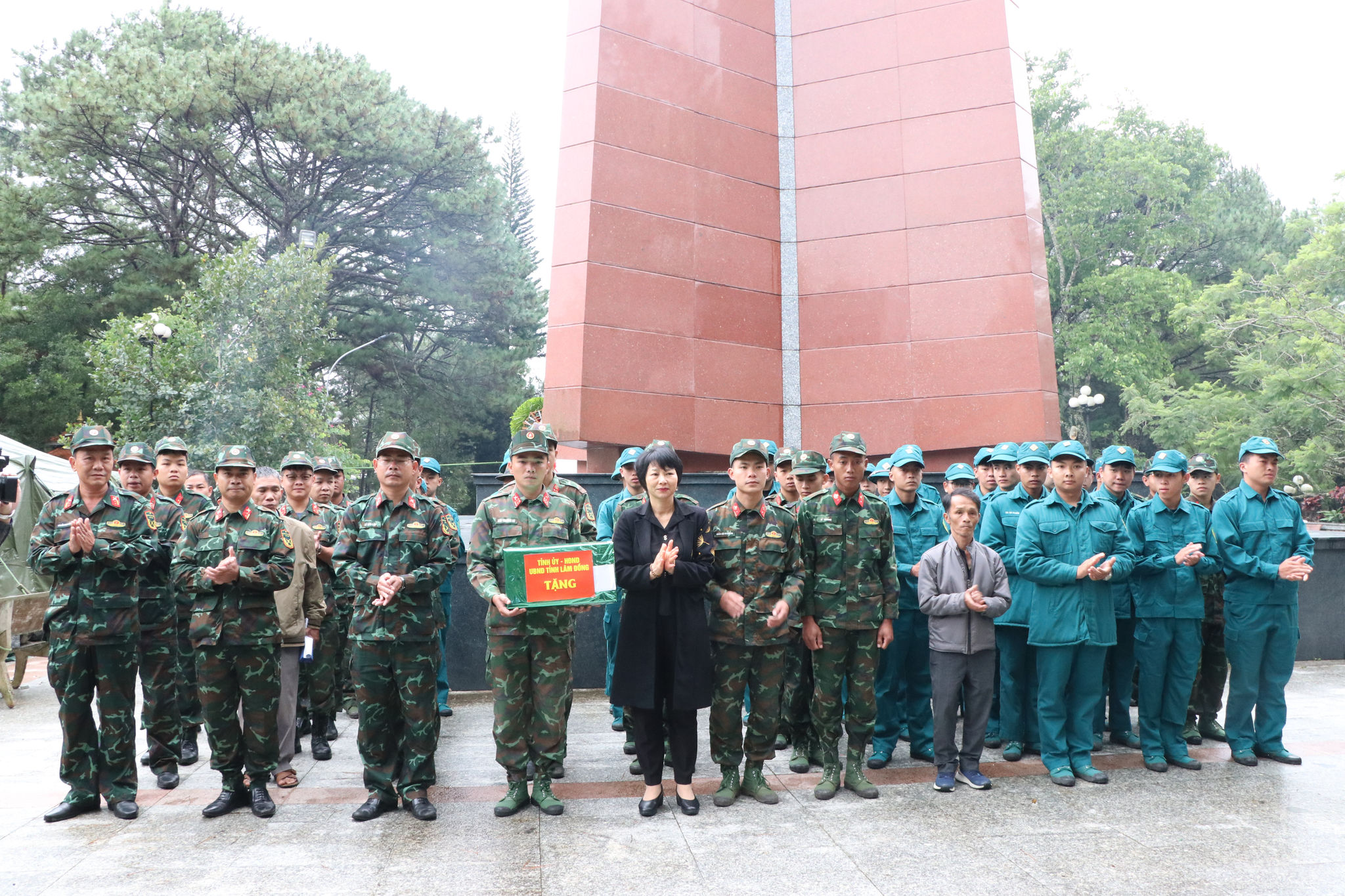
Lam Dong Martyrs' Cemetery is the final resting place of more than 2,000 heroic martyrs who sacrificed their lives for national liberation and the defense of the Fatherland. Of these, 651 graves remain unidentified.
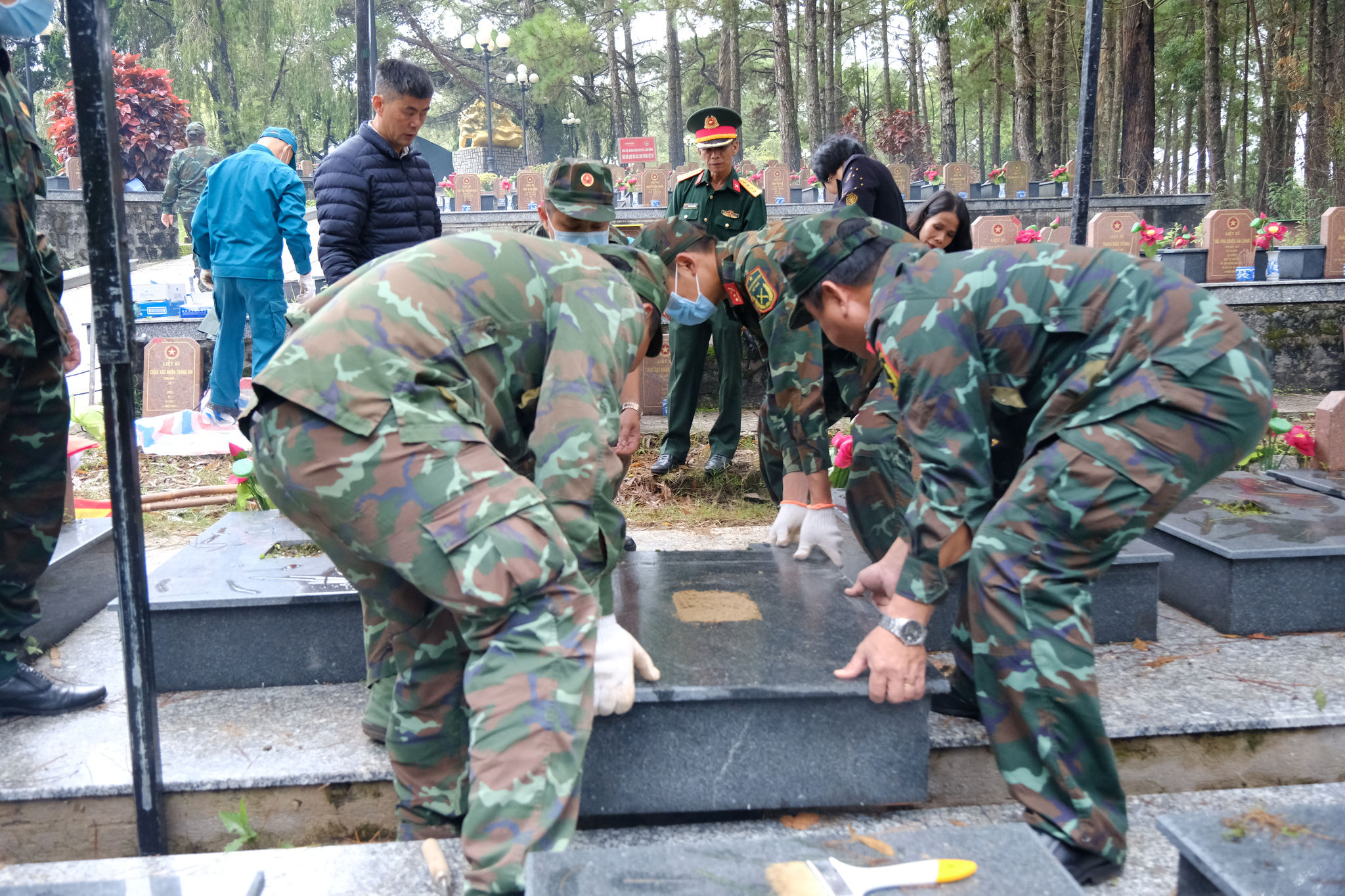
The unidentified graves will be exhumed for DNA sampling. Given the large number of graves, the Provincial Steering Committee 515 established five sampling teams to carry out the work simultaneously at the cemetery.
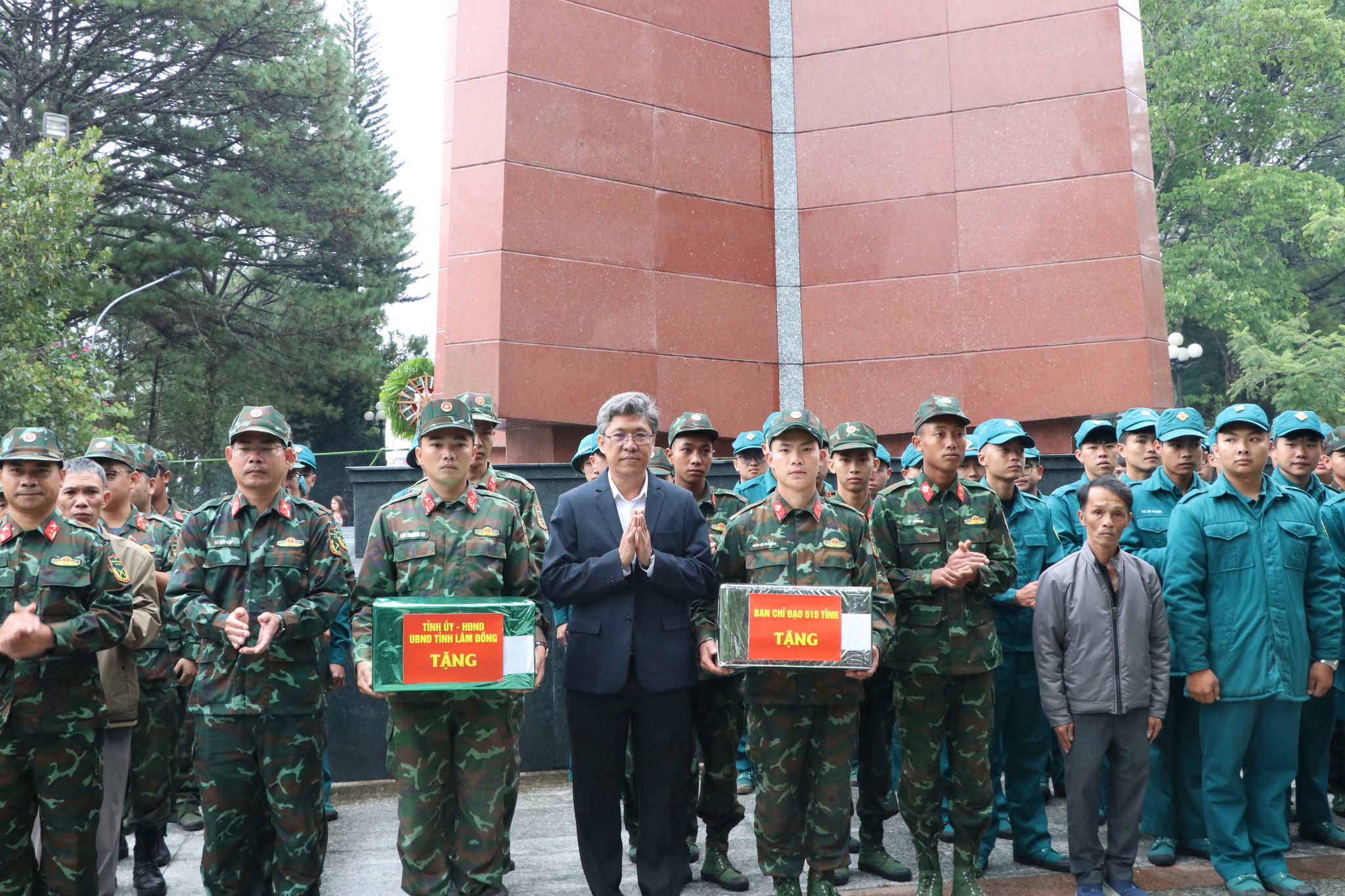
Before excavation and sample collection began, members of the Provincial Steering Committee 515 and local authorities offered flowers and incense at the memorial monument and martyrs' graves, paying tribute to the fallen and observing traditional spiritual rituals in accordance with Vietnamese customs.
.jpg)
Digitization and DNA Identification Advance Efforts to Restore Martyrs’ Identities
Following the commemorative ceremony, each sampling team moved to its assigned area and distributed specific responsibilities to ensure that excavation and sample collection were conducted in strict compliance with technical procedures and regulations.
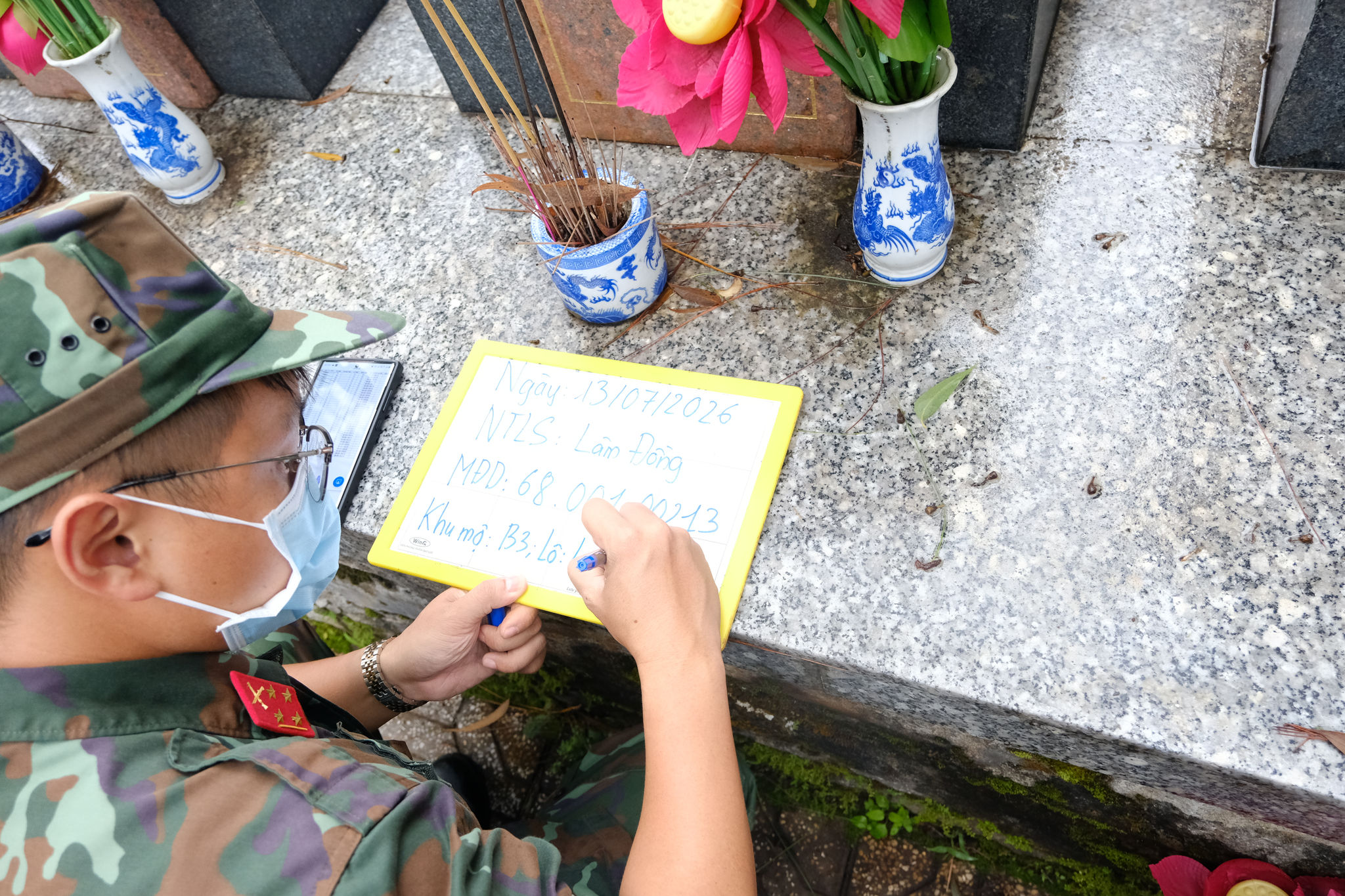
At each unidentified grave, personnel responsible for sampling and digital documentation recorded information on-site, including grave location, headstone details, collected specimen and related documentation, providing a comprehensive database for archiving, management, handover and subsequent DNA analysis.
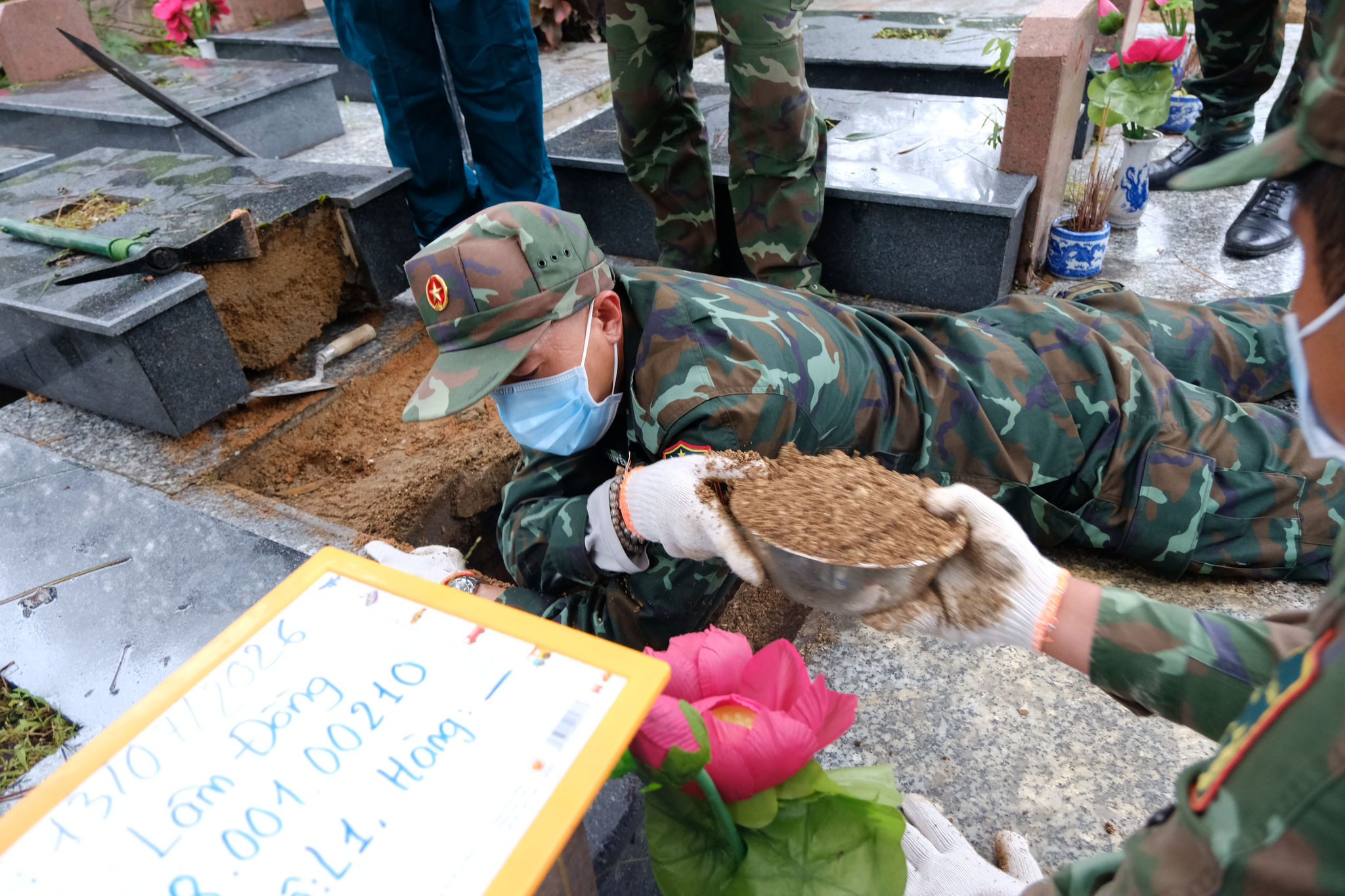
After the initial digitization process was completed, specialized equipment was used to carefully open each grave. The work followed established technical procedures to minimize disturbance to the original condition of the burial sites.
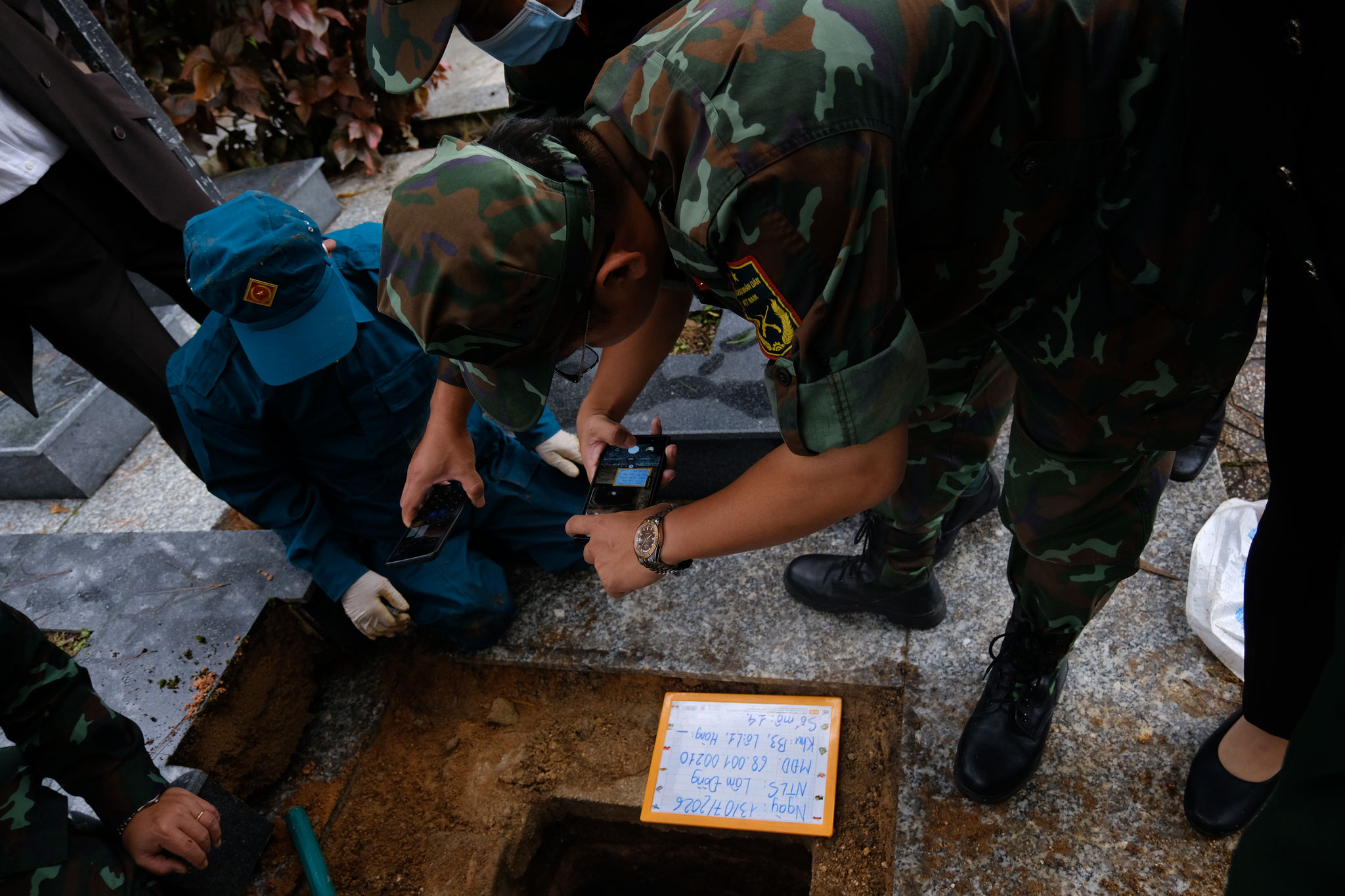
Once the graves were opened, personnel carefully removed each layer of soil and sand to access the remains, while digital documentation teams continued updating on-site information to ensure data accuracy and consistency.
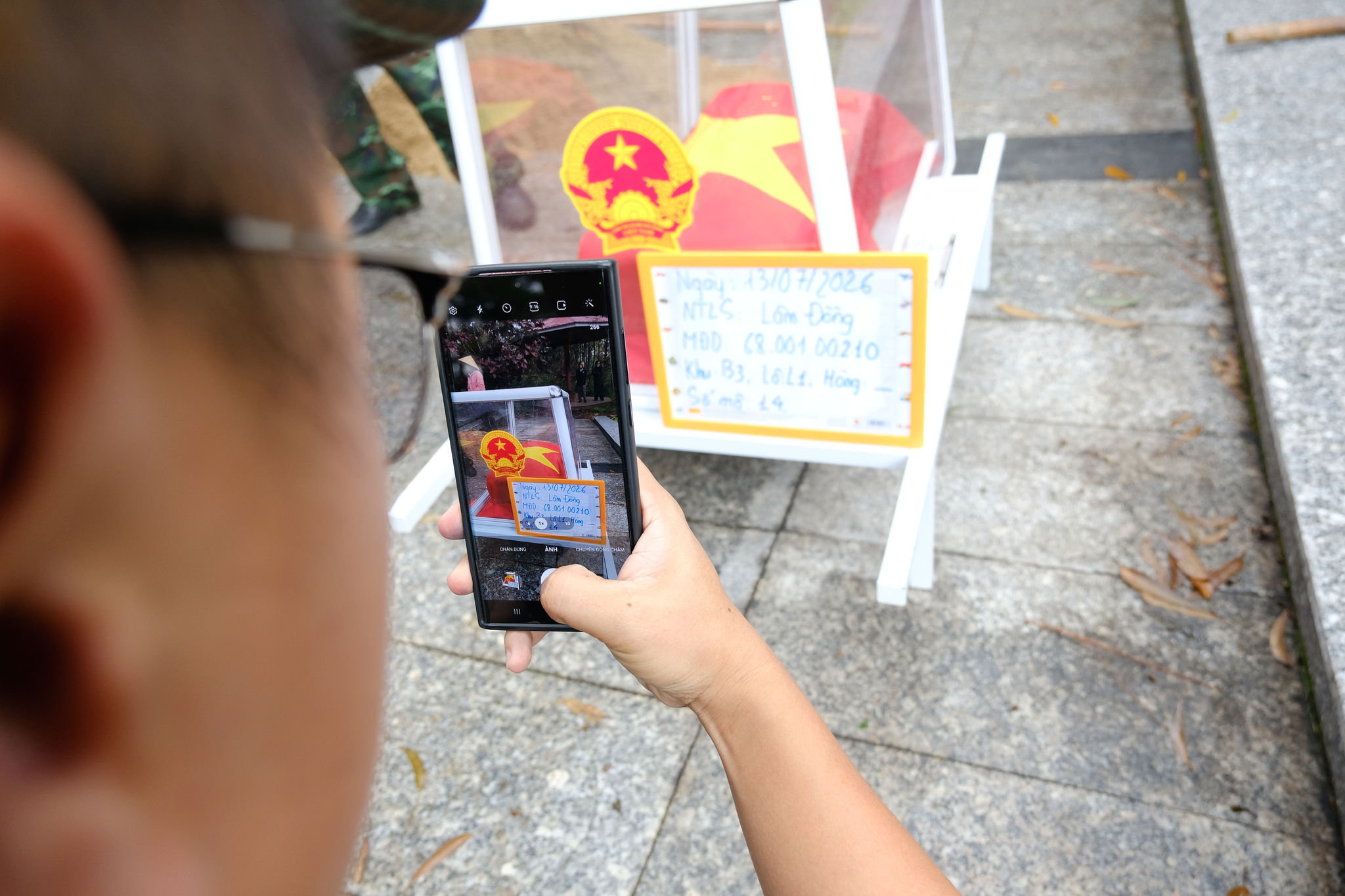
After being respectfully recovered, the martyrs' remains were draped with the national military flag, placed in specialized glass cases and transported with the utmost care and solemnity.
.jpg)
Digital documentation teams continued updating all relevant information into the centralized database to ensure full traceability and effective management throughout the sampling process.
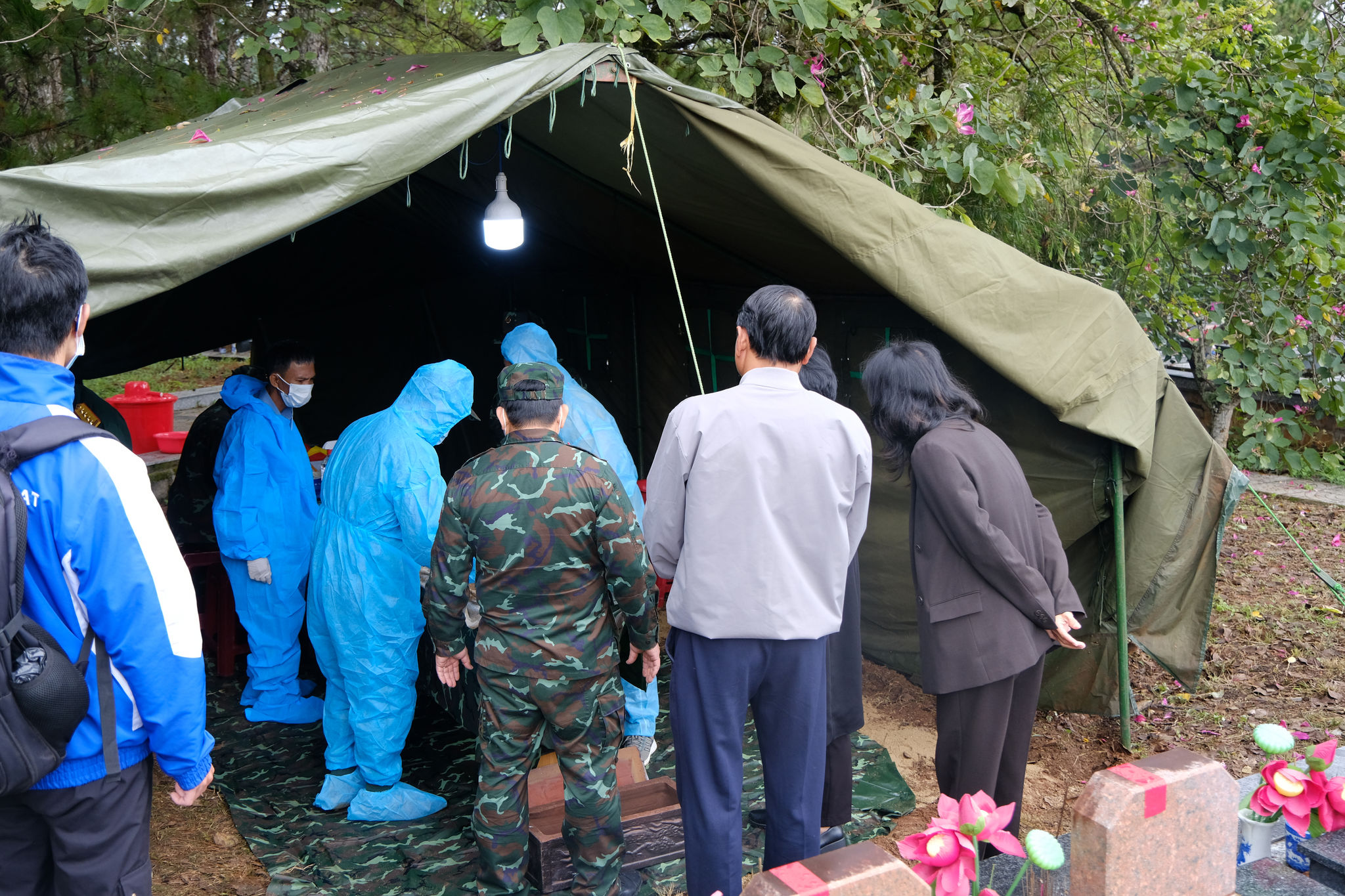
The remains were then transferred to a designated sampling area, where medical personnel from the sampling and digital documentation teams carried out professional procedures under strict sanitary conditions while wearing full protective equipment.
Samples were selected based on the preservation condition of each set of remains to ensure they met the technical requirements for DNA identification.
The DNA sampling campaign for unidentified martyrs at Lam Dong Martyrs' Cemetery is scheduled for completion by July 21.