

K'ho brocade: Threads of memory
K'ho brocade is an essential part of the community's cultural identity. Behind each intricate pattern and earthy color lies generations of traditional knowledge and craftsmanship.
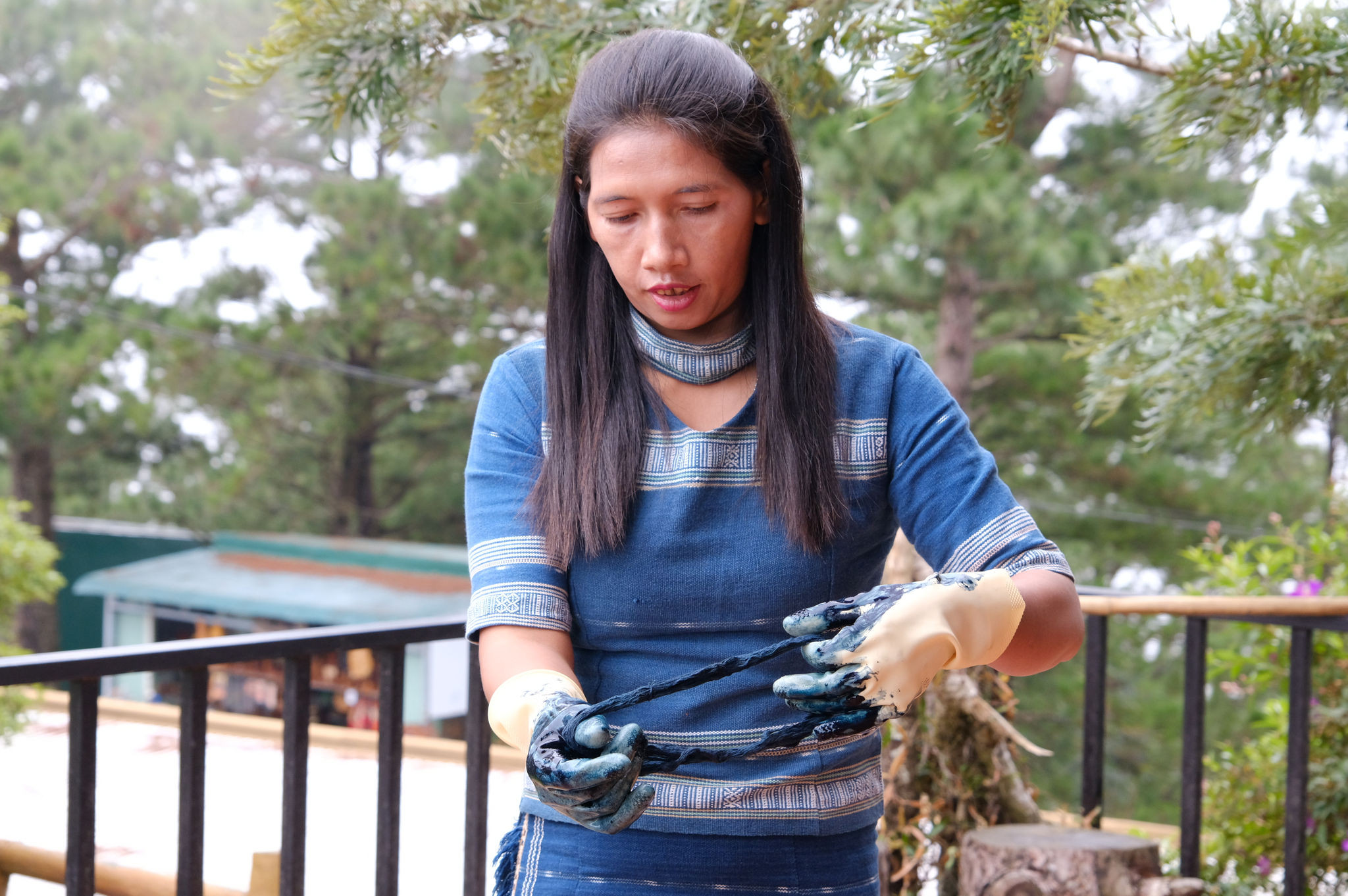
Hands stained with indigo
While synthetic dyes have become common, Bon Nieng Ka Gut, from Dung K'no Village in Dam Rong 4 Commune, continues to dye yarn by hand to preserve the traditions of the K'ho people. Her hands are permanently stained with indigo - a mark of years devoted to the craft.
Every step, from preparing natural dye and extracting indigo to soaking and wringing the yarn, is done by hand to achieve the desired texture and color.
Ka Gut produces all the colors used in her family's brocade from natural ingredients: indigo from indigo leaves, yellow from turmeric, orange from curry fruit, gray from beetroot and white from rice powder. Among them, indigo remains the signature color of K'ho brocade and a lasting symbol of the community's cultural identity.
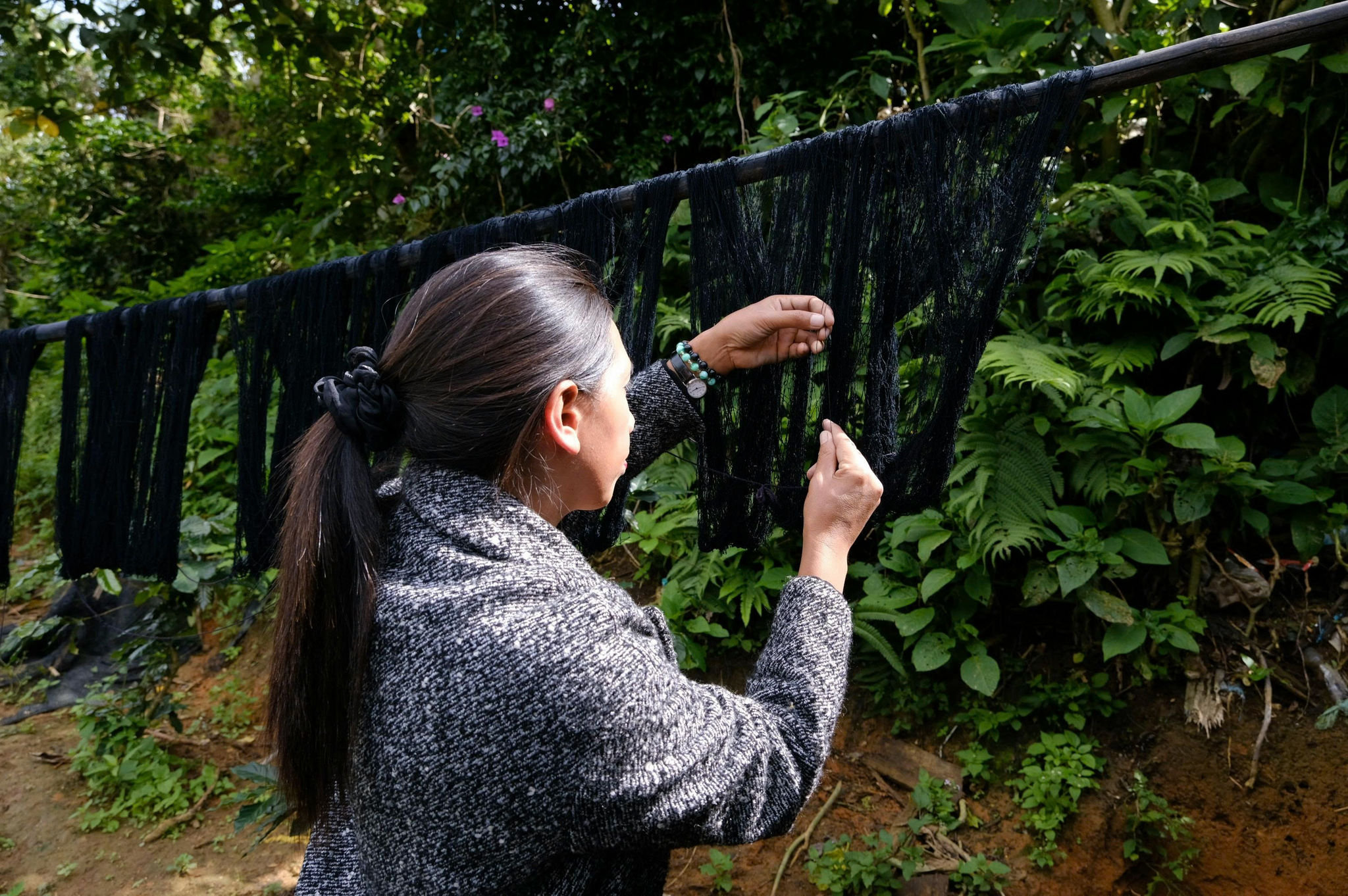
Indigo dye is made from the indigo plant, which once grew abundantly in local forests. To ensure a reliable supply, Ka Gut's family now grows it on the hillside behind their home. The leaves are soaked for about three days to extract the dye, which is then mixed with powdered seashells, roasted gourd seeds and other traditional ingredients. The indigo paste is dried in handwoven bamboo baskets before use.
The process may seem simple, but it demands patience and precision. A slight change in the ingredient ratio or soaking time can affect the final color.
Unlike industrial yarn, hand-dyed threads are never perfectly uniform. Their subtle variations reflect the colors of the forest, the touch of the artisan and traditional knowledge passed down through generations.
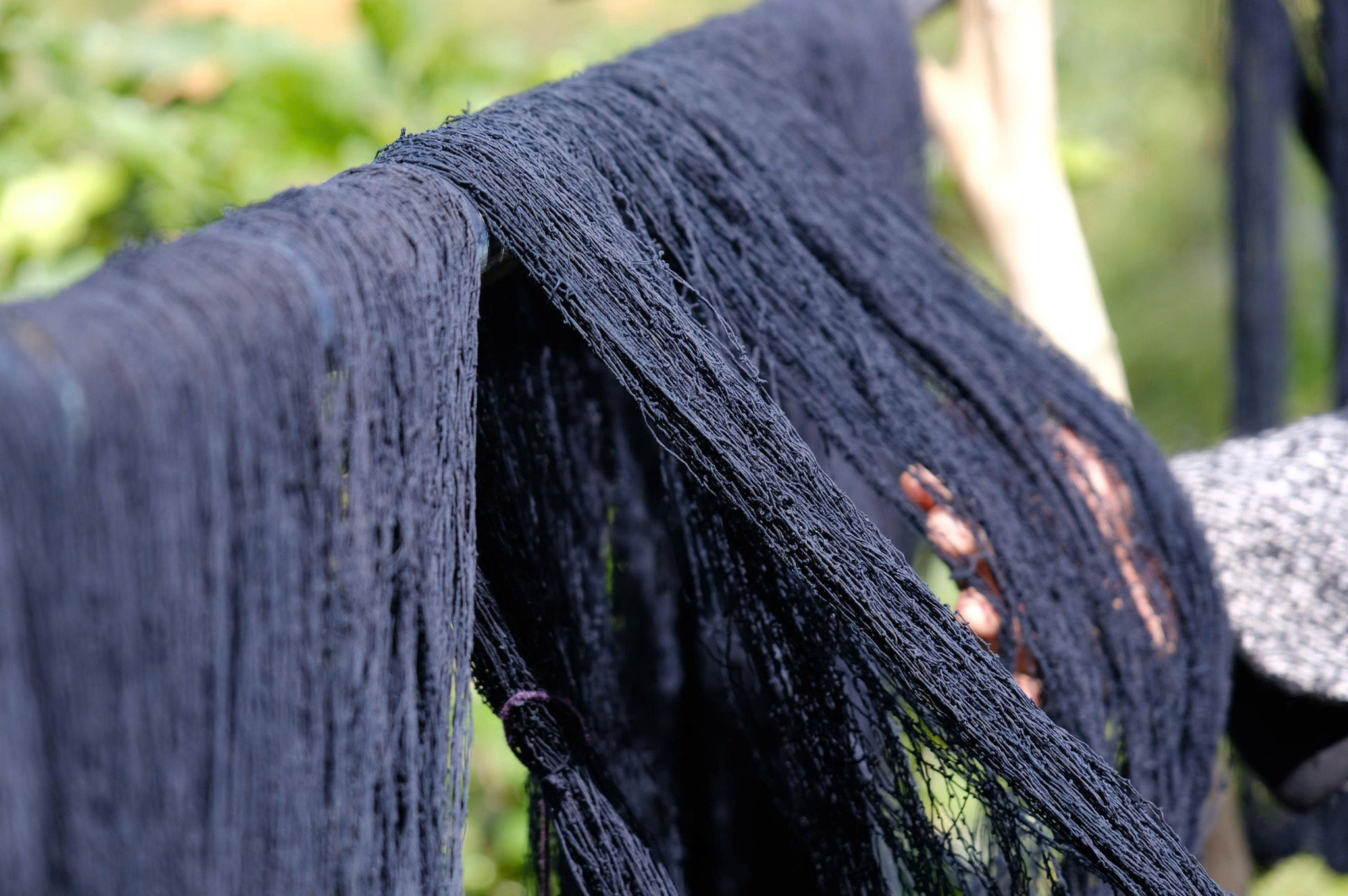
Preserving the colors of memory
If indigo is the soul of K'ho brocade, the person who inspired Ka Gut's love for the craft was her mother, Bon Nieng K'Glong, a Distinguished Artisan. Born into a family of weavers, Ka Gut grew up beside her mother's loom, learning every step of the process -from selecting yarn and preparing natural dyes to weaving intricate patterns. These lessons passed on not only technical skills but also the cultural stories woven into every piece of brocade.
Ka Gut said she learned the craft not simply because her mother taught her, but because she wanted to continue the work her mother had devoted her life to. She understands that without a new generation of artisans, traditional dyeing techniques and indigenous knowledge passed down through generations could gradually disappear.
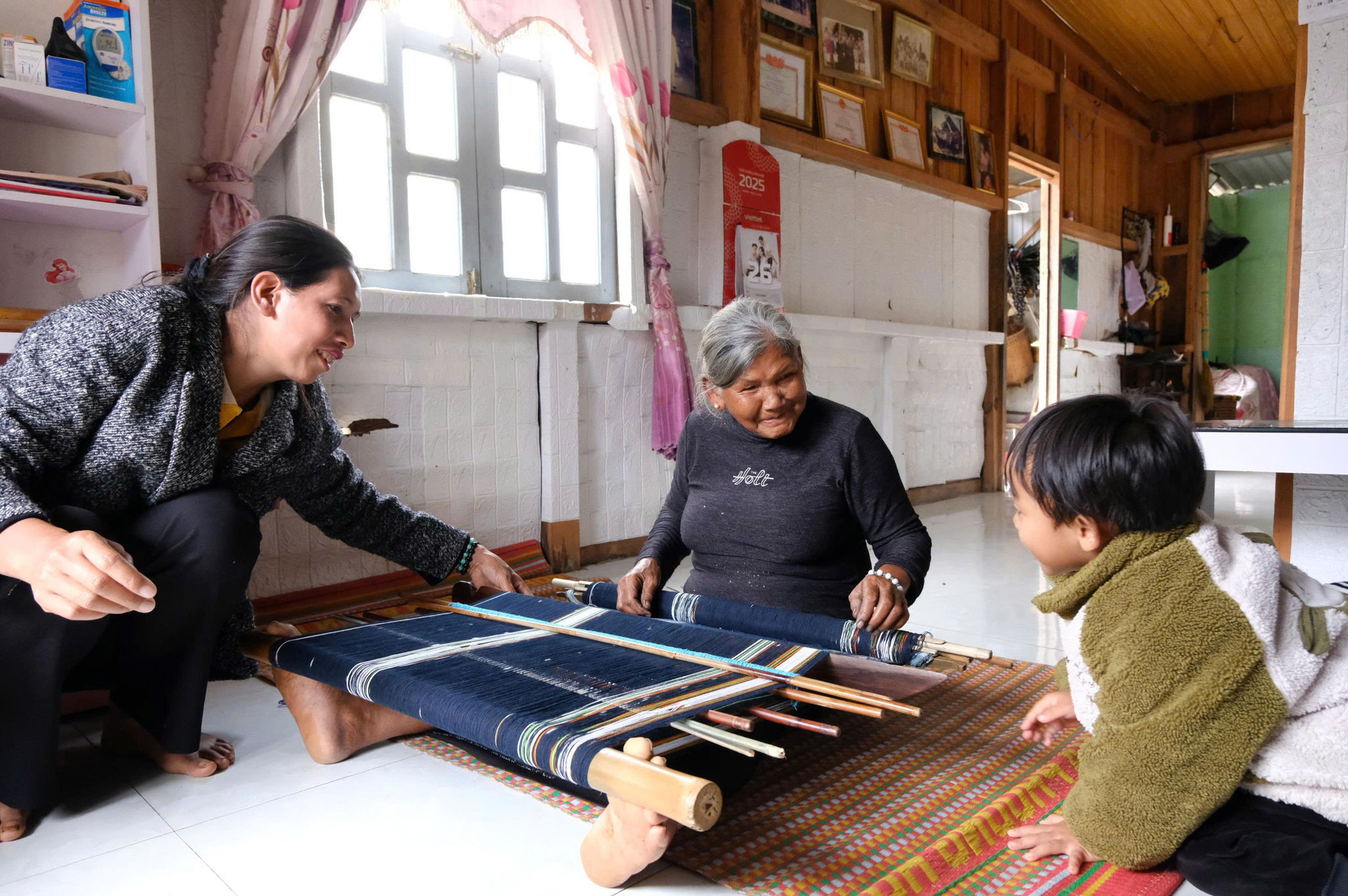
Over the years, Ka Gut has actively promoted traditional weaving, introducing K'ho brocade to visitors and the wider community. Once shy about speaking in public, she now confidently shares the stories behind the craft, the indigo plant and the natural dyes made from local forest plants.
According to Ha Oanh, head of Dung K'no Village, brocade weaving remains part of daily life for many families. While many women still know how to weave traditional patterns, far fewer have mastered the art of natural dyeing. He said the commitment of younger artisans like Ka Gut is vital to preserving this cultural heritage.
Amid the changing pace of village life, Ka Gut continues to tend her indigo garden, prepare natural dyes and patiently work with every thread. Her indigo-stained hands tell a story of tradition passed from one generation to the next, reflecting a deep devotion to her craft and a determination to preserve the K'ho people's cultural identity.