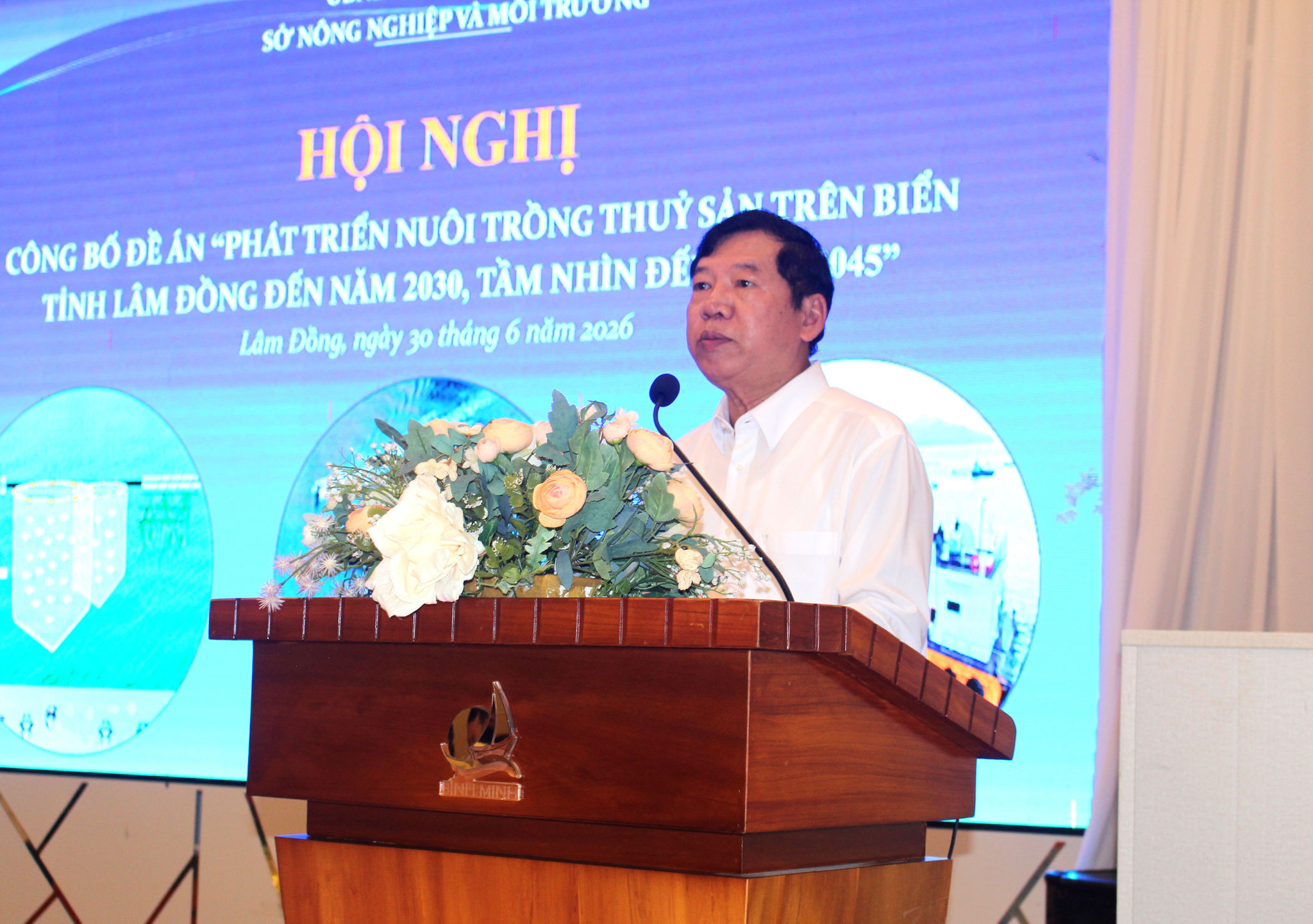
The provincial People's Committee's recent announcement of the Marine Aquaculture Development Plan to 2030, with a vision to 2045, marks a significant step toward developing the province's marine economy. It is expected to transform the coastal region into a dynamic engine of the provincial economy.
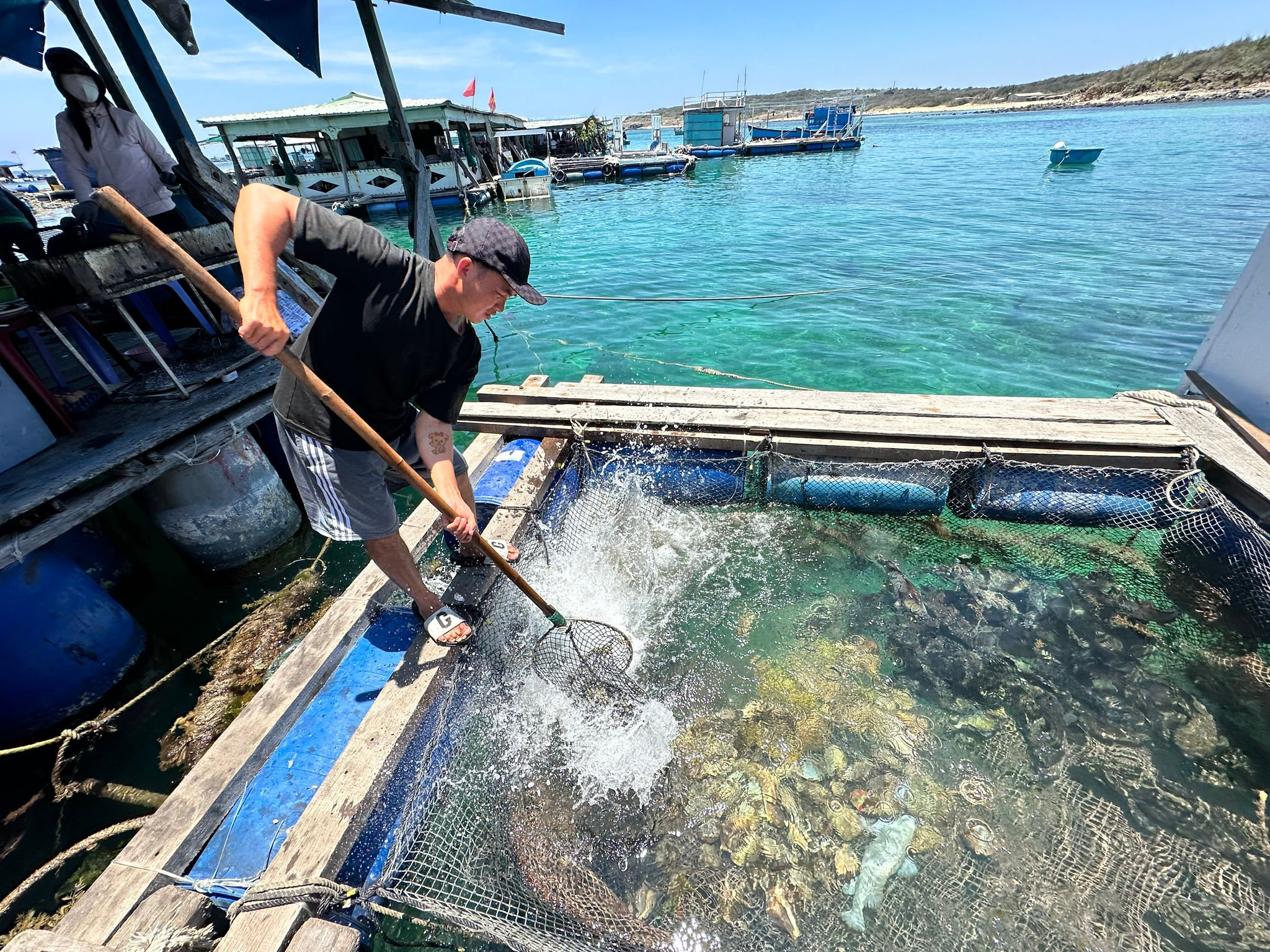
Harvesting farmed seafood in Lam Dong’s coastal waters
Opening new opportunities
Diep Van Hung, a resident of Hiep Duc 1 Hamlet, Phan Ri Cua Commune, is among the local farmers who began marine farming in 2024. He said his family farms about 2 hectares, including six 500-cubic-metre cages to raise high-value seafood species such as cobia, grouper and pompano, with annual output exceeding 30 tonnes.
Thanks to the area’s clean, clear seawater, the survival rate of the fish exceeds 80 percent, and the fish are of good quality and free from any muddy taste. The farming cycle from stocking to harvest lasts at least eight months, with production carried out on a staggered basis. “With the province’s announcement of the marine farming project, local farmers are very happy and confident that the local economy will grow in the near future,” Hung said.
The optimism is shared by many residents, especially those in the province’s coastal areas. According to the plan, by 2030 Lam Dong will focus on developing marine farming zones in accordance with approved plans and accelerating the transition from traditional farming to industrial and semi-industrial production. The province will also form concentrated production areas linked to supply chains covering production, processing and consumption.
Lam Dong aims to maintain and expand 100-150 hectares of aquaculture in sheltered and semi-sheltered bays and coves along the coast, develop 1-2 industrial marine aquaculture zones and clusters in open-sea areas, and expand around 5,000 hectares for shellfish and specialty seafood cultivation, along with 50 hectares for fish and specialty marine species seed production.
“
The project is aimed not only at creating breakthroughs in output and value and deeply restructuring the fisheries sector, but also at contributing to national defense and security. At the same time, it seeks to support livelihood transitions for fishermen and protect coastal ecosystems.
Nguyen Van Chien Deputy Director of the Department of Agriculture and Environment
The province also aims to develop a modern, high-tech marine aquaculture industry with strong economic returns by strengthening links across the entire value chain and investing in integrated support infrastructure. The strategy seeks to promote balanced growth alongside other marine industries, contributing to the sustainable development of Lam Dong's coastal tourism sector.
To achieve these goals, the plan sets out several key measures. These include marine aquaculture zoning, science and technology applications, seed and feed development, stronger production-to-market links, environmental protection, investment promotion and workforce training. Priority will be given to reorganizing marine farming areas to develop concentrated zones and curb unplanned expansion. The plan will also encourage the use of modern cage systems and digital tools for environmental monitoring, traceability and production management.
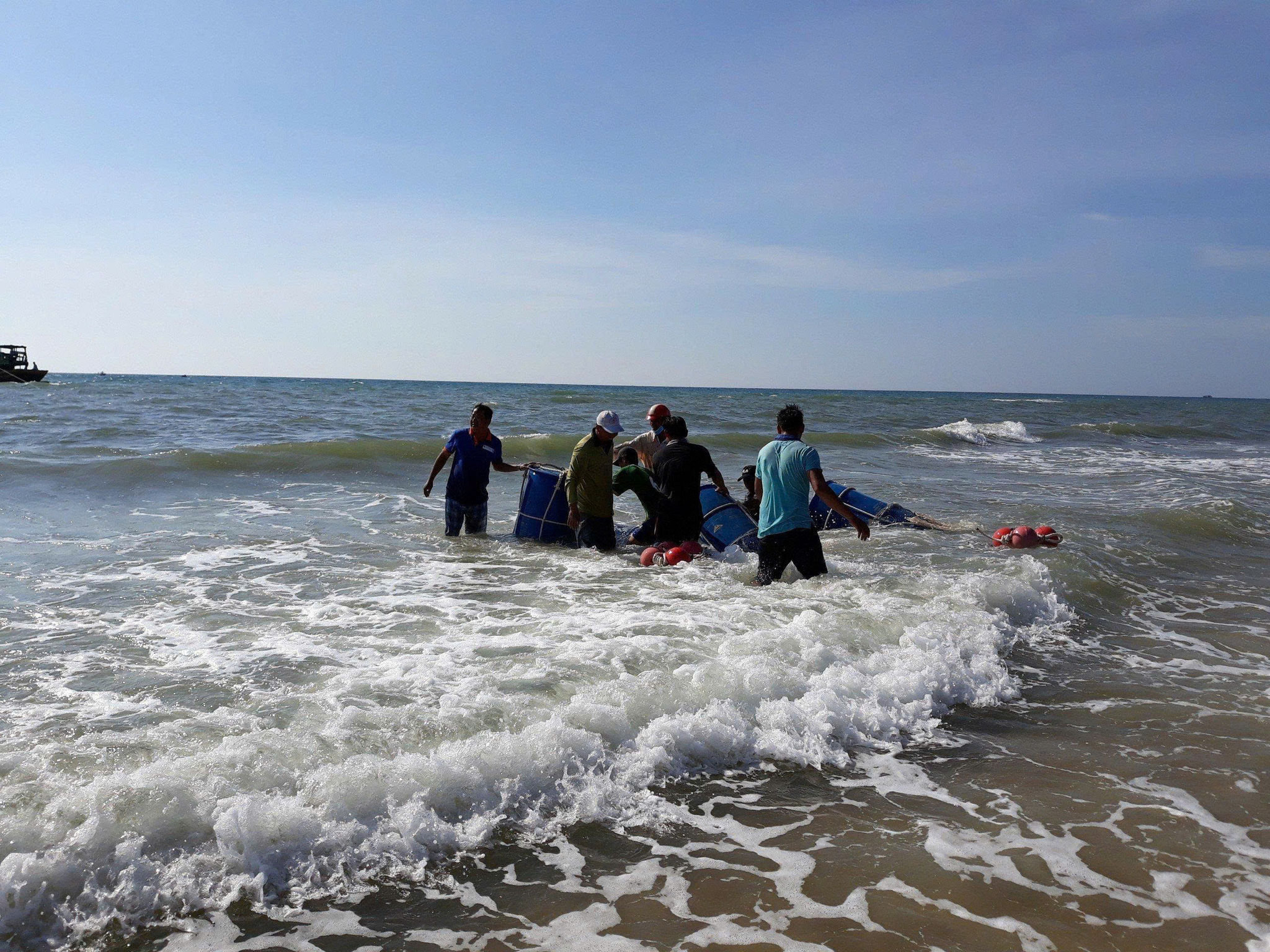
Local authorities and residents install marker buoys to designate a marine aquaculture zone in Tan Thanh Commune
Marine aquaculture seen as an inevitable path
Nguyen Van Minh, Deputy Sales Director of Hai Trieu Co., Ltd., said the province's marine aquaculture plan offers significant opportunities for businesses.
"A well-managed farming area will strengthen customer confidence in product quality and traceability. We have already registered to invest in industrial-scale aquaculture to secure a stable supply of raw materials for processing," Minh said.
Nguyen Xuan Lam, Secretary General of the Vietnam Marine Aquaculture Association, said Vietnam's favorable marine conditions make the expansion of both nearshore and offshore aquaculture inevitable as wild fish stocks continue to decline.
He noted that Lam Dong's 52,000 sq. km of sea area and experienced coastal workforce provide a strong foundation for the industry. Lam also called for more efficient use of marine space, greater private investment and supportive policies to accelerate growth. He stressed the need for skilled workers, improved governance and detailed marine spatial planning to prevent conflicts with tourism, shipping, energy and mining.
Under the plan, marine aquaculture output is projected to reach 50,000-55,000 tonnes by 2030, accounting for 22% of the province's total fisheries production. The sector is expected to generate VND 5 - 5.2 trillion in output value, representing 32% of the fisheries industry's total production value, while marine aquaculture exports are forecast to reach around USD 50 million. The plan is also expected to create jobs for 6,500 - 7,000 workers, including helping 3,000 fishermen transition to new livelihoods.