

From Sorbonne - Oyama to Costco: The story of Phan Thiet fish sauce
More than six months had passed since I last met Tran Ngoc Dung - "fish sauce doctor." When we met again in mid-July, he quietly placed a bottle of Tin fish sauce on the table and smiled, "It's now available at Costco".
The remark sounded casual. Few would have guessed it marked the culmination of more than two years of navigating dozens of technical standards, holding late-night meetings with partners on the other side of the world, and making countless revisions to everything from label wording and aroma to quality indicators - until every detail met the most exacting standards.
.jpeg)
The Legend of Retail
To outsiders, it seems like nothing more than sending a few extra containers of fish sauce to the United States. But for those familiar with global retail, particularly the US market, the achievement is all the more significant. In football terms, Costco would be the UEFA Champions League of global retail.
By listing a product, Costco is effectively staking its reputation on its quality. Its membership-based business model means customers pay annual fees to shop at its warehouses and generally purchase goods in large quantities.
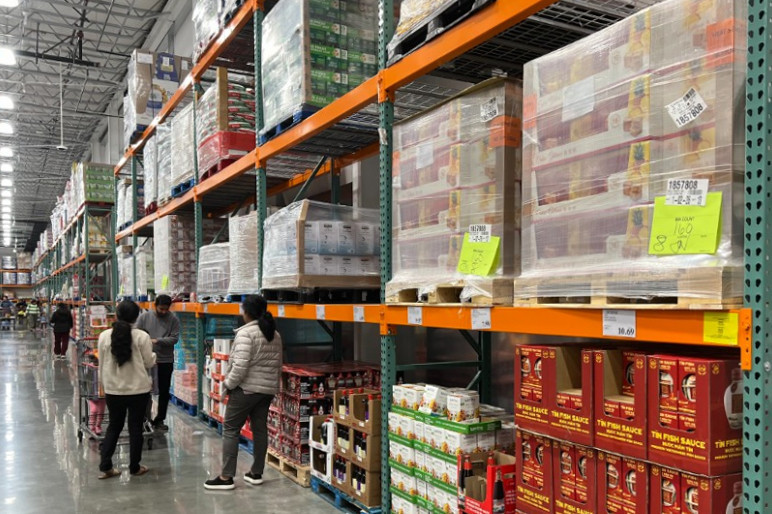
Moreover, to meet Costco's stringent standards, fish sauce imported into the United States must comply with FDA regulations. Products must undergo continuous thermal pasteurization using state-of-the-art technology to prevent microbial contamination while retaining their natural taste.
On-site audits of suppliers are also required. In Vietnam, two inspection teams spent more than a month evaluating the company's compliance with food safety and social responsibility standards. They assessed everything from factory facilities, production processes, and personnel records to working conditions and even the smallest tasks on the production line.
Failure to meet even one criterion could force the company to restart the entire approval process or lead to outright rejection.
.jpg)
"At first glance, they're just a few bottles of fish sauce on a retail shelf. But in reality, they serve as a passport carrying a local specialty into one of the world's most demanding retail networks.
It's like a footballer not only earning a place on the national team but also securing a starting spot at the FIFA World Cup on merit."
The childhood aroma
I've always called Tran Ngoc Dung the "fish sauce doctor" not because of his academic title - he is a university lecturer with a PhD in marketing - but because I've known him since he first returned to Phan Thiet, determined to collect artifacts for what would become Vietnam's first fish sauce museum.
At the time, many questioned his decision. Some even thought he had lost his mind for walking away from a promising career, returning home and investing hundreds of billions of dong to start over from scratch.
Dung graduated as the valedictorian of the Ho Chi Minh City University of Economics before receiving a scholarship to study business administration for four years at Monash University in Melbourne, Australia. He later earned a master's degree in France and, in 2004, completed his PhD in marketing with distinction at the Sorbonne.
Back in Ho Chi Minh City, he founded one of Vietnam's first Japanese joint ventures specializing in consumer market research. He was also paid as much as USD 20,000 a month by an American company to conduct market analysis in Vietnam.
Dung was born in the fishing village of Binh Hung, on the banks of the Ca Ty River that runs through Phan Thiet. Growing up, the fish sauce his mother made at every family meal became woven into the fabric of his childhood - etched into his very being and, as he likes to say, in his blood.
While working with Japanese partners, Dung became fascinated by the One Village, One Product (OVOP) movement, launched in 1979 in Oyama, Oita Prefecture.
The initiative is built on a simple idea: a traditional local product can only achieve lasting success when it is paired with tourism and a compelling cultural story. Once the OVOP model takes shape, fragmented cottage industries can evolve into globally recognized brands, enabling local communities to earn a sustainable living from their own specialties.
A hometown treasure
Inspired by that vision, Dung immersed himself in research before making a life-changing decision. He walked away from a highly lucrative career, transferred ownership of his company, and returned to Phan Thiet with the goal of reviving Tin fish sauce - a once-famous product that had disappeared for decades. He devoted himself to the project seven days a week.
Three centuries ago, Tin fish sauce marked the transition from the Cham people's small-scale fish sauce fermentation to large-scale production in wooden fermentation vats established by Kinh settlers in the fishing villages of Phan Thiet.
By 1962, the fish sauce had become a cornerstone of Vietnam's commercial fish sauce industry, helping establish Phan Thiet as southern Vietnam's fish sauce capital. Production, however, came to a halt after 1975, and subsequent generations grew up without ever knowing the iconic amber-colored fish sauce once stored in distinctive ceramic jars.
Reviving that legacy took years. While continuing to teach tourism marketing at Phan Thiet University, Dung spent his time collecting artifacts, designing and building the project, and recruiting and training a team to carry it forward.
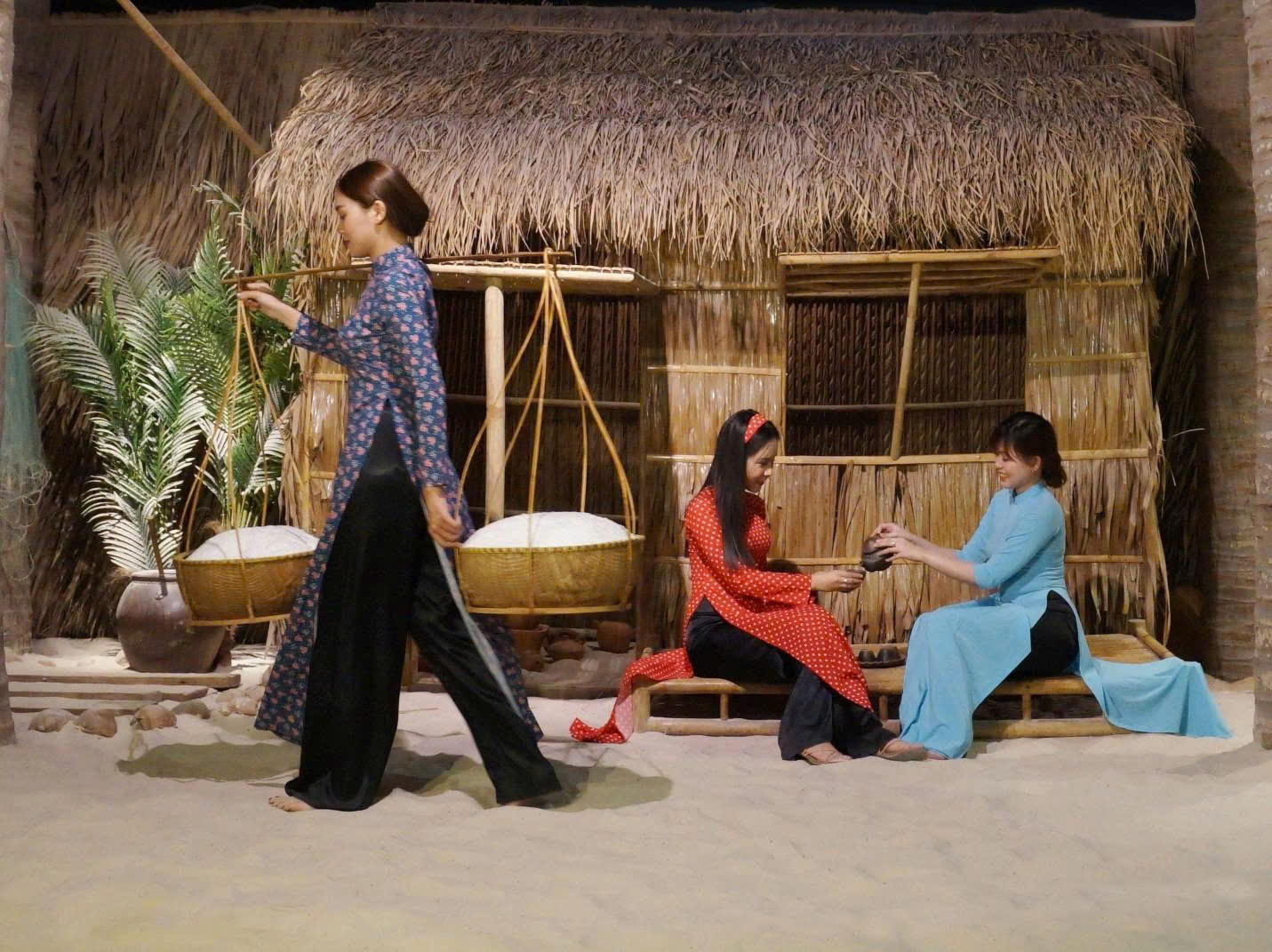
His efforts eventually came to fruition with the launch of four key components: The Legend of the Fishing Village stage performance, a restaurant complex, the Phan Thiet Fish Sauce Museum, and a commercial fish sauce brand.
.jpg)
When we met again, Dung proudly shared that the project has now welcomed more than one million visitors. Schools and tour operators regularly include the museum, live performance and culinary experiences in their itineraries.
The Phan Thiet Fish Sauce Museum is more than a collection of fermentation jars, ceramic containers and traditional tools. It preserves the soul of a coastal community.
Rather than simply viewing artifacts behind glass, visitors are taken on a journey through more than 300 years of fish sauce history. They learn about Tran Gia Hoa, who helped bring Phan Thiet fish sauce to markets across Vietnam; Luc Thi Dau, who pioneered the route linking Phan Thiet and Mui Ne; and Ho Long Dich, one of the industry's early pioneers, who established one of the first fish sauce laboratories.
Ho Long Dich was also the husband of poet Mong Cam, whose well-known romance with poet Han Mac Tu is closely associated with the historic Ong Hoang Tower, located near the museum.
Together, these stories transform fish sauce making from a livelihood into a living chapter of Vietnam's history and cultural heritage.
What makes the museum remarkable is that Dung never intended it to be a static display of old artifacts. Instead, he created an immersive space where every object tells a story. Visitors can smell fermenting fish, hear the sound of the sea, and discover why producing a premium fish sauce requires months of patient aging in the coastal sun and wind - an experience no textbook could ever provide.
Looking back after a decade, I finally understood why Dung had turned down numerous offers from major investment funds.
They could have brought more capital, but none could have protected his vision in the way he wanted.
Some projects are measured by revenue and profit. Others, like Lang Chai Xua (Old Fishing Village), derive their greatest value from preserving a legacy. As Dung sees it, if no one acts today, there may be nothing left for future generations to remember or tell.
.jpg)
A bottle of fish sauce placed on Costco's shelves is the result of meeting hundreds of technical requirements. But winning consumers' hearts takes more than compliance—it requires authenticity, integrity and a distinct identity.
Above all, it takes someone patient enough to tell the story of their hometown over and over again, year after year, without ever growing tired.
People often say you have to travel far to find your way home. Dung did exactly that. After seeing the world, he returned to remind his hometown that it was sitting on a treasure.
More importantly, he chose not to keep that treasure to himself. Instead, he opened it to the public, sharing its story so that everyone who leaves the museum walks away with a deeper appreciation for Phan Thiet, a better understanding of Vietnamese fish sauce, and greater pride in the legacy passed down by previous generations.
Every hometown has its own culinary specialty. But it is only when someone dedicates a lifetime to telling its story that a local product becomes part of a cultural heritage - and only then can that heritage resonate around the world. Tran Ngoc Dung, the "fish sauce doctor," is one such person.
Thank you, Tran Ngoc Dung - fish sauce doctor.
During a recent visit to the Phan Thiet Fish Sauce Museum, Ho Van Muoi, Member of the Party Central Committee, Deputy Secretary of the Lam Dong Provincial Party Committee and Chairman of the Lam Dong People's Committee, praised Dung's contributions. According to Chairman Ho Van Muoi, Dung is not simply selling fish sauce - he is selling its story. A bottle of fish sauce may attract buyers because of its quality, but a brand endures because people remember the story behind it. That is why Tin fish sauce carries more than the taste of Vietnam to the United States. It also carries the memories of a fishing village and more than 300 years of Vietnam's fish sauce-making heritage.