

Building Multi-Tier Value Chains for Cooperative Development
Collective economic development can no longer rely solely on traditional "buy together, sell together" models. As Lam Dong expands its administrative boundaries and restructures local governance, building multi-tier value chains has become essential to unlocking the full potential of the cooperative economy and strengthening the province's agricultural sector.

Early Progress Meets New Challenges
Lam Dong currently has 4,032 cooperative groups, 1,532 cooperatives and people's credit funds, and 12 cooperative unions. Of these, 802 organizations are operating, while 461 cooperatives generate revenue and provide employment for 3,281 workers. During the first six months of 2026 alone, 61 new cooperatives were established under the 2023 Cooperative Law, reflecting growing confidence in the collective economic model.
Across the province, 428 agricultural production and marketing value chains have been established, involving 192 cooperatives and 47,590 farming households. Approximately 63% of agricultural output is now marketed through contractual partnerships, improving product value, market stability and farmers' incomes.
However, following the implementation of the two-tier local government model and administrative restructuring, only 26 of 124 communes, wards and special administrative zones have established steering committees for collective economic development. Limited engagement at the grassroots level has slowed policy implementation.
Meanwhile, hundreds of inactive cooperatives remain on official records despite ceasing operations, accumulating tax liabilities or abandoning their registered addresses. The absence of comprehensive data on membership, income and profitability also makes policy planning more challenging.
Transitioning from fragmented production to multi-tier value chains not only enhances the competitiveness of Lam Dong's agricultural products but also strengthens cooperatives' resilience against market fluctuations.
Dinh Thi Hanh, Vice Chairwoman of the Lam Dong Cooperative Alliance
Experience shows that cooperatives focusing solely on collecting raw agricultural products for traders or processors generate only limited added value for farmers. Small-scale operations also restrict investment in logistics, value-added processing, digital transformation, science and technology, trade promotion and access to financing.
The cooperative economy is built on the combined contributions of multiple stakeholders. To align interests and unlock the full potential of multi-tier value chains, fragmented production models must give way to larger, more integrated cooperative structures capable of generating greater scale, efficiency and competitiveness.
At the provincial mid-year review conference on collective economic development, Vice Chairman of the Lam Dong Provincial People's Committee Vo Ngoc Hiep called for stronger implementation of Government Decree No. 98/2018/ND-CP, emphasizing closer production-consumption linkages while removing obstacles that hinder cooperative development.
Driving Transformation Through Multi-Tier Value Chains
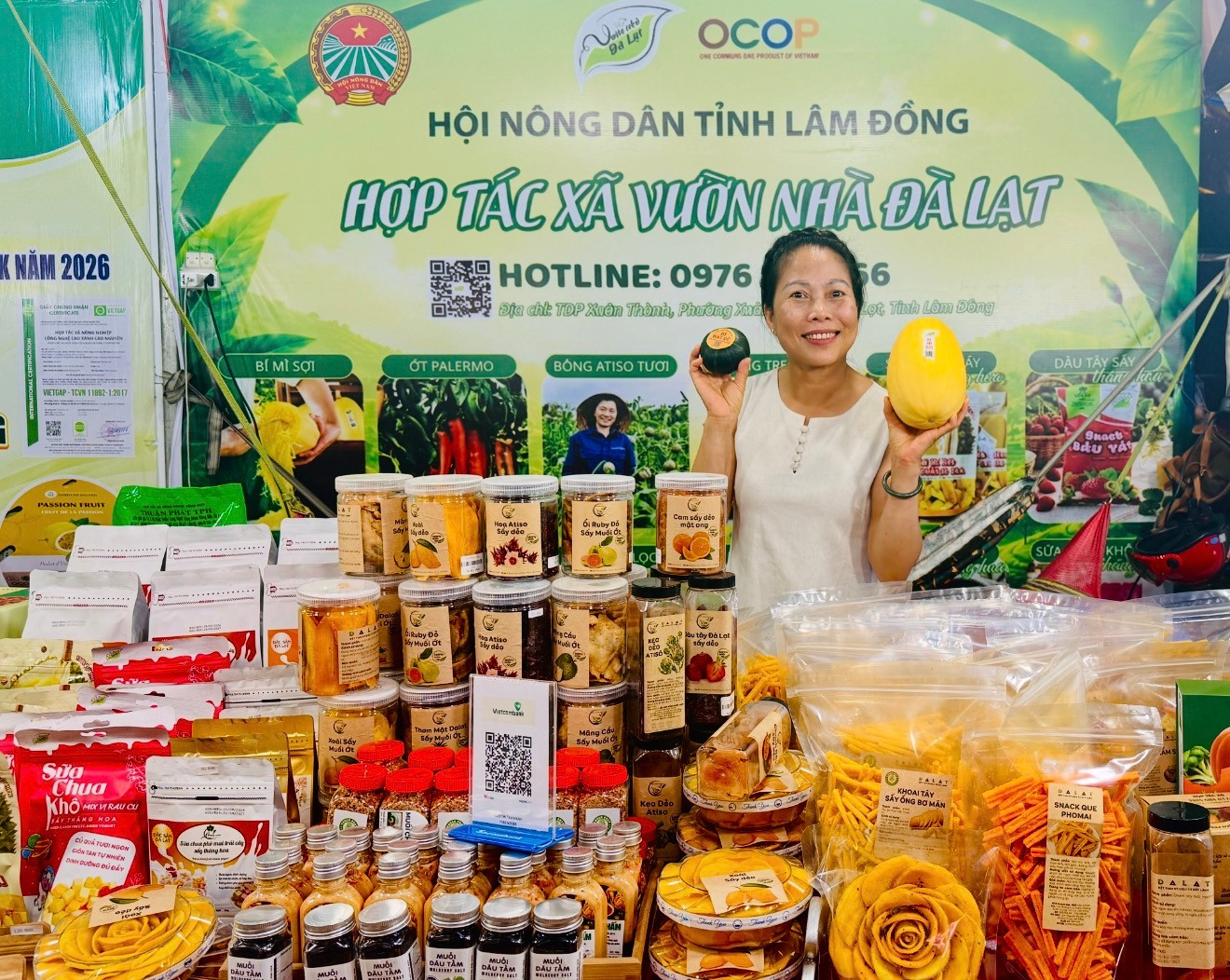
Many cooperatives across Lam Dong are gradually embracing high-tech agriculture, digital transformation and internationally recognized production standards such as VietGAP, GlobalGAP and Organic certification.
These initiatives are creating multi-tier value chains that integrate smart farming, digital technologies, value-added processing, branding, agricultural tourism and financial services.
Beyond strengthening horizontal cooperation among farmers, many cooperatives have established vertical partnerships with businesses, expanding market access, creating employment opportunities and increasing the value of agricultural products.
According to a cooperative director in Lam Dong, participating in multi-tier value chains requires farmers to adopt a more comprehensive production approach rather than focusing solely on cultivation and harvesting.
Hundreds of cooperatives have standardized production under VietGAP, GlobalGAP and Organic frameworks and are serving as the foundation for concentrated raw-material production areas. Agricultural products are now marketed with traceability labels, electronic invoices and increasing access to e-commerce platforms, opening broader domestic and international market opportunities.