

H’Mang: Passing Down the Gongbeat, Preserving Ma Culture
More than 40 years after trading two buffaloes for her gong set, artisan H’Mang in Dak Nia residential quarter, Dong Gia Nghia Ward, continues to teach gong playing free of charge, quietly passing on the sounds of the gongs and love of Ma culture to younger generations.
Trading Two Buffaloes for the Sound of the Village Gongs
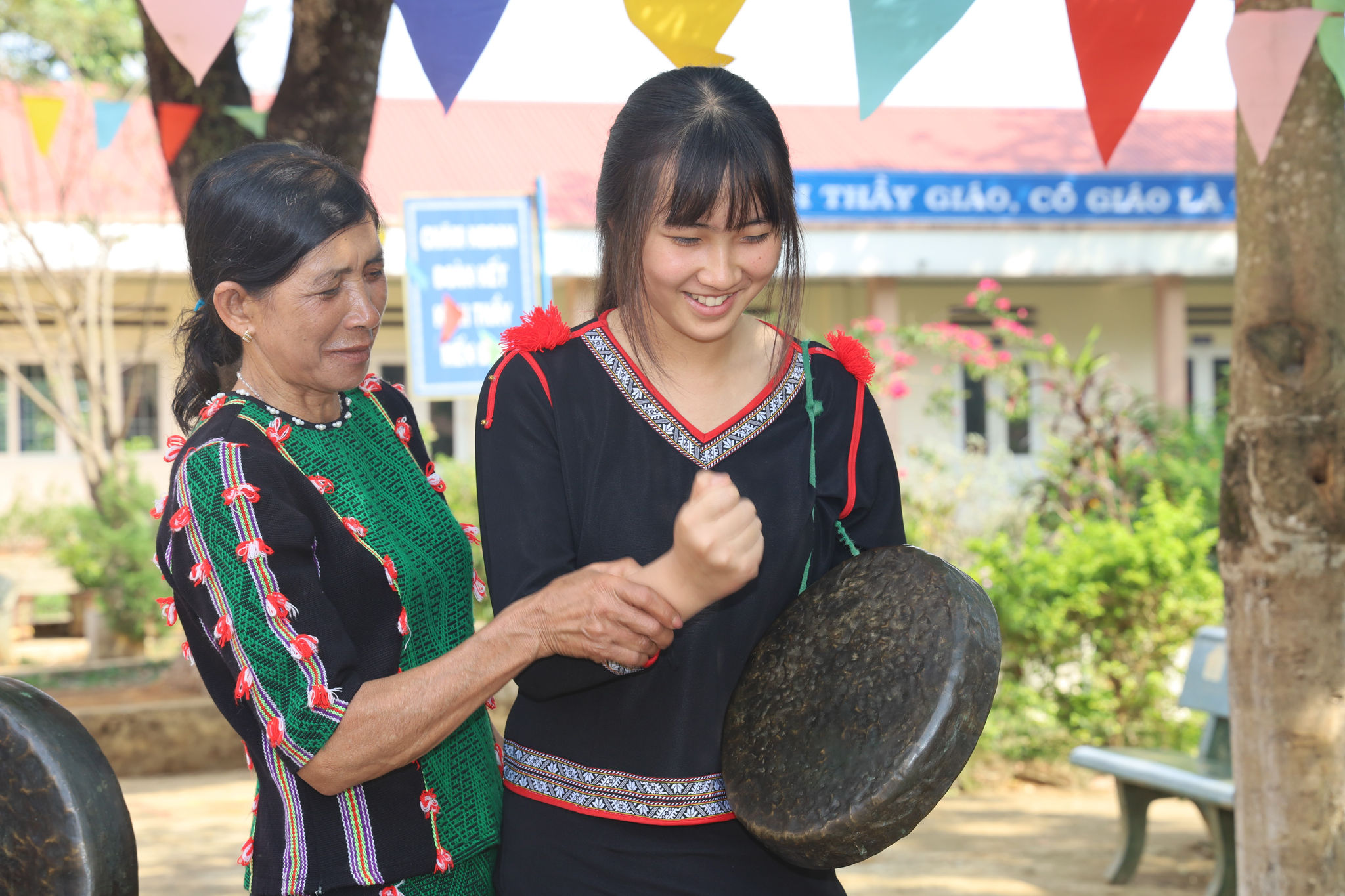
Under the eaves of her home, more than a dozen Ma children watch the artisan’s every move before taking turns striking the gongs to follow the rhythm. Some are still tentative, while others have become quite proficient. Yet all share the same excitement whenever she nods in approval.
At 60, artisan H’Mang continues to hold free gong classes for local teenagers and students. As long as people are willing to learn and she still has the strength, she says, she will keep teaching.
Few people know that more than 40 years ago, H’Mang decided to trade two buffaloes—the family’s most valuable assets at the time—for the gong set she still uses today. While many people questioned the decision, she has never looked back.
“I was afraid that one day no one in the village would know how to play the gongs. Having a gong set means we can preserve the sound and pass it on to our children and grandchildren,” she said simply.
By the age of 20, H’Mang had mastered all six gongs and more than 15 traditional gong pieces of the Ma people. Over the decades, she has taken part in almost every major and minor festival in her village and locality, as well as numerous cultural events inside and outside the province.
What makes her most proud is not the number of performances, but the growing number of young people who have learned to play the gongs.
“Many people come to learn but give up halfway because they find it difficult. But whenever I meet someone who truly loves the sound of the gongs, I gain more motivation. I just hope to pass on everything I know so that someone can continue the tradition in the future,” she said with a gentle smile.
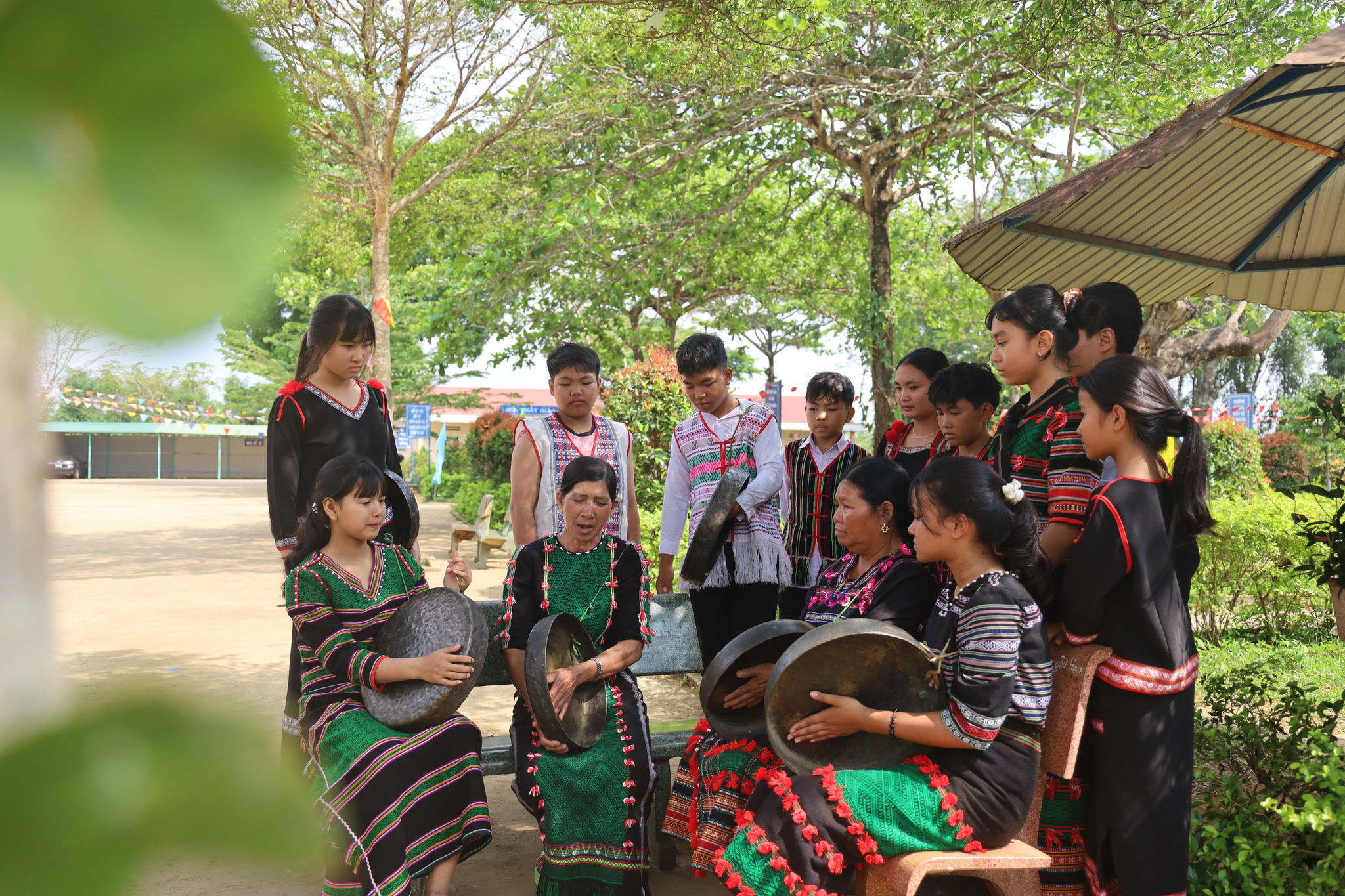
Beyond gong playing, H’Mang also teaches young people traditional brocade weaving, bamboo weaving and other cultural practices of the Ma people. In her view, ethnic culture is not found only in the sound of gongs, but also in the everyday life of the community.
Passing the Cultural Flame to the Young
Among H’Mang’s students is H’Anh Thu, an eighth-grade student at Tran Van On Primary and Lower Secondary School. She says she has loved the sound of gongs since childhood. However, because of her studies, she could previously only watch adults perform at village festivals.
“During the 2025–2026 school year, when artisan H’Mang and other artisans began offering free classes, I signed up. She teaches us very patiently—not only how to keep the right rhythm, but also the stories and meaning of each gong piece. During this summer, many of my friends still make time to visit her home to learn more,” H’Anh Thu said.
For H’Mang, her greatest joy is not being called an artisan, but seeing a student master the rhythm and confidently join the village gong ensemble.
According to Le Huu Vong, Principal of Tran Van On Primary and Lower Secondary School, about 76% of the school’s students are from ethnic minority groups. Preserving traditional cultural identity and educating students about it are therefore key priorities in the school’s two-session-a-day teaching program.
“The school is fortunate to have the support of artisan H’Mang, who is dedicated and deeply committed to ethnic culture. She not only teaches the students how to play the gongs, but also instills in them pride in and love for their cultural identity,” Vong said.
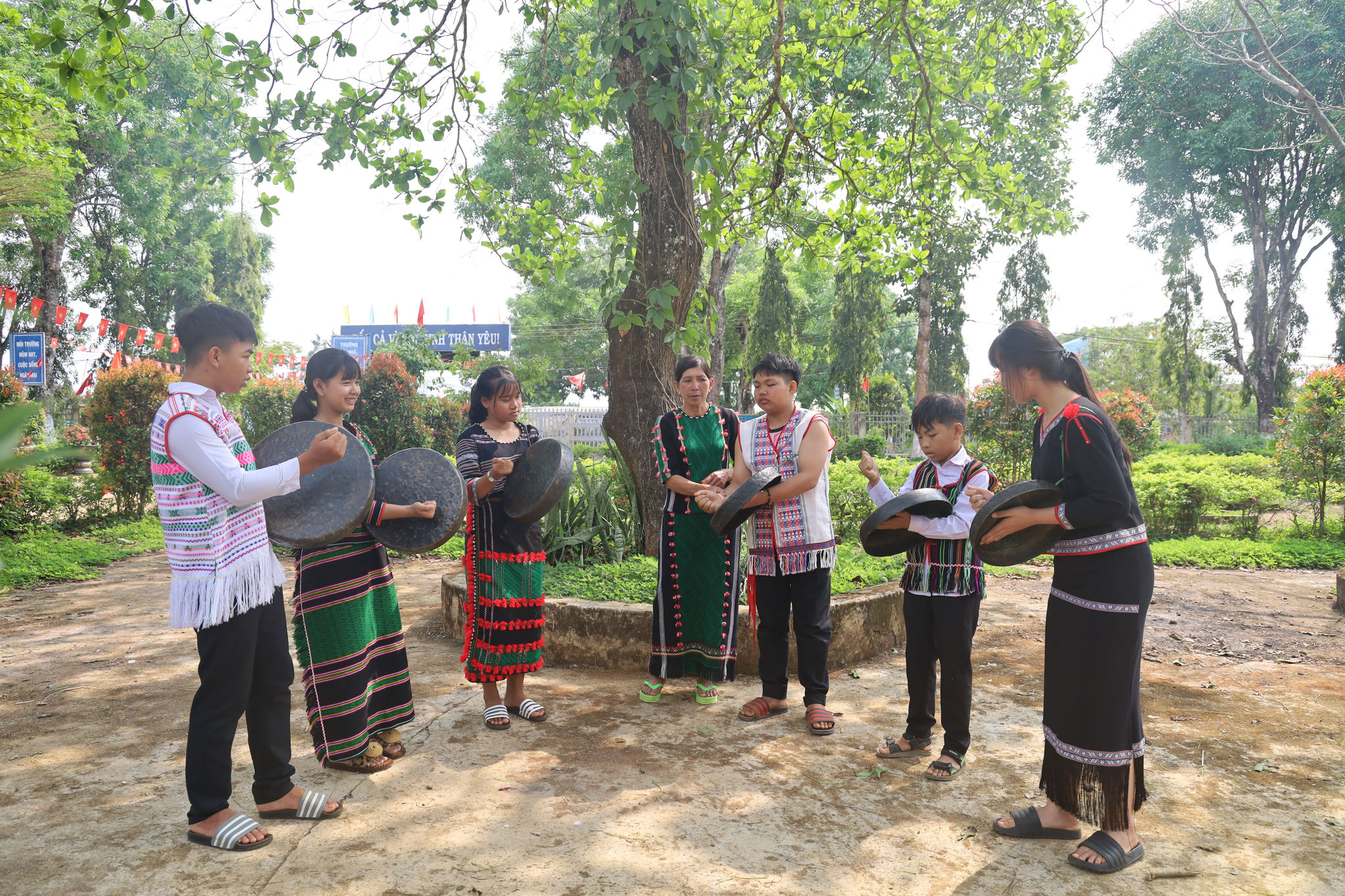
Thanks to these efforts, cultural preservation at the school has become increasingly substantive. Students are not only learning to play the gongs, but also gaining a deeper understanding of the value of this heritage, enabling them to appreciate and carry it forward.
“As long as I am still healthy, I will continue teaching. I only hope that when I grow old and can no longer carry the gongs, the sound of Ma gongs will continue to echo through the village.”
Artisan H’Mang, Dak Nia Residential Quarter, Dong Gia Nghia Ward