Production Linkages Open a Path to Prosperity for Durian Farmers in Dam Rong
Chinh Thanh•11/08/2026 15:20
Behind the trucks loaded with “sweet fruits” lies a story of livelihood transformation, production linkages and effective community engagement, helping many ethnic minority households in Dam Rong, Lam Dong, improve their incomes and prosper through durian cultivation.
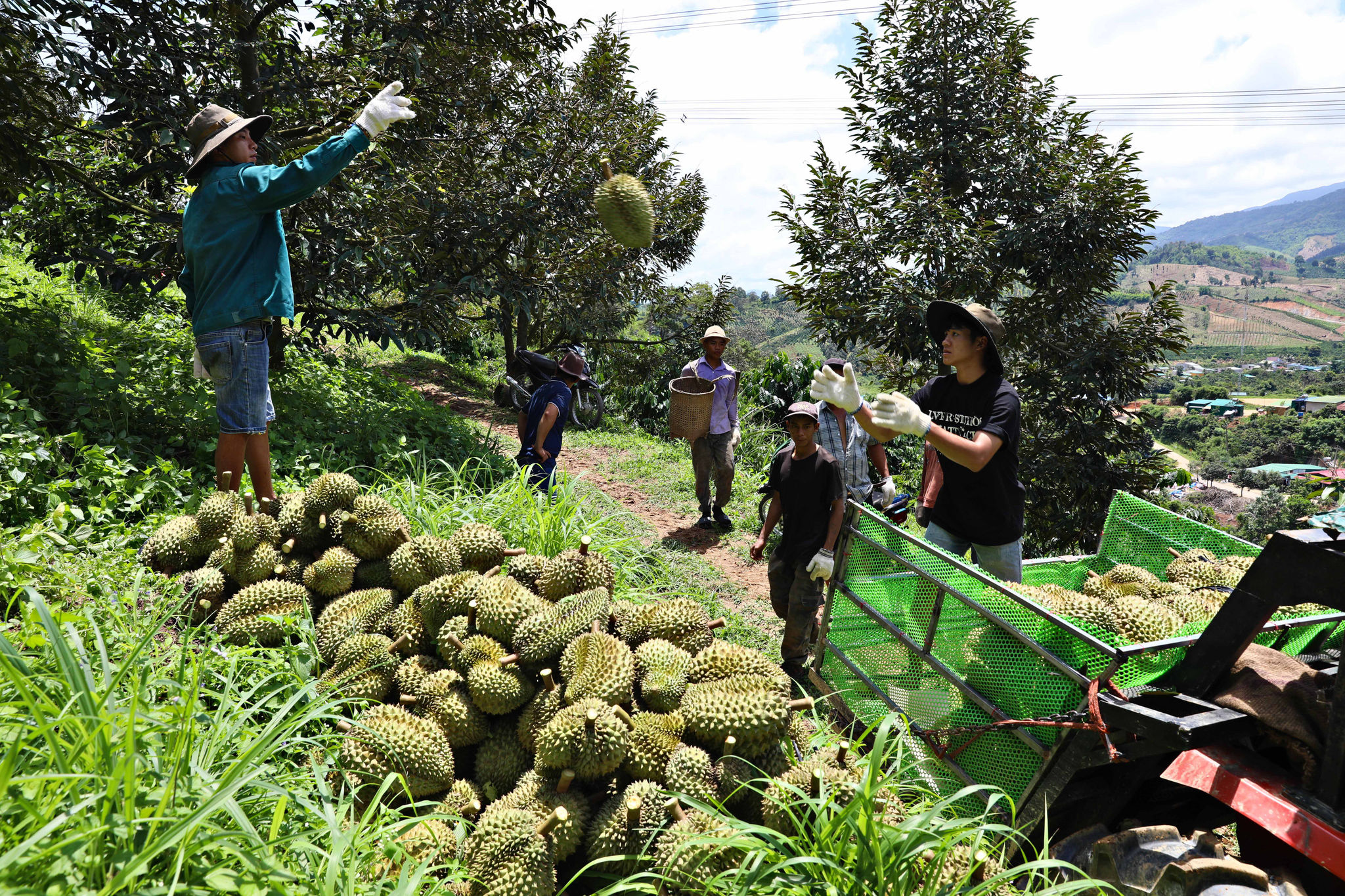
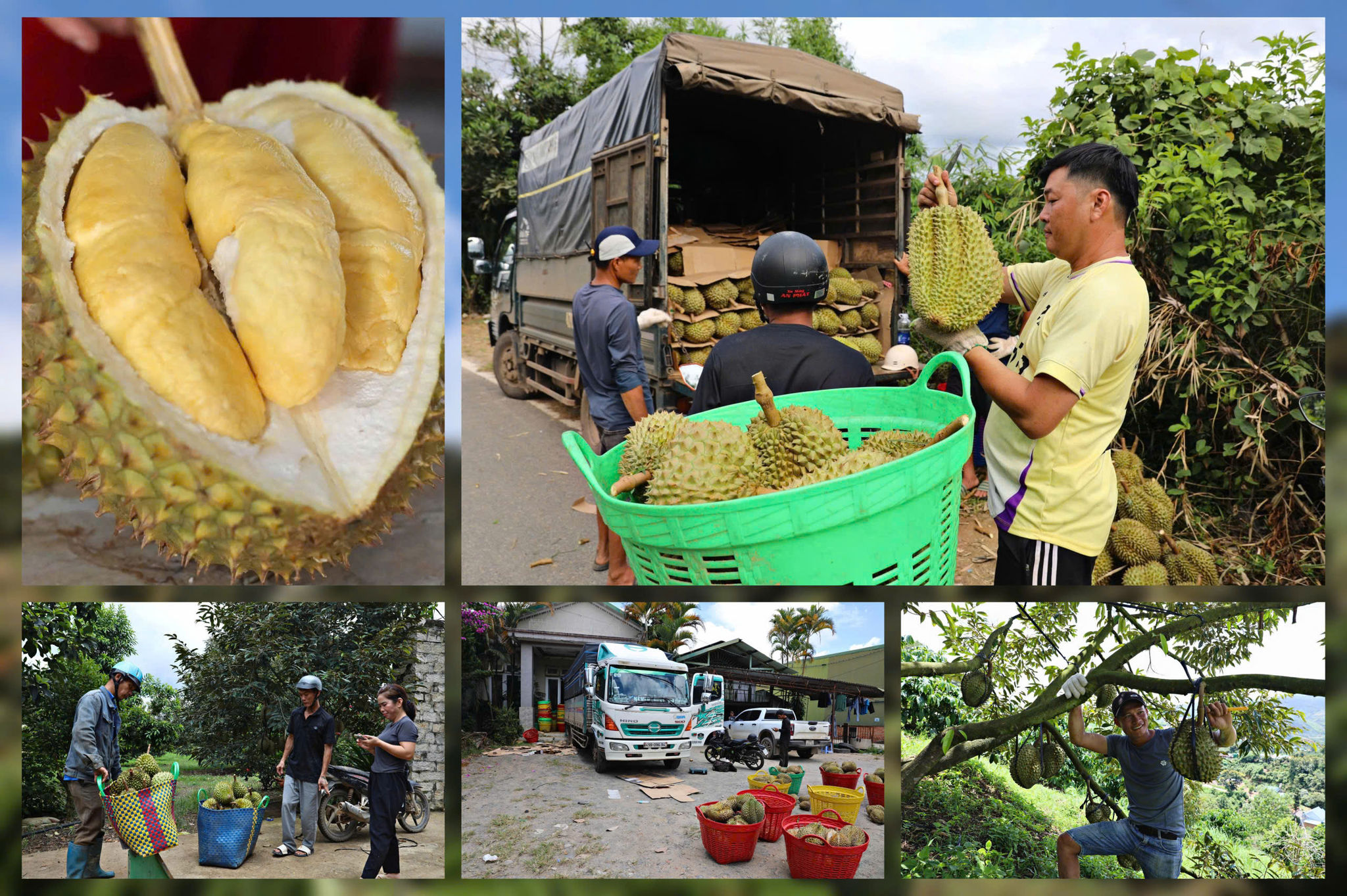
These days, durian-growing areas across Dam Rong are bustling as the main harvest season gets underway
From Fruit-Laden Orchards to Production Linkages
It was just after 7 a.m., but the more than one-hectare durian orchard of K'Huy's family in Dam Rong 3 Commune was already bustling with activity.
Under the lush tree canopies, groups of workers carefully inspected the fruit and harvested those that had reached the appropriate stage of maturity. After being picked, the durians were brought to collection points, weighed, sorted and transported to buyers.
The harvest season is in full swing, from orchards to collection points
K'Huy said that his family previously cultivated 1.8 hectares of coffee and cashew, but the income was unstable. The family later converted most of the area to durian and actively sought out new cultivation techniques.
As the orchard entered its productive stage, the economic benefits became increasingly evident. Household income improved, while the orchard also created additional employment opportunities for local workers.
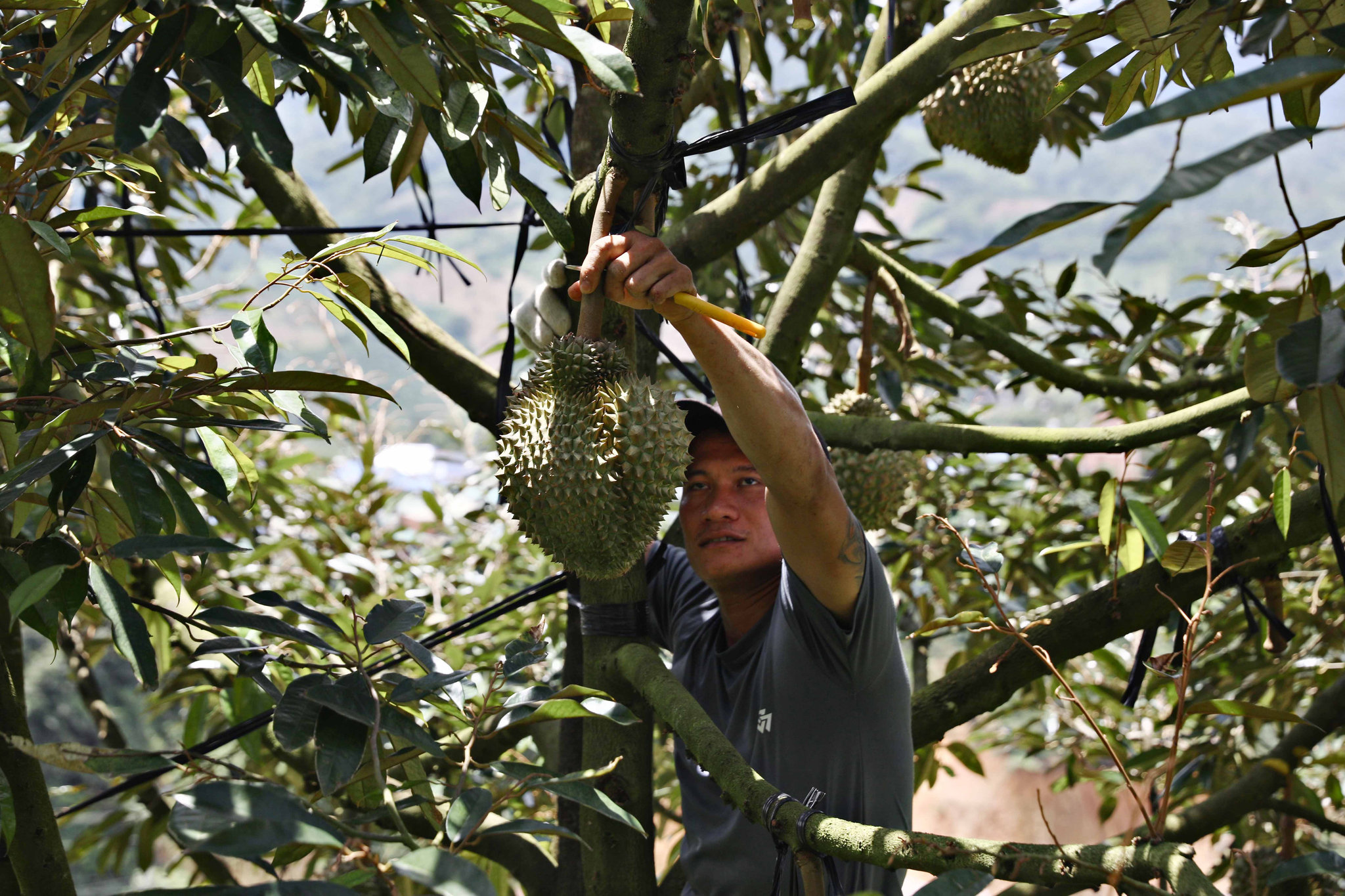
Farmers gently tap each durian with the handle of a knife to check its maturity before cutting it from the tree
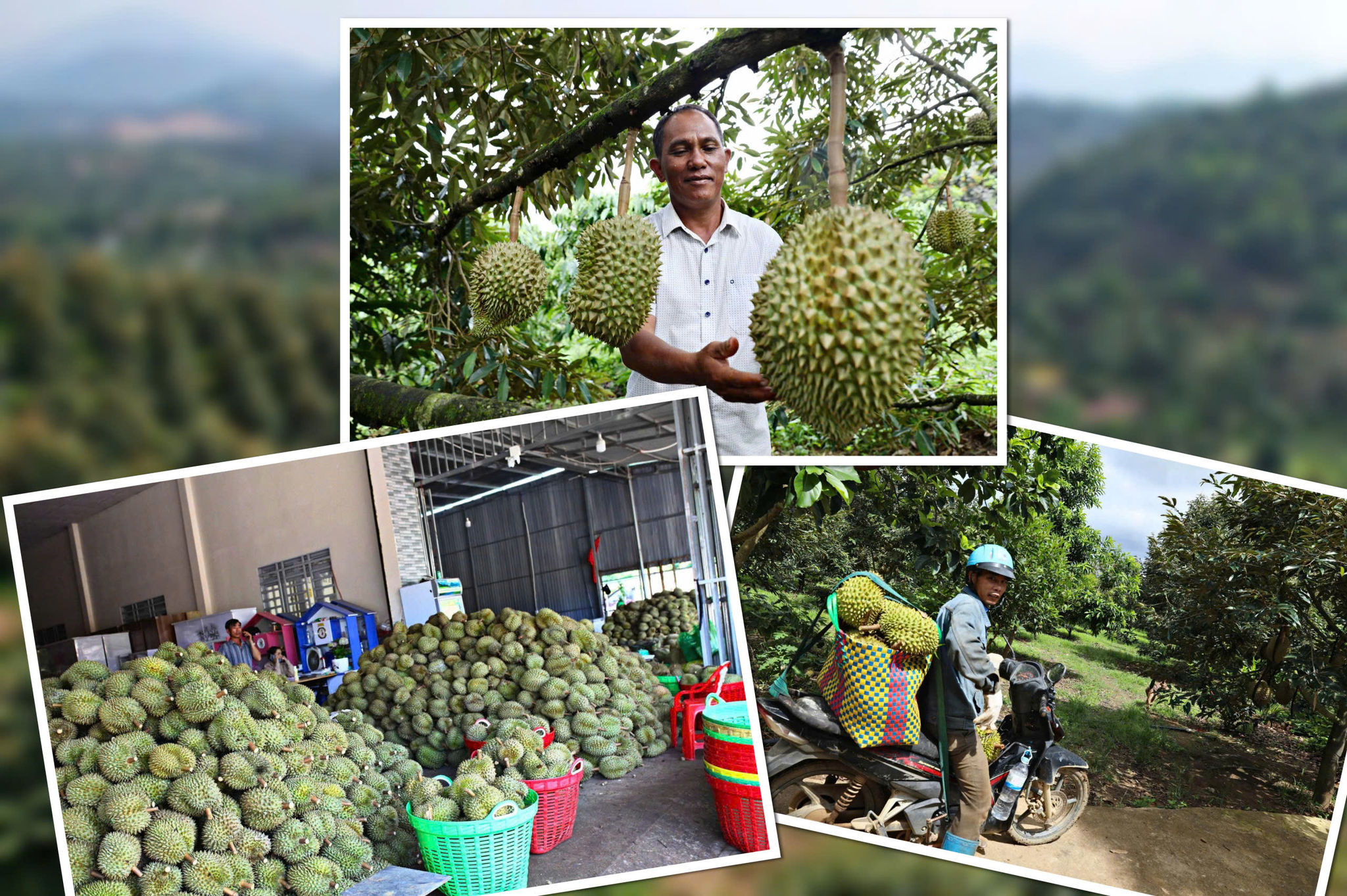
Along National Highway 27 and Provincial Road DT722 through Dam Rong 1, Dam Rong 2 and Dam Rong 3 communes, durian weighing stations are operating continuously. Trucks wait to have the fruit collected, weighed, sorted and loaded for transport to markets.
The bustling harvest season reflects the growing importance of durian as a high-value crop in the area.
In Lieng Sronh Village, Dam Rong 2 Commune, the value of durian cultivation has been further enhanced through another approach: production linkages.
Vu Ngoc Truyen was among the first farmers to join the village's durian production cooperation group. Starting with several hundred durian trees intercropped with other crops in 2010, his family now has more than four hectares of pure and intercropped durian, including about three hectares that have been granted growing area codes.
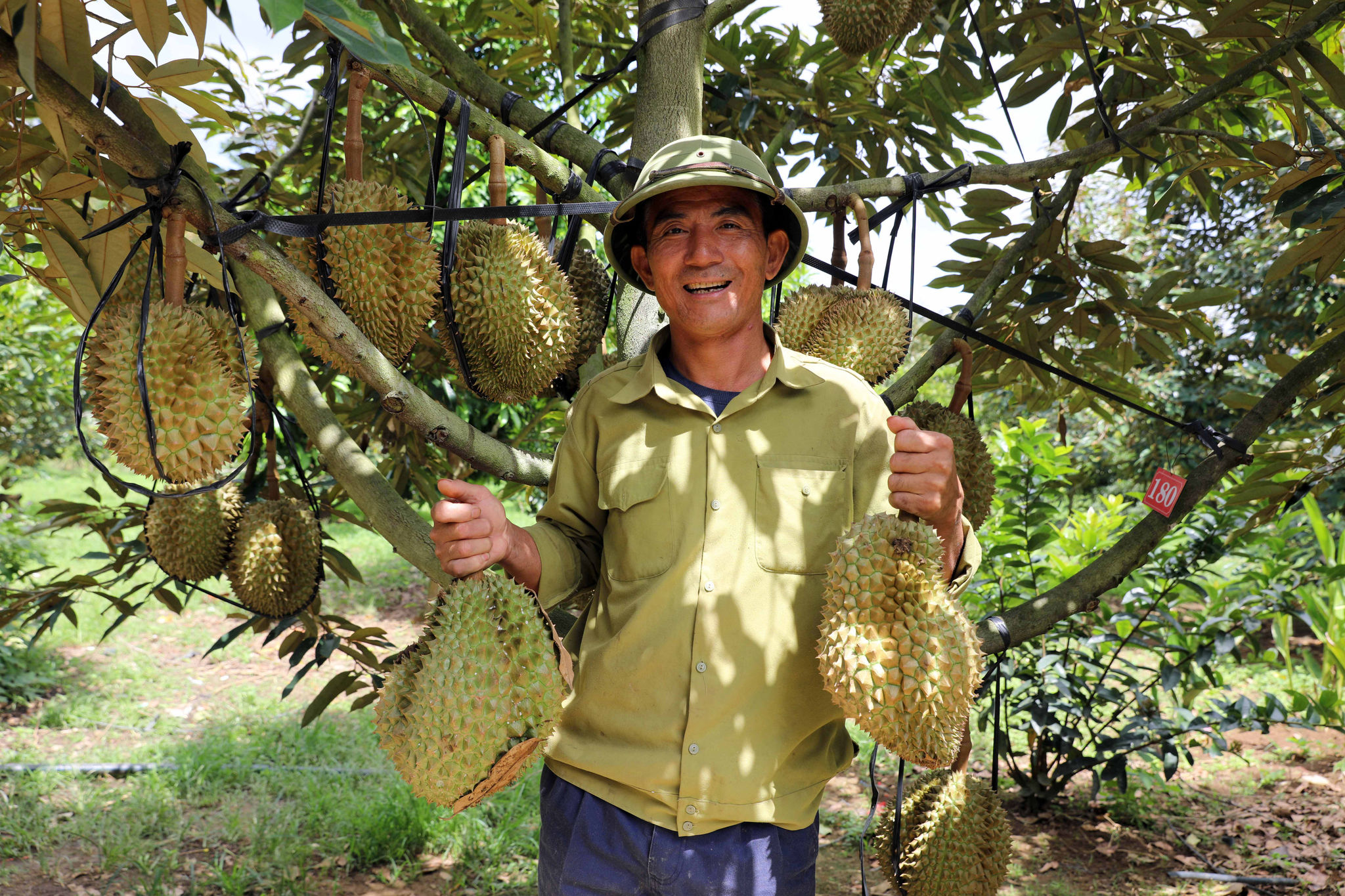
Farmer Vu Ngoc Truyen is delighted with this year's bumper harvest from around three hectares of durian orchards that have growing-area codes meeting export requirements
According to Truyen, joining the production group has allowed participating households to exchange experiences, support one another in cultivation and pest control, and gradually change their production practices.
More importantly, the linkage has made it easier for local authorities to help farmers meet requirements related to growing area codes, traceability and export standards.
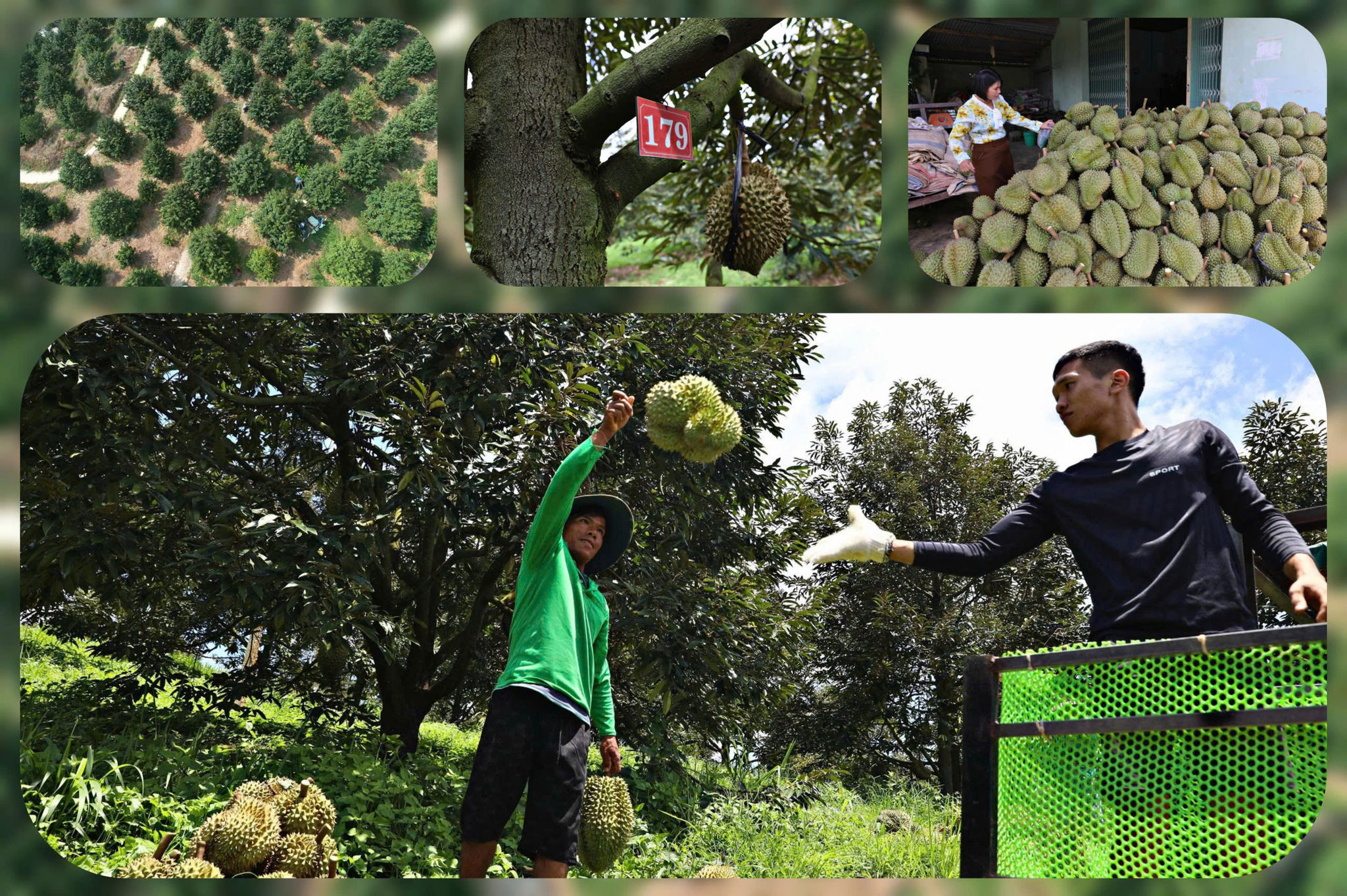
After more than three years of operation, the Lieng Sronh Village durian production cooperation group has provided technical assistance and supported the registration of growing-area codes for 19 households covering a total of 30 hectares. Of this area, 19.9 hectares have been granted growing-area codes.
The certification mark “Dam Rong Durian” was granted protection by the Intellectual Property Office of Vietnam under the Ministry of Science and Technology in April 2025
The average yield of durian production groups in the area is approximately 15 tonnes per hectare. With purchasing prices ranging from VND20,000 to VND50,000 per kilogram, one hectare can generate annual revenue of approximately VND350 million to VND800 million.
Durian-growing areas also provide regular employment for around 40 to 60 local workers.
When Community Engagement Drives Development
In the communes of the Dam Rong area, where ethnic minorities account for around 65 percent of the population, the story of durian is not simply about cultivated area or revenue. Behind the crop transformation is a new approach to engaging and mobilizing local residents.
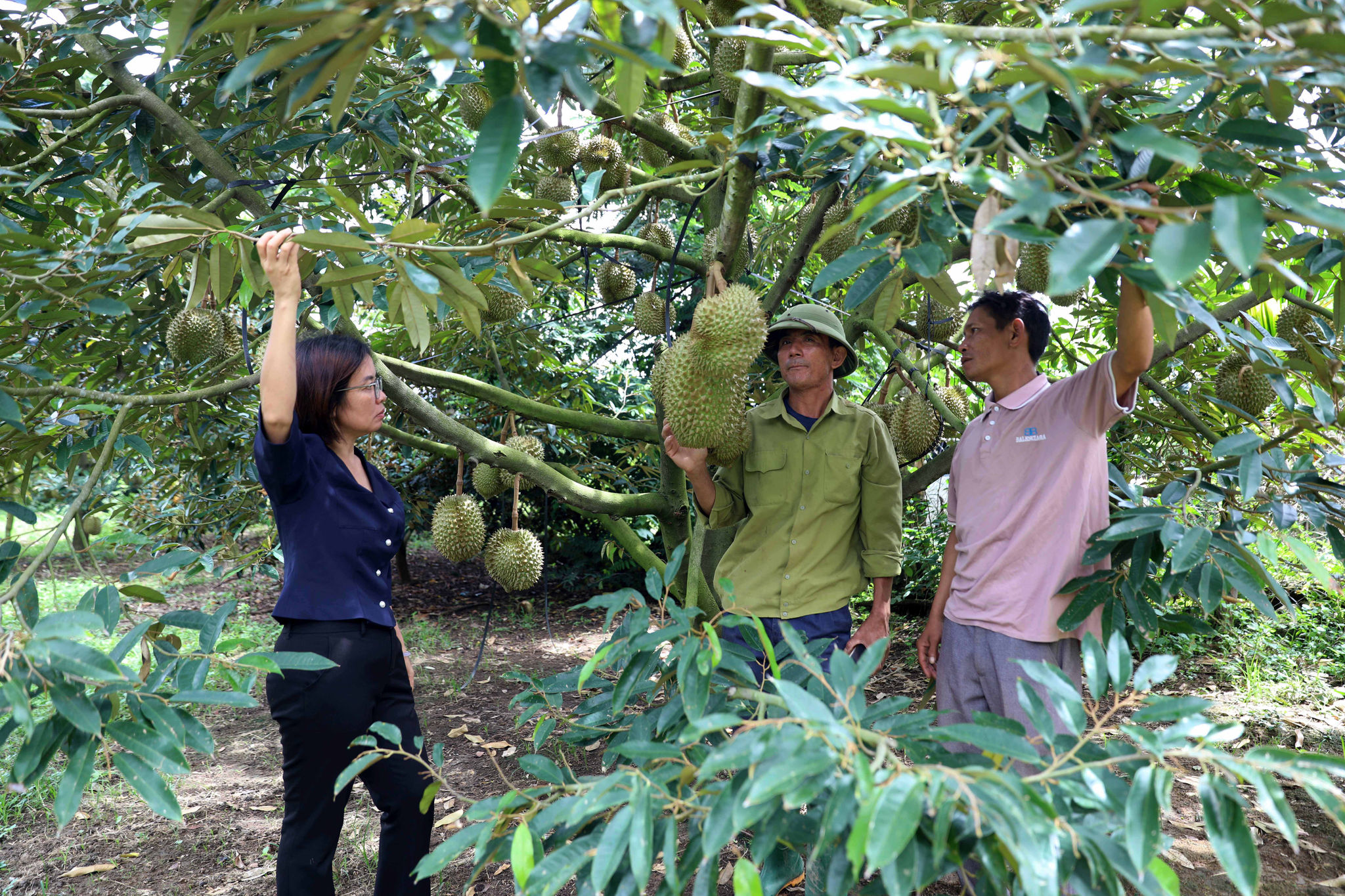
Phan Thi Cam, Standing Deputy Secretary of the Party Committee of Dam Rong 2 Commune, and Secretary of the Lieng Sronh Village Party Cell visit a durian orchard and encourage farmers to improve product quality
Statistics from four communes in the Dam Rong area show that the locality currently has more than 3,000 hectares of durian, of which more than 1,100 hectares are bearing fruit and over 300 hectares have growing-area codes. Production has increased year by year, generating hundreds of billions of Vietnamese dong in revenue.
Notably, most of the durian-growing areas are located in communities with large ethnic minority populations. Encouraged by the crop's economic returns, many households have confidently converted areas previously planted with less profitable crops, gradually improving their incomes.
From relying mainly on traditional farming experience, many households in Dam Rong are increasingly focusing on standards, traceability, market linkages and brand development
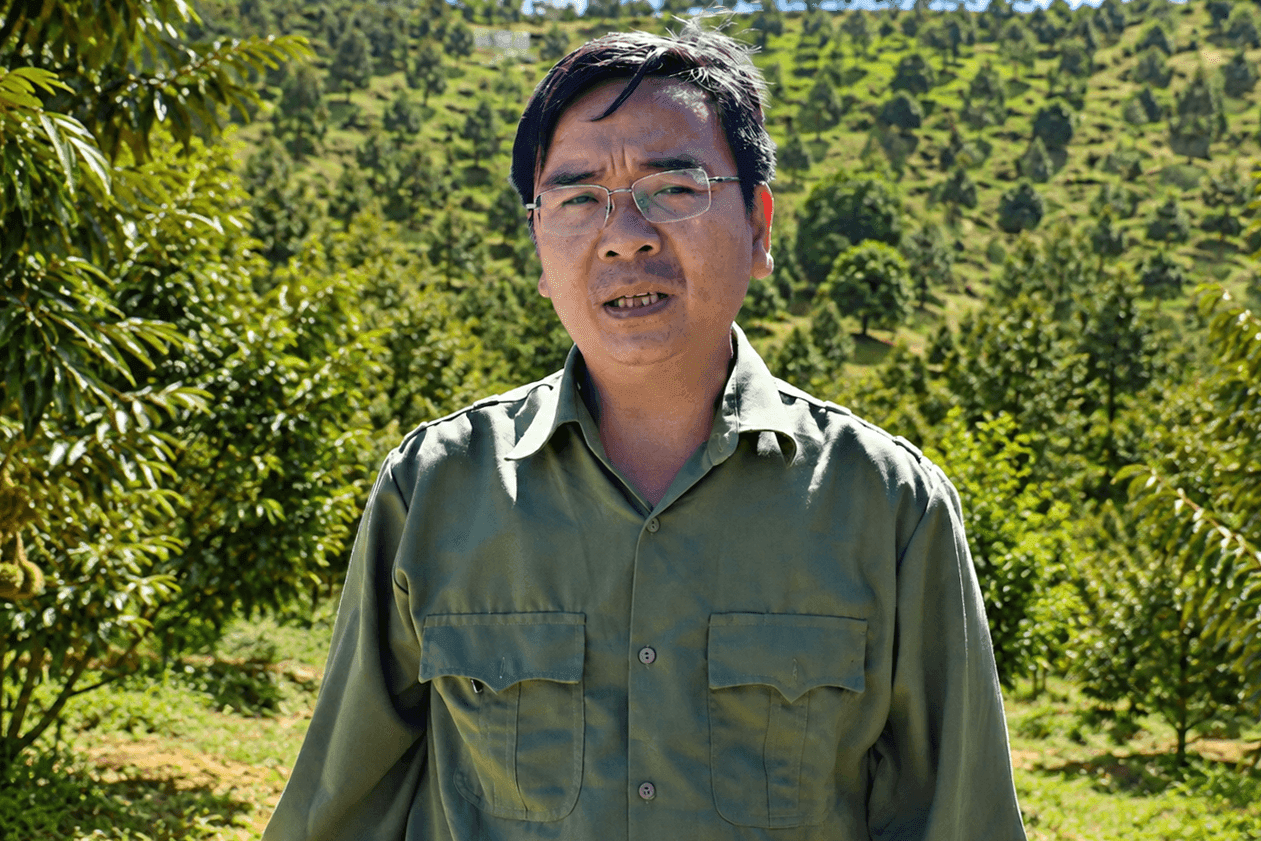
Truong Van Sang, Chairman of the People's Committee of Dam Rong 2 Commune, said that while coffee is the traditional crop and provides a relatively stable income, durian has expanded rapidly over the past decade and generated higher economic value for local farmers.
However, Sang emphasized that the locality is not pursuing acreage expansion at all costs. Its current priority is to properly care for existing orchards, improve productivity and quality, and build a sustainable value chain.
At the same time, the commune is encouraging businesses to invest in deeper processing and develop post-harvest storage facilities to extend shelf life, diversify products and reduce the risk of bumper harvests leading to falling prices.
“
Durian prices have remained relatively stable recently, but we encourage farmers not to expand their acreage. Instead, they should focus on improving product quality and creating sustainable value from this key local crop.
Truong Van Sang, Chairman of the People's Committee of Dam Rong 2 Commune
Since the two-tier local government model came into operation, the Party Committee, local authorities and Farmers' Association of Dam Rong 2 Commune have continued to step up communication and outreach to help farmers better understand the importance of production linkages and the collective economy.
Production groups are being encouraged to operate more effectively, with the goal of developing cooperatives capable of organizing production and connecting farmers with markets.
These efforts are accompanied by the transfer of scientific and technical knowledge, guidance on safe production practices, assistance with the registration and management of growing-area codes, traceability, and brand development.
These are essential steps to ensure that Dam Rong durians not only reach markets but also gradually gain greater value within the supply chain.
Lush durian orchards grown under organic-oriented practices are generating significantly higher incomes than many other crops in the area
The encouraging development of Dam Rong's durian-growing areas is reflected not only in higher incomes but also in changes in farming practices.
From small-scale production based largely on individual experience, farmers are increasingly paying attention to production standards, growing-area codes, traceability, market linkages and brand building.
Production groups have become platforms for sharing experiences, providing technical support and jointly seeking markets. The economic benefits generated by durian are helping improve living standards and giving ethnic minority communities greater confidence to invest in and develop agricultural production.
This is also how community engagement can be translated into practical results through specific and effective models.
Locals have affectionately dubbed durian the “billion-dong crop” because of its income potential. To ensure that this valuable crop develops sustainably, Dam Rong's priorities in the coming years are to further improve quality, strengthen production linkages, promote processing and expand export markets.


.jpg)