

STEM Creates a Creative Playground for Lam Dong Students
STEM education is expanding across high schools in Lam Dong, creating more opportunities for students to engage in hands-on practice, innovate, and develop their scientific and technological capabilities.
"Covering" STEM Across High Schools
Phan Thanh Hai, Deputy Director of the Lam Dong Department of Education and Training (DOET), stated that the education sector is focusing on establishing continuity in STEM implementation from lower secondary to upper secondary schools, thereby helping students experience an uninterrupted learning and capacity development process.
Annually, the DOET organizes platforms and competitions in Robotics, artificial intelligence, and scientific research, creating conditions for students to interact, gain practical experience, and showcase their abilities.
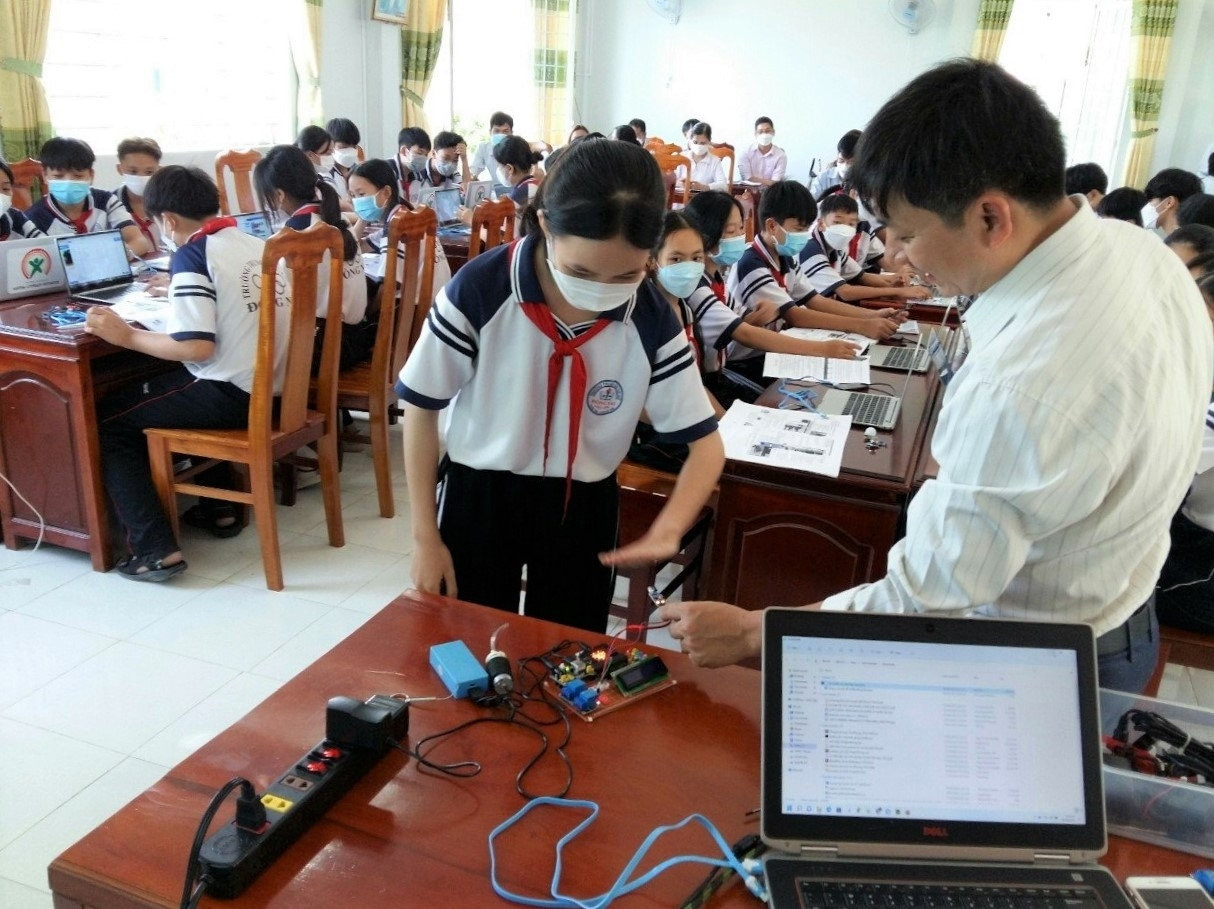
Along with the 2018 General Education Curriculum and professional training workshops, digital platforms are actively supporting STEM education in Lam Dong. To date, 99.47% of teachers and students aged 14 and older have activated level-2 electronic identification accounts, facilitating profile management, access to learning materials, and research activities in the digital environment.
During the 2025–2026 academic year, the Lam Dong DOET is piloting an artificial intelligence (AI) education model across 47 schools. Among them, four specialized high schools—Thang Long, Nguyen Chi Thanh, Tran Hung Dao, and Bao Loc—have been designated as core units.
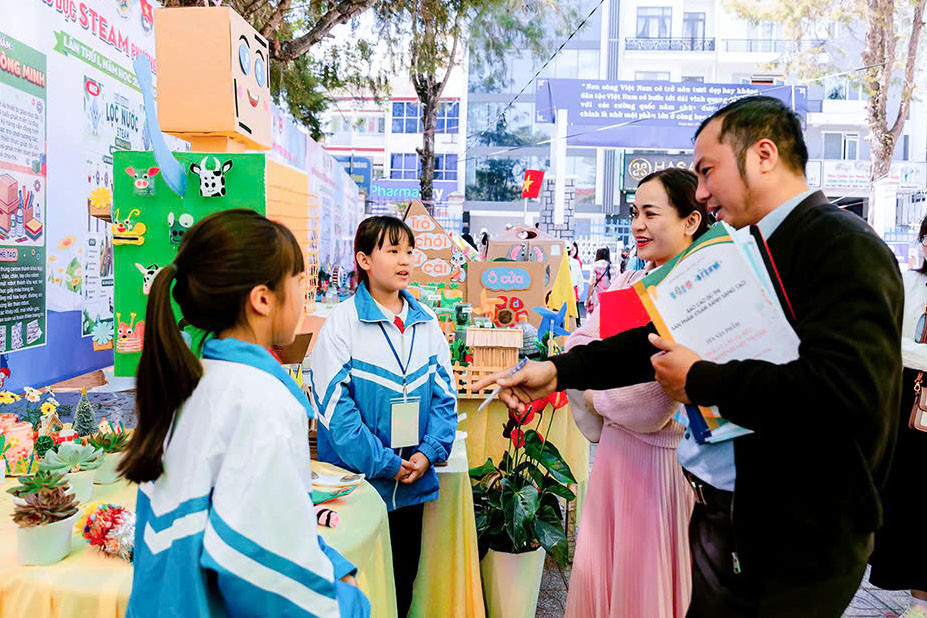
At specialized schools, STEM is not only organized through experiential activities but is also gradually integrated into core subjects and scientific research activities.
Nguyen Vu Minh Tu, Principal of Bao Loc Specialized High School, noted that the most common method is developing integrated STEM lessons within the main curriculum of Physics, Chemistry, Biology, Computer Science, and Mathematics. Professional departments have proactively compiled hundreds of teaching topics following the 2018 General Education Curriculum, with a stronger focus on practical applications.
A notable highlight is the scientific and technical research movement. Annually, the provincial Science and Engineering Competition attracts nearly 400 participating projects. Students from specialized schools present numerous projects tied to local strengths, such as IoT applications in greenhouse agriculture, research on medicinal materials from Central Highlands flora, or software solutions serving tourism.
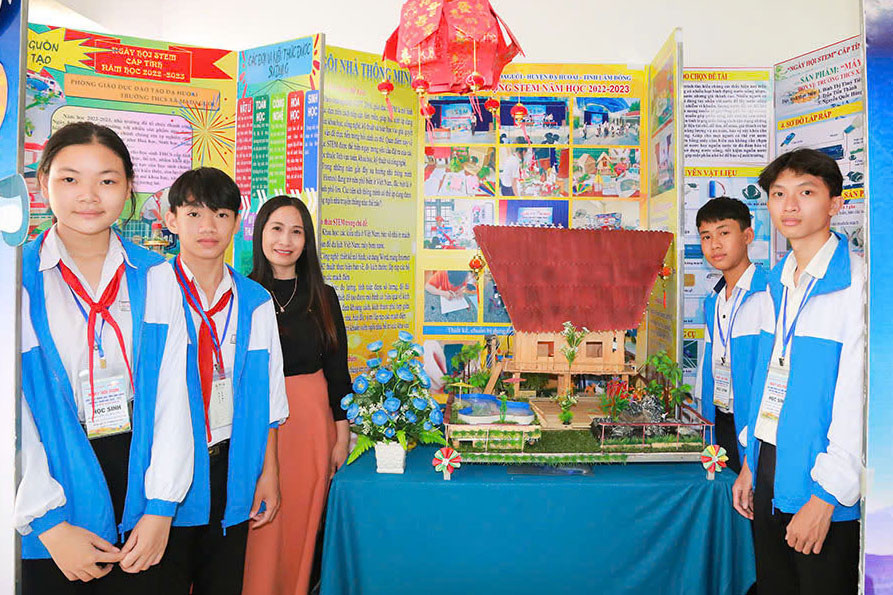
Additionally, STEM clubs focused on Robotics, AI programming, and experimental biology provide extra spaces for students to practice beyond regular class hours. Through these activities, classroom knowledge is connected to real-world problems, while helping teachers identify students with suitable talents and interests.
According to Nguyen Vu Minh Tu, the integration level of STEM in specialized curricula still faces limitations. Due to the large volume of knowledge in specialized subjects aimed at preparing for national excellent student competitions, time dedicated to hands-on STEM activities remains restricted. Interdisciplinary connections also vary.
"STEM in Computer Science or Physics is quite strong, but in some social sciences or in the integration of Chemistry and Biology, it remains modest,"
Principal of Bao Loc Specialized High School Nguyen Vu Minh Tu
More Space for Students to Innovate
Beyond practical training, STEM education strengthens students' collaboration, design thinking, data processing, and research presentation skills.
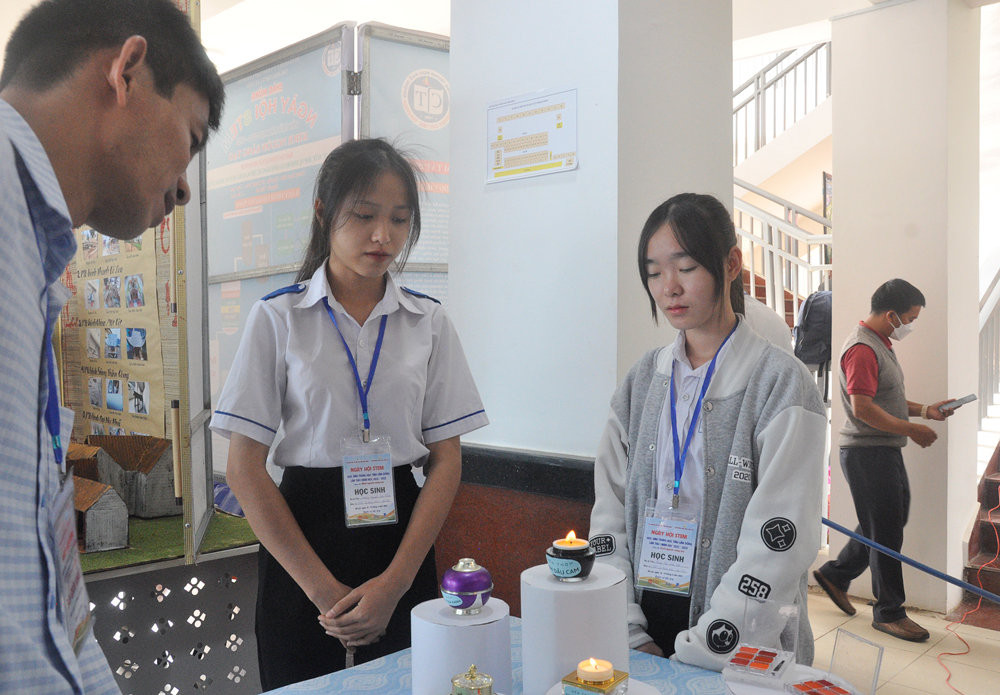
Through projects, students become familiar with collecting information, processing data, building products, and applying technology to solve specific problems. These are also increasingly essential skills in the digital transformation process.
More importantly, the implementation of STEM in specialized schools creates a spillover effect, giving other high schools in the province additional motivation to innovate through seminars and the sharing of digital learning material.
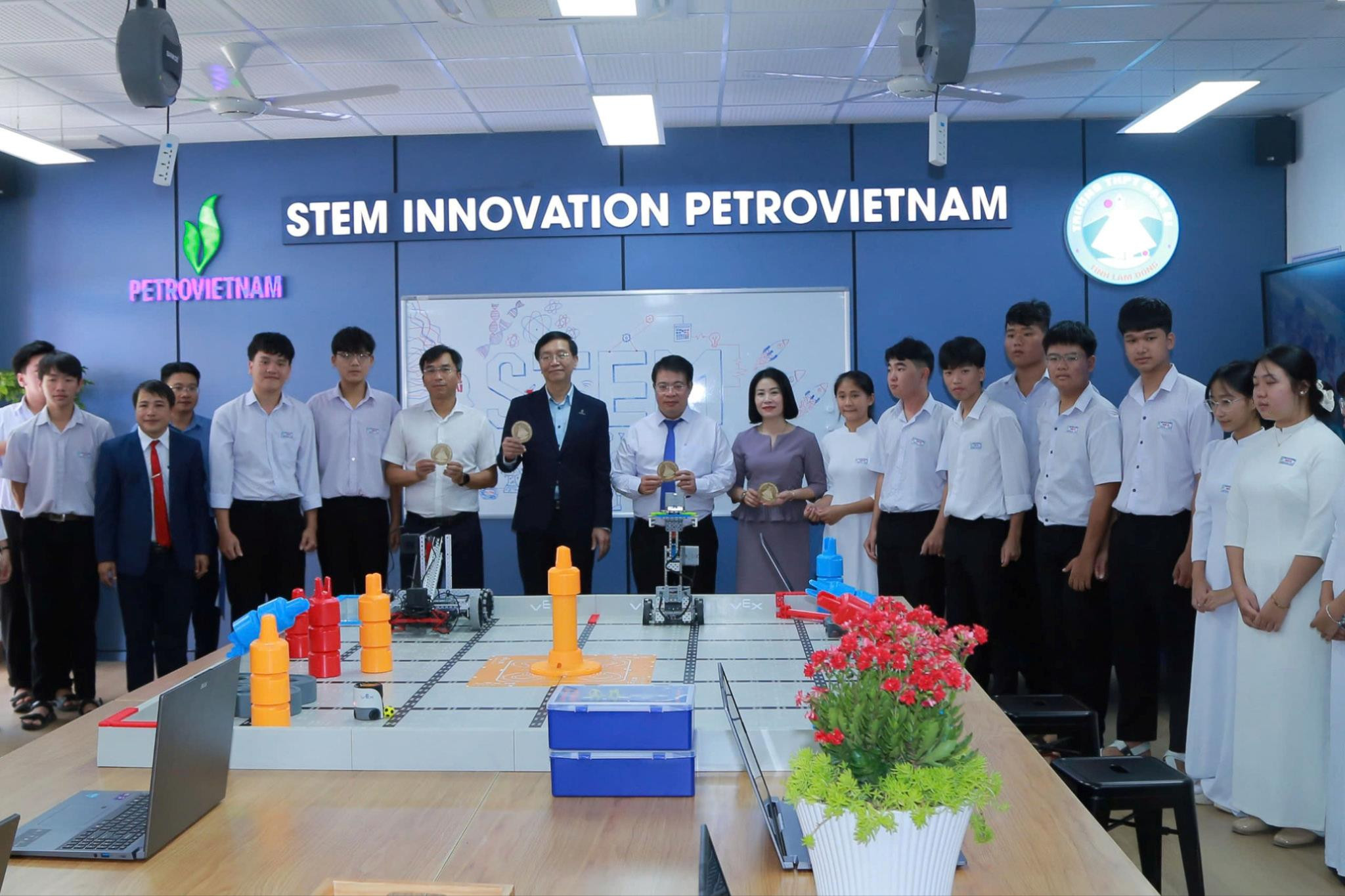
Going a step further, the Lam Dong education sector has also mobilized social resources for STEM models by receiving three modern STEM rooms sponsored by Vietnam National Energy Industry Group at Le Van Tam Lower Secondary School (Lien Huong Commune), Dam Ri High School (Da Huoai 2 Commune), and Phan Boi Chau High School (Nam Dong Commune).
According to Phan Thanh Hai, Deputy Director of the Lam Dong DOET, bringing these STEM rooms into use initially helps teachers obtain additional equipment for visual teaching, hands-on practice, experiments, and guiding students on small projects.
At Dam Ri High School, equipment such as computers, experimental kits, 3D printers, and various other supporting devices has been put to use in learning and experiential activities.
Tran Thanh Lien, Principal of Dam Ri High School, stated that the equipment aligns with STEM education goals, meeting the needs for teaching, hands-on practice, and creative learning experiences for students.
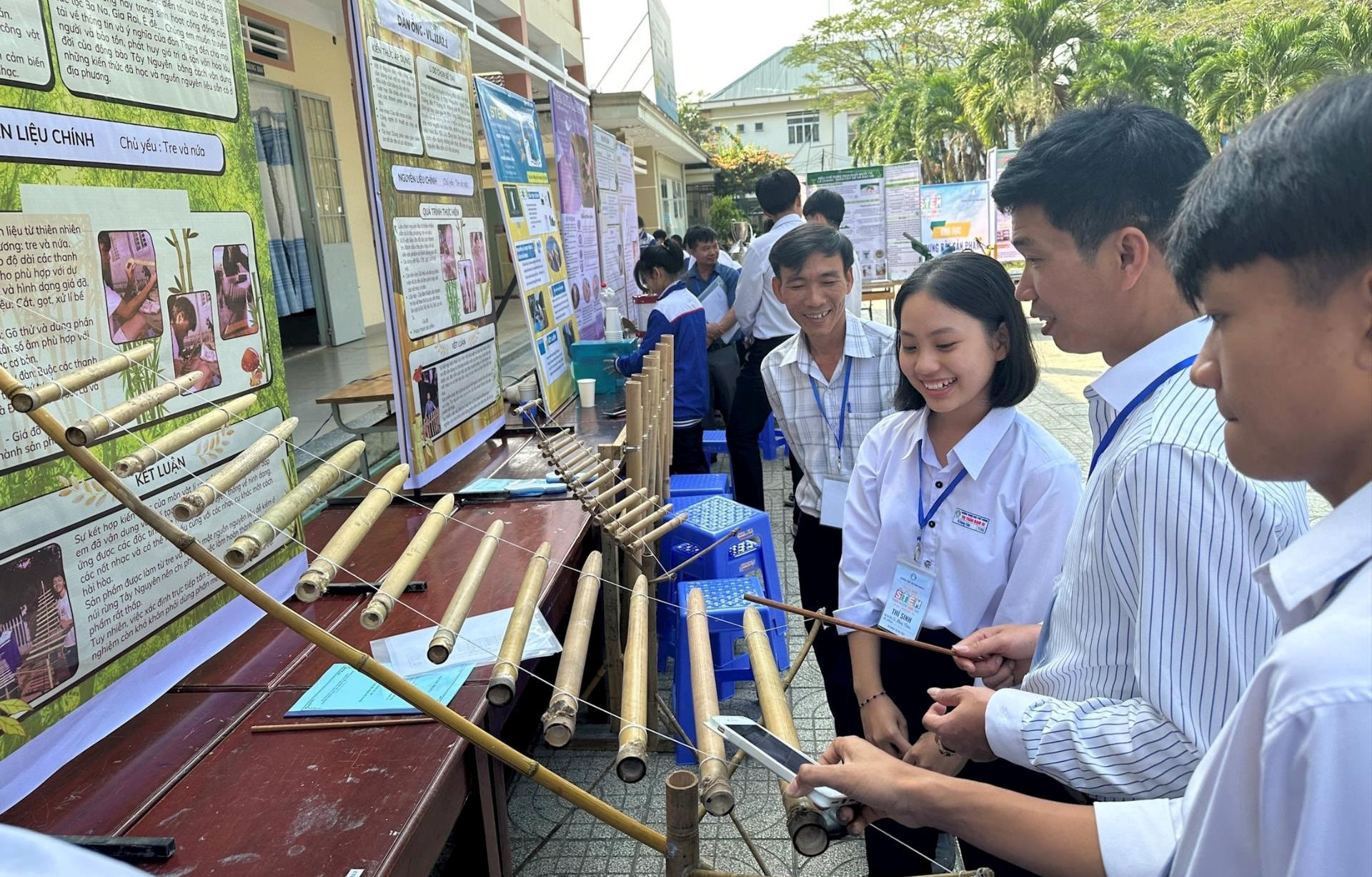
STEM is gradually becoming an important part of general education in Lam Dong, expanding space for students to practice, innovate, and develop scientific and technological competencies.