Artisan Ma Thi Thuan - Preserving Cham Heritage on the Loom
Minh Van•17/08/2026 10:59
Amid modern life, traditional looms continue to echo with the rhythmic sound of shuttles in Cham villages. There, women like artisan Ma Thi Thuan remain devoted to every thread, helping preserve traditional Cham weaving and cultural heritage across generations.
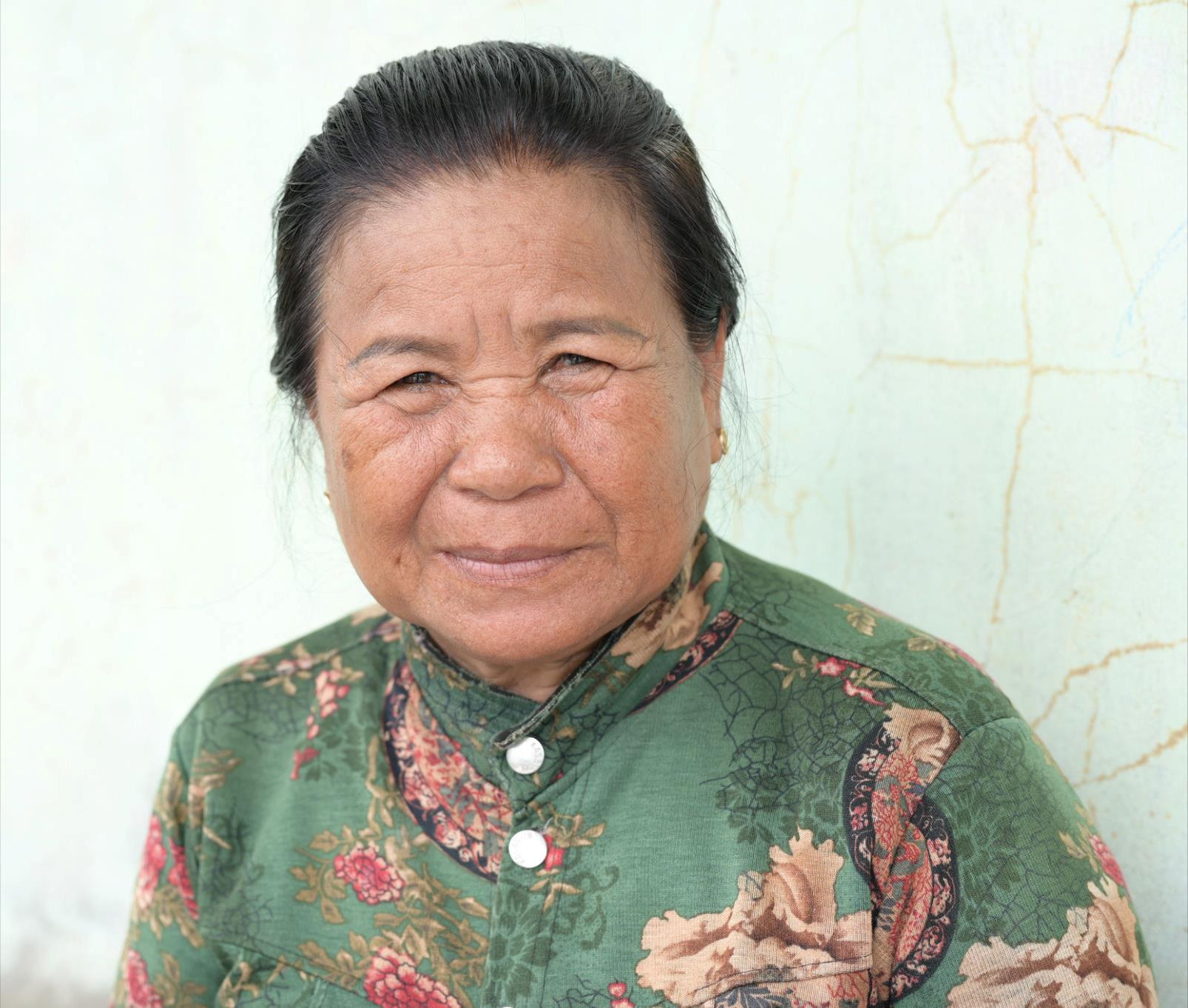
Artisan Ma Thi Thuan (born 1962), one of the few people who still work at the traditional loom every day
Preserving a Distinctive Cultural Identity
In early August, guided by the locals, I traveled to Lam Giang Hamlet in Ham Thuan Bac Commune, Lam Dong Province, home to a significant Cham community.
As I followed the straight concrete road through the village, I reached the residence of artisan Ma Thi Thuan (born 1962), one of the few people who still weave at a traditional loom every day, safeguarding the cultural heritage of the Cham people.
At 64 years old, her fingers remain agile as she weaves intricate traditional designs, working thread by thread. She believes that “these designs represent the unique cultural identity of an ethnic group.”
More than fifty years have gone by since the Cham girl, at just 15, first joined her mother to learn the craft. Now, she has perfected every aspect of the weaving process, producing fabrics whose hues and designs reflect the expertise and skill passed down through generations of artisans.
Ma Thi Thuan with a handmade product woven by her skilled hands
Thuan is capable of crafting a diverse array of products, such as traditional garments, headscarves, belts, and household goods, alongside items for religious ceremonies, festivals, funerals, and weddings. Each piece is made by hand, showcasing the expertise and creativity of Cham artisans.
She frequently takes part in festivals and events both within and beyond the province to showcase traditional brocade weaving, contributing to the preservation and promotion of an important part of Cham cultural heritage.
In the everyday lives and spiritual practices of the Cham people, hand weaving has long been of great importance. This craft not only provides artisans with a source of income but also represents significant cultural and spiritual values.
Artisan Ma Thi Thuan regularly demonstrates traditional brocade weaving at festivals, helping preserve and promote an important part of Cham cultural identity
The Cham community adheres to a matrilineal culture, which has allowed the art of weaving to be passed down through generations of women within their families. Consequently, the loom in a Cham home represents more than just a functional tool. It serves as a space where grandmothers impart knowledge to their grandchildren, mothers share their expertise with their daughters, and tales of ancestors, traditions, and celebrations are kept alive and handed down through time.
Each day, after completing her household tasks, she goes back to her loom to create textiles featuring designs requested by villagers.
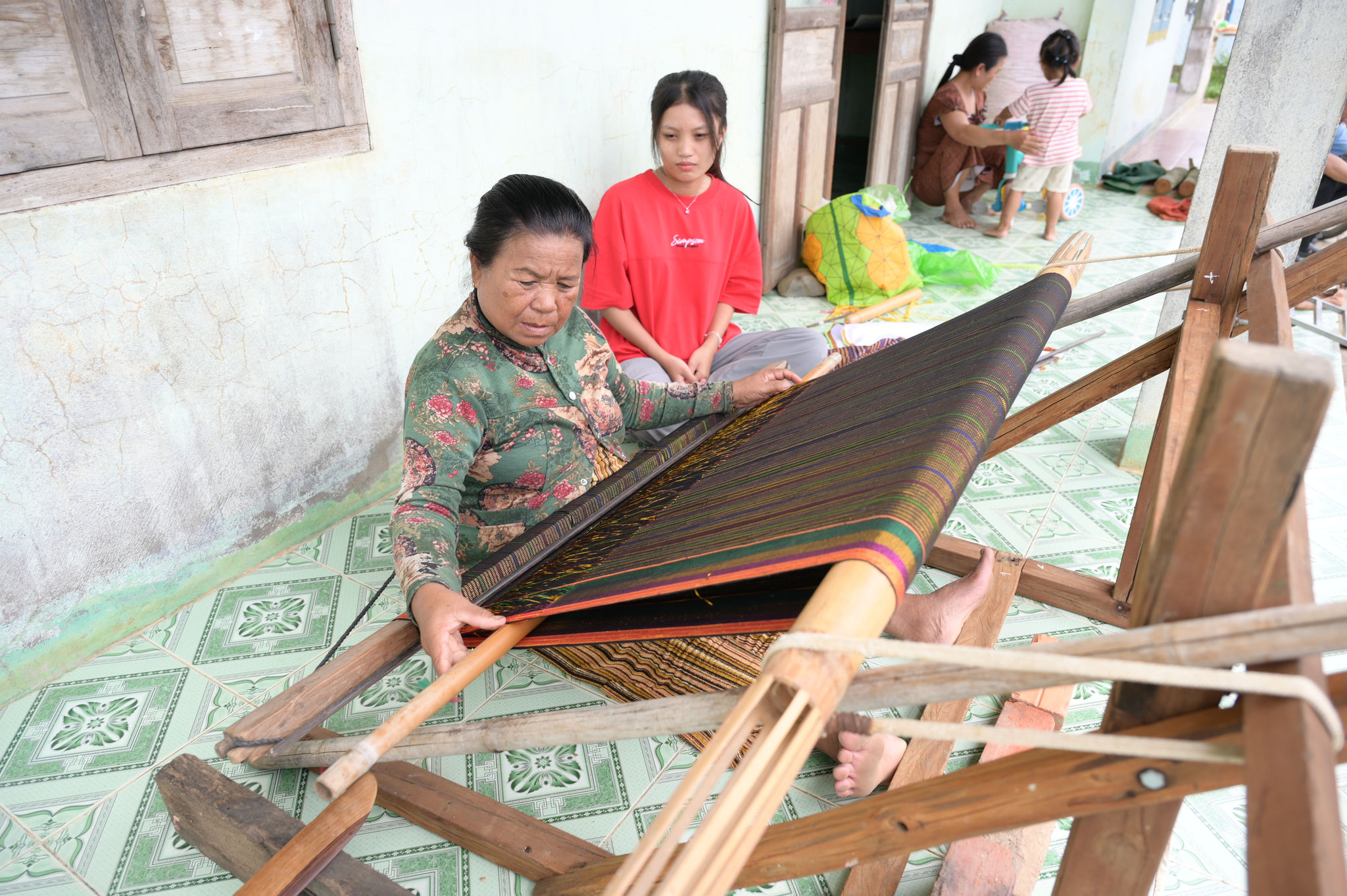
Every afternoon, Thuan sits at her loom to weave fabrics with requested patterns
Thuan shared: “The most difficult part is probably arranging the threads to form the patterns. To create a complete motif, I have to calculate everything from the moment I set up the warp threads, memorize the composition, and then shape the pattern while weaving. It is a skill developed through memory, experience and perseverance and passed down from one generation to the next.”
Keeping the Traditional Craft from Fading Away
In earlier times, the Cham community managed nearly the entire fabric production process independently, including cultivating cotton, spinning thread, sizing, dyeing, and weaving the final items. This process demanded significant time and labor.
“Currently, weavers have less to do than in the past, but the volume of orders is also declining. A completely handmade fabric can take three to five days, or even several weeks, to finish. At the same time, mass-produced fabrics are becoming more affordable and convenient, posing numerous challenges to traditional weaving,” Thuan explained.
“
The patterns on brocade reflect the cultural life and beliefs of the Cham people. Many motifs are associated with ancient symbols, images of Shiva and other deities in Cham beliefs. Beyond their aesthetic value, these patterns carry cultural messages passed down through generations.
Artisan Ma Thi Thuan
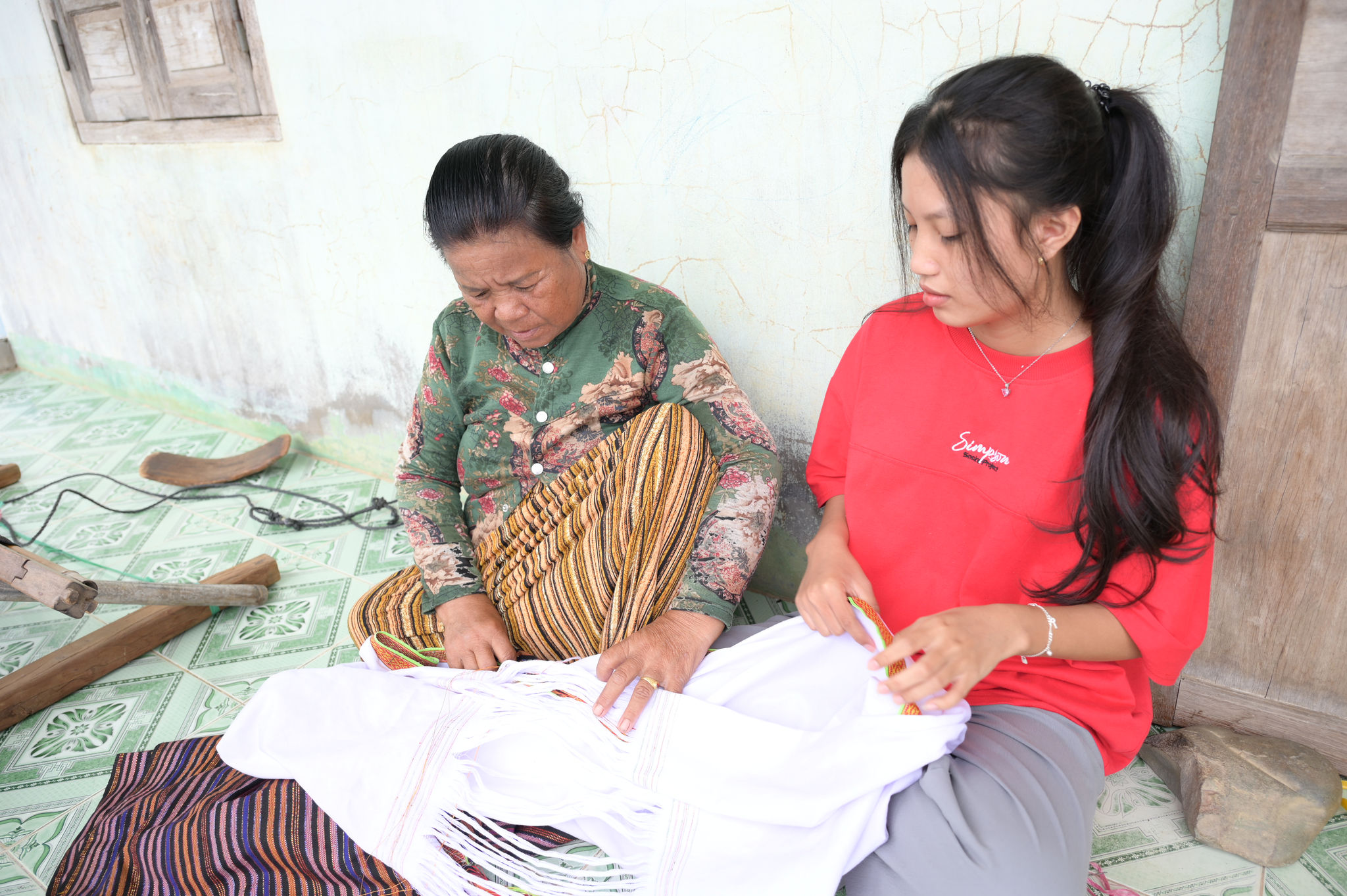
While Thuan focused intently on her loom, her granddaughter perched next to her, observing her grandmother's agile fingers with keen interest. Nevertheless, when offered the chance to learn the skill, the girl declined. Now a university student in Ho Chi Minh City, she has little opportunity to learn weaving from her grandmother—a craft that demands patience, accuracy, and significant commitment.
The loom is also where Thuan tells her children and grandchildren stories about ancestors, customs and festivals passed down through generations
“
There are currently more than 730 Cham households in the hamlet, but only one or two people still practice traditional brocade weaving, and they are all elderly.
Thong Minh Dong, Deputy Head of Lam Giang Hamlet, Ham Thuan Bac Commune
According to Thong, most young people nowadays either work in companies and factories or study away from their hometowns, while traditional clothing is less commonly worn in daily life.
Consequently, there is a declining interest among young people in learning and carrying on the tradition of weaving. Even during occasions like traditional festivals, weddings, and funerals, a significant number of young people prefer ready-made clothing produced by machines.
“If steps aren’t taken to safeguard it, the traditional craft of brocade weaving will eventually fade away,” he expressed with worry.
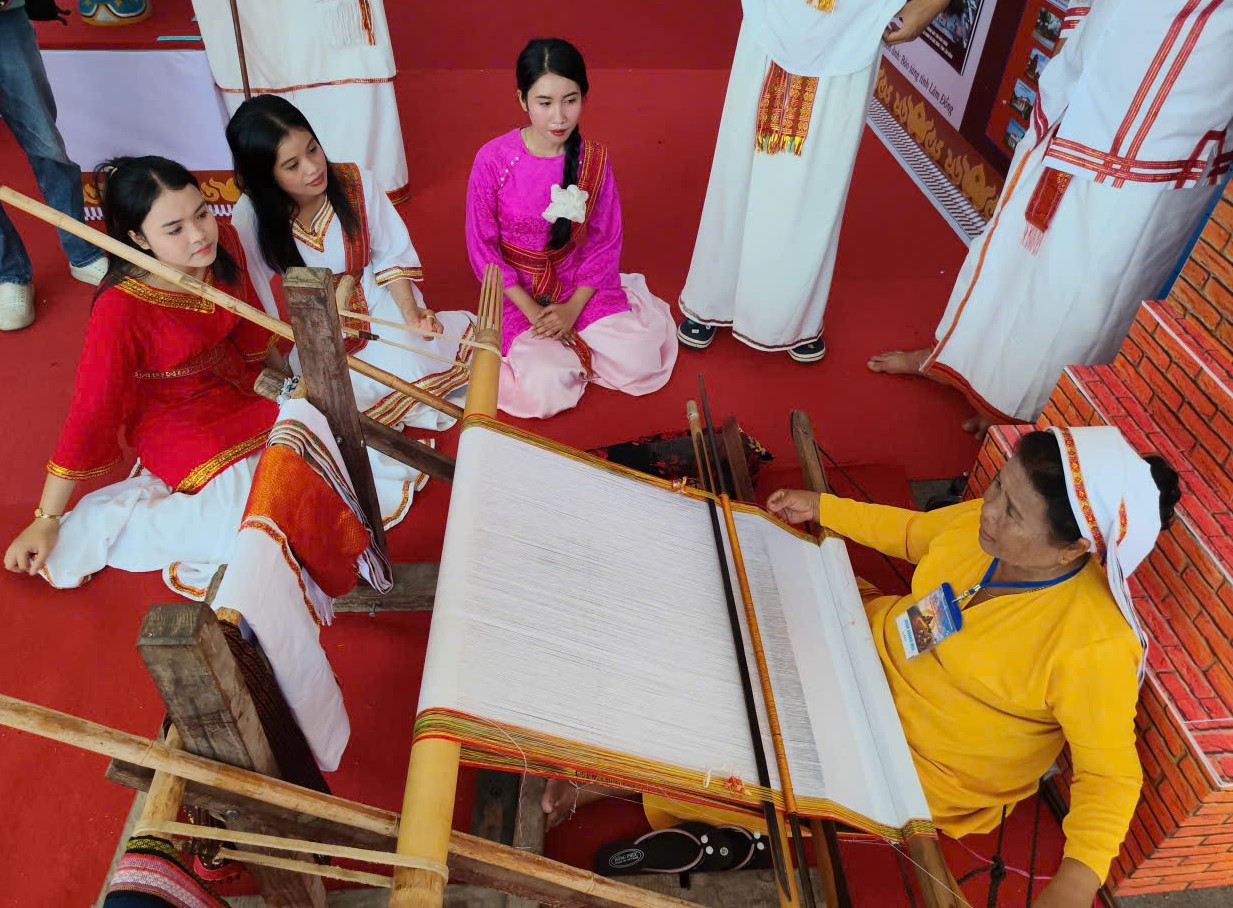
Visitors enjoy taking photos beside the loom with Artisan Ma Thi Thuan at the Kate Festival
Despite being an ancient craft with centuries of history, weaving continues to hold significant importance for the Cham community, though the number of skilled artisans is slowly diminishing.
In recent years, the provincial museum and local authorities have frequently organized programs aimed at promoting, showcasing, and raising awareness of traditional weaving techniques. Special emphasis has been placed on cultivating cultural pride among Cham women, motivating them to discover, learn, and engage in the craft.
During festivals and public holidays, artisans are often invited to conduct demonstrations at the Cham Cultural Exhibition Center and Po Sah Inu Tower. These interactive experiences provide visitors with greater opportunities to understand the rich history, culture, and unique values of the Cham community.
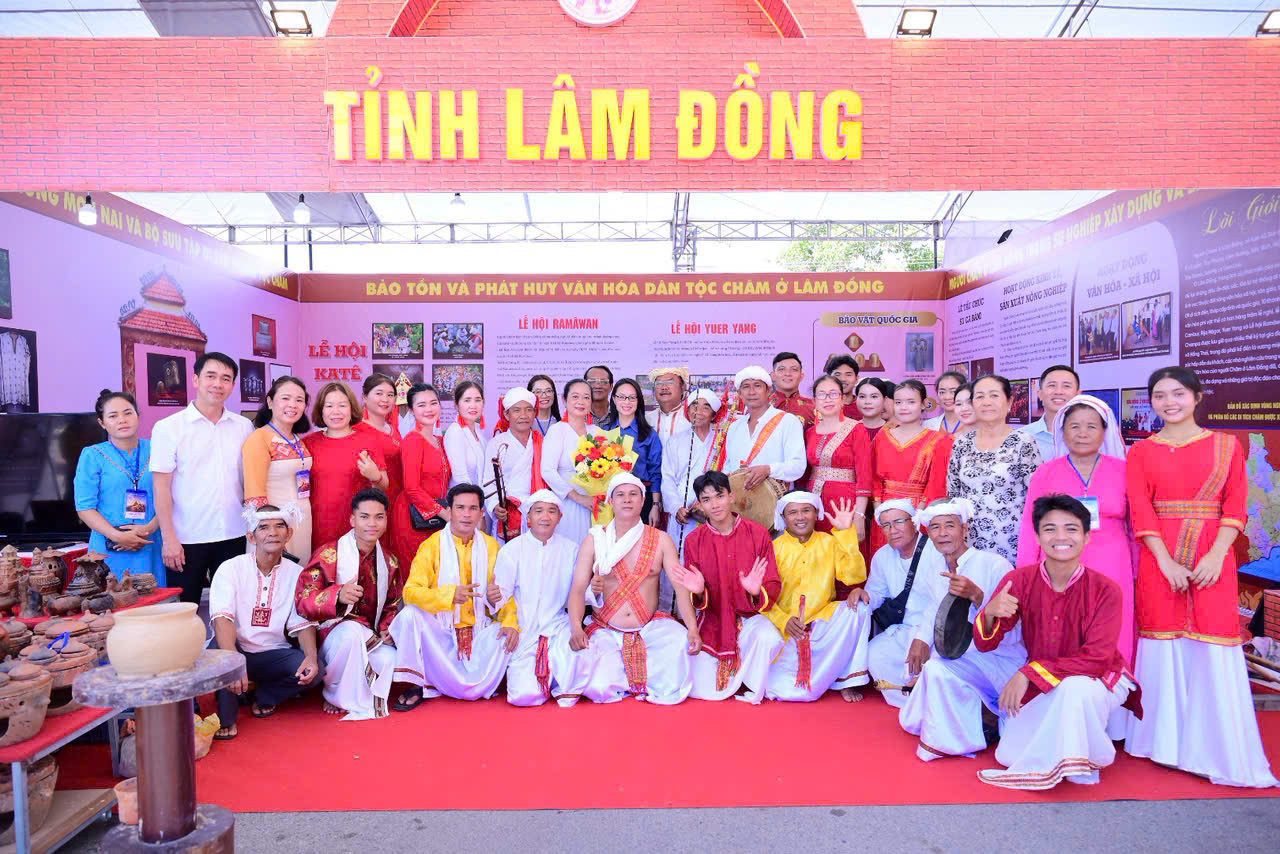
Artisan Ma Thi Thuan (in pink, second from right) with a Lam Dong delegation of artisans at the Cham Cultural Festival in Khanh Hoa in June 2026
Brocade weaving is an ancient cultural activity intricately linked to the material and spiritual lives of the Cham people. Each fabric not only highlights artistry and skill but also conserves the memories, wisdom, and cultural identity that have been handed down over generations.
Despite numerous obstacles, traditional wooden looms are still found in Cham villages, and the sound of weaving resonates daily. Craftspeople are hopeful that traditional weaving will continue to gain recognition and support, ensuring that the craft is preserved, passed down to future generations, and adapted to contemporary life.
Lam Dong boasts a significant Cham community, with over 40,000 individuals, making up more than 22% of the total Cham population in Vietnam.


.jpg)
.jpg)
.jpg)