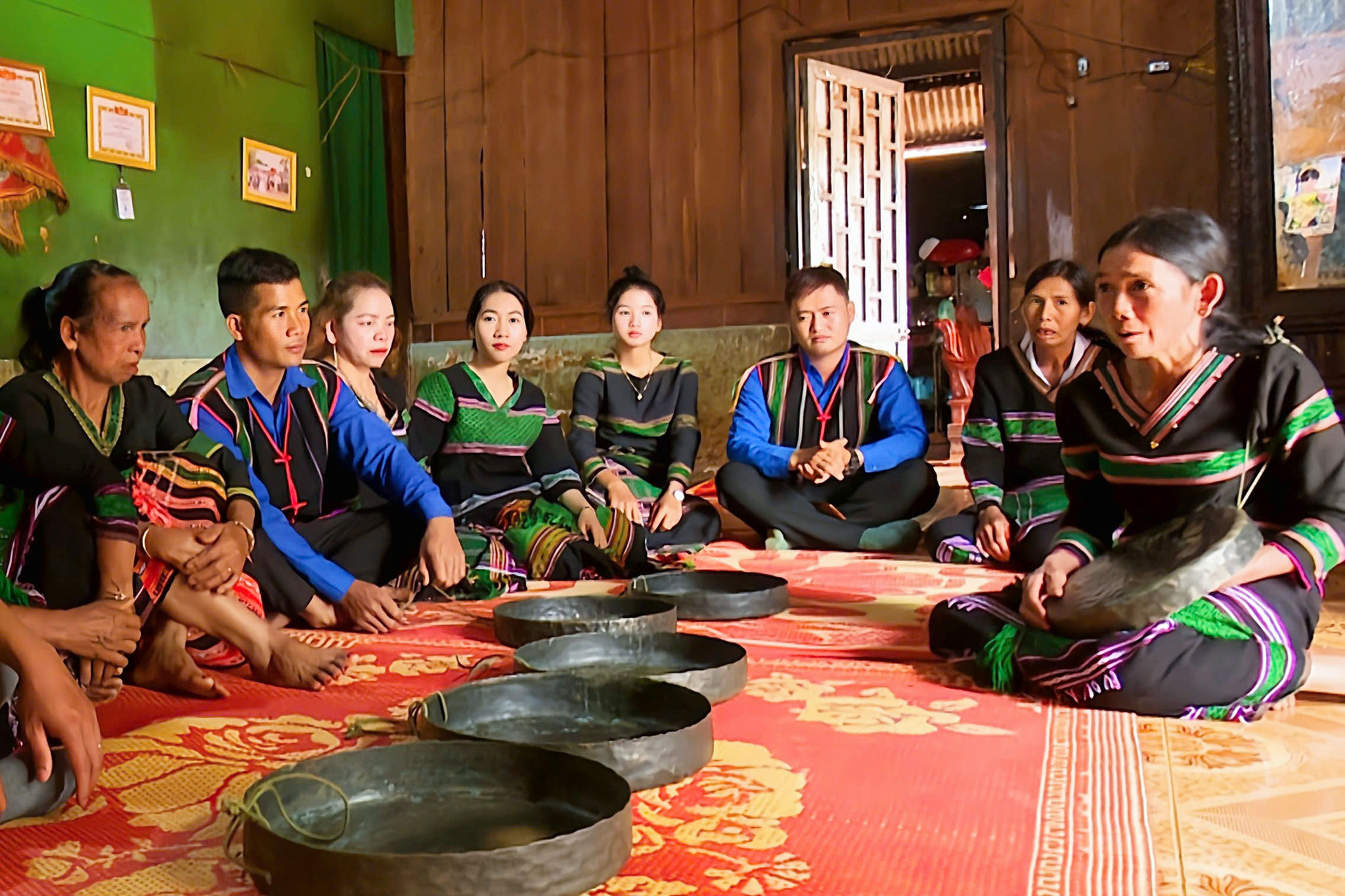

Folk Artists and Their Journey of Passing on the Cultural “Flame”
Lam Dong is home to many folk artists who quietly preserve and pass on traditional cultural values, ensuring that gong music, Then singing, Tinh instruments and traditional brocade weaving continue to have a place in modern life.
The “Keepers of the Flame”
Located near National Highway 28, the small wooden house of folk artist H’Grao, born in 1948, stands quietly among more modern homes in Ta Dung Commune. Inside, the familiar sounds of Ma traditional music can still be heard.
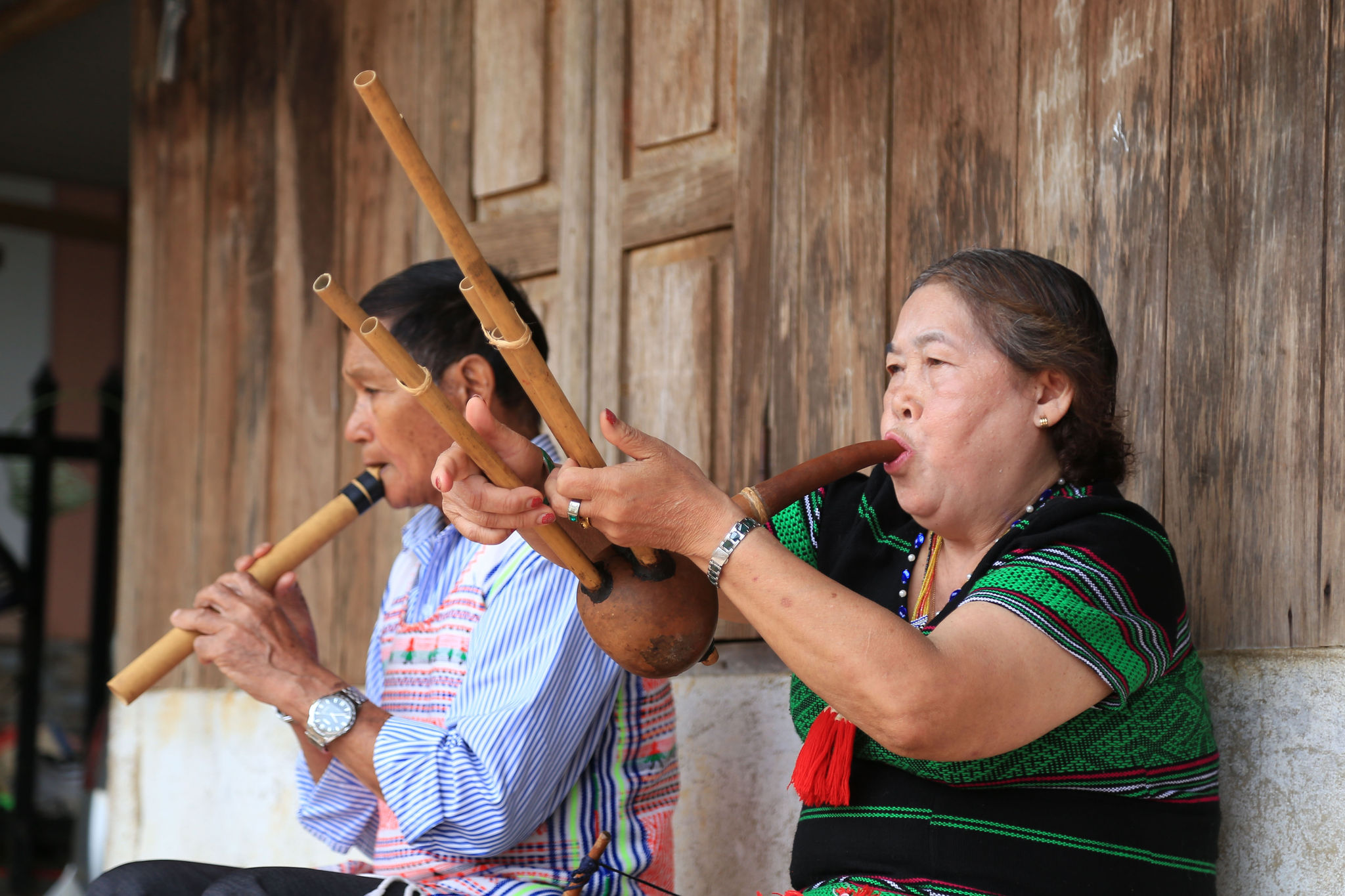
H’Grao and her husband, K’Bot, have spent many years preserving the traditional culture of the Ma people in western Lam Dong. Both are skilled in playing various traditional Ma musical instruments and regularly participate in local cultural activities.
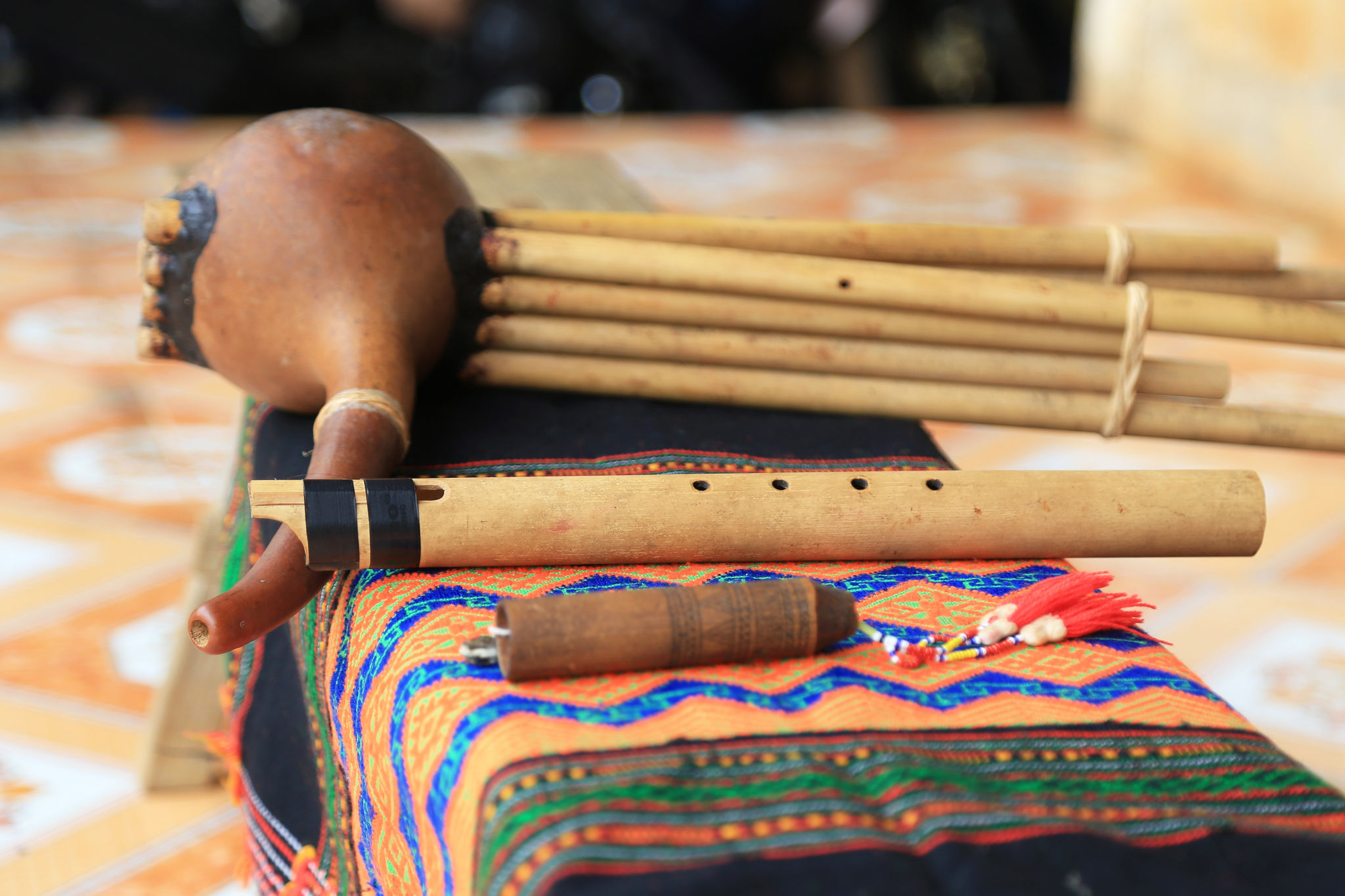
For the couple, these instruments are not simply used for festivals or performances. They have been part of their lives since childhood, passed down by their parents and deeply rooted in their memories. Today, they can still skillfully play the m’buot, r’let, t’ron and t’rong.
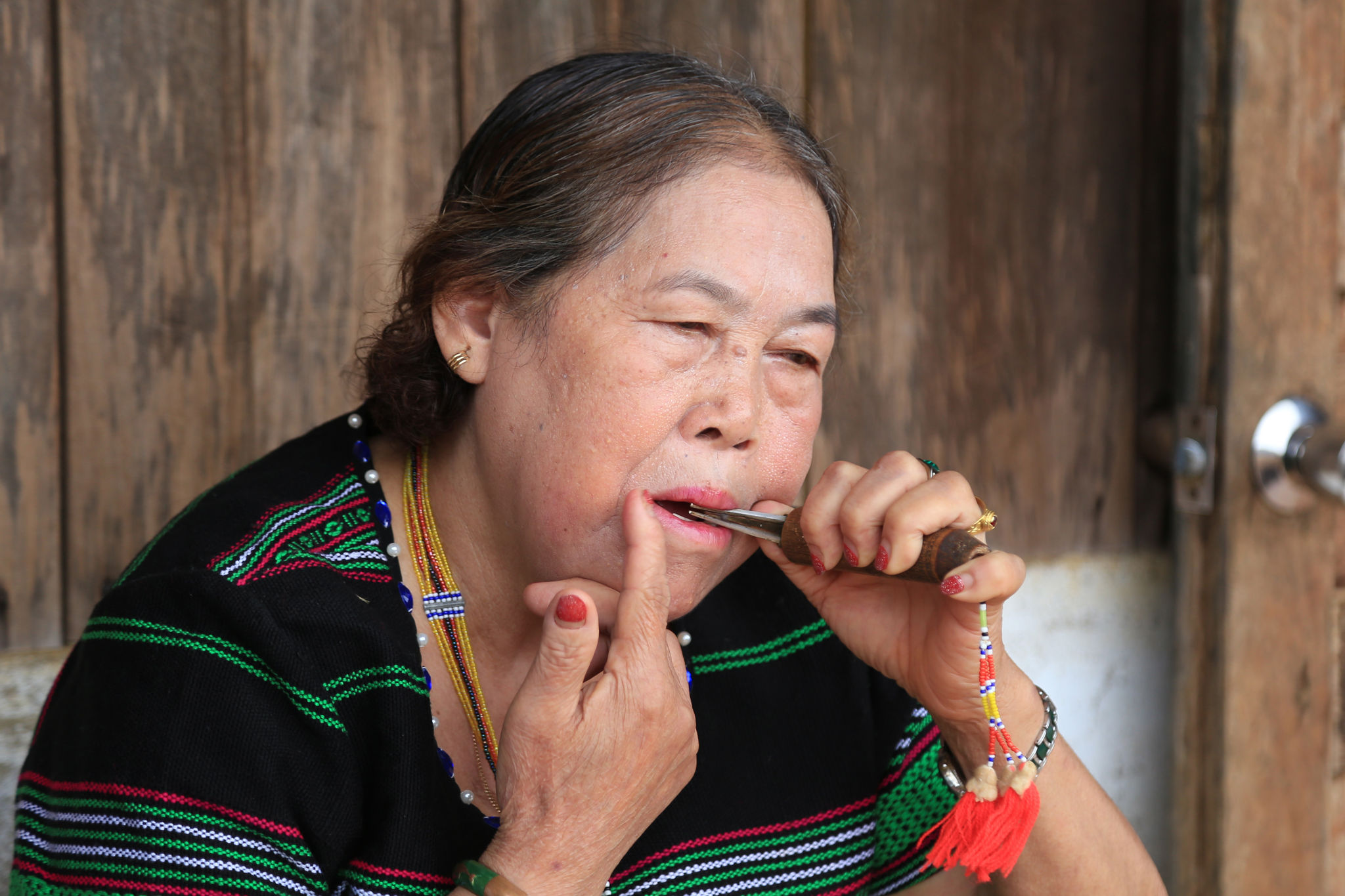
The t’rong is also closely connected to the couple’s love story. In 1966 and 1967, K’Bot and H’Grao used the sound of the t’rong to express their feelings for each other. What seemed like simple music became a discreet way for young men and women to express their love without being overheard. The couple married in 1968.
More than half a century later, the music that once brought them together continues to be preserved. H’Grao also became well known for playing the m’buot, an instrument traditionally played mainly by men. Mastering its intricate structure required years of persistent practice.
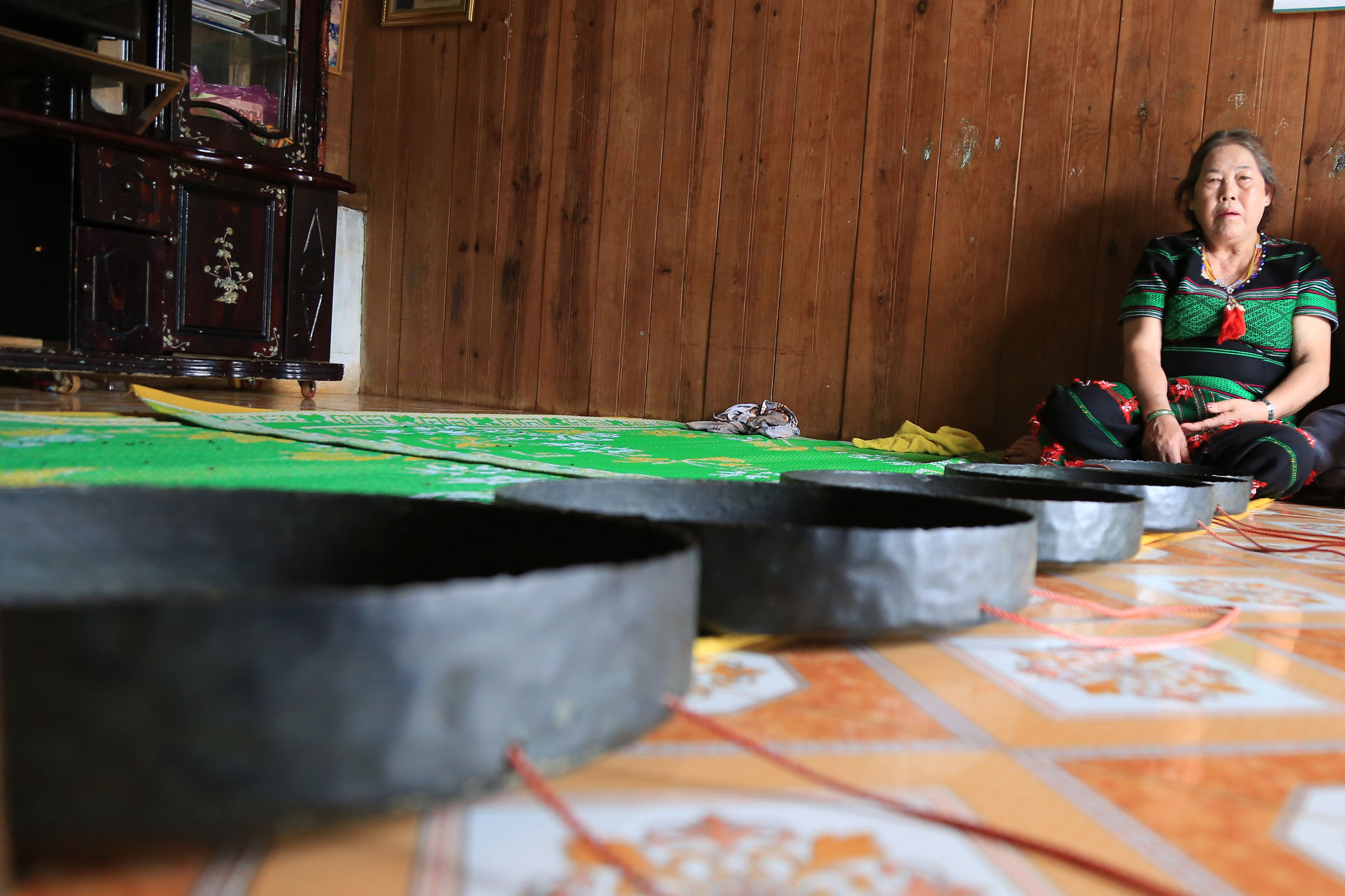
Her family also preserves a six-piece gong set that is decades old. One of the gongs has developed a hole and no longer produces the same clear sound, but K’Bot still repairs and tunes it himself so that it can continue to be used.
Sometimes, preserving culture begins with the simplest things: one person continuing to play the music of their ancestors, another repairing an old gong, and a husband and wife still playing the instruments passed down by their parents.
But simply preserving cultural heritage is not enough. Without passing it on, traditions may survive only in the memories of one generation. That is why, across many ethnic minority communities in Lam Dong, people with knowledge of traditional culture are taking on an even greater challenge: teaching it to the next generation.
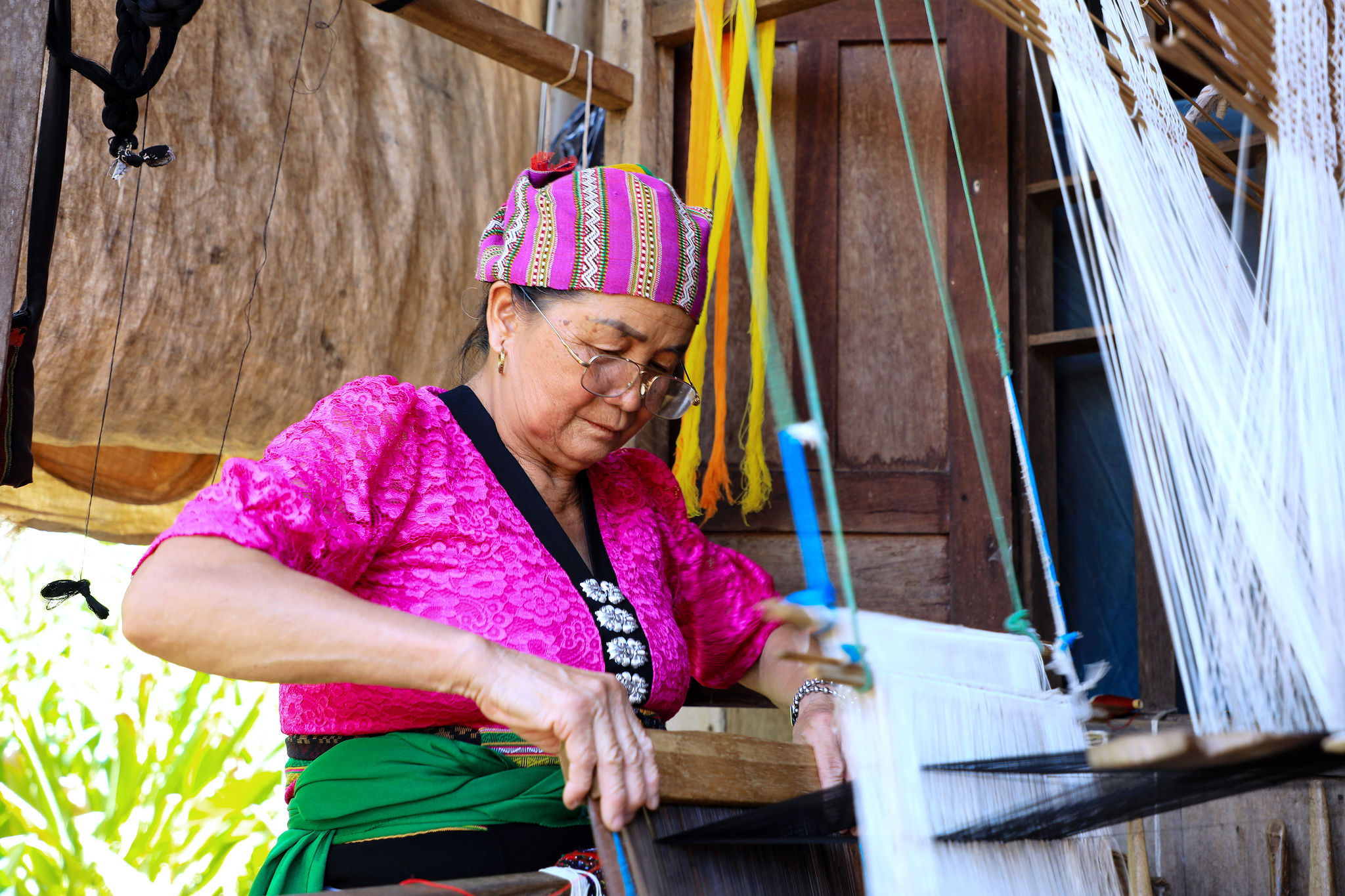
Folk artist Lo Thi Hoa, born in 1956, from the border commune of Dak Wil, also began learning from her family. Her grandmother and mother taught her from the age of nine. By the time she was 12, she had mastered spinning, dyeing yarn and weaving traditional patterns of the Thai people.
What was passed down to her has since been passed on to younger generations. Lo Thi Hoa and many other folk artists continue to teach traditional crafts to young people. From mother to daughter, grandmother to grandchild, and artist to student, a quiet cultural stream continues to flow.
Passing the Flame On
This journey is even more evident in the story of Nong Van Huu, also known as folk artist Nong Thanh Huu, born in 1950, in Nam Dong Commune. More than three decades ago, he left Cao Bang and settled in the Central Highlands. Inspired by his mother’s music, he began his journey of preserving Then singing. Today, he has become the person passing that musical tradition on to others.
But preserving a cultural heritage in a new homeland has not been easy. During his early years in Nam Dong, his love for the Tinh lute and Then singing was mainly maintained within his family and the Tay and Nung communities. He was once hesitant to take his instrument out to perform in public because of social prejudices surrounding folk culture.
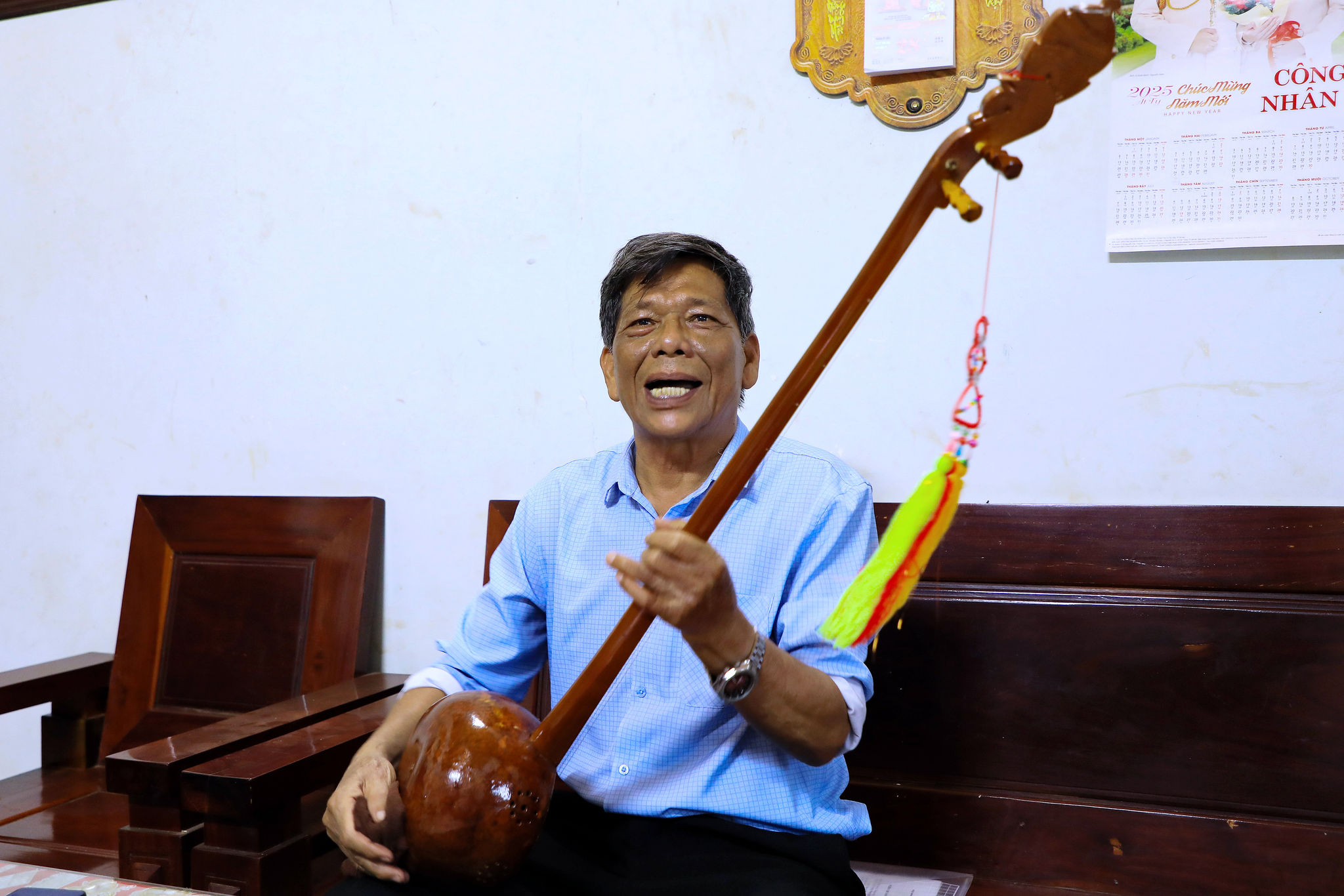
He gradually introduced Tinh lute and Then singing into local cultural and artistic activities. After stepping down as Secretary of the commune Party Committee in 2005, he devoted more time to developing the movement.
Without formal professional training, he taught himself and developed his own techniques. He makes instruments, composes music, performs and teaches others. To date, he has handcrafted more than 400 Tinh lutes and composed more than 600 Then songs about his homeland, the country, ethnic solidarity and life in his new home.
But these numbers are not what make his journey particularly remarkable. In 2010, he founded the “Purple Lagerstroemia” Tinh Lute and Then Singing Club. Starting with just eight members, the club has grown to 22 official members and has participated in numerous performances, festivals and arts events, bringing Tinh lute and Then singing closer to the community.
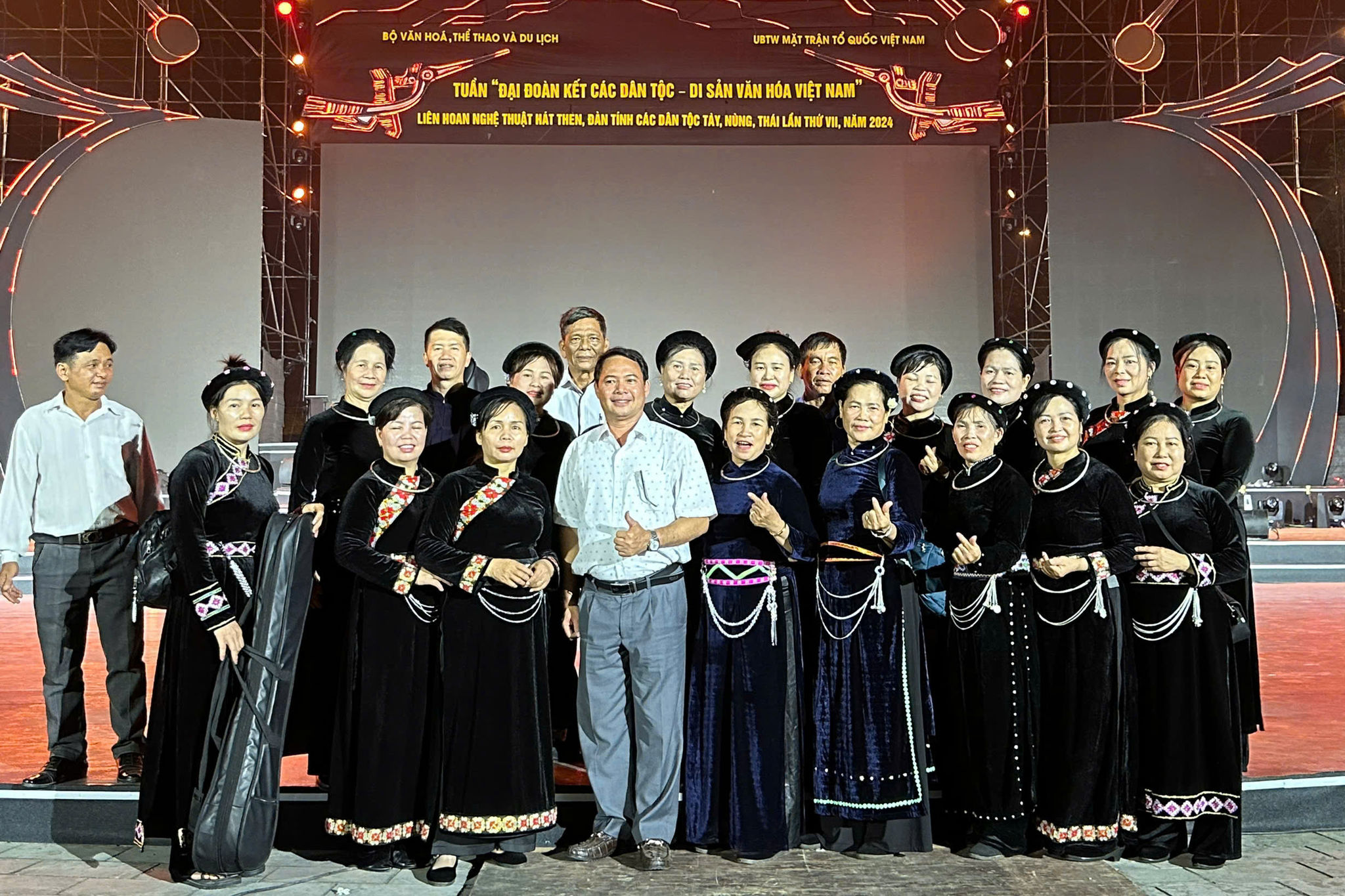
More importantly, he has taught more than 150 students free of charge. Some of them have continued to participate in local cultural and artistic activities. From one teacher, his students have gone on to bring the music and Then melodies to their own communities.
Preserving heritage, therefore, is not simply about keeping it alive—it is about passing it on. At 76, although his hands are no longer as agile as they once were following an accident, folk artist Nong Thanh Huu has not stopped. At his small home in Nam Dong Commune, he continues to compose melodies, write scripts and create new works.
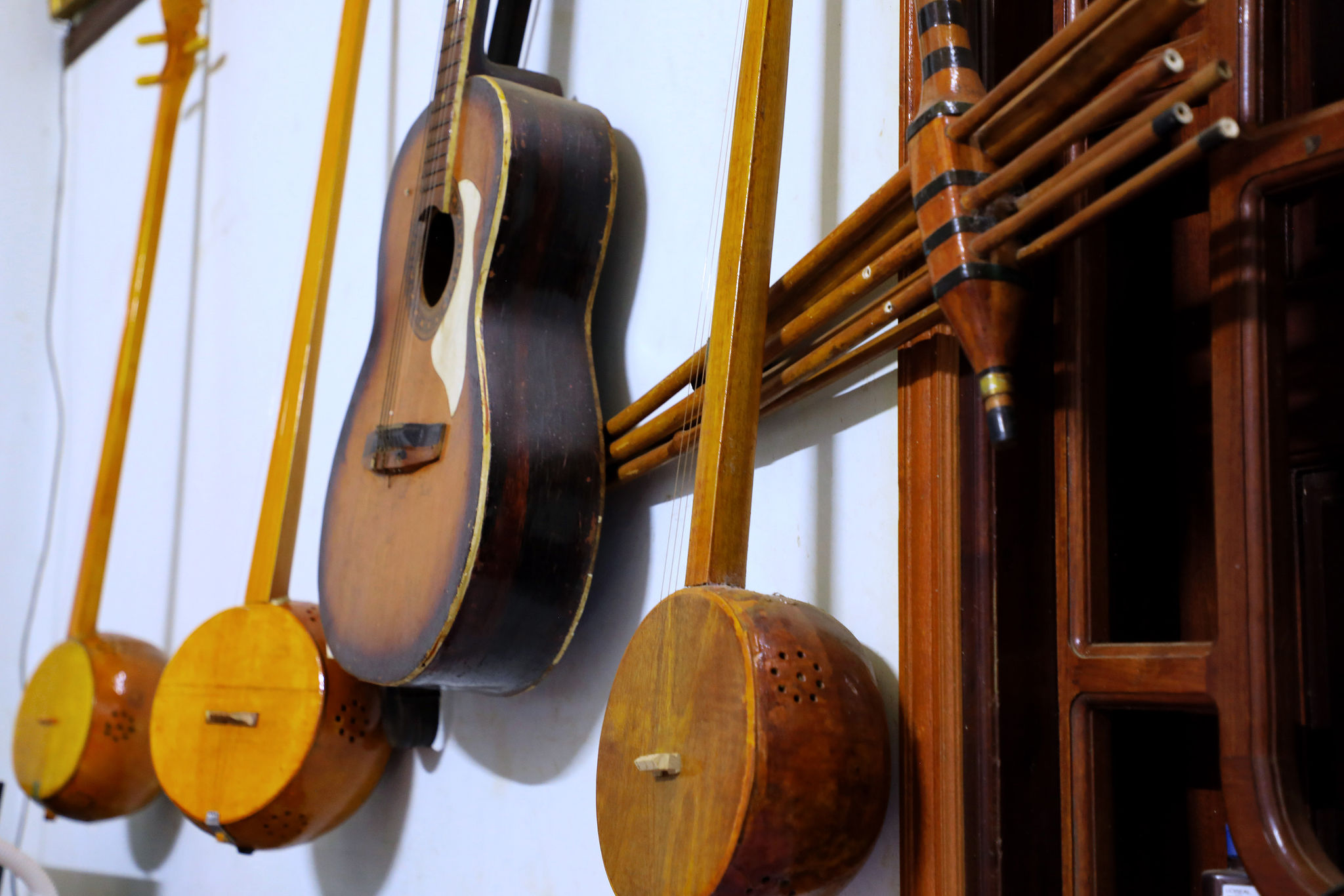
Huu’s story is also shared by many folk artists across Lam Dong. Following the administrative reorganization, Lam Dong is now home to 49 ethnic groups, including more than 683,000 people from ethnic minority communities. Each community brings its own customs, languages, music and traditional crafts.
Within this diverse cultural landscape, artists such as H’Grao, K’Bot, Lo Thi Hoa and Nong Thanh Huu are not merely preserving the heritage of their ancestors. More importantly, they are looking for people to whom they can pass it on.
A gong can be preserved. A musical instrument can be carefully stored. But cultural heritage truly lives only when there are people who continue to practice it.
From the sounds of the m’buot and gongs to the melodies of the Tinh lute, these traditions are being passed from one generation to the next. This is how the cultural flame continues to burn in modern life.