Developing Sustainable Livelihoods Beneath the Forest Canopy
Hoang Sa•21/08/2026 19:11
Deep within the lush greenery of Cat Tien National Park, ethnic minority communities in Villages 3 and 4 of Cat Tien 2 Commune are gradually developing sustainable livelihoods.
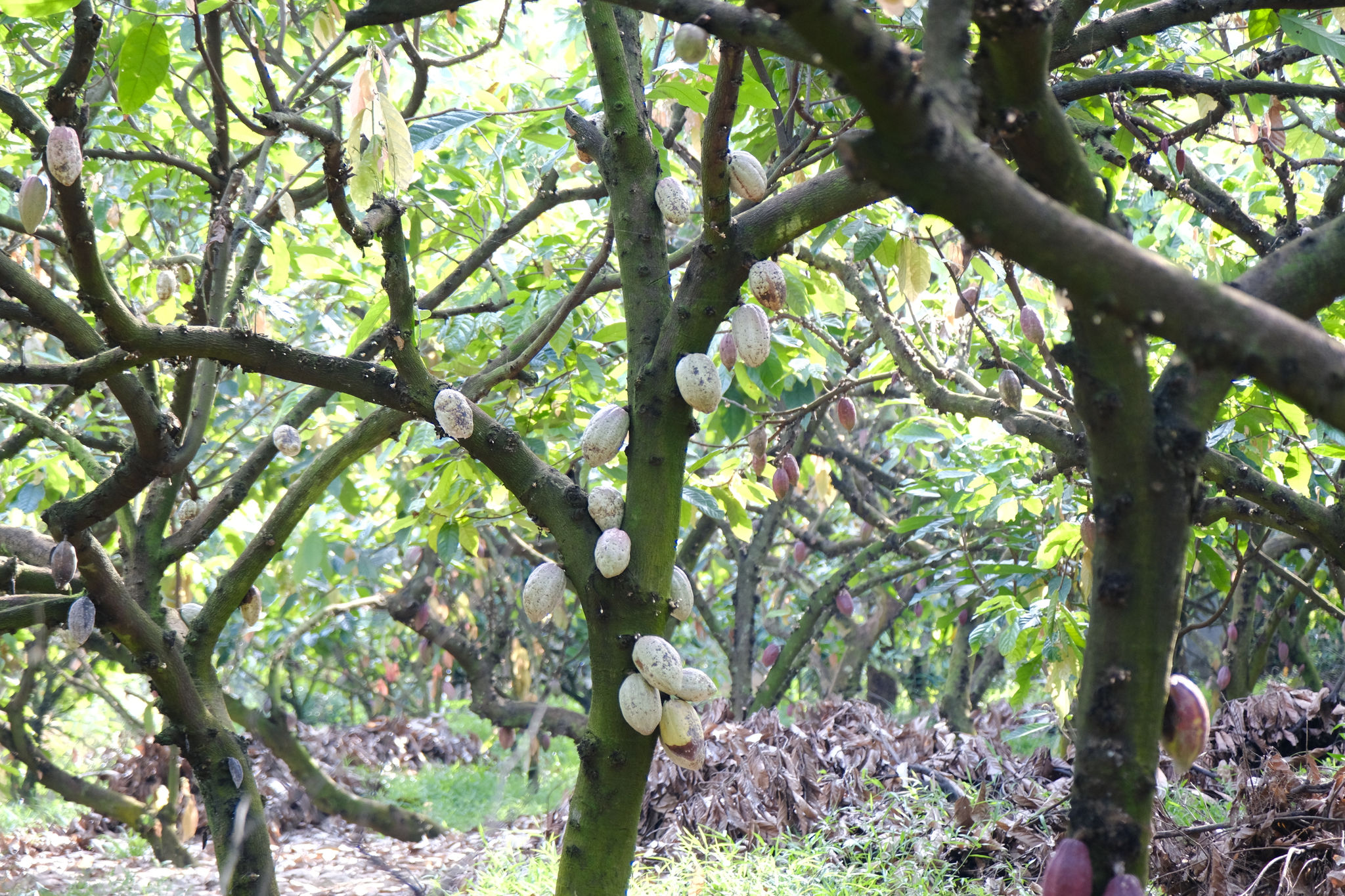
Lush cocoa gardens in Village 3, Cat Tien 2 Commune are generating significant income for local residents
From Cocoa to Stable Livelihoods
The path leading into Village 3 of Cat Tien 2 Commune meanders through areas of vibrant greenery. In a region where the community's lives are intricately linked to the forest, selecting crops that fit the local soil and climate while minimizing environmental impact is essential to sustainable economic growth.
Recently, cocoa has surfaced as a viable option. In many gardens throughout Village 3, rows of flourishing cocoa trees are cultivated beneath the shade of existing trees, providing livelihoods and adapting effectively to local farming conditions.
As a crop that thrives in shade, cocoa can flourish in regions with adequate tree cover, creating a production model that aligns with natural conditions instead of necessitating the expansion of cultivated land.
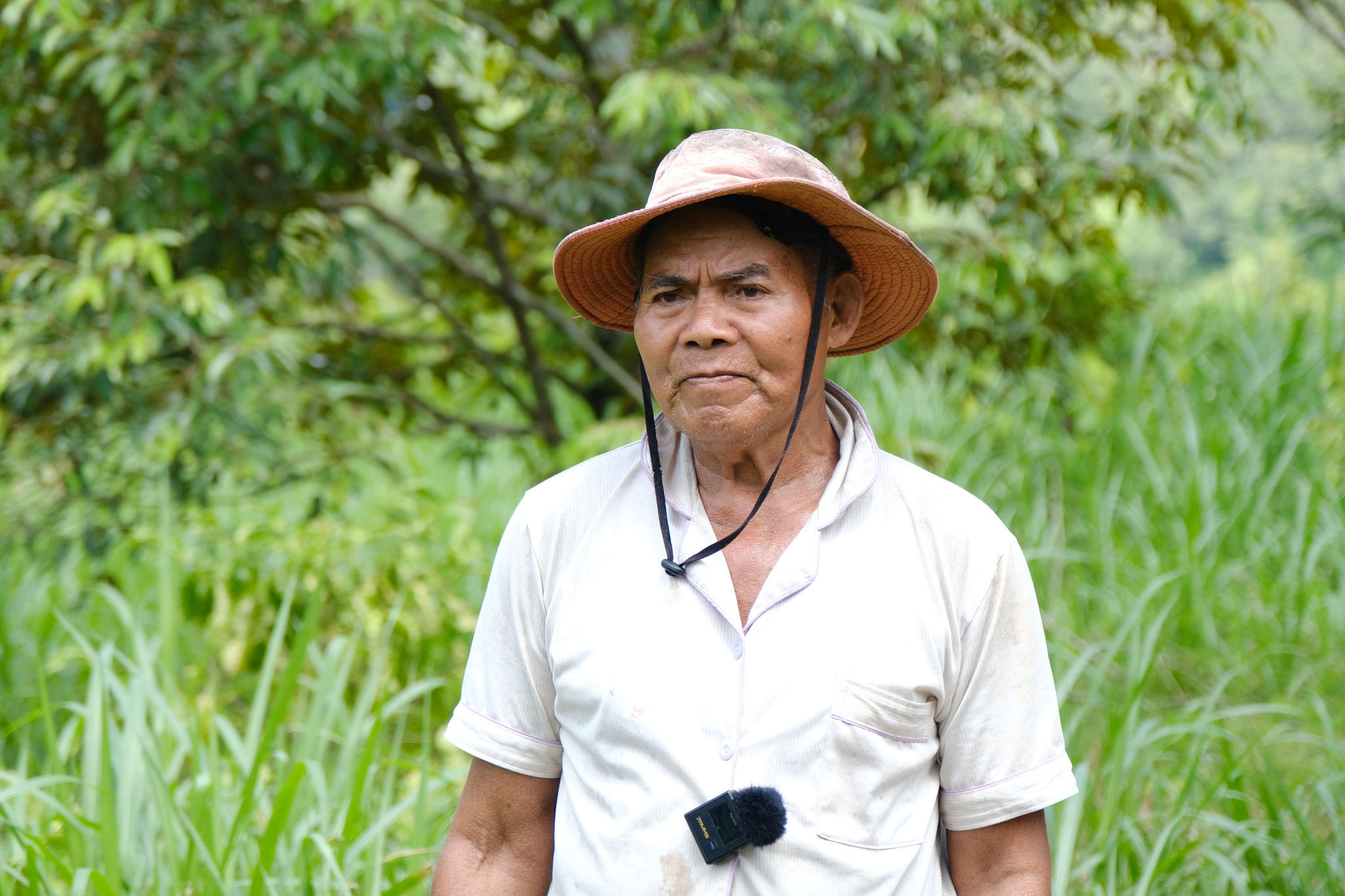
Village elder K Mot of Village 3, Cat Tien 2 Commune, said that cocoa prices were previously quite low, so local residents paid little attention to the crop. However, since 2024, cocoa prices have risen sharply, from around VND 4,000 per kilogram to VND 10,000 and now approximately VND 17,000 per kilogram. Higher prices have encouraged farmers to invest more in caring for their cocoa trees and expand cultivation where conditions are suitable.
“
Higher cocoa prices have given people additional income and improved their lives. More importantly, the crop suits the local soil conditions and, with proper care, can provide a stable source of income.
Village elder K Mot
According to the Farmers’ Association of Cat Tien 2 Commune, there are approximately 200 hectares of cocoa in the area. Many families view cocoa as a highly profitable crop, with potential earnings from it, especially during favorable market prices, able to rival those of other high-value crops.
In particular, in communities with significant ethnic minority populations, such as Village 3 and Phuoc Thai, cocoa is contributing to substantial income for numerous households. This narrative is not merely about a crop with economic value, but also about a model for livelihood that aligns with the goal of boosting local incomes while safeguarding forest resources.
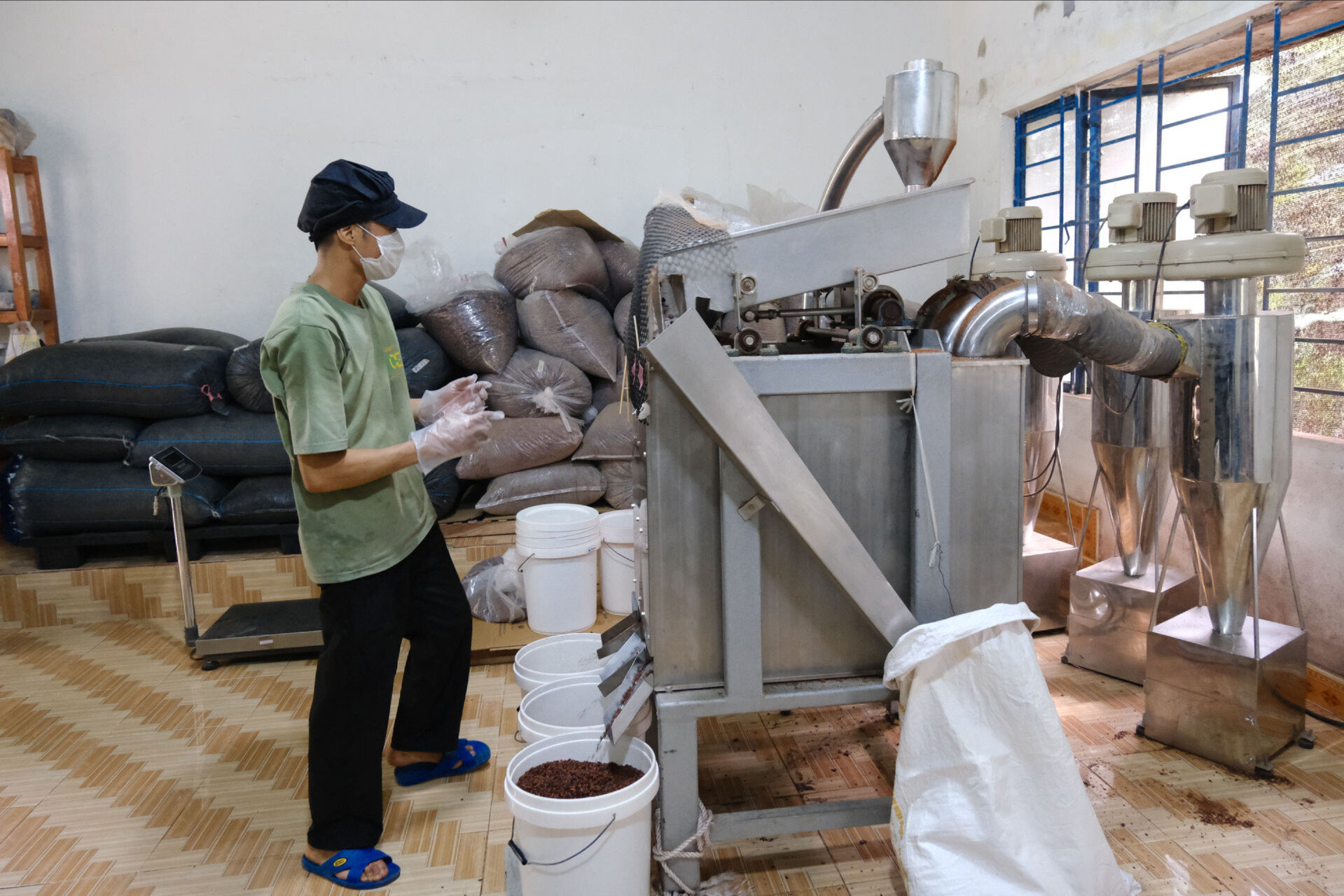
A cocoa purchasing and processing facility operates in Cat Tien 2 Commune
An additional benefit is the availability of a nearby facility for purchasing and processing cocoa, which simplifies the process for farmers to sell their crops. This boosts the confidence of local residents in their production efforts, decreases reliance on intermediaries, and enables them to invest more in the care of their orchards.
In light of these findings, local authorities are urging residents to preserve current cocoa-growing areas and expand cultivation in appropriate locations, while also focusing on cultivation methods to enhance yields and the quality of the products.
Protecting Forests, Enhancing the Value of Local Products
Notably, in communities surrounded by the Cat Tien forest, economic development has gone hand in hand with growing awareness of forest protection.
Residents cultivate only on land allocated or authorized by the State and do not encroach on or convert forest land. This principle is becoming increasingly well understood within the community as local people pursue economic development.
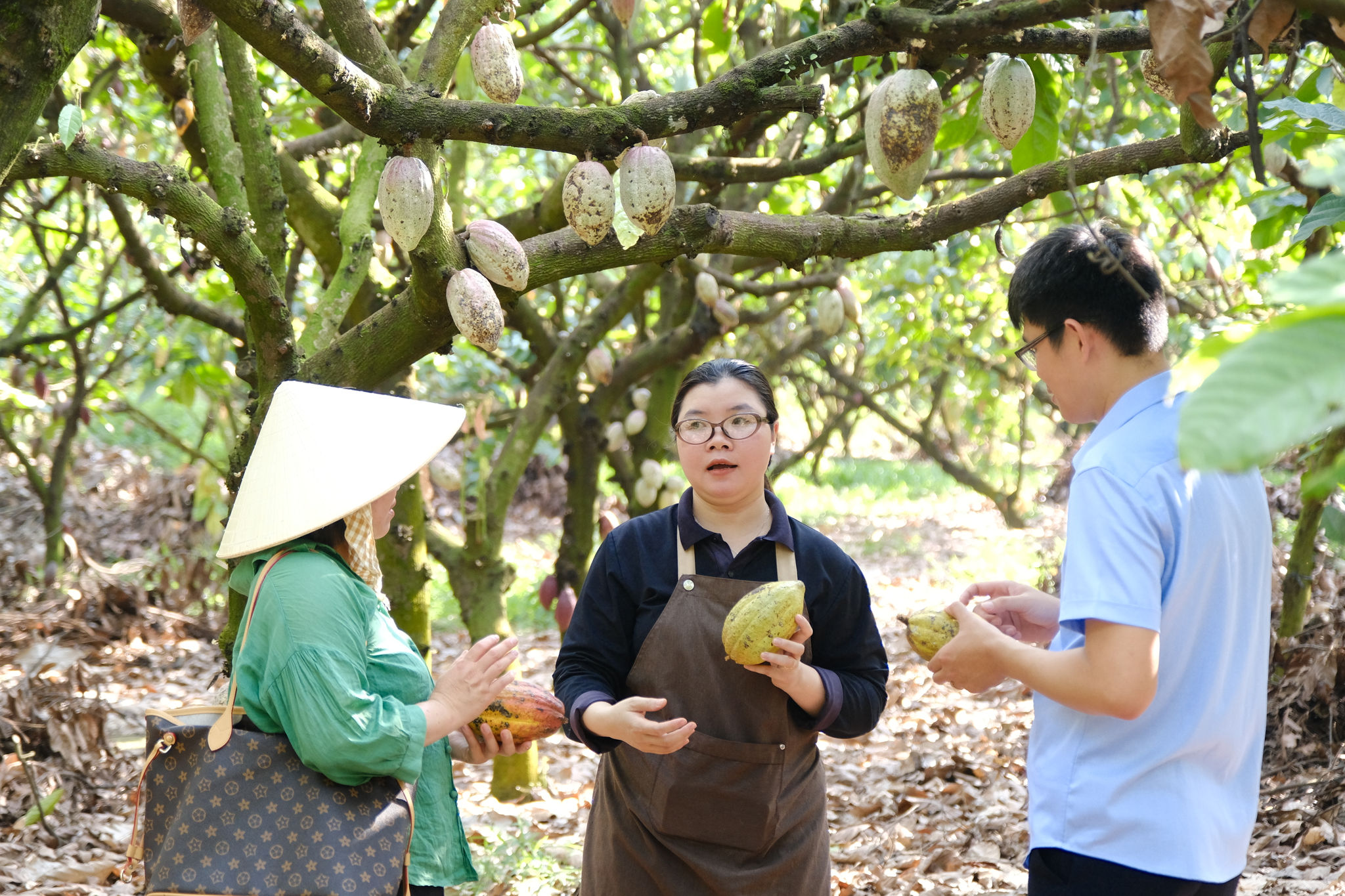
Under shaded conditions, cocoa can be integrated into production systems suited to the local landscape and ecological conditions
From this viewpoint, selecting appropriate crops holds significant importance. Instead of opting for high-value crops that necessitate land expansion or have a larger environmental footprint, community members are increasingly embracing methods that utilize existing farmland, leverage natural conditions, and enhance the output from the same land area.
Cocoa serves as an example of this approach. Its ability to thrive in shaded environments allows it to be incorporated into production systems that align with the local landscape and ecological settings. With the right cultivation practices, this crop can yield consistent harvests and provide a steady income stream for families.
Cocoa is not the only local product experiencing a resurgence in value. Items related to the traditional way of life of the Ma people are also being revitalized.
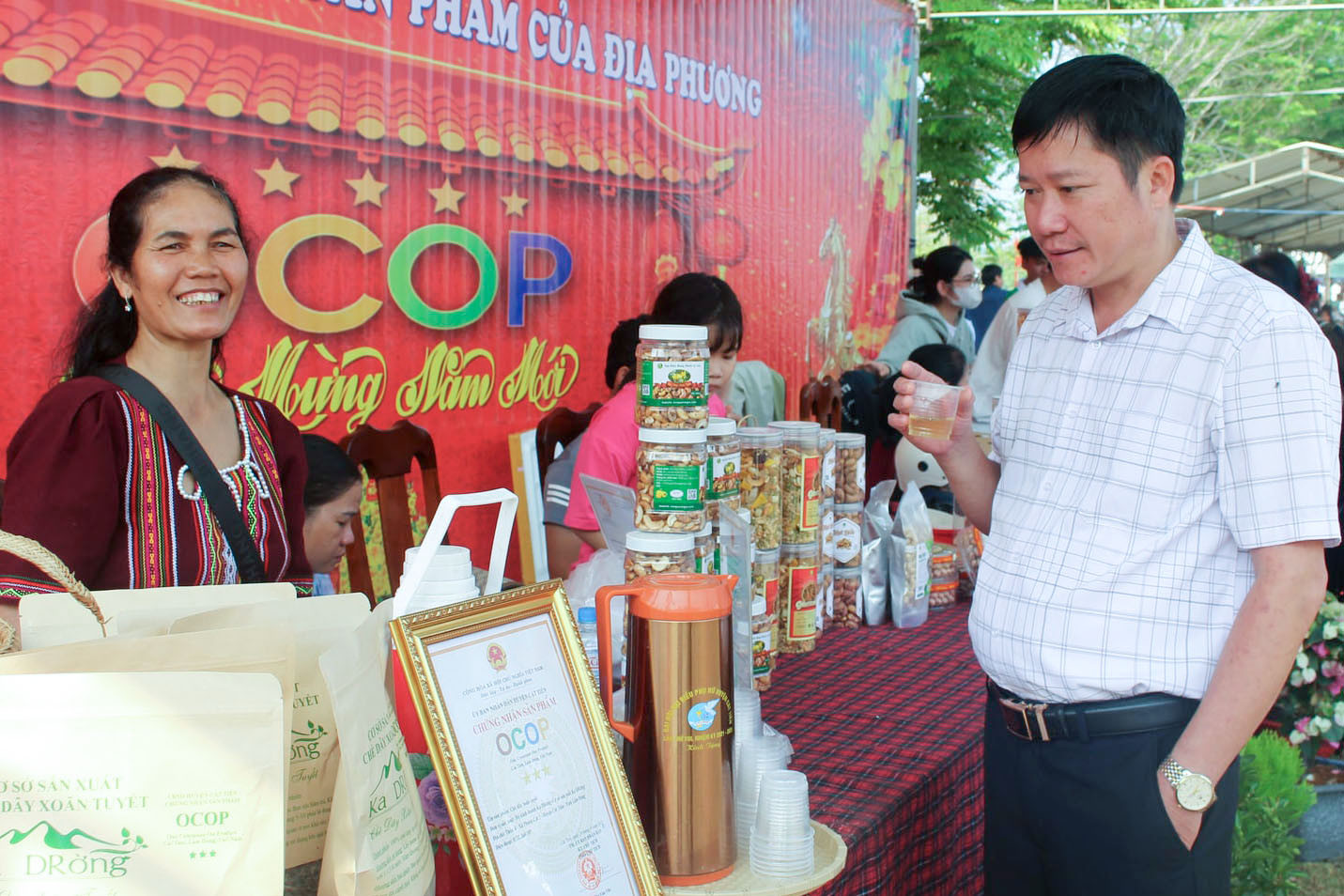
In Cat Tien 2 Commune, more than 200 kilometers from the provincial center, a Ma woman has chosen a distinctive way to affirm her responsibility for the products she makes: putting her own name on the packaging of the “Ka Drong Xoan Tuyet Vine Tea” product.
Ka Drong Xoan Tuyet Vine Tea, a three-star OCOP-certified product from the Cat Tien forests
Vine tea is a climbing plant that is typically found in the buffer zone of Cat Tien National Park and its neighboring regions. The Ma people have utilized this plant as a traditional herbal remedy for many generations. Once harvested, the vines are chopped into smaller pieces and dried for household use.
What was once a plant known primarily within the local community, Ka Drong Xoan Tuyet Vine Tea, is now on a new path through the establishment of standardized production and branding.
In 2023, Ka Drong's Xoan Tuyet Vine Tea achieved certification as a three-star OCOP product. This milestone signifies a significant shift from small-scale production to a more organized framework featuring clear labeling, a designated production site, standardized procedures, and a unique product story.
Nguyen Van Thuc, Secretary of the Party Committee and Chairman of the People’s Council of Cat Tien 2 Commune, said that the Ka Drong Xoan Tuyet Vine Tea production facility has played a significant role in diversifying local products. Previously primarily gathered and dried for household use, the vine tea has acquired increased commercial value after being recognized as an OCOP product, opening up new development opportunities linked to rural tourism.
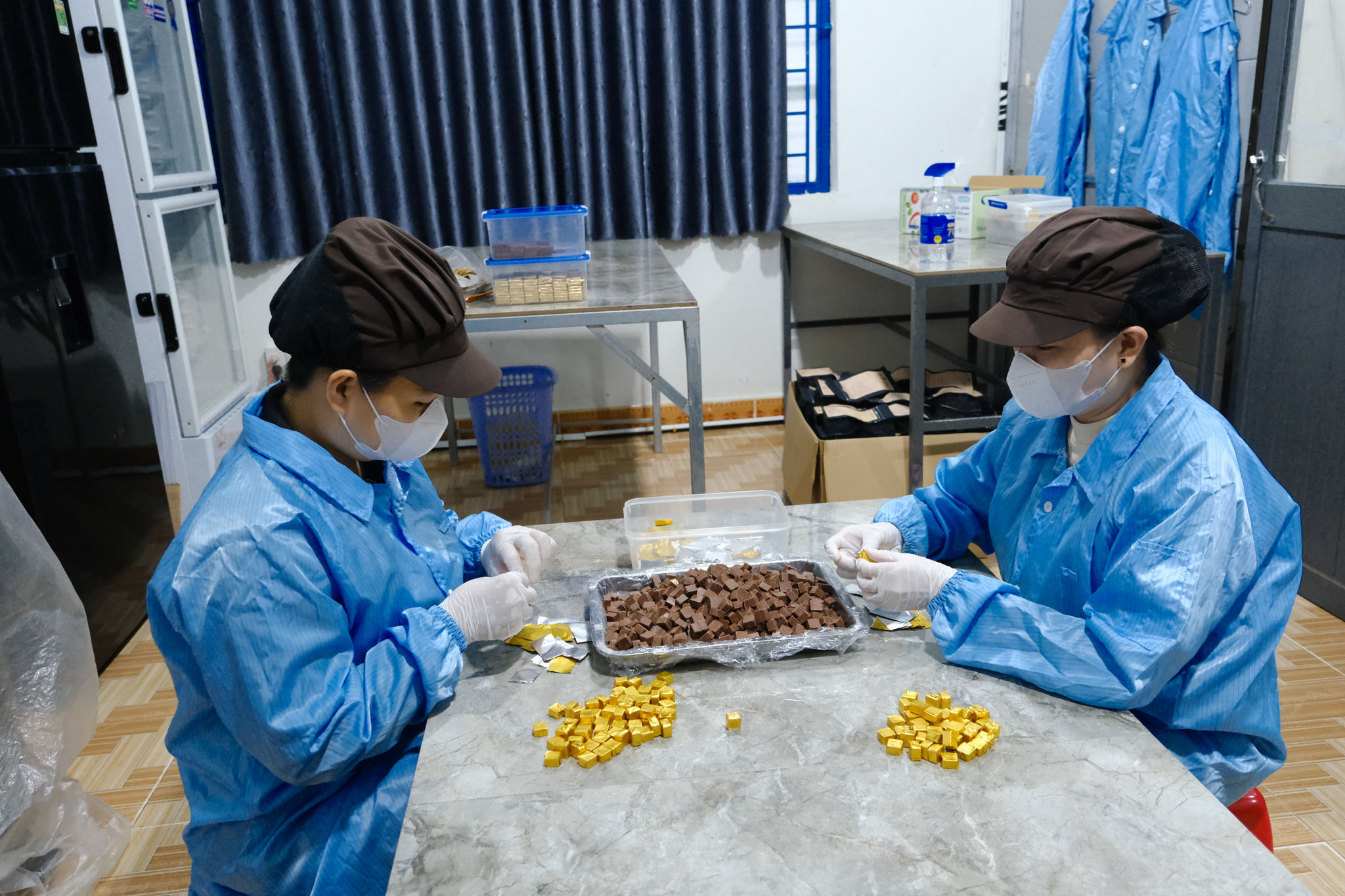
Chocolate products made from locally grown cocoa beans
From vibrant cocoa plantations under the forest canopy to vine tea products featuring a Ma producer's name, the narrative of livelihood in Villages 3 and 4 showcases a unique approach to development within ethnic minority groups. It focuses on generating prosperity from the land, local produce, and indigenous knowledge while maintaining the forest's green cover.