

Tan Thanh introduces AI robot at Public Administration Service Center
From providing information and procedural guidance to creating an additional channel for interaction with residents, an artificial intelligence (AI) robot has been introduced at the Tan Thanh Commune Public Administration Service Center. The initiative is expected to modernize public services and promote the use of technology in grassroots administration.
A new channel to support residents
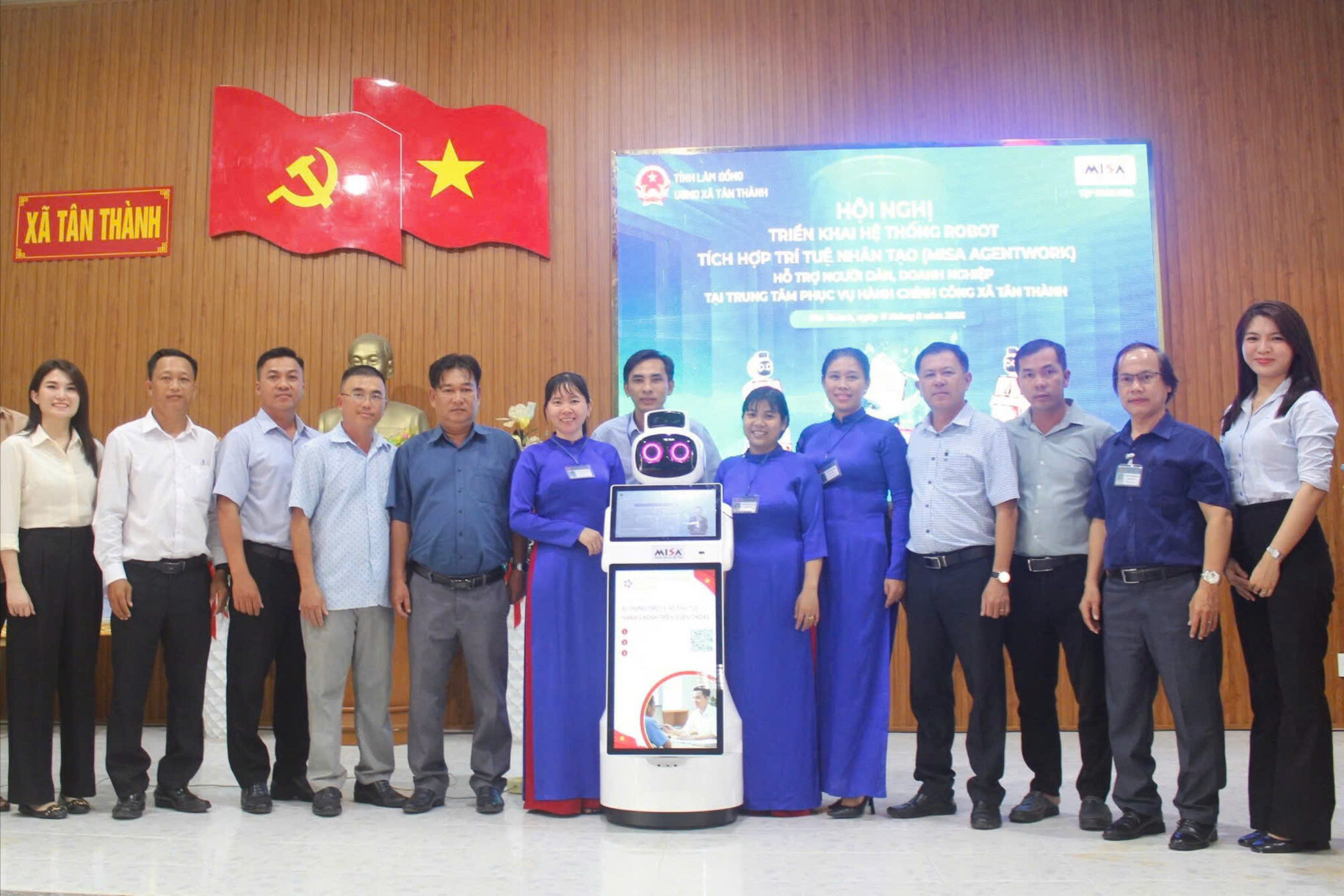
Recently, the Tan Thanh Commune People's Committee held a ceremony to introduce and officially put an artificial intelligence robot into operation at the commune's Public Administration Service Center.
The initiative is part of the locality's efforts to apply science and technology and promote digital transformation in public administration and services for residents and organizations.
Speaking at the ceremony, Nguyen Xuan Thanh, Vice Chairman of the Tan Thanh Commune People's Committee, said the introduction of the AI robot provides an additional means of interaction between local authorities and residents. The technology is expected to help provide information and guide residents through administrative procedures, thereby improving the quality of public services.
At the Public Administration Service Center, officials not only receive and process applications but also regularly guide residents through procedures, required documents and the steps involved.
For people carrying out a procedure for the first time or those who are unfamiliar with electronic transactions, access to clear and easy-to-understand information is particularly important.
The AI robot has been introduced to support part of this work. Through interactive functions, the robot can receive questions and provide responses based on its programmed information, giving residents an additional source of information when visiting the Public Administration Service Center.
At the launch ceremony, representatives of MISA Corporation introduced the AI robot solution, its integrated functions and potential applications in public administration.
Delegates also watched a presentation about the robot, attended the launch program and directly experienced its interactive functions. During the demonstration, they observed how the robot receives questions, processes information and provides responses.
The event also gave Tan Thanh an initial opportunity to assess the solution's suitability under actual operating conditions at the commune's Public Administration Service Center.
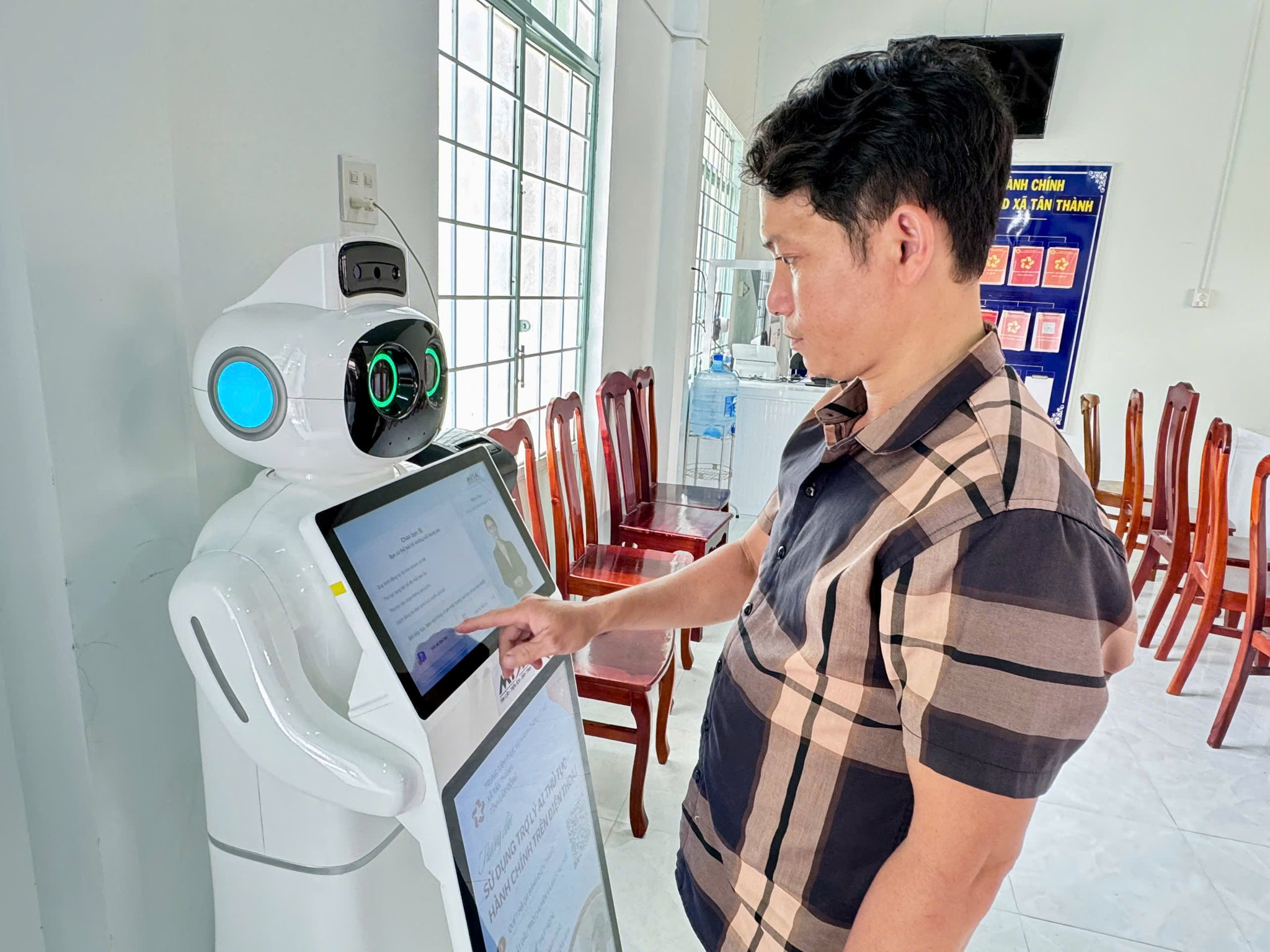
At the Tan Thanh Commune Public Administration Service Center, Nguyen Thi Thuy Trang, a resident of Ke Ga Hamlet, directly tested the AI robot by asking: "What documents do I need to prepare to register my child's birth, and where should I submit the application?"
The robot received the question and provided information about the required steps, documents and application submission location. Trang then asked about the processing time, and the robot provided a response based on its programmed information.
After several interactions, Trang said that asking questions and receiving information from the robot was relatively easy.
"I found it quite easy to ask questions and receive information from the robot. If information about administrative procedures is regularly updated and comprehensive, residents can learn what they need to know before coming to submit their applications," Trang said.
Technology supports people, not replaces them
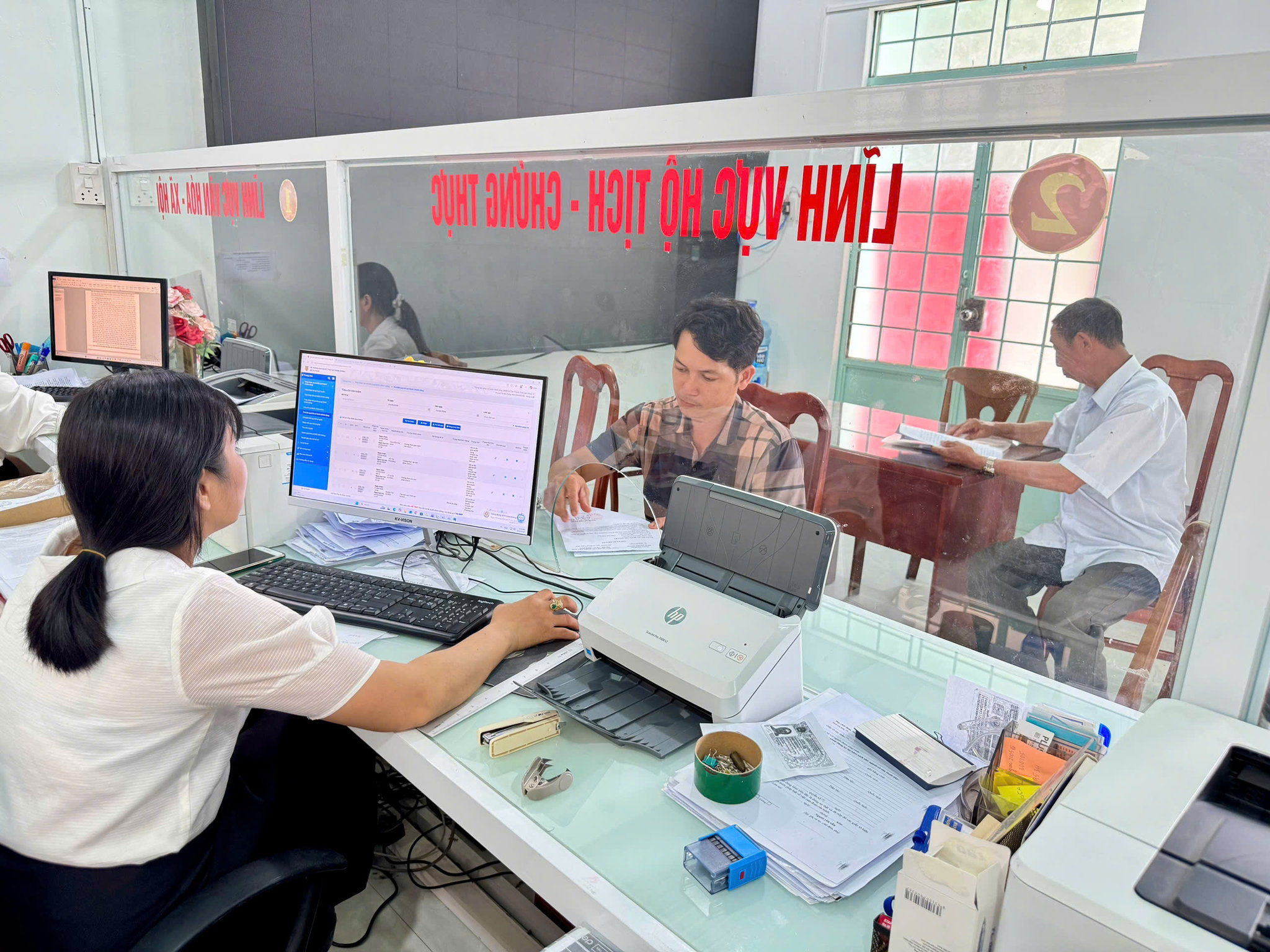
According to Nguyen Xuan Thanh, the introduction of the AI robot is not intended to replace officials responsible for receiving applications, providing guidance or processing administrative procedures.
Instead, the technology is primarily designed to provide information and initial guidance, allowing officials to devote more time to matters requiring professional expertise and to directly address residents' requests.
A modern device can only deliver meaningful results when it meets the practical needs of both residents and public servants.
When information is complete and accurate and the interaction is easy to use, the robot can help residents spend less time searching for information and become more proactive when completing administrative procedures.
The locality therefore needs to regularly update its database, verify information and guide residents in using the system so that the robot can operate effectively.
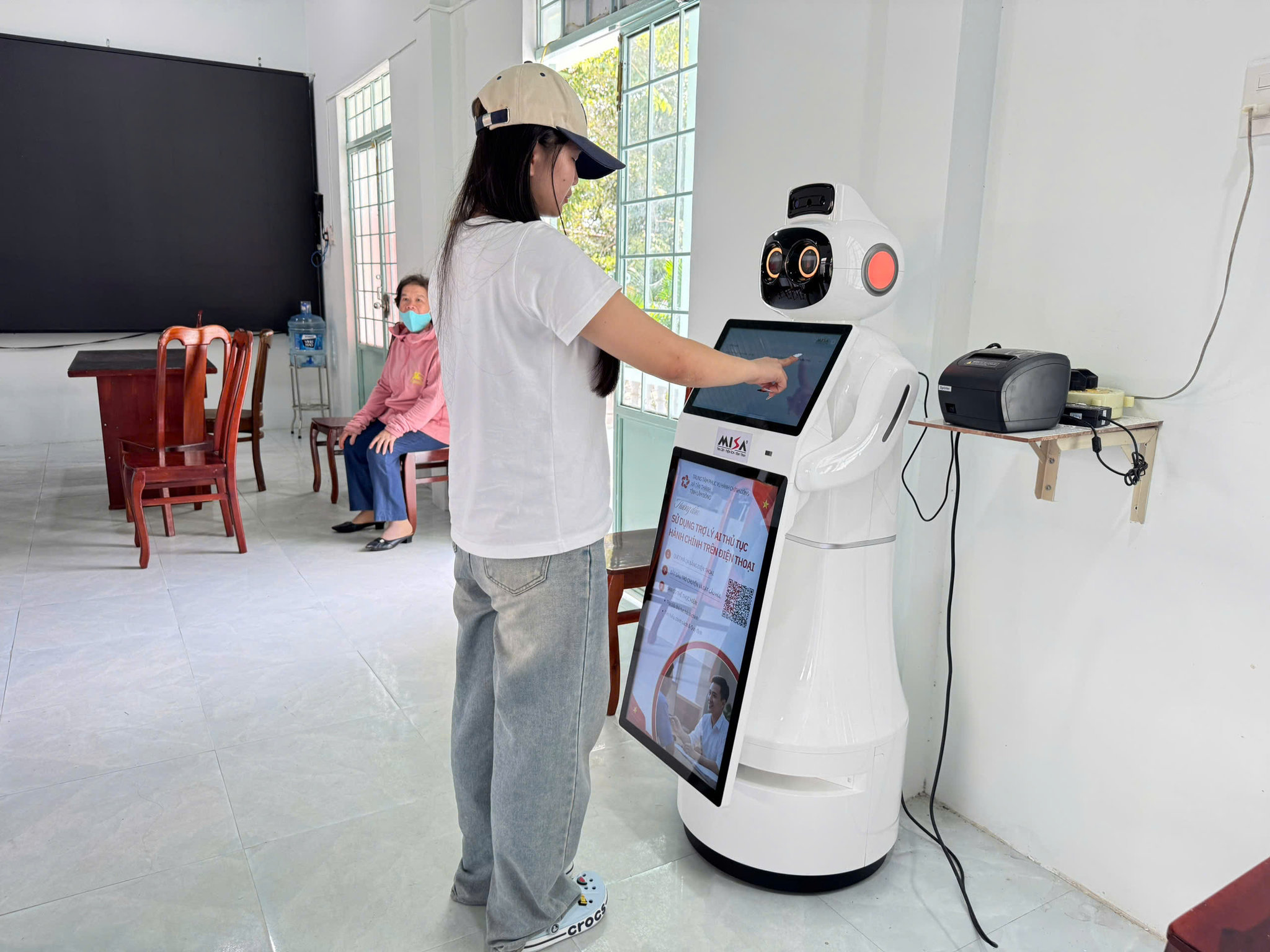
For residents, the priority remains having administrative procedures handled accurately, promptly, clearly and conveniently.
The AI robot can provide information and initial guidance, but it does not replace officials in explaining unclear matters, assisting with incomplete applications or handling individual cases that require direct intervention.
In the coming period, the Tan Thanh Commune People's Committee will continue promoting the use of digital technology in administration, management and public services while exploring solutions suited to local conditions.
The introduction of the AI robot at the Public Administration Service Center is only a first step.
The effectiveness of the solution will ultimately be measured through its actual operation and concrete improvements in public service delivery: making information easier to find, guidance clearer, waiting times shorter and administrative procedures more convenient.
These results will also provide a basis for Tan Thanh to further evaluate, adjust and select appropriate technological solutions as it works toward a modern, people-oriented public administration.
For Tan Thanh, introducing an AI robot at the Public Administration Service Center also creates a requirement to continue improving the quality of our workforce, updating data and refining operating procedures so that technology can genuinely support officials and better serve residents.
Nguyen Xuan Thanh, Vice Chairman of the Tan Thanh Commune People's Committee