

Strengthening agricultural production zones through linkages
When producers, cooperatives, businesses and distribution networks participate in a cohesive value chain, the advantages of agricultural production zones can be fully leveraged. This gradually increases added value and lays the foundation for the sustainable development of different crop groups.
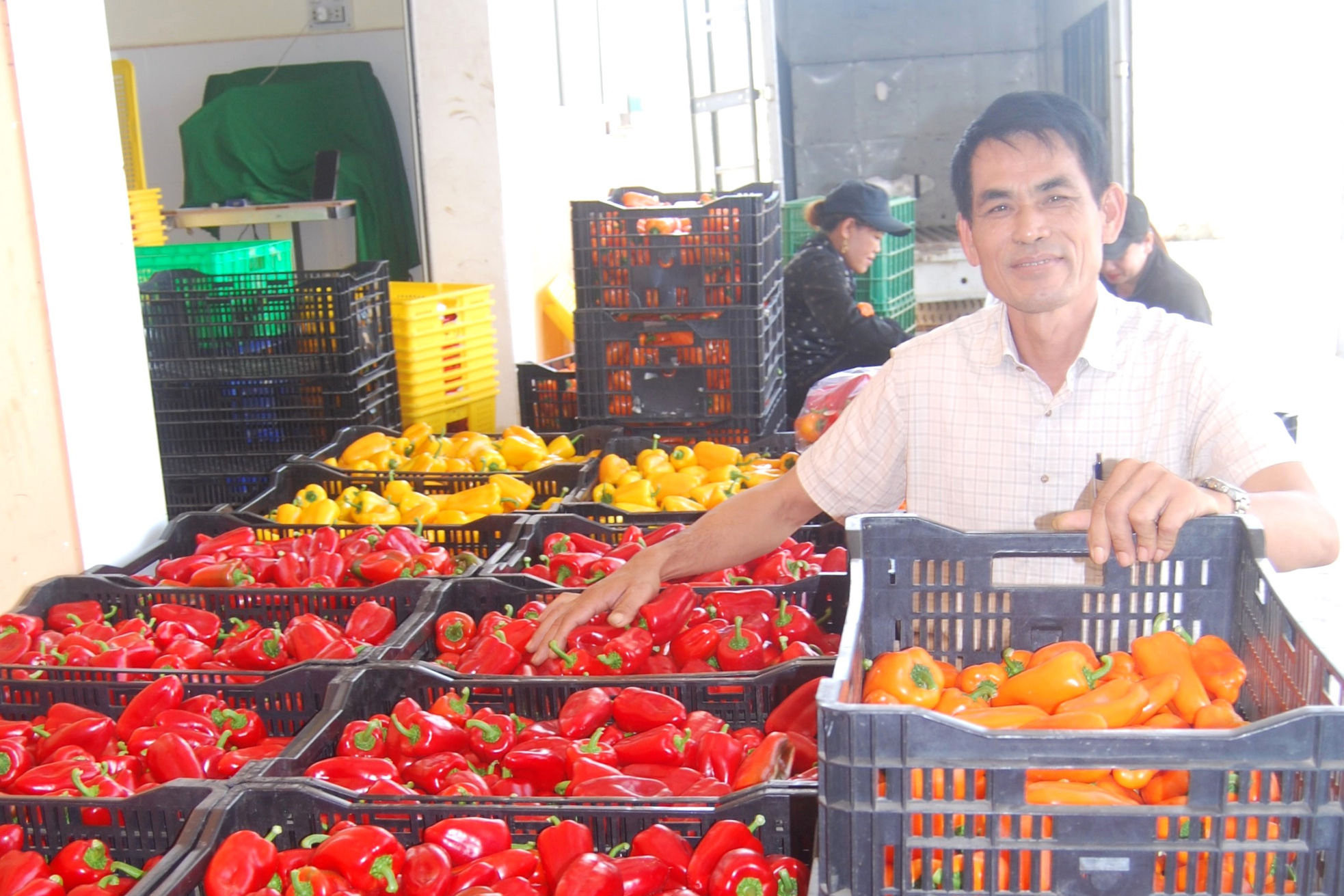
Value-chain production
An effective value chain involves more than a business signing purchasing contracts with farmers. It connects every stage, from seeds, agricultural inputs and cultivation practices to quality control, harvesting, preliminary processing, packaging, transport, distribution and sales. Each link serves a different function, but all pursue the same goal: creating consistent, traceable products shaped by market requirements from the outset.
Rather than reacting passively to market signals, the Huynh Thi Thom value chain in Duc Trong Commune has organised production from the outset around export orders, standards and consumer demand.
In the first eight months of 2026, the value chain exported 2,000–3,000 tonnes of vegetables to Taiwan and South Korea each month. The vegetables were grown and harvested in production zones across Duc Trong, Don Duong and neighbouring communes, meeting quality and food safety requirements.
The coordinator of the Huynh Thi Thom value chain said the operation began establishing connections with Taiwanese businesses 10 years ago. Operating in the southwestern region, the value chain assigns detailed production plans to each member. These plans cover seed sources, cultivation techniques and harvesting processes to ensure products meet contractual quality requirements.
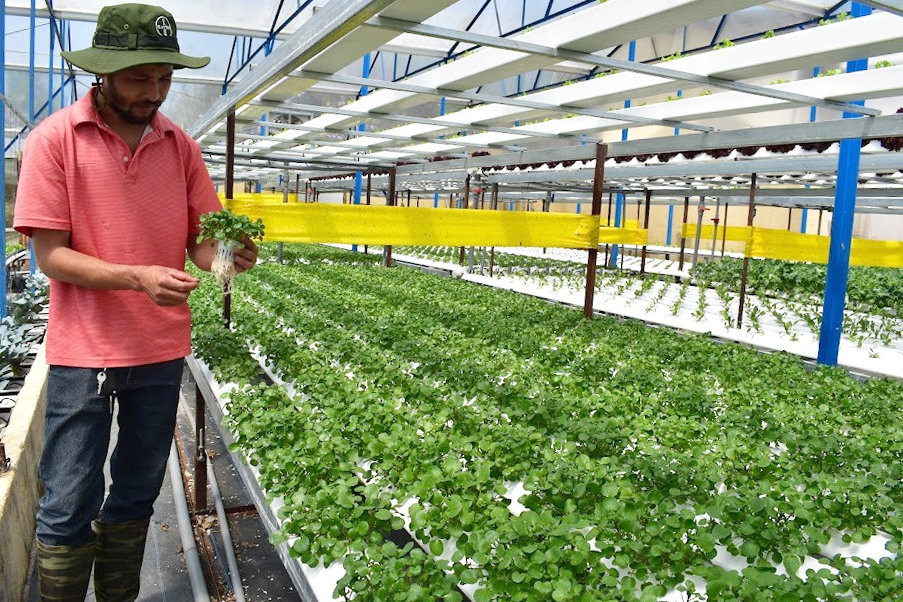
In recent years, Taiwanese businesses have expanded trade links with partners in Japan and South Korea involving the province's temperate vegetables, root crops and fruit. The value chain has gradually expanded to more than 50 members, maintaining approximately 100 ha of production area.
"After signing purchasing contracts with export partners, the value chain advances investment capital and supplies seeds. It also provides cultivation guidance based on seasonal schedules, manages crop diseases and organises harvesting according to order requirements.
"Guaranteed purchase prices are agreed for both the six-month rainy season and six-month dry season. This allows member households to estimate their profits in advance and optimise investment for each vegetable crop," the coordinator said.
Besides selling fresh produce as raw materials under export contracts, the Huynh Thi Thom value chain has built an 8,500 sq.m processing facility. It is equipped with modern production lines and machinery for preliminary processing and packaging according to agreed specifications.
The facility also processes produce into products with longer shelf lives. This helps regulate supply and reduces pressure to sell large volumes during peak harvest periods. The value chain currently processes and exports 50 tonnes of passion fruit and 30 tonnes of frozen avocado each month, using produce grown within the province.
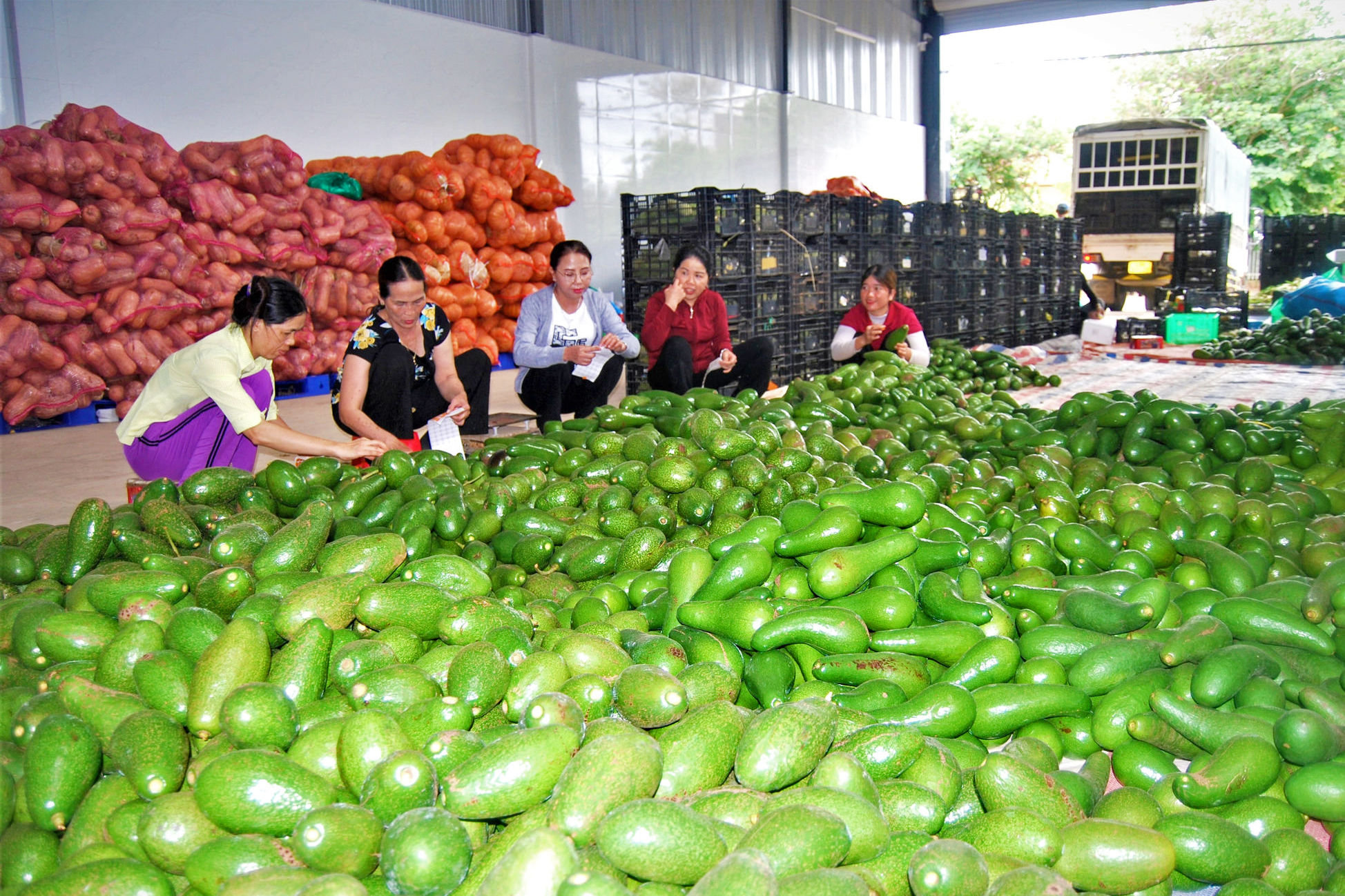
The avocado value chain in Hiep Thanh Commune follows a similar approach. It began with a one-hectare pilot avocado orchard connected to the market. The value chain then recruited members to expand the model and purchased their entire output for processing, domestic distribution and export.
Vu Thi Thu Phuong, the value chain's coordinator, said it currently works with 15 farming households. Together, they maintain more than 40 ha of different avocado varieties, with staggered harvests throughout the year. During the peak season, the value chain purchases, processes and sells more than 100 tonnes of fresh avocado daily.
From vegetable fields to linked avocado production zones, these models share one defining feature: production no longer operates through isolated households. Market demand is incorporated from the outset and determines the scale of production zones, crop varieties, technical processes, output and marketing plans.
Improving production quality
The examples above demonstrate how agricultural value chains can transform farmers' production mindsets. Farmers no longer focus solely on yield per unit of land. They also prioritise quality, safety, consistency and the ability to fulfil orders, reducing their exposure to market fluctuations.
For businesses leading these value chains, the model enables them to organise production zones systematically and secure stable supplies. It also reduces sourcing costs while strengthening quality control and the reputation of the province's agricultural brands. This transforms production advantages into market advantages, increases product value and brings individual farming households into a highly competitive agricultural ecosystem.
The restructuring of production around value chains is expanding across the province. By the end of 2026, the province is expected to convert nearly 8,420 ha of land generating low returns to higher-value crops. Key crops continue to increase in both cultivated area and output.
Investment is also gradually expanding beyond production to post-harvest services. The province currently has nearly 510 agricultural processing, packaging and preliminary processing facilities. These facilities meet import markets' requirements for quality, food safety and traceability. Their combined output has reached 20,722 tonnes, up 11.6% year on year.
The Department of Agriculture and Environment has connected the province's key products and One Commune One Product (OCOP) items with distribution and retail networks. These include durian, dragon fruit, passion fruit, avocado and pepper. The products are distributed domestically and exported to China, Russia and other potential markets.
Export results recorded over more than six months of 2026 demonstrate the considerable market potential of agricultural products. Coffee bean exports exceeded USD 416.2 million, while vegetable, root crop and fruit exports surpassed USD 61.8 million. Pepper exports reached USD 95.4 million, cashew exports USD 74 million and flower exports more than USD 54.4 million. Tea exports totalled nearly USD 7.5 million.
Notably, the province currently has 428 agricultural value chains involving 47,590 member households. They cover approximately 85,000 ha and produce around 920,000 tonnes annually.
Connecting every stage, from production and preliminary processing to manufacturing and trade, helps reduce post-harvest waste and market risks. It also increases the value of agricultural products.
This process transforms production advantages into market advantages. Large cultivation areas become systematically organised production zones, while individual households become links within broader value chains. Together, they gradually generate sustainable added value for Lam Dong's agricultural products.
According to the provincial Sub-Department of Crop Production and Plant Protection, the province will continue restructuring its crop sector. Appropriate levels of technology will be selected for each production area and crop. The share of competitively advantageous products will also be increased, creating diverse, high-value supplies for domestic and export markets.