

Lam Dong promotes market linkages for agricultural, forestry and fishery products
Lam Dong is strengthening trade and market connections with Can Tho and Mekong Delta provinces and cities, creating more opportunities to promote local agricultural, forestry and fishery products and expand distribution channels.
On August 28, the Can Tho Department of Agriculture and Environment held a conference to promote market linkages and introduce agricultural, forestry and fishery products, along with a ceremony to sign a cooperation program between Can Tho and provinces and cities for the 2026–2030 period, including Lam Dong.

At the opening of the conference, Nguyen Thi Thuy Nhi, Deputy Director of the Can Tho Department of Agriculture and Environment, said the city has developed large-scale concentrated raw material production areas and established and maintained 222 agricultural, forestry and fishery product value chains nationwide in recent years. These chains have grown by an average of 12–15% annually.
Through cooperation mechanisms, participating provinces and cities have shared information and data, exchanged quality standards and market demand, and supported businesses in expanding their access to markets. Provinces in the Central and Central Highlands regions, including Quang Ngai, Lam Dong and Hue City, have contributed distinctive local products, helping diversify the range of high-value goods available for trade.
Lam Dong strengthens quality and value chains
Sharing Lam Dong's experience in production, quality management, processing and agricultural market development, Nguyen Thuy Quy Tu, Director of the Lam Dong Sub-Department of Quality, Processing and Market Development, said the province currently has more than 153,000 hectares of certified safe and sustainable production.
Lam Dong has been granted 1,242 planting area codes and currently has more than 300 packing facilities for various exported fruits.
.jpg)
The province has also developed 918 OCOP products rated three or four stars, produced by 518 businesses, cooperatives and other entities. Each year, around 1,200–1,300 samples are tested, with more than 98% meeting food safety and quality standards.
Lam Dong has established 428 agricultural value chains involving 47,590 member households. These chains cover approximately 85,000 hectares of cultivated land, with an estimated annual output of 920,000 tonnes. The province's livestock population stands at about 2.23 million, producing approximately 210,000 tonnes annually.
Products sold through value chains account for 55% of the province's total agricultural output. In addition, 140 facilities apply standards such as HACCP, ISO and BRC in the preliminary processing and processing of agricultural and fishery products.
“Lam Dong views trade promotion as more than simply introducing products at fairs and exhibitions. It aims to establish direct connections between producers and buyers, distributors, supermarket systems, retailers and export partners, while combining traditional trade promotion with e-commerce.
The province is currently operating a dedicated e-commerce platform for agricultural products. It has supported more than 900 businesses, cooperatives and OCOP entities, with more than 2,000 products,” Nguyen Thuy Quy Tu said.
Expanding trade links with the Mekong Delta
The conference provided an opportunity for Lam Dong businesses to introduce local agricultural products and seek new partners in the Mekong Delta market. The region is an important consumption and distribution center, offering considerable potential for expanding market access and developing stable supply chains.
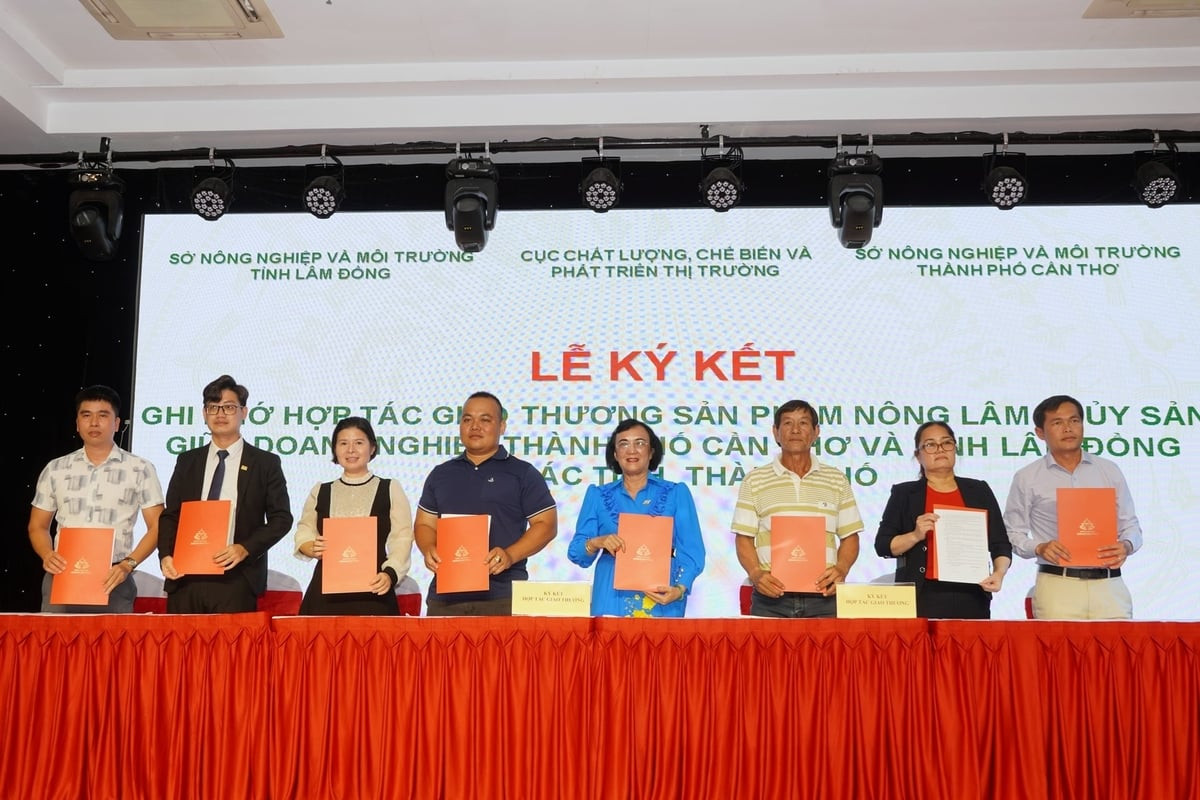
At the event, agricultural producers, businesses, supermarket chains and distributors from Lam Dong and Mekong Delta provinces and cities signed memoranda of understanding and trade cooperation agreements for the coming period.
The agreements are expected to strengthen direct connections between producers, distributors and buyers, while creating additional opportunities for Lam Dong's agricultural, forestry and fishery products to enter wider domestic distribution networks and develop more sustainable markets.