

The Century-Old “Azure Dragon” Revives Memories of the Coastal Land
For more than two weeks, the streets of the coastal urban area have come alive each afternoon with the sounds of drums, horns and cheers from rehearsals for the 15th Nghinh Ong Festival, to be held at Quan De Temple in 2026. The familiar sounds evoke distant memories, taking many locals back to childhood afternoons spent following lion dance troupes and listening to festive drums echo through the seaside streets.
A Dragon Head That Has Crossed a Century
I still recall those days clearly. As kids, we always anticipated the Nghinh Ong Festival, particularly the part when the deity was paraded through the streets. As soon as we heard the distant sound of drums, we would eagerly call out to each other and chase after the procession.
The once-familiar streets suddenly felt transformed. Banners, flowers, drums, horns, and animated crowds gave the coastal city a completely different look. However, what stands out most in my memory is the gigantic blue - green dragon, weaving in and out among the throngs of people.
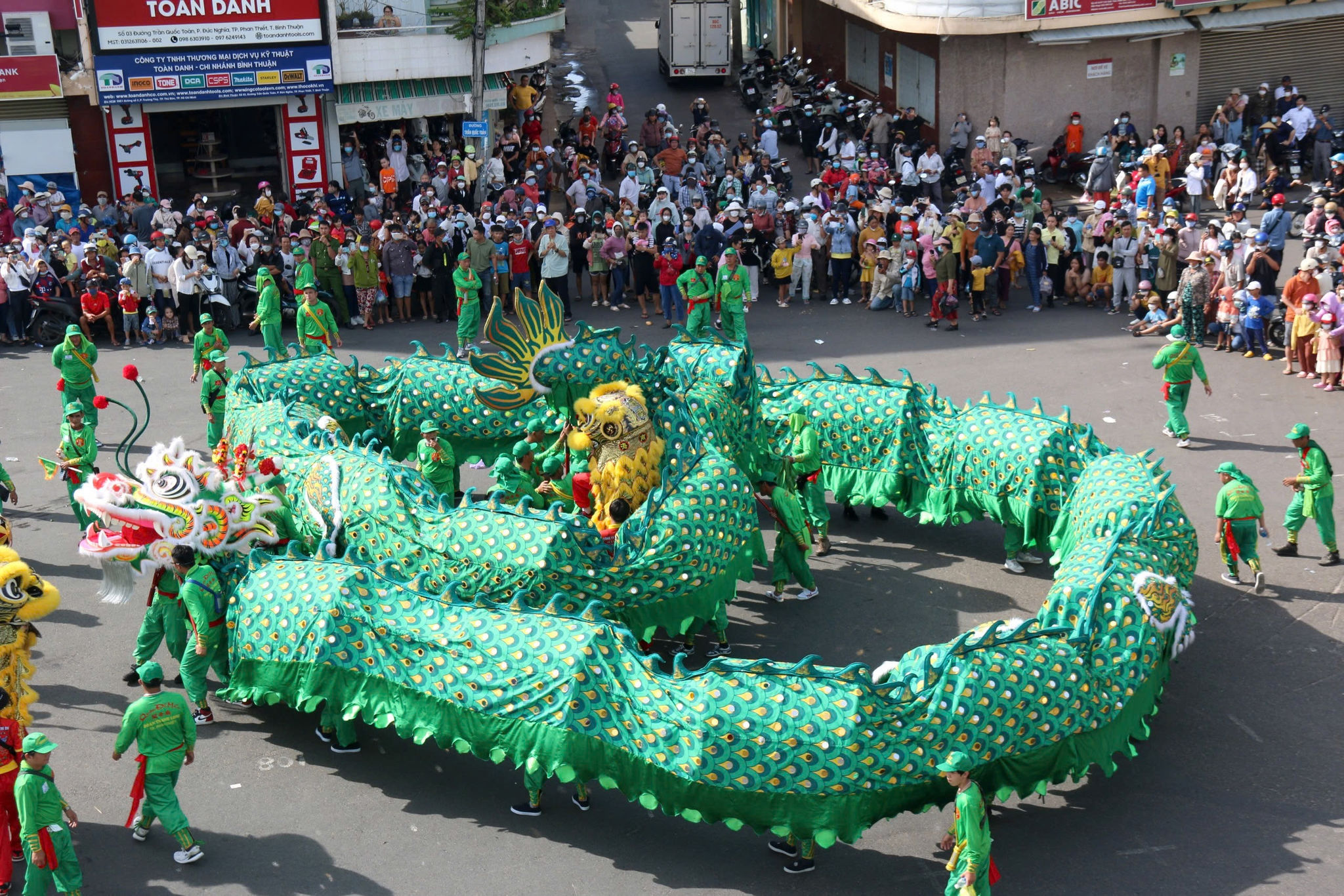
It may be hard to believe, but the head of the Azure Dragon used during the Nghinh Ong Festival in southeastern Lam Dong is over a century old. Throughout numerous festival cycles and various transformations in the coastal area, this dragon head has been meticulously maintained as a quiet observer of history.
.jpeg)
Tran Chan Khon, a representative of the Quan De Temple Management Board, explained that in the late 1700s, Chinese immigrants began to settle in Binh Thuan. As their lives became more established, they constructed temples, shrines, and assembly halls, bringing along customs and beliefs that had been handed down through generations.
The assembly halls for the Cantonese, Teochew, Fujian, and Hainan communities not only functioned as places of worship but also as gathering spots and sources of spiritual support for Chinese communities during their initial years in the new environment.
In 1778, the Quan De Temple, also known as Ong Pagoda, was constructed. From that point, the Nghinh Ong Festival began to develop, evolving into a unique cultural and religious custom of the Chinese community in Phan Thiet. The festival takes place every two years, in July during even-numbered years.
In a festival that is deeply intertwined with religious traditions like Nghinh Ong, the dragon figure is nearly essential. For Chinese communities, the dragon represents luck, tranquility, and affluence.
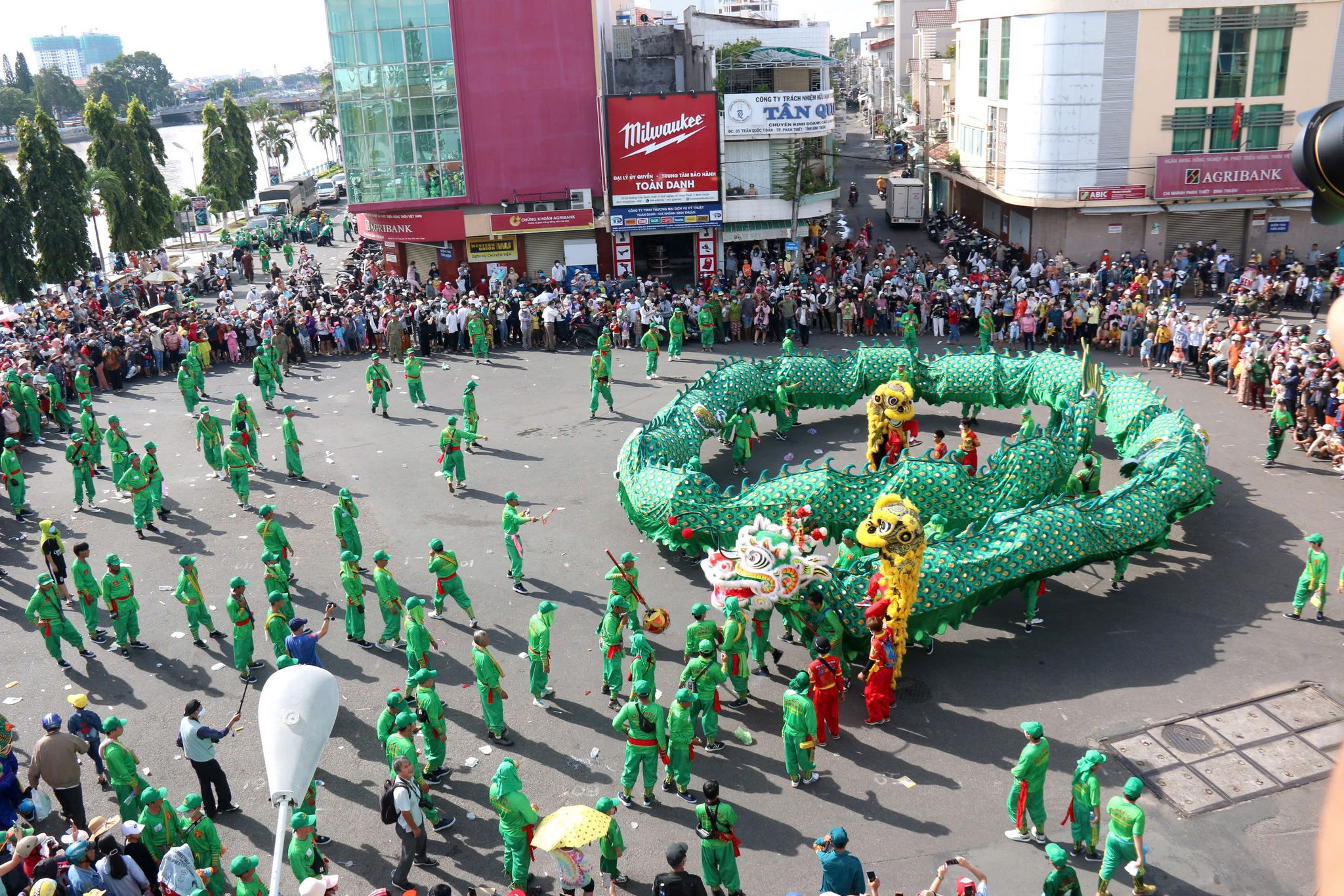
The Azure Dragon, which spans 49 meters in length and was once recognized by Guinness World Records, is primarily crafted from rattan and bamboo, consisting of a single head, 15 segments along its body, and three parts for the tail. A spherical pearl, also woven from rattan, is placed along the length of the dragon's body, enhancing the creature's elegant shape.
The most striking feature is the dragon's head, which has a weight of approximately 60 kilograms. The head and the pearl are the only remaining elements of the original dragon, which is over a century old—silent witnesses that hold the stories of numerous festival celebrations.
.jpeg)
Over the years of celebrations, the dragon head has been maintained as a key element of the community's shared history. Following each festival, it is honored and displayed at Quan De Temple.
During practice sessions, the dragon dance team utilizes a replica; it is only on the main day of the festival, after the incense-offering ritual, that the original dragon head is taken out for the parade.
Before each festival, the dragon head is repainted and decorated, with a new layer of fabric added. Its colors may change, but the frame, more than a century old, continues to be carefully preserved.
Normally, the dragon is dismantled into numerous sections for storage. When festival season arrives, members spend about two days putting it back together. In this way, for more than a century, a cultural artifact has continued to live alongside the festival and the community's contemporary life.
Drums That Call Back Childhood Memories
Perhaps that is why, whenever the festival returns, the sound of drums and horns does more than summon people to the celebration. It also awakens memories that have long lain dormant in their hearts.
Currently, the coastal area of Lam Dong reverberates with the sounds of drums and horns once more. Adults pause to listen, while children eagerly follow the practices. Some have experienced over fifty years of life, yet just one familiar drumbeat is enough to transport them back to the festivities of their youth.
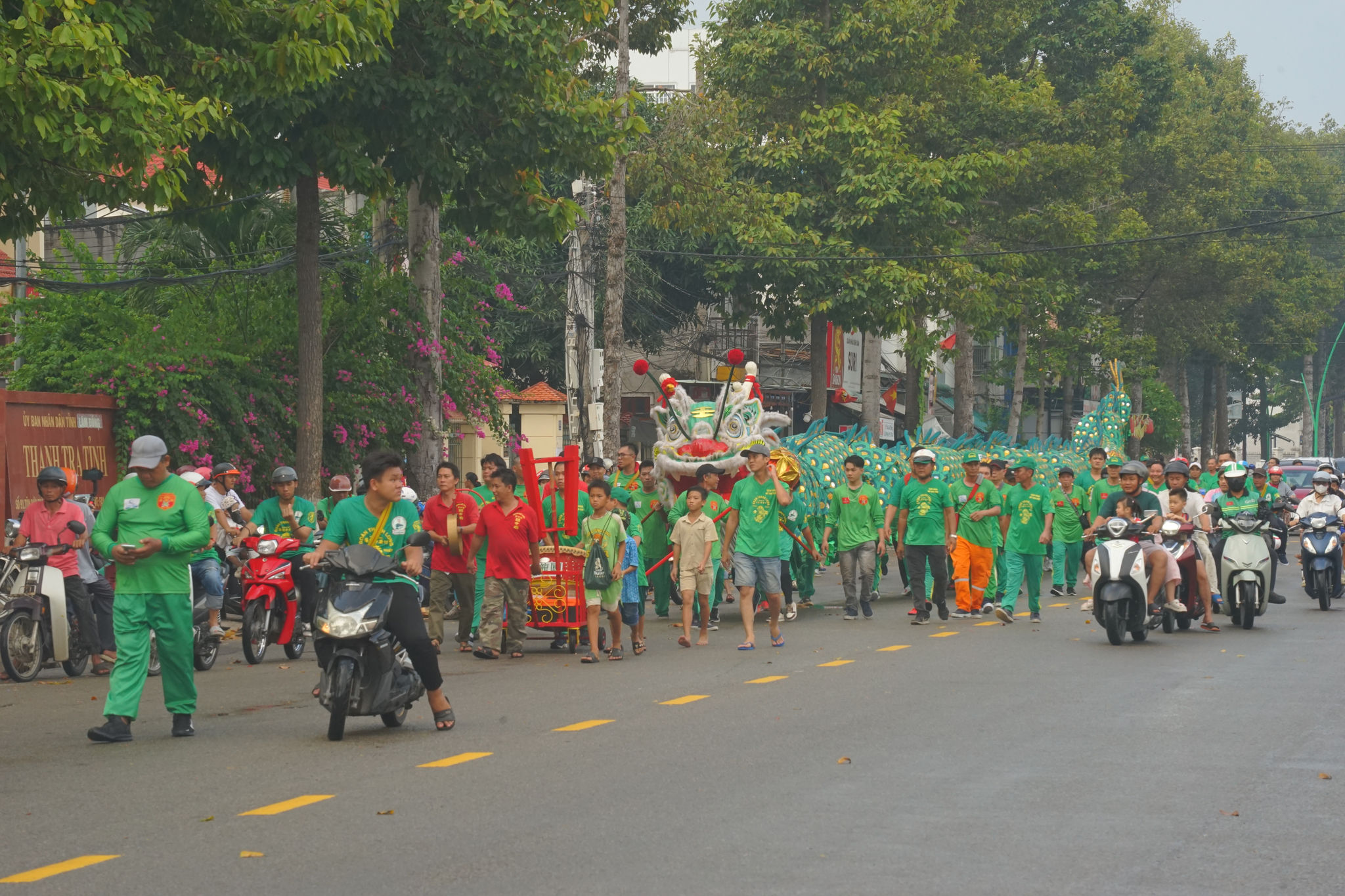
We reminisce about the days when, under the scorching sun, we followed the parade as it wove through the streets. At that time, no child considered culture or history. We merely understood that the festival season had arrived—ushering in drums, horns, vibrant flags and flowers, along with the grand blue dragon weaving its way through the streets.
Nguyen Thi Thuy Hong, who lives in Phu Thuy Ward, is currently in her 60s. Despite the many festival seasons that have gone by, she still vividly remembers her childhood. For Hong, Nghinh Ong is not just a cultural tradition of the Chinese community; it is also an integral part of her early years.
The dragon that winds its way through the streets, the rapid beating of drums, and the enthusiastic crowds that follow the procession — all of these memories replay in her mind like scenes from an old movie each time the festival arrives.
Culture is often maintained through the simplest of things: a ceremony, an antique item, a familiar sound, or a tale handed down through generations. In the case of Nghinh Ong, these aspects have become intertwined with the community's life over the years.
Over a hundred years have gone by, but the dragon head is still meticulously preserved, and the blue - green dragon continues to snake through the streets during each festival. As the drums start to play, those who once eagerly participated in the procession as children can rediscover a sense of their youth in the current celebration.
Perhaps that is the essence of a festival: when elements of the past still resonate with people's emotions today and are handed down to future generations.
.jpeg)
In Chinese tradition, the Azure Dragon is a sacred figure worshipped at Quan De Temple, with rituals passed down through generations. It embodies wishes for peace and prosperity, favorable weather, abundance and happiness. More than 140 people are needed to operate the Azure Dragon, while other members carry flags and play drums and musical instruments, creating a vibrant procession during each festival.
Ly Cam Minh — Deputy Head of the Quan De Temple Management Board