

81 Years of National Independence: A Foundation for Vietnam’s New Stage of Development
From a war-ravaged country, Vietnam has risen to achieve significant progress in socio-economic development, innovation and international integration.
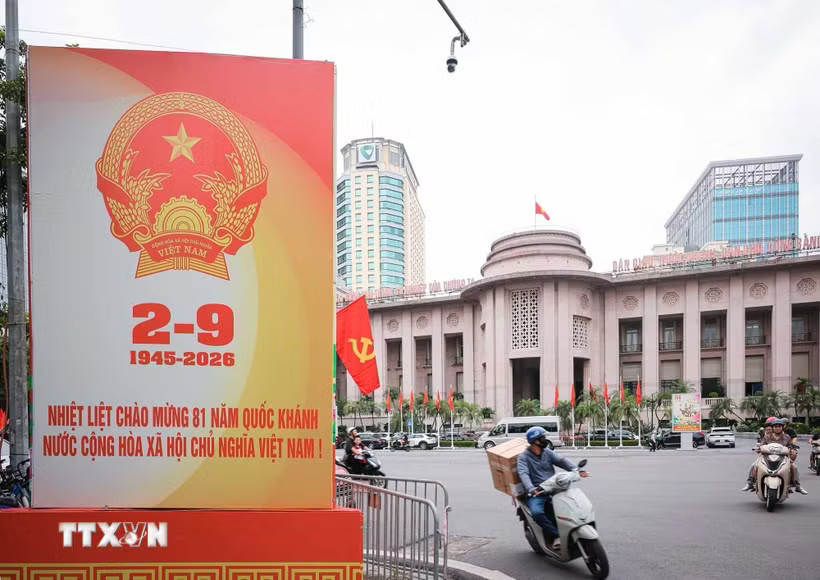
Eighty-one years after President Ho Chi Minh read the Declaration of Independence, the Vietnamese nation has traveled an arduous yet immensely proud journey through history to safeguard its independence, sovereignty, unity and territorial integrity. From a war-ravaged country, Vietnam has steadily risen, achieving significant progress in socio-economic development, improving people's living standards, advancing science and technology, promoting innovation and deepening international integration. These achievements have laid a solid foundation for the country to enter a new stage of development.
81 Years of Safeguarding National Independence
Following the success of the August Revolution, on September 2, 1945, at historic Ba Dinh Square, President Ho Chi Minh, on behalf of the Provisional Government, read the Declaration of Independence, solemnly proclaiming to the Vietnamese people and the world: “Vietnam has the right to enjoy freedom and independence, and in fact has become a free and independent nation. The entire Vietnamese people are determined to dedicate all their spirit and strength, lives and property, to safeguard that right to freedom and independence.”
Over the past 81 years, in carrying out that sacred pledge, the Vietnamese people have spared neither blood nor effort to safeguard the achievements and uphold the values of the August Revolution, defend national independence, and secure freedom and happiness for the people.
Immediately after the August Revolution, Vietnam faced an extremely precarious situation, with threats from both inside and outside the country and mounting difficulties. Yet within a short period, the Party, the State and the people achieved remarkable results: successfully holding a nationwide general election, electing the National Assembly, establishing the Government, promulgating the Constitution, building and consolidating the administration from the central to local levels, strengthening the people's armed forces, expanding the great national unity bloc, and building a new economy, a new culture and a new way of life.
When the French colonialists returned to invade Vietnam once again, the entire nation rose up with the resolve to “sacrifice ourselves so that the Fatherland may live,” launching a prolonged, nationwide and comprehensive resistance war based primarily on self-reliance and with unwavering confidence that “the resistance will certainly triumph.” The Party, the people and the armed forces united as one, forging invincible strength and achieving glorious victories, culminating in the historic Dien Bien Phu Campaign, whose resounding triumph reverberated across the five continents and shook the world.
No sooner had Vietnam emerged from the nine-year resistance war against French colonialism than the nation was drawn into another war against US aggression. Faced with this immense challenge, under the clear-sighted leadership of the Party and President Ho Chi Minh’s call that “Nothing is more precious than independence and freedom,” the entire country rose as one, determined to fight and defeat the invading US forces.
After a prolonged and heroic struggle, the Vietnamese people achieved a glorious victory in the 1975 Spring General Offensive and Uprising, culminating in the historic Ho Chi Minh Campaign. The South was completely liberated and the country was reunified.
Following the Great Spring Victory of 1975, Vietnam entered a new era: an era of peace and reunification, with the entire country advancing toward socialism. The Party, the people and the armed forces devoted their efforts and intellect to healing the wounds of war, rebuilding lives, and carrying out the tasks of building and defending the socialist Vietnamese Fatherland.
In the early years after reunification, Vietnam faced numerous difficulties and challenges. The country had to overcome the severe consequences of war while fighting to defend every inch of its sacred territory and safeguard national independence, sovereignty and territorial integrity. At the same time, Vietnam fulfilled its international duty to the Cambodian people, endured international isolation and economic embargoes, and continued exploring the path toward socialist development.

Building a Stronger and More Prosperous Nation
In response to the country’s pressing needs, the 6th National Congress of the Communist Party of Vietnam in 1986 launched the Doi Moi reform process, marking a historic shift in development thinking and policy. After 40 years of reform, through the efforts of the Party and the people, Vietnam has achieved major gains, gradually emerging as a large, highly open economy, a dynamic nation, and an active and responsible member of the international community.
Four decades of Doi Moi have brought profound changes in the scale and strength of the economy. From an economy facing numerous difficulties, Vietnam has gradually developed new growth drivers, expanded trade relations and become increasingly integrated into global production and supply chains.
In 2025, GDP grew by 8.02%; total trade turnover exceeded USD 930 billion, with a trade surplus of USD 20.03 billion, marking the 10th consecutive year in which Vietnam recorded a trade surplus. Growth momentum continued into 2026, with GDP expanding by 8.18% year on year in the first six months.
Alongside trade, investment and tourism have increasingly become important growth drivers. By the end of 2025, Vietnam had more than 45,000 active FDI projects with total registered capital of around USD 529.6 billion. The country is placing greater emphasis on attracting higher-quality investment, with a stronger focus on technology and innovation.
Tourism has also made a strong contribution, with Vietnam welcoming a record 21.2 million international visitors in 2025 and nearly 12.3 million in the first six months of 2026. This has generated additional resources for development while helping promote Vietnam and its people internationally.
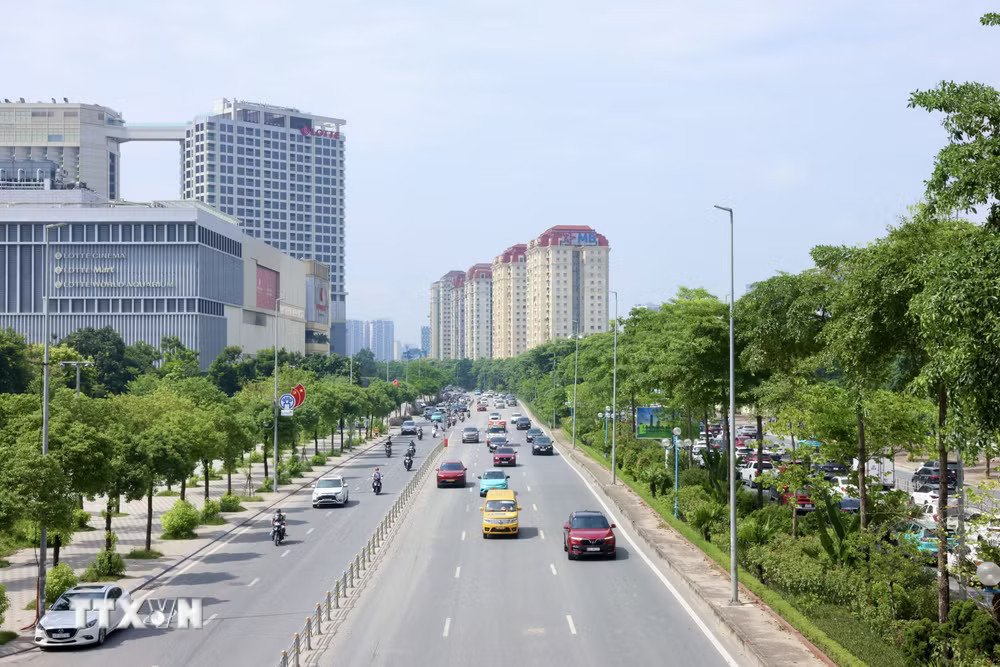
The country’s landscape has also changed dramatically alongside its development. Expressways, bridges, seaports, airports, urban areas and digital infrastructure have been developed in an increasingly coordinated manner, expanding development space and strengthening regional connectivity.
By the end of 2025, Vietnam had completed and put into operation 3,345 kilometers of expressways and 1,711 kilometers of coastal roads. The operation of urban railway systems in Hanoi and Ho Chi Minh City, together with the development of strategic infrastructure projects, is creating new momentum for the country’s modernization.
Beyond expanding physical infrastructure, Vietnam is also making significant changes to the way the country is organized and governed. The restructuring of provincial-level administrative units into 34 provinces and centrally governed cities, along with the introduction of a two-tier local government model from July 1, 2025, aims to streamline the administrative apparatus, strengthen decentralization and the delegation of authority, expand development space, and improve services for people and businesses.
These changes show that Vietnam’s development is increasingly tied to the need for institutional reform, stronger governance capacity and a solid foundation for a new stage of development.
The country’s development achievements are also clearly reflected in improvements in people’s living standards. The Party’s policy of linking economic growth with social progress and equity has increasingly been translated into practical measures.
By the end of 2025, the multidimensional poverty rate had fallen to 2.95%. Social insurance policies and support for vulnerable groups continued to be implemented, helping strengthen social security and broaden development opportunities for people.
In healthcare, health insurance coverage reached more than 95.2% of the population, while the country has mastered a range of advanced medical techniques. In education, the policy of tuition exemptions for preschool children and general education students at public schools from the 2025-2026 academic year, together with the gradual introduction of free textbooks, has continued to expand access to education for children across the country.
Alongside economic and social development, culture is increasingly recognized as both a spiritual foundation and an important resource and driver of development. Efforts to preserve and promote heritage, develop cultural industries and bring more Vietnamese cultural products to international markets have helped strengthen national identity, enhance soft power and promote the country’s image.
Science, technology, innovation and digital transformation are opening up new development opportunities. Vietnam has gradually built an innovation ecosystem and developed fields such as artificial intelligence, semiconductors, big data and biotechnology. In the 2025 Global Innovation Index, Vietnam ranked 44th among 139 economies.
Digital transformation is also becoming increasingly integrated into production, business and everyday life, helping improve governance efficiency and the quality of services for people and businesses.
Building on its domestic achievements, Vietnam has steadily strengthened its standing on the international stage. The country has established diplomatic relations with all 193 United Nations member states, participated in more than 70 major international organizations and forums, and taken on an increasing number of multilateral responsibilities.
Vietnam’s re-election to the United Nations Human Rights Council for the 2026-2028 term, with the highest number of votes among Asia-Pacific candidates, is further evidence of its growing international prestige.
Moving beyond integration primarily for development, Vietnam is increasingly taking a proactive role in contributing to and shaping an environment of peace, cooperation and development, while making effective use of external resources to support national development.
Shaping Vietnam’s Future
As Vietnam enters a new stage of development, it faces both opportunities and challenges. Resolution No. 19-NQ/TW, issued on July 28, 2026, by the third plenum of the 14th Party Central Committee on reforming Vietnam’s development model, calls for a major transformation of the country’s development approach, the creation of new growth drivers and the more effective use of national resources.
The Government has also issued Resolution No. 217/NQ-CP dated August 6, 2026, outlining an action programme to implement Resolution No. 19-NQ/TW.
Accordingly, Vietnam is shifting decisively from a growth model that relies heavily on traditional factors to one driven increasingly by productivity, science and technology, innovation, the quality of human resources and more efficient use of resources.
Developing the private sector, strengthening the competitiveness of Vietnamese businesses, improving the investment environment, removing institutional bottlenecks and unlocking social resources must become key priorities.
Maintaining independence and self-reliance in the new development stage does not mean closing the country off from the world. Vietnam is pursuing deeper and more proactive international integration, more effective participation in global value chains and greater access to international resources, while strengthening the economy’s capacity for self-reliance. The deeper the integration, the stronger that capacity must become.
In this process, science, technology, innovation and digital transformation must become direct drivers of development. Resolution No. 57-NQ/TW identifies these areas as a top strategic breakthrough and a key driving force for rapidly developing modern productive forces and enabling the country to achieve breakthrough growth.
The resolution sets a target for Vietnam to rank among Southeast Asia’s top three countries in artificial intelligence research and development by 2030, among the world’s top 50 economies in digital competitiveness, and to develop a digital economy accounting for at least 50% of GDP by 2045.
To achieve these goals, alongside prioritizing investment in machinery and infrastructure, Vietnam is building an innovation ecosystem in which businesses play a central role, scientists are empowered to realize their potential, people gain greater access to technology, and the State creates an enabling institutional environment for innovation. At the same time, efforts to master technology, particularly strategic technologies, will directly strengthen national self-reliance and competitiveness.
Shaping the future also means, first and foremost, investing in people. A country seeking rapid and sustainable development must have a workforce capable of mastering knowledge, technology and new modes of production. Education and training therefore play a particularly important role. Resolution No. 71-NQ/TW on breakthroughs in education and training emphasizes the need to develop high-quality human resources, reform education, and strengthen training in technology and digital skills to meet the demands of the new stage of development.
Alongside education, protecting and improving public health is an important foundation for both human resource quality and people’s quality of life. Resolution No. 72-NQ/TW sets out further breakthrough measures to strengthen public health protection and care.
At the same time, maintaining national defense and security, safeguarding sovereignty and improving the effectiveness of foreign affairs remain tasks of strategic importance. From the historic autumn of 1945 to the present day, safeguarding independence has remained a constant thread throughout the country’s journey of nation-building and development.
In the new stage, independence and self-reliance are increasingly tied to internal strength, economic capacity, science and technology, the quality of human resources and the country’s international standing. Building on its achievements, Vietnam is proactively seizing opportunities, overcoming challenges and moving confidently into the future.