

Solar Power Projects on Hydropower Reservoirs Raise Expectations
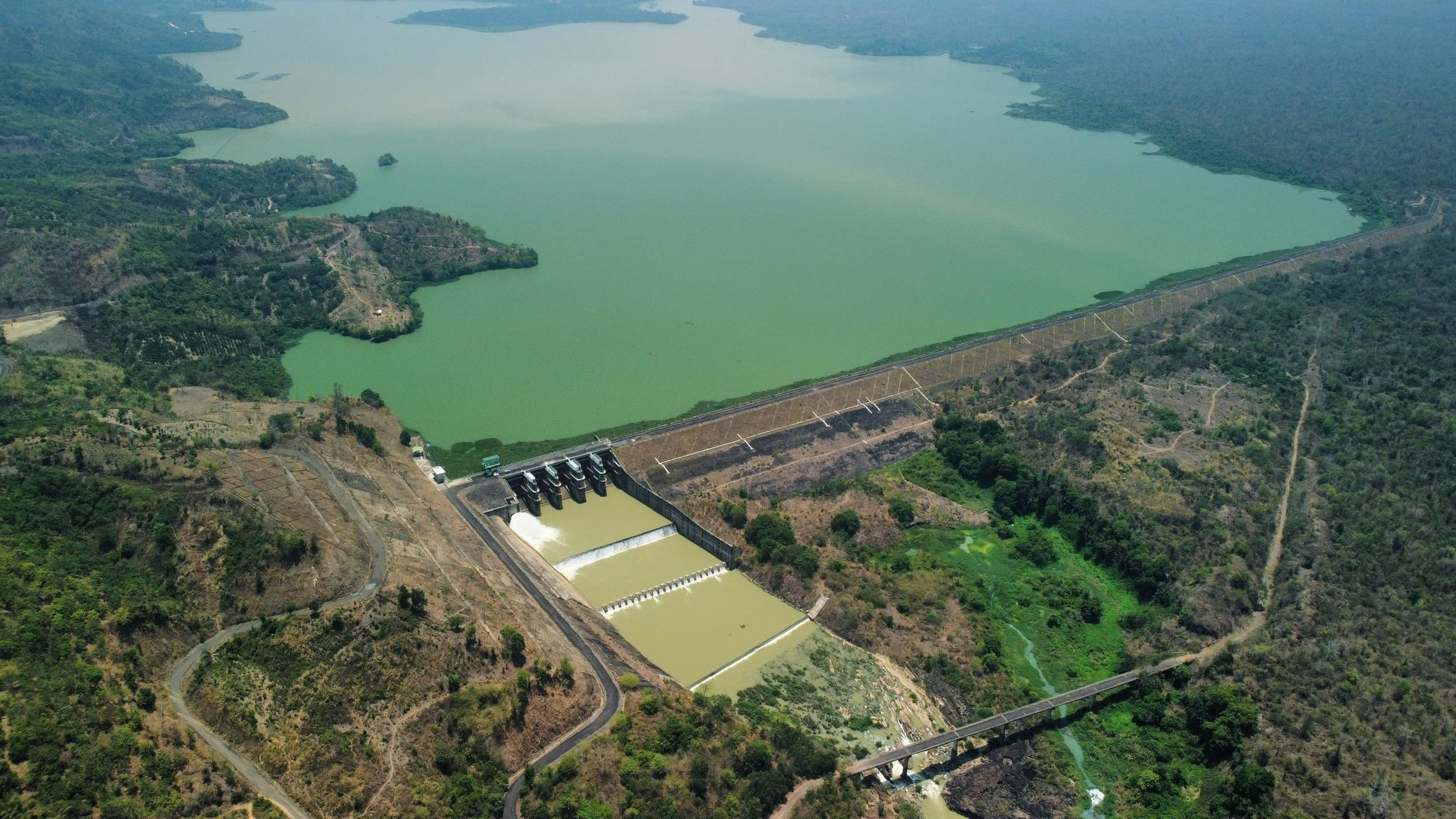
Solar panels are expected to be installed on the reservoirs of Buon Tua Srah, Buon Kuop and Serepok 3 hydropower plants. Alongside hopes that these projects will unlock new resources, local authorities are working to build consensus and ensure environmental protection and livelihoods for local residents as the projects move forward.
When Residents Raise Legitimate Concerns
In Phu Vinh village, located in Quang Phu Commune, the KN Buon Tua Srah Solar Power Plant project has garnered considerable interest from the local community. Along with hopes for the project's prompt implementation to provide a new electricity source, residents anticipate an increase in job opportunities, infrastructure investments, and a boost in local services.
Y Cu, a local resident of Phu Vinh Village, stated: “Once the project begins, there will be a high demand for workers during the construction phase. This will give local people the chance to find additional employment and enhance their income.”
Y Kha, a local resident, expressed his happiness upon hearing that the commune would be the site of a significant project. “Given the project's large scale, there is likely to be an increase in transportation and service activities. The local community could gain from the infrastructure developments that will support the project,” Y Kha remarked.
In a sturgeon farming facility located on the hydropower reservoir, the water surface plays a crucial role in production. Consequently, as the project advances, the business is particularly focused on the availability of water resources and the health of the aquatic environment.
Phan Thi Thanh Nhan, who works as an accountant at the sturgeon farming site on the Buon Tua Srah hydropower reservoir, expressed her concerns, stating: “I am worried about the potential impacts of the solar panels on the environment and aquaculture operations. This concern must be addressed through thorough inspections and evaluations, along with specific monitoring systems throughout the project's execution.”
The KN Buon Tua Srah Solar Power Plant project, funded by Buon Tua Sra Solar Power Joint Stock Company, is set to be developed in the Quang Phu Commune.
The initiative has a total budget exceeding VND7.743 trillion and spans approximately 495 hectares, including around 487 hectares of water surface designated for solar panel installation, representing roughly 13% of the total area of the reservoir.
Under the project schedule, procedures related to land, the environment, construction, water surface use and other relevant matters are expected to be completed no later than the fourth quarter of 2027. The facility is expected to be completed and put into operation no later than the second quarter of 2029.
.jpg)
Building Consensus and Strong Local Support
Pham Ngoc Vu, Deputy Secretary of the Party Committee and Chairman of the Quang Phu Commune People's Committee, stated that the provincial Party Committee’s preliminary agreement on the project and the provincial People’s Committee’s endorsement of the investment policy for the KN Buon Tua Srah Solar Power Plant have heightened hopes for a new avenue of growth in the region.
The official noted that, in addition to enhancing the electricity supply and supporting a transition to greener energy, the project is anticipated to aid in economic restructuring, boost budget revenues, generate employment, encourage service sector growth, and draw in further investment to the area.
Through discussions with the community, meetings with constituents, and Party cell initiatives, the commune has recognized both the hopes and worries of its residents. Locals are eager for the project to start soon so that more employment opportunities can be generated, roads and infrastructure can be enhanced, services can be broadened, and living standards can improve.
However, some community members have expressed concerns about land acquisition and the protection of the reservoir's water quality.
"These concerns are valid," Pham Ngoc Vu remarked, emphasizing that local officials would collaborate with the investor and relevant agencies to offer residents thorough and transparent details about the project and ensure that community engagement is conducted during the preparation of the environmental and social impact assessment report.
According to Quang Phu commune authorities, the Party Committee’s consistent approach is to strictly uphold the principle that “the people know, discuss, participate, inspect, supervise and benefit.” Information about the project must reach residents early and be provided fully and accurately, leaving no information gaps that could lead to differing interpretations.
The local government is collaborating with the investor and various departments to conduct on-site assessments and gather feedback on project boundaries, power transmission paths, and the placement of project facilities to reduce the impact on residents' daily lives.
In relation to livelihoods tied to the waterbody, the commune is also advising on the specific areas designated for solar panel installations to lessen the impact on households involved in cage aquaculture and fishing activities.
Throughout the construction phase, the local authority will keep a watchful eye on the project, oversee its execution, and work to resolve any issues that may arise.
“Based on the principle that economic development must not come at the expense of the environment, the commune will actively monitor the project. If the project complies with all required procedures, the locality will support it. If it causes major environmental impacts, the commune will report the matter and request action in accordance with regulations,” Pham Ngoc Vu said.
.jpg)
Opening Up New Avenues for Green Energy Development
Buon Tua Srah is not the sole site where floating solar power is being considered. Floating solar initiatives are also being explored for several reservoirs throughout the province.
As reported by the Department of Finance, by August 2026, the province had received 35 applications seeking preliminary approval for power generation projects under the revised Power Development Plan VIII and the provincial master plan. These projects represent a total estimated investment of around VND75.6 trillion and would require more than 2,300 hectares of land and water area.
Importantly, numerous proposed solar power projects are set to be established on hydropower reservoirs, including Buon Tua Srah, Buon Kuop, Serepok 3, Dak Sin 1, Dong Nai 2, Dai Ninh, and Da Dang 3.
Utilizing the water surfaces of current reservoirs provides extra opportunities for the expansion of renewable energy initiatives. Some projects might also benefit from the existing electricity infrastructure intended for hydropower facilities, such as substations, grid connections, and transmission lines.
Nevertheless, the provincial People’s Committee emphasizes that these benefits do not allow for the neglect of legal, water-resource, and environmental standards.
Regarding the KN Buon Tua Srah Solar Power Plant initiative, the provincial Party Standing Committee has called for clearer clarification of the project's legal framework and its utilization of water surfaces, while ensuring that the rights and interests of relevant organizations and individuals are preserved.
Floating solar power opens up new opportunities for energy development in Lam Dong. However, the effectiveness of these projects will depend on how thoroughly the concerns of local residents and organizations using the water surface are addressed, as well as how effectively environmental impacts on reservoir ecosystems are controlled.