

Expanding Educational Opportunities for Students with Disabilities
Moving beyond merely enrolling students with disabilities in school, the Lam Dong education sector is systematically reforming inclusive education to closely align with the individual needs of each student. Through these efforts, every child is given greater opportunities to learn, integrate, and progress according to their personal capabilities.
.jpeg)
A Journey of Integration
Song Luy Primary School in Song Luy Commune was formed through the merger of Song Luy Primary School 2 and Song Luy Primary School 3 and now serves over 500 students, including 13 students with disabilities receiving inclusive education in 13 classrooms.
Each student presents unique characteristics and distinct support requirements, ranging from intellectual disabilities, autism, and hyperactivity to speech impairments and Down syndrome. One hundred percent of these students possess medical records and disability certificates, and are evaluated under personalized education plans.
Dao Duy Bich Ngan, Principal of Song Luy Primary School, noted that inclusive education at the school was initiated in the 2008–2009 academic year and saw significant improvements from the 2016–2017 school year following specialized teacher training.
"The most crucial factor is understanding each student and identifying their abilities and support requirements. When educational goals are appropriate, students gain opportunities to progress and build confidence," Ngan shared.
At the beginning of each academic year, the school formulates an inclusive education plan, establishes a support and advisory team, and manages student file handovers between teachers. Every student has an individual education plan monitored throughout the learning process.
Adjustments are made across multiple aspects, including seating arrangements, task assignments, visual learning materials, and assessment methods. Challenges encountered are discussed during professional development sessions to find solutions collaboratively.
"For children with disabilities, not every student learns the same way. If a method does not work, teachers must find a more suitable alternative so that students always feel included alongside their peers," Principal Ngan said.
Years of persistent effort by the school are yielding positive transformations. Students with disabilities exhibit higher confidence and a greater desire to attend school, while parents place increased trust in the educational environment. Meanwhile, classmates have gradually learned to show care, empathy, and mutual support.
Leaving No Student Behind
Reflecting practical experience from grassroots levels, the Lam Dong education sector continues to emphasize elevating the quality of inclusive and specialized education for the 2026–2027 school year.
The objective extends beyond placing students with disabilities in classrooms to ensuring that every child receives an education tailored to their capabilities and needs. Each student is assigned an individual education plan specifying their capabilities, needs, targets, and support methods.
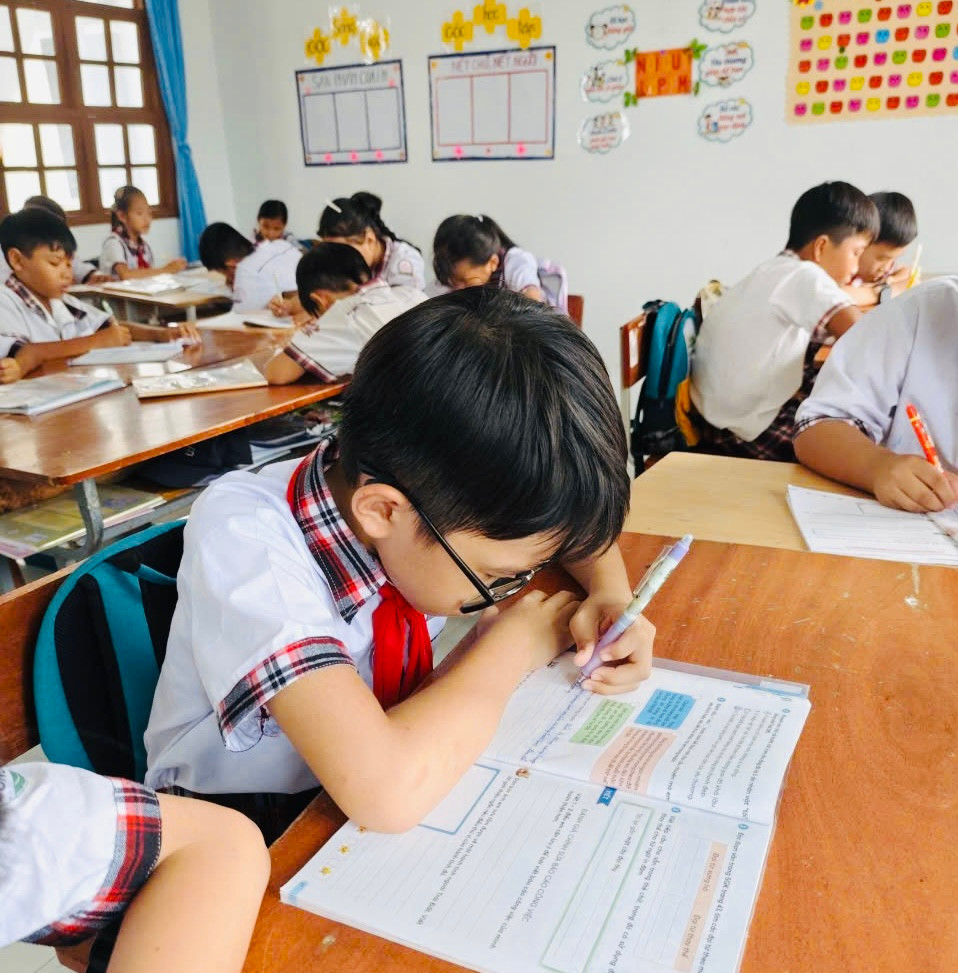
Under existing regulations, inclusive classrooms accommodate no more than two students with disabilities. Schools are gradually enhancing inclusive education support rooms, focusing on developing communication skills, self-care, social skills, and specialized abilities. Alongside these measures, flexible examination and assessment protocols are applied to accurately recognize individual progress.
According to Phan Thanh Hai, Deputy Director of the Lam Dong Department of Education and Training, bringing students with disabilities to school is only the first step; the key is ensuring they learn, receive support, and make progress according to their abilities.
Achieving this requires synchronized cooperation among families, schools, local authorities, and relevant organizations. Teachers require continuous professional development, while physical infrastructure and inclusive education support rooms are being expanded progressively.
Because each student with disabilities possesses different capabilities and requirements, teaching methods must remain flexible. When schools, families, and the community collaborate, these students gain better conditions to learn, integrate, and move forward with confidence in life.
Students with disabilities receive age priority for enrollment, allowed an entry age up to three years older than general regulations across general education levels. They are granted direct admission into public lower and upper secondary schools under current regulations. Policies regarding tuition fee exemptions, financial aid for learning costs, scholarships, and specialized learning materials are also mandated for full and timely implementation.