

How a 2004 flower festival paved the way for Da Lat’s iconic Flower Festival?
There was a time when Da Lat began to realize that flowers were more than a source of beauty. They could also become a distinctive cultural and tourism product — one capable of telling the story of the highland destination in its own way.
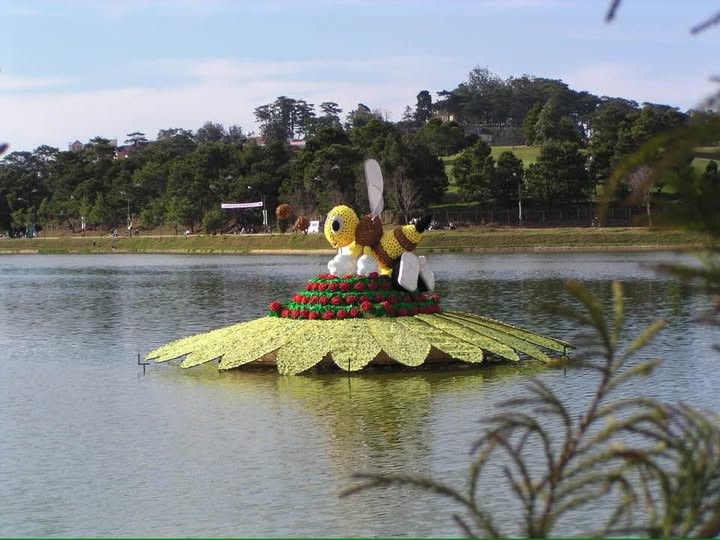
At the end of 2004, that idea was put to the test with the Da Lat Festival of Colors, an event later regarded as a trial run for the Da Lat Flower Festival and the beginning of a journey that would turn flowers into one of the destination's most recognizable cultural symbols.
When flowers moved beyond the gardens
On the evening of December 18, 2004, Da Lat City Flower Garden was illuminated for the opening ceremony. Tens of thousands of residents and visitors gathered at a familiar landmark that, for the first time, had been transformed into the setting for a major flower-themed festival.
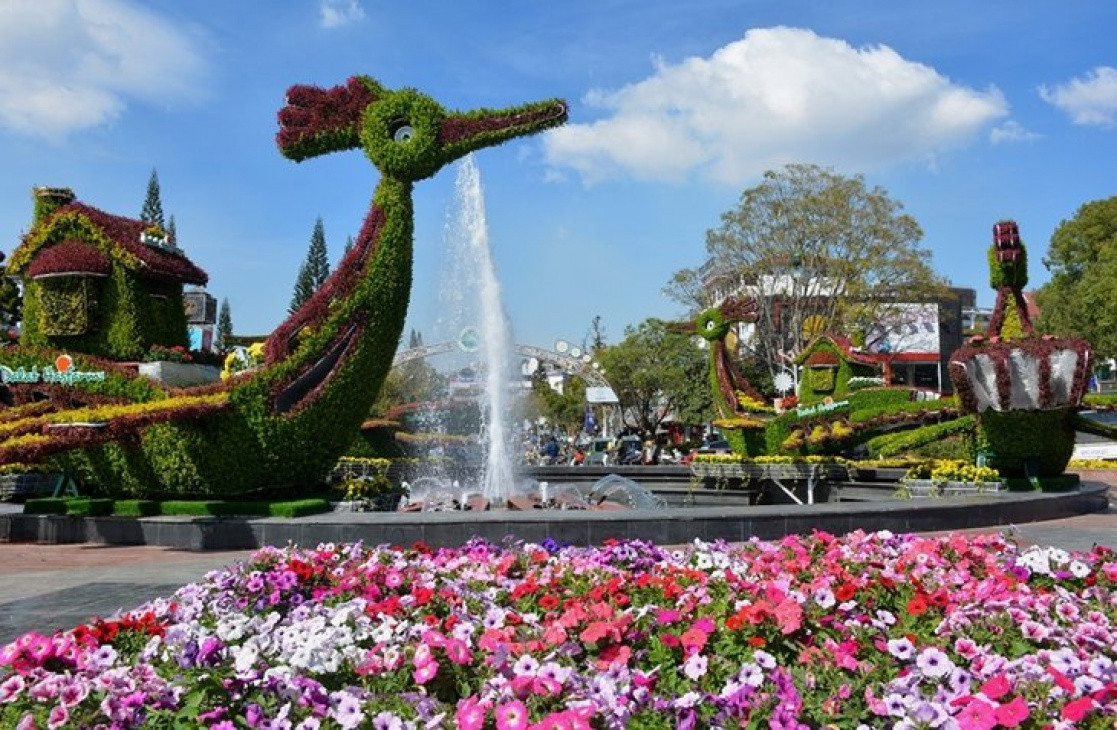
Across roughly 9 hectares, organizers displayed about 100,000 pots of flowers arranged around a variety of themes. Traditional flowers associated with the “land of a thousand flowers” were presented alongside orchids, cut flowers, Da Lat wildflowers, ornamental plants and models showcasing flower-growing technology.
The scale of the preparations was equally remarkable.
More than 200 workers worked continuously in three shifts from early November. Flowers were not confined to the city flower garden. They were also brought into parks, roundabouts and central streets.
Since August 2004, Da Lat had planted and decorated flowers at 10 parks, two landmarks, six roundabouts and 29 streets, with an investment of nearly VND2 billion.
The destination was gradually transformed into a vast floral landscape. The festival was no longer limited to a stage or a designated exhibition area; flowers became part of the streetscape and everyday public spaces.
The opening ceremony also revealed how Da Lat wanted to tell its story through flowers.
Dance, music and light performances recreated the colors of the highlands, while “flower fairies” appeared amid the illuminated stage. Tens of thousands of residents and visitors packed the area around the flower garden.
The program was not simply a showcase of flowers. It also sought to honor the flower growers and the agricultural industry that had helped build Da Lat's reputation as a major flower-growing destination.
A festival that exceeded expectations
The appeal of the event quickly went beyond expectations.
During the festival, the tourism sector recorded around 30,000 visitors arriving in Da Lat each day. About 2,000 visitors attended the opening night alone.
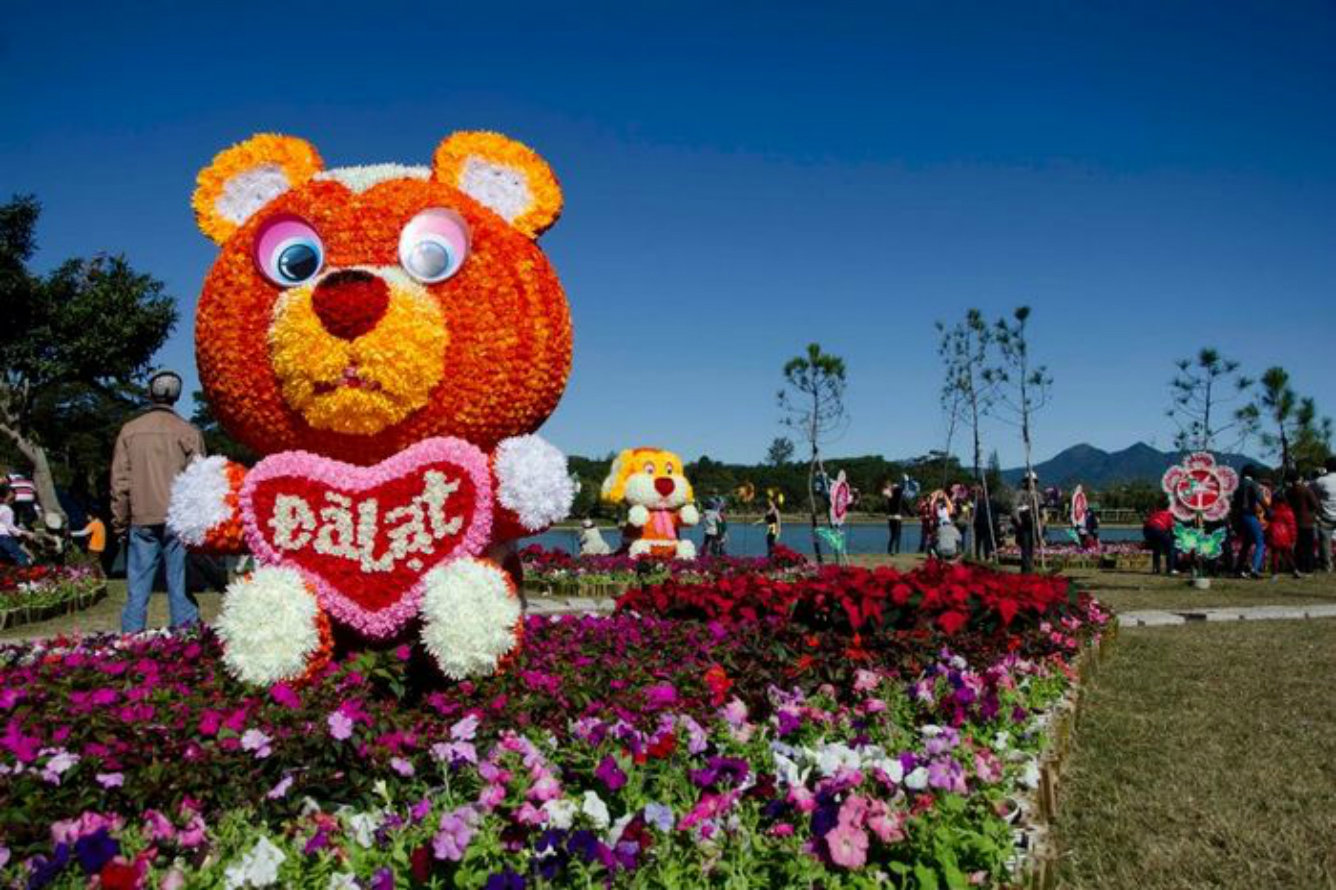
The sudden surge in visitors caused traffic congestion in the central area at times. The demand for travel was also reflected in the air network: Vietnam Airlines added six flights on routes connecting Da Lat with Ho Chi Minh City and Hanoi on December 25 and 26.
For Da Lat, these numbers offered an important signal.
Flowers could become more than an agricultural product or an element of the landscape. They could become a reason for travelers to choose the destination.
Yet the festival was about much more than floral displays.
Over nine days, from December 18 to 26, a wide range of activities took place, including exhibitions, a tourism and trade fair, flower-related seminars, an art photography festival, cultural performances and culinary events.
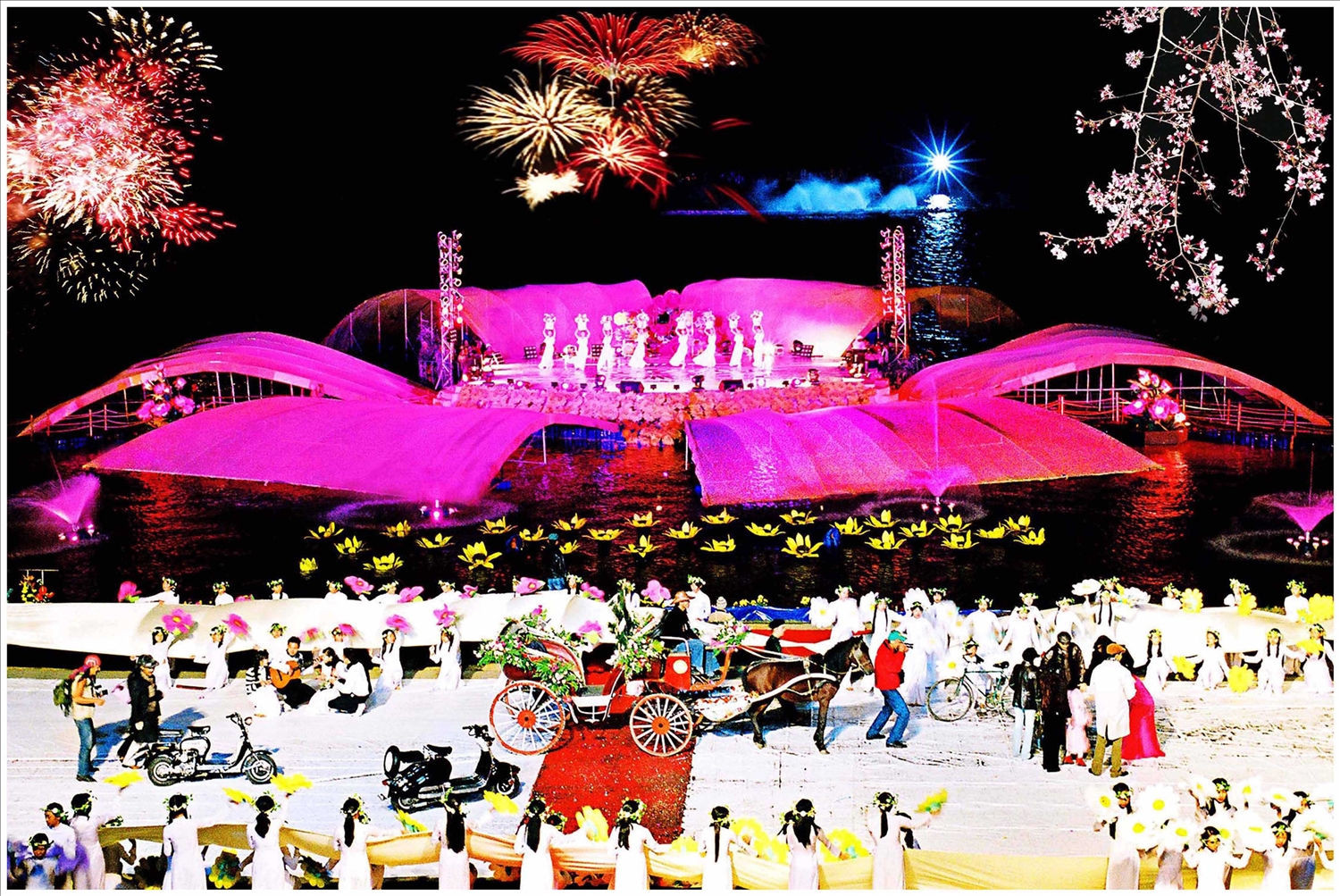
One of the highlights was the street festival on the evening of December 25, featuring more than 2,000 performers.
The program was divided into seven chapters, including “Da Lat's Distinctive Character,” “The Legend of Flowers,” “Floral Vehicle Improvisation,” “Memories of Wild Sunflowers” and “The Colors of Da Lat.”
Flowers were beginning to move beyond gardens and exhibition spaces and become part of urban life and community cultural activities.
Behind the colorful spectacle was a broader ambition: to showcase the potential and achievements of the flower-growing industry, promote Da Lat as a tourism brand and position the destination as one of Southeast Asia's flower-exporting centers.
The 2004 Da Lat Festival of Colors was therefore more than a standalone cultural event. It became a test of whether Da Lat could stage a large-scale festival built around one of its most distinctive strengths.
And the test produced a compelling answer.
From a trial run to a destination brand
Following the success of the 2004 Festival of Colors, Lam Dong decided to organize the first Da Lat Flower Festival in 2005, under the theme “Da Lat – A Rendezvous of a Thousand Colors of Flowers.”
From that point, a new festival began to take shape, gradually becoming a signature cultural and tourism event associated with Da Lat.
Looking back, the Da Lat Flower Festival did not emerge from an entirely new idea. Its roots lay in the everyday life of the destination — in its flower gardens, its flower growers and the desire to tell a distinctive story about Da Lat.
The 2004 Festival of Colors was the starting point. The 2005 Flower Festival opened a much longer journey, transforming Da Lat's naturally abundant floral beauty into the identity and brand of a destination.