

Coconut Harvesters Keep a Risky Trade Alive in Mui Ne
High above the ground, coconut harvesters climb slender trunks, balance among swaying fronds and cut down clusters of fruit to earn a living. In Rang, now part of Mui Ne Ward in Lam Dong Province, this demanding trade has sustained families for generations. But as the area changes and veteran workers grow older, fewer young people are willing to take their place.
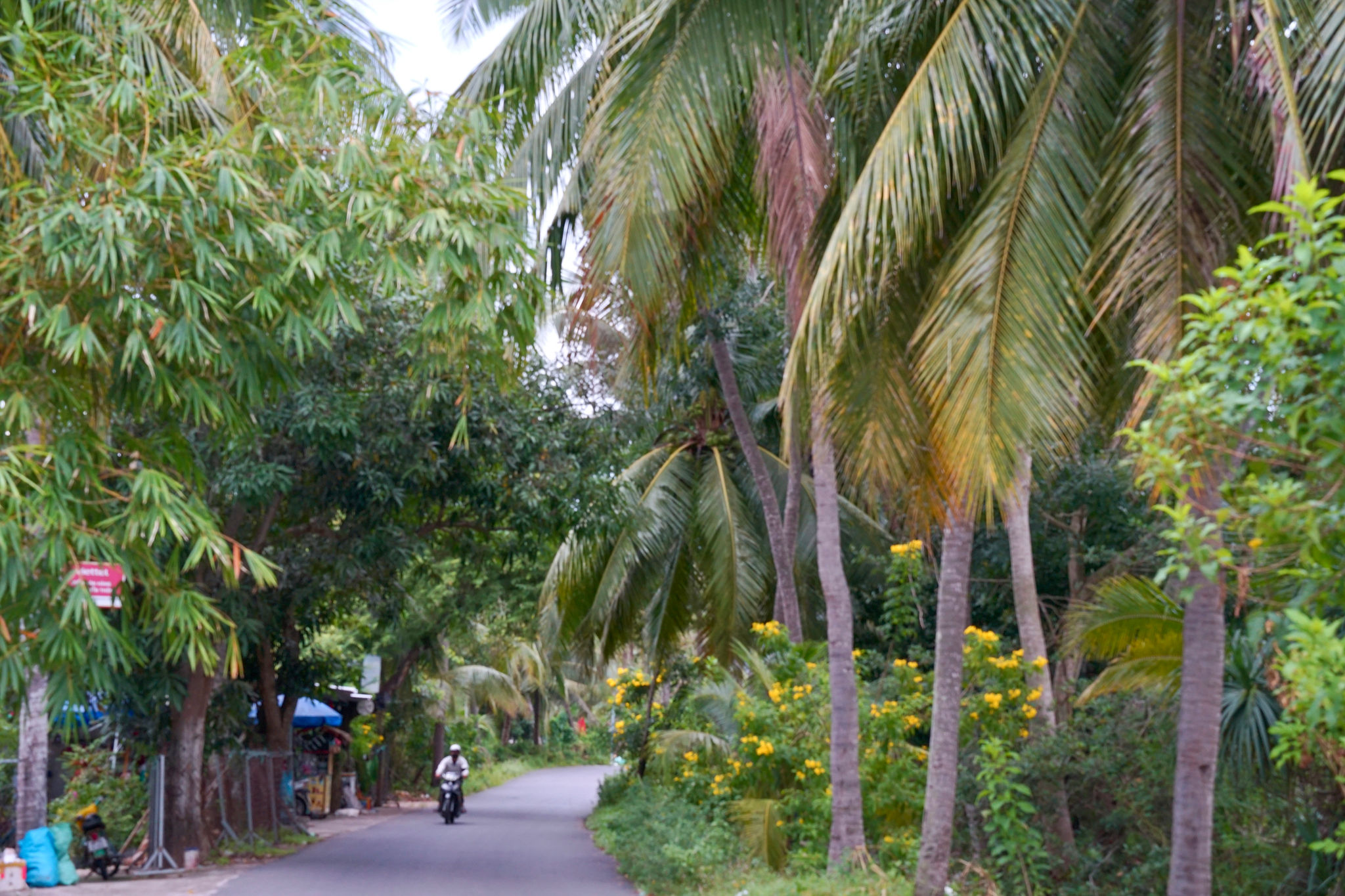
Coconut Palms That Sustain a Community
No one can say exactly when hired coconut harvesting began in Rang. Older residents recall that the trees were already part of coastal village life when settlers from the Ngu Quang region arrived to clear the land and establish communities. Over generations, the palms grew alongside the villages, enduring seasons of sun, wind and storms and becoming part of the area's collective memory.
Today, the coconut palms of Rang still stand tall. High above the ground, harvesters cling to their trunks and move deftly among the fronds, cutting down clusters of fruit. Behind this seemingly simple task are workers who have spent years mastering a dangerous trade—and growing concerns that the tradition may not survive another generation.
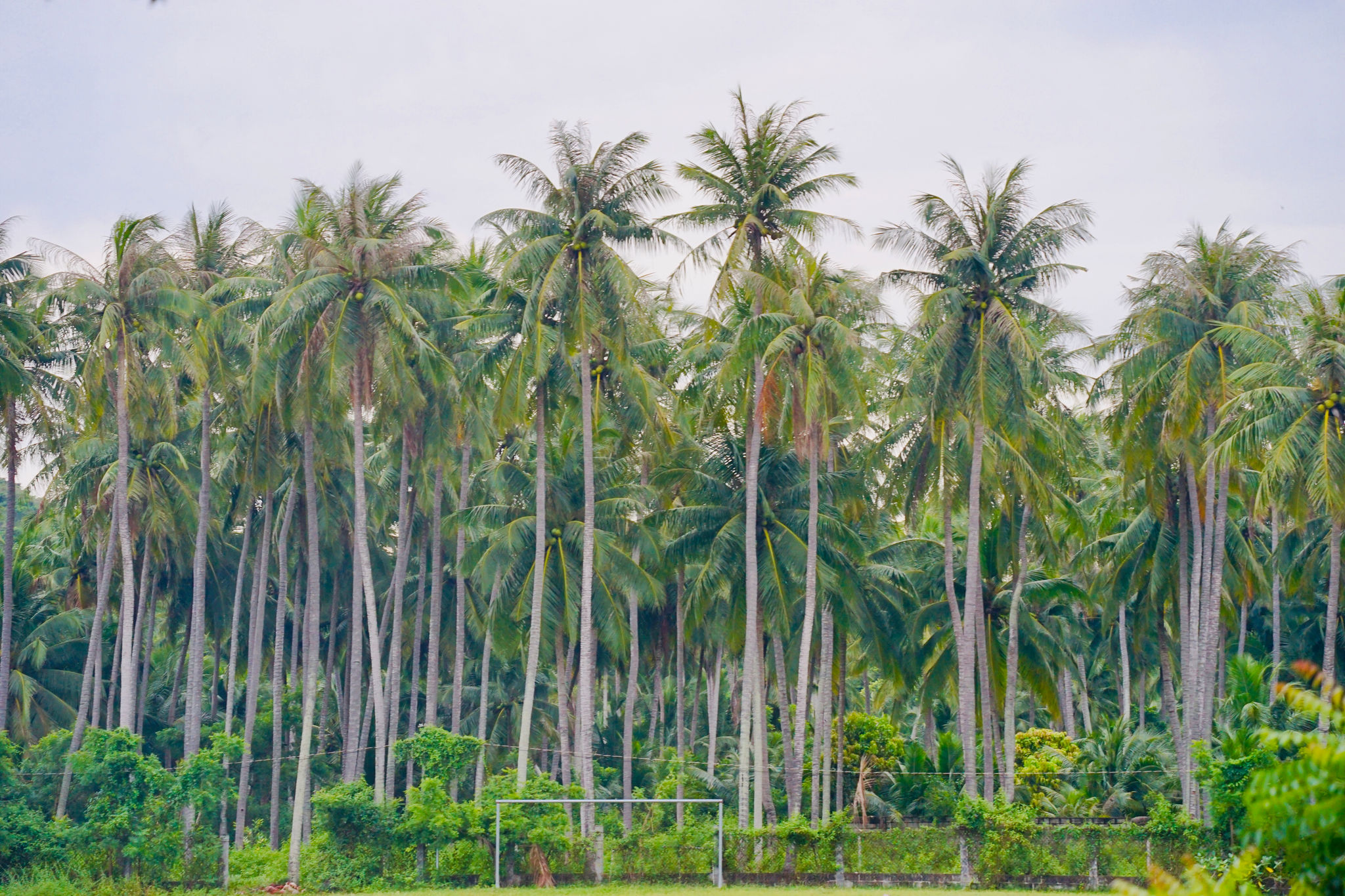
Nguyen Van Trong, a resident of Residential Group 9 in Mui Ne Ward, remembers when Rang had the area's densest coconut groves.
“There used to be coconut palms everywhere in Rang, planted close together. You could tell whose grove it was by the size of the trees, because each family had planted theirs a few years apart. In the Bau Me area, coconut palms were planted only after liberation. My family made a living from coconuts; they were our livelihood,” he recalled.
Young people don't take up this work anymore. Anyone who does has to be willing to work hard and persevere
Nguyen Van Trong, resident of Residential Group 9, Mui Ne Ward
Urbanization has gradually replaced some of Rang's green coconut groves with resorts, hotels and restaurants. The palms that once shaded village lanes have become less common. Yet the harvesting trade continues in newer growing areas, including Bau Me and Thien Nghiep, where coconut palms still provide a livelihood for local families.
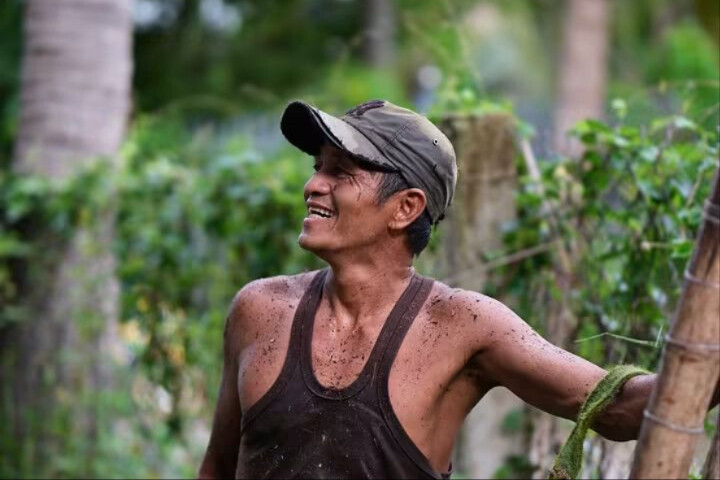
Coconut palms bear fruit throughout the year, providing harvesters with work whenever the clusters are ready to be picked. The trade has traditionally passed from father to son, with children accompanying older family members into the groves and gradually learning the work. For many households, coconut harvesting has been more than a job: it has helped families build homes, raise children and secure their future.
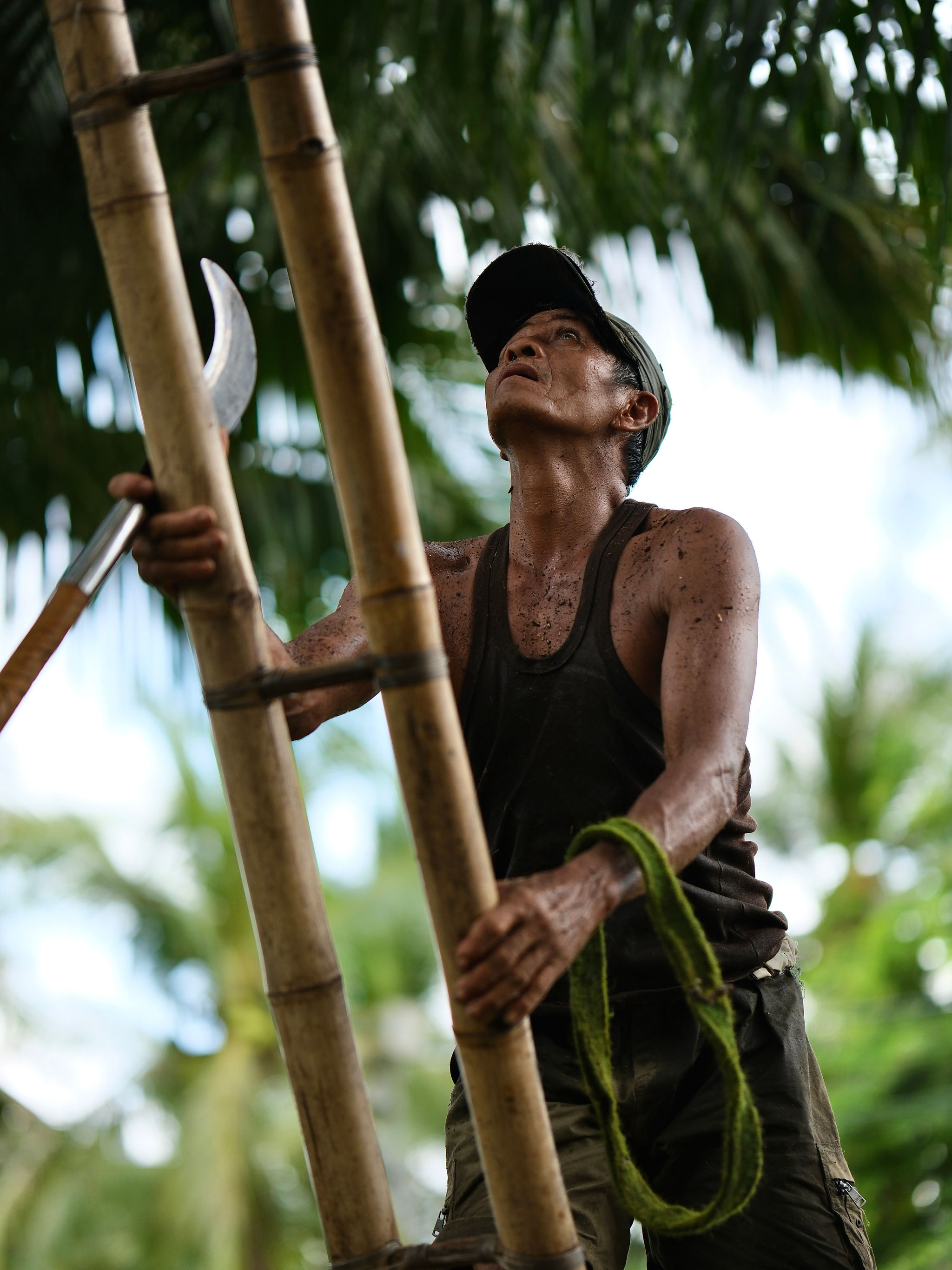
Among the few harvesters still working in Ham Tien and Thien Nghiep is Pham Van Tan, born in 1965, who has earned his living from the trade for more than 30 years.
He first took up the work at the age of 14 or 15, drawn by the thrill of climbing and eager to join older young men from his village on their harvesting rounds. But when the work failed to provide a stable income and his family struggled financially, he left the trade and went to sea with local fishermen.
Fishing, however, did not always bring reliable returns. After several disappointing trips, Tan returned to coconut harvesting. Over the years, he cut down one cluster after another, saving what he could to raise his children.
“After doing it for so long, you get used to it. This work put my children through school and helped them build their own families,” he said.
His words are simple, but they tell the story of a lifetime of hard work and sacrifice for his family.
Now in his sixties, Tan still heads into the groves most mornings. Watching him move among the towering trunks offers a glimpse of the physical demands of his work. For him, the rule is straightforward: as long as he remains fit enough to work, he will keep going.
“I still have the strength, so I work every day. Staying at home makes me feel more tired. The work is hard, but it keeps me active,” he said.
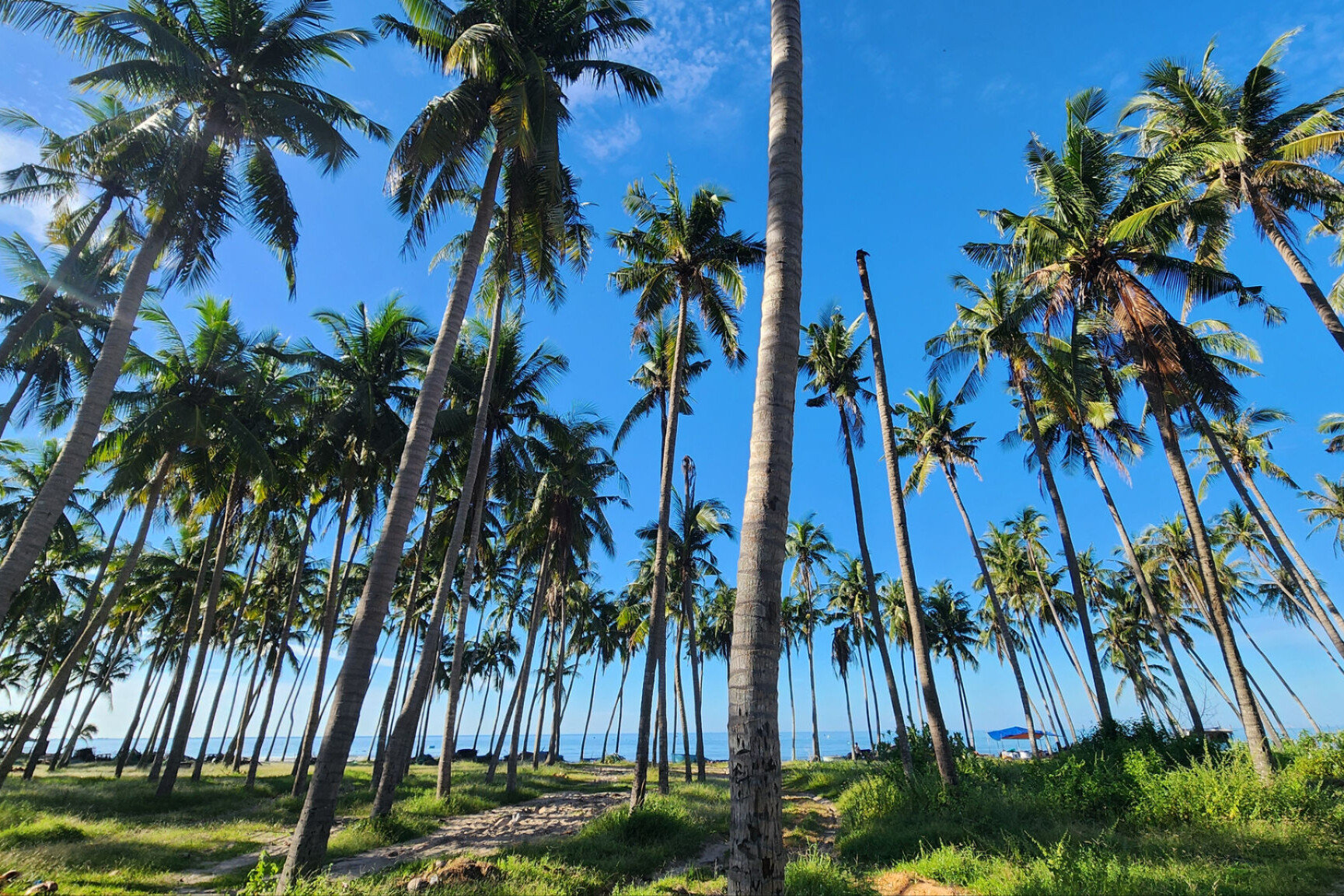
Tan is not the only person in Rang to have spent much of his life harvesting coconuts for hire. These workers know the groves and individual trees by heart, relying on physical strength and years of experience to earn their daily bread. As the surrounding landscape becomes increasingly urbanized, they continue to climb the palms, preserving a small but enduring part of the area's traditional way of life.
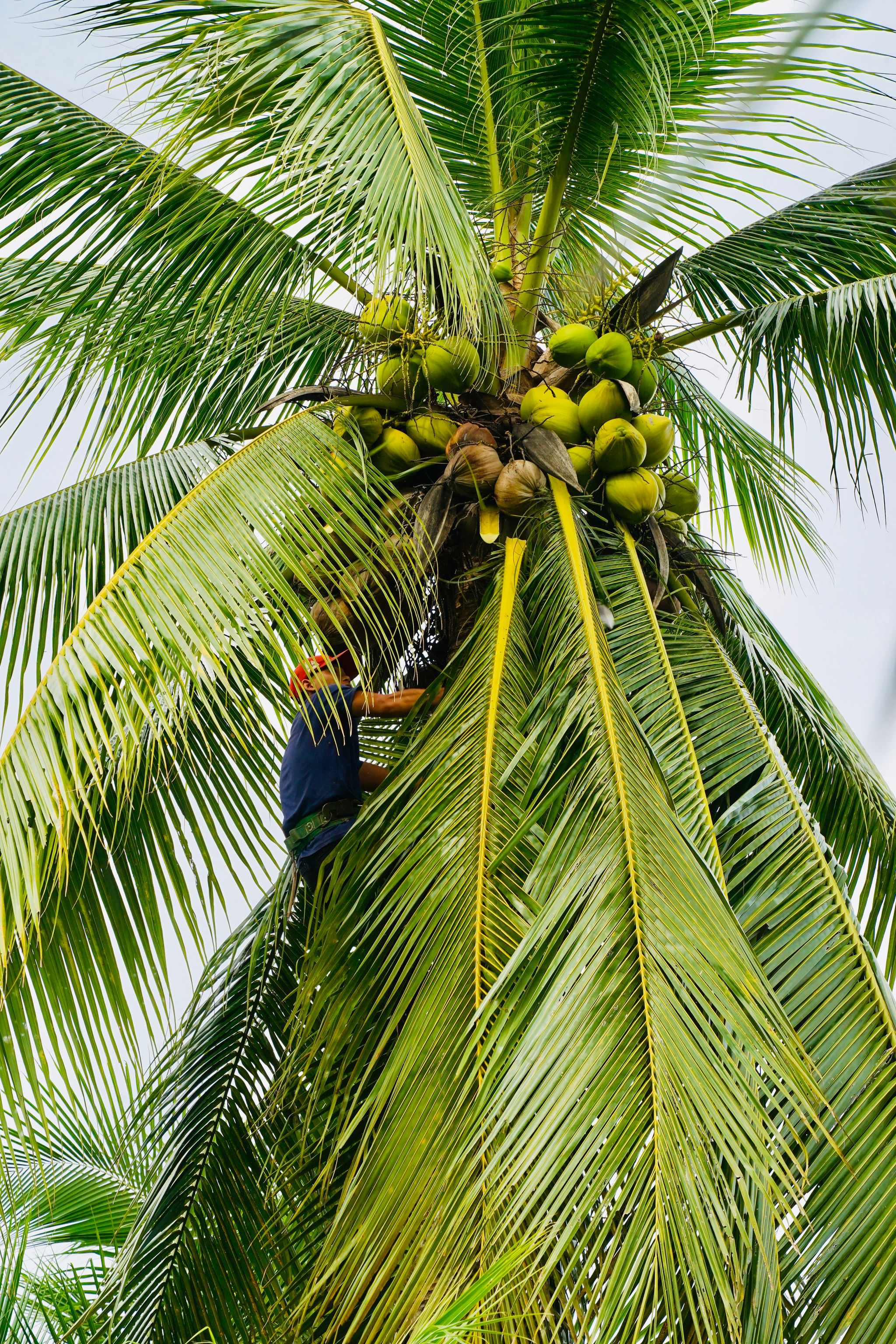
A Precarious Trade, High Above the Ground
Coconut harvesting is often described in Vietnamese as “eating on the ground while working in the sky”—a saying that captures both the hardship and danger of the job. To make a living this way, workers need strength, courage, practical skill and the composure to respond to unexpected hazards.
One afternoon in Thien Nghiep, rows of coconut palms cast deep shade across the groves. Do Anh Phung, a harvester from Residential Group 9 in Mui Ne Ward, prepared his familiar tools: a ladder, a safety belt and a sharp hooked blade. These simple implements have accompanied him through years of work among the treetops.
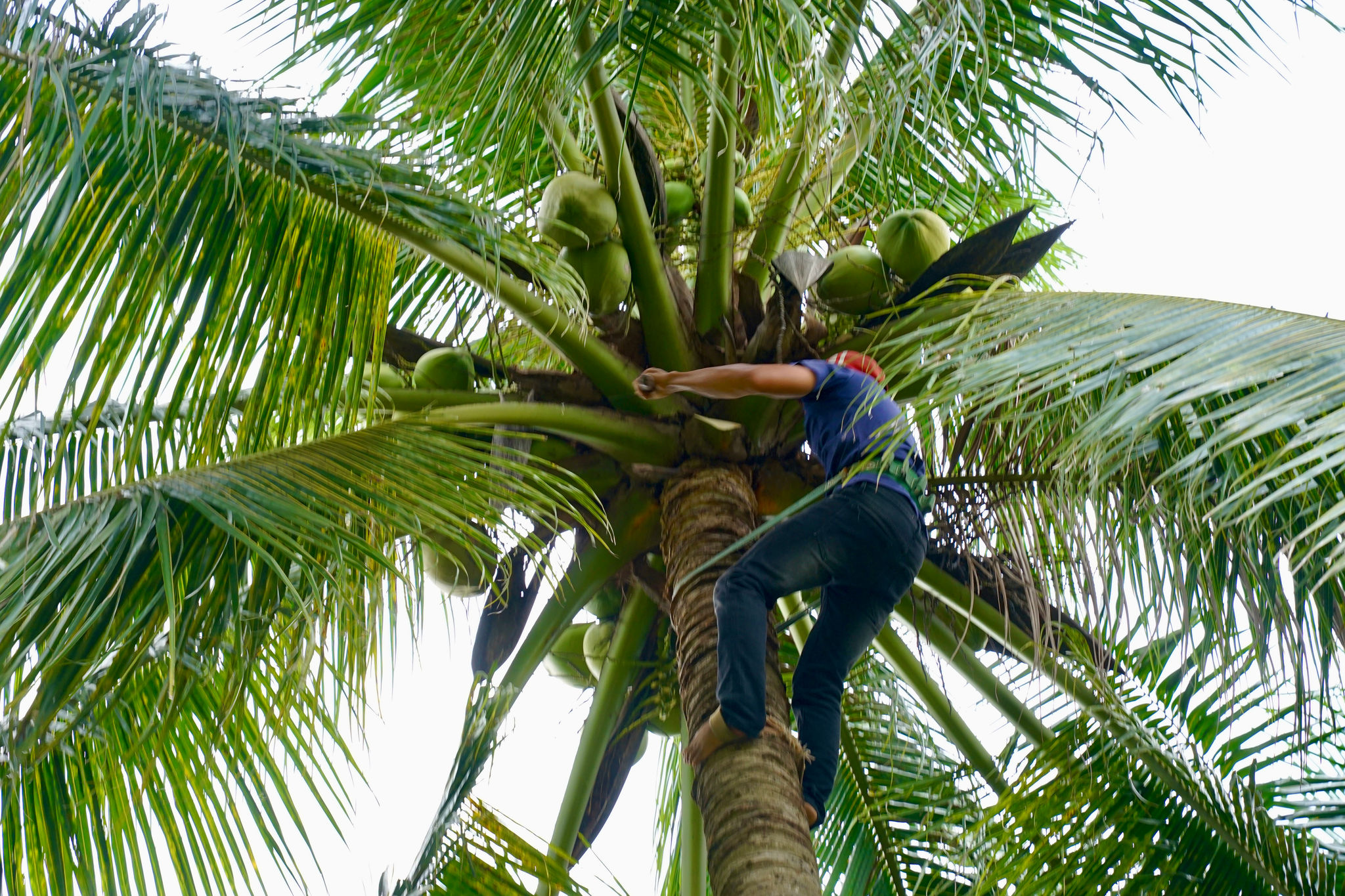
At just 29, Phung has already spent 15 years harvesting coconuts for hire. He began following his father into the groves as a child and gradually learned the locations of the local coconut trees. What once seemed ordinary became valuable working knowledge, built through years of observation and practice.
“I never thought I would do this for a living. When I was little, I followed my father to harvest coconuts. Seeing how hard he worked, I started helping him and eventually stayed with the trade. I was afraid of heights when I first began, but now I'm used to it,” he said with a smile.
Drawing on his strength and years of experience, Phung quickly climbed a coconut palm about 30 meters tall. His bare hands and feet gripped the trunk while a belt secured around his body provided support and helped him work at height.
Suspended among the fronds, he wrapped one arm around the trunk while using the hooked blade in the other hand to cut away old fronds, clear the crown and harvest clusters of coconuts. Within minutes, the crown was tidier and the fruit was coming down to the ground.
Height is not the only danger. Snakes and wasps hidden among the fronds pose additional threats, requiring workers to remain alert, keep their balance and react calmly. Such skills cannot be learned overnight; they are accumulated through years of working in the trees.
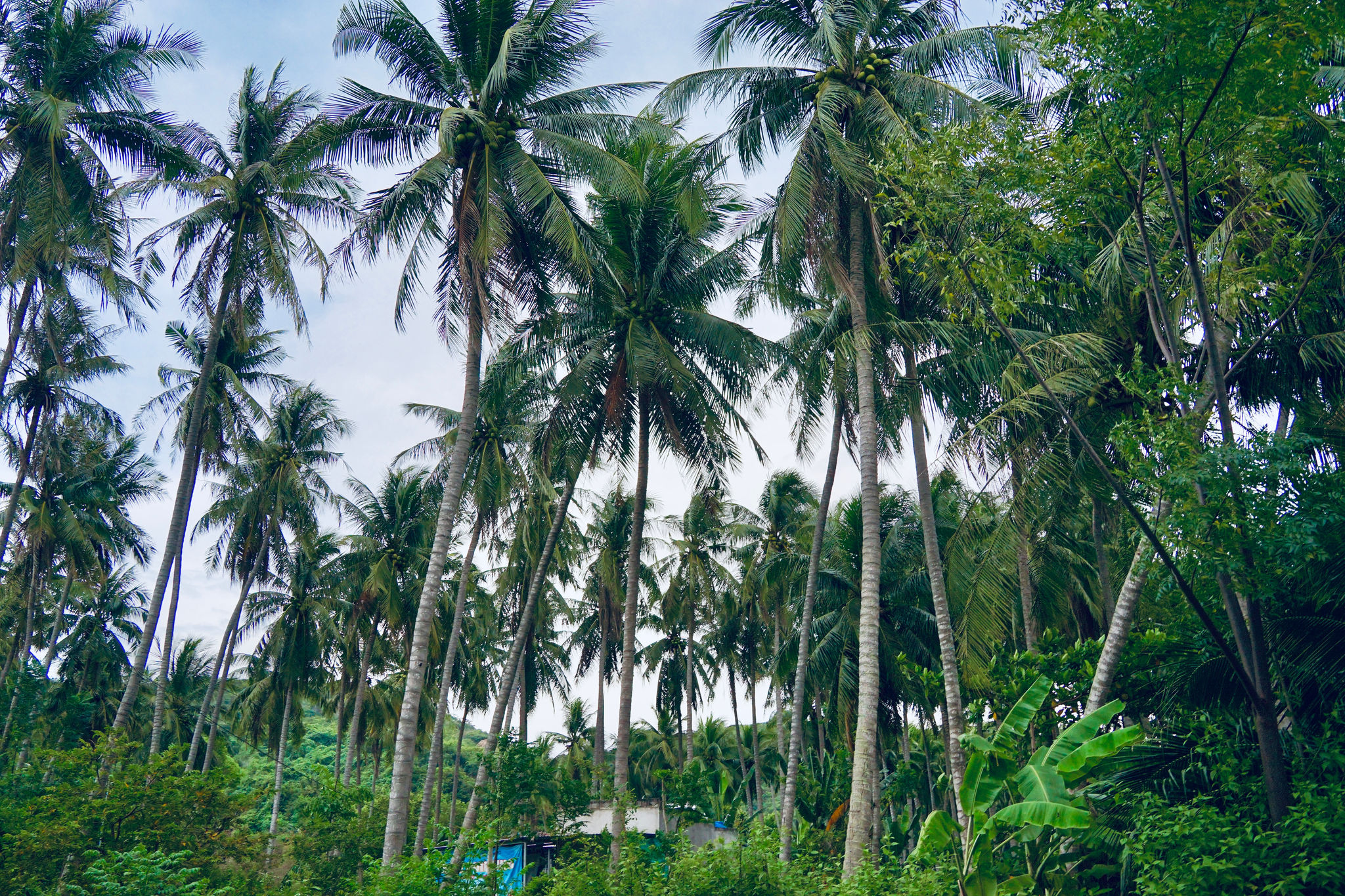
Harvesters are paid according to the number of coconuts collected. A thien of local coconuts—equivalent to 1,300 fruits—earns about VND 200,000, while a thien of Siamese coconuts brings in VND 150,000–160,000. During busy periods, a worker may harvest several thousand coconuts in a day, earning around VND 1 million.
The income can be significant, but it comes at a cost: hours of strenuous work under the sun and wind, often dozens of meters above the ground.
Nguyen Chi Tao, Chairman of the Mui Ne Ward Farmers' Association, said coconut palms had long been closely tied to local livelihoods. Although urbanization has reduced the area planted with coconuts in some places, cultivation has continued to expand in areas such as Bau Me and Thien Nghiep. Tourism has also increased demand for coconuts, helping growers and harvesters maintain their livelihoods.
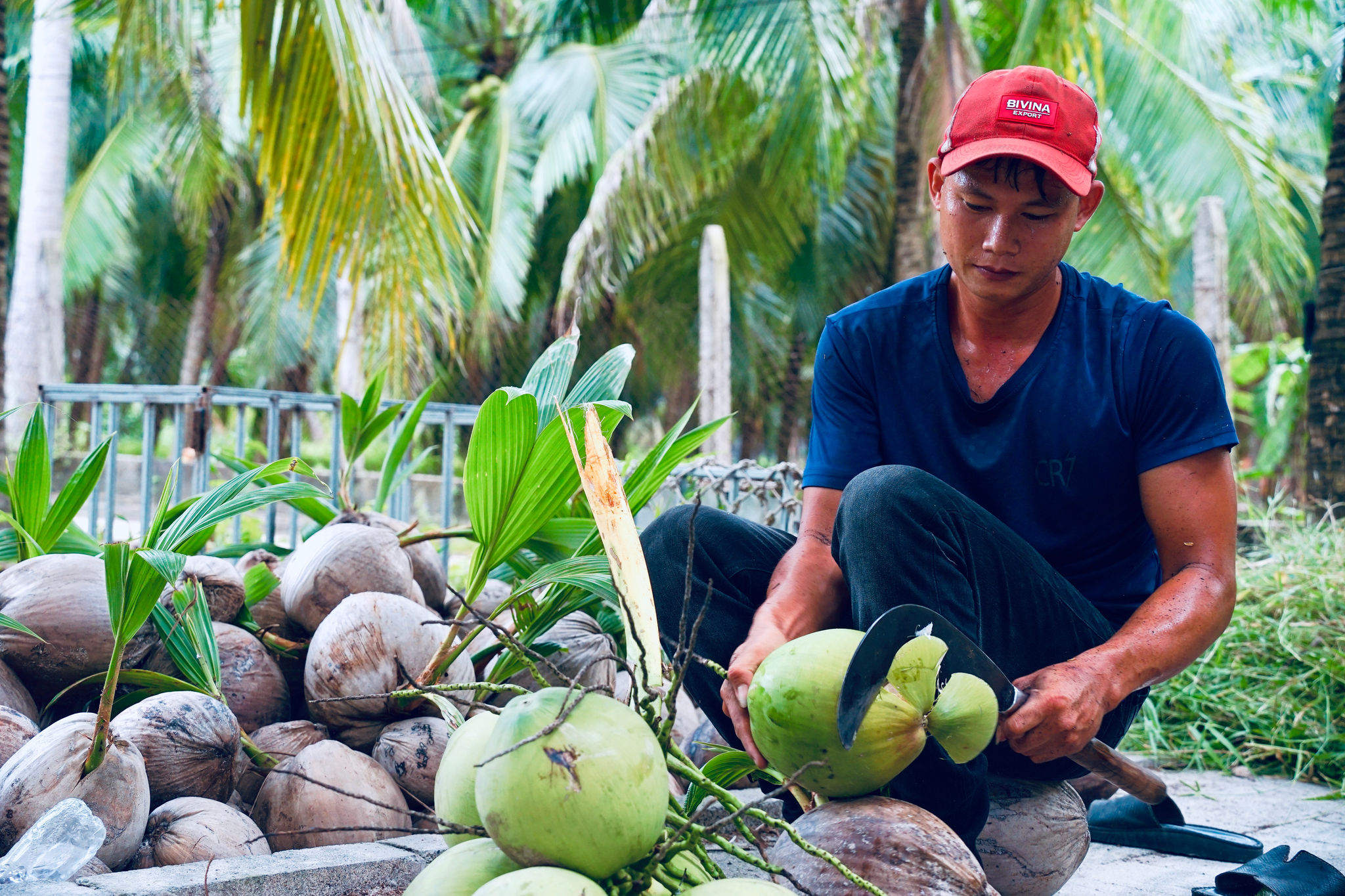
Yet even as the groves remain green, the number of people willing to harvest coconuts for a living is dwindling. Only about 10 workers in the wider area still practice the trade. The physical demands, risks and need for considerable strength have deterred many younger people. Most of those who remain have accumulated years of experience, while the next generation of harvesters is becoming increasingly scarce.
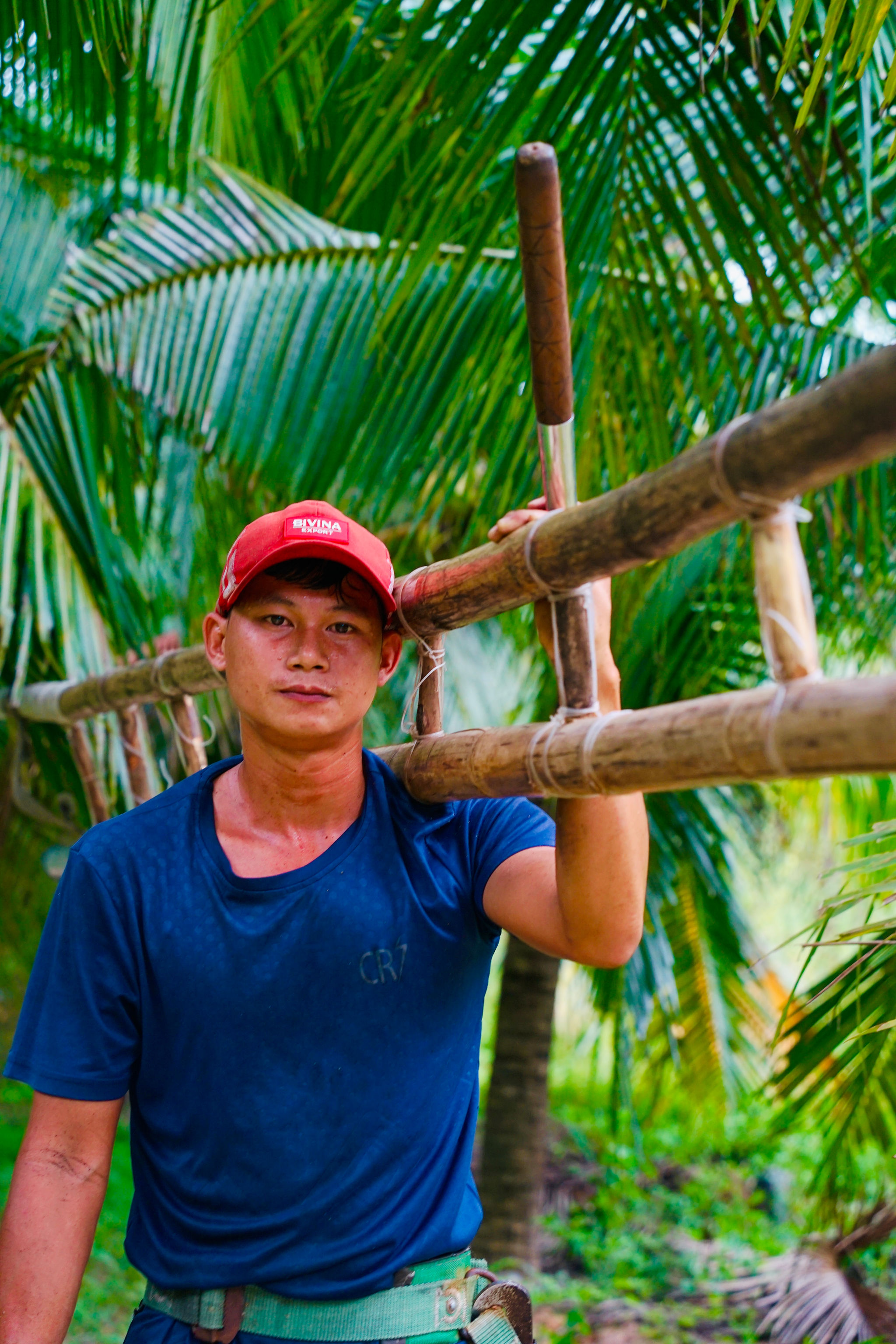
The palms continue to bear fruit, and the demand for harvesting remains. But fewer people have the strength and experience to climb trees dozens of meters tall. As Rang changes, Tan still heads to the groves each morning, while Phung continues to make a living among the treetops.
Their lives span two generations, but both are bound to the same trade that sustains their families. With veteran workers growing older and fewer young people following in their footsteps, coconut harvesting faces an uncertain future.
The coconuts of Rang remain sweet, but behind every cluster brought down from the treetops lies the sweat, skill and hardship of the people who keep this traditional trade alive.
Mui Ne Ward has around 130 hectares of coconut plantations, making it one of the well-known coconut-growing areas in eastern Lam Dong. Rang coconuts are popular for their delicately sweet water and soft flesh, supplying both local residents and visitors.