

Partnerships help preserve Da Lat's persimmon orchards
Along National Highway 20 from Trai Mat to Cau Dat at this time of year, fruit-laden orchards stand beside rows of greenhouses filled with amber-colored strips of hanging persimmons. Behind that transformation is a journey in which farmers have moved away from fragmented production, joined cooperative supply chains, learned new skills, mastered deep-processing technology and raised the value of a local specialty.
Lessons from persimmon trees once cut down
Historical records show that persimmon trees were introduced to Da Lat by the French in the early 20th century. Thanks to the mild climate and suitable soil, persimmons became one of the area's signature crops. The total growing area now stands at about 600 hectares, producing more than 4,500 tons of fresh fruit annually, concentrated in five wards of urban Da Lat.
Yet for longtime persimmon growers in Da Lat, especially in Trai Mat and Cau Dat, the familiar cycle of bumper harvests and falling prices was once a constant worry. Because persimmons have thin skins and bruise easily during long-distance transport, farmers previously depended almost entirely on traders.
In some years, when large volumes ripened at the same time, prices fell to just VND 2,000-3,000 per kilogram, not enough to cover harvesting costs. Growers were forced to watch ripe fruit rot and fall beneath the trees. Many households eventually cut down persimmon trees and switched to tea or short-term vegetable and flower crops.
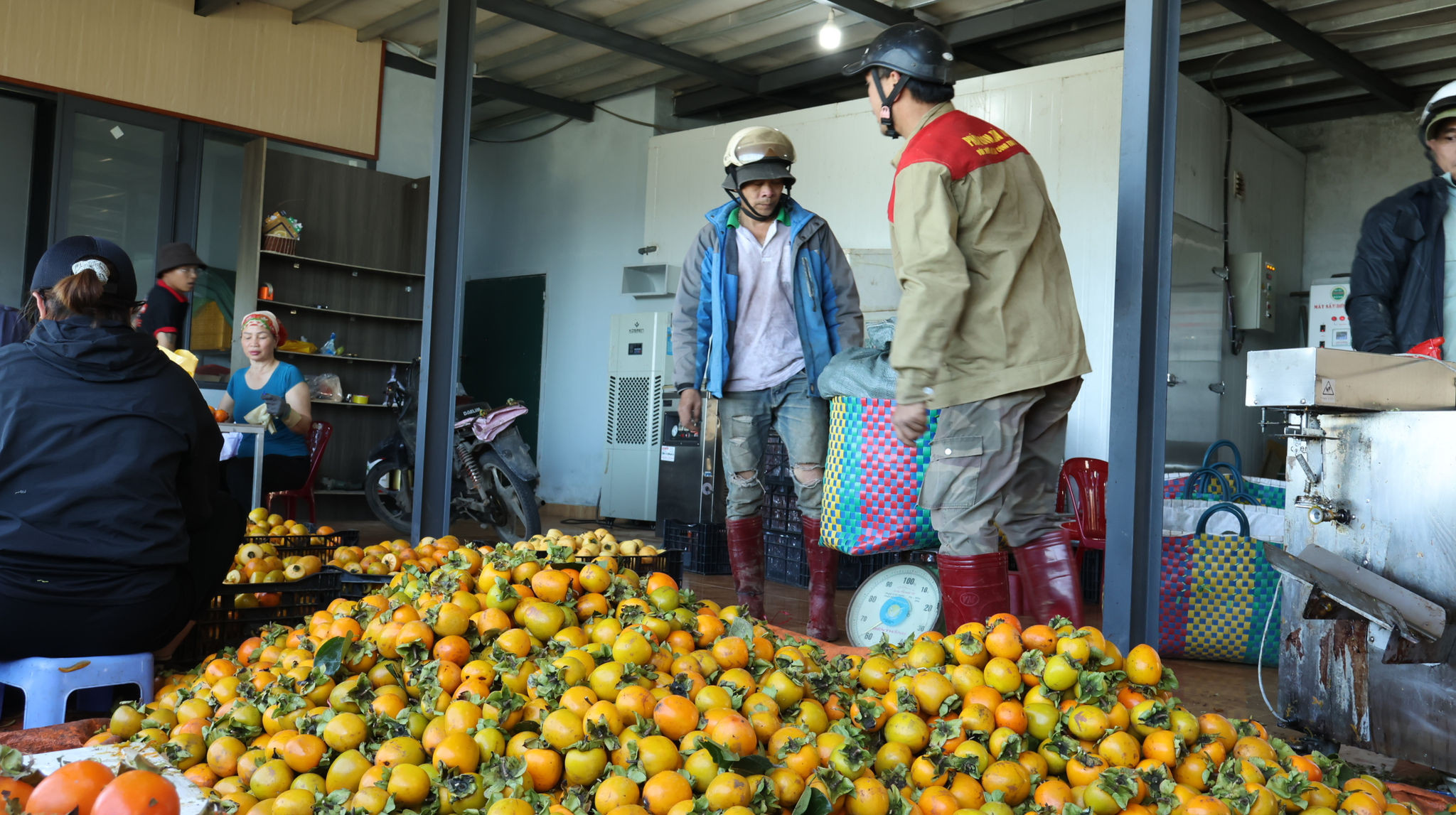
Nguyen Van Thanh's family in Phat Chi Residential Area, Xuan Truong - Da Lat Ward, owns more than two mau of persimmon orchards and once has endured such uncertain harvest seasons. Due to erratic weather, he expects to harvest only about 25 tons this year.
Even so, the fear of being forced to accept low prices is now a thing of the past. His entire crop is purchased by a cooperative for wind-dried persimmon production at VND 20,000 per kilogram.
“Now, as soon as the persimmons are harvested, there is a buyer. Prices are stable and higher than on the open market. Farmers can focus on producing fruit that meets quality standards instead of waiting for traders,” Thanh said.
Working together to preserve the craft
A turning point for Da Lat's persimmon-growing area came when JICA transferred Hoshigaki wind-drying techniques to local farmers.
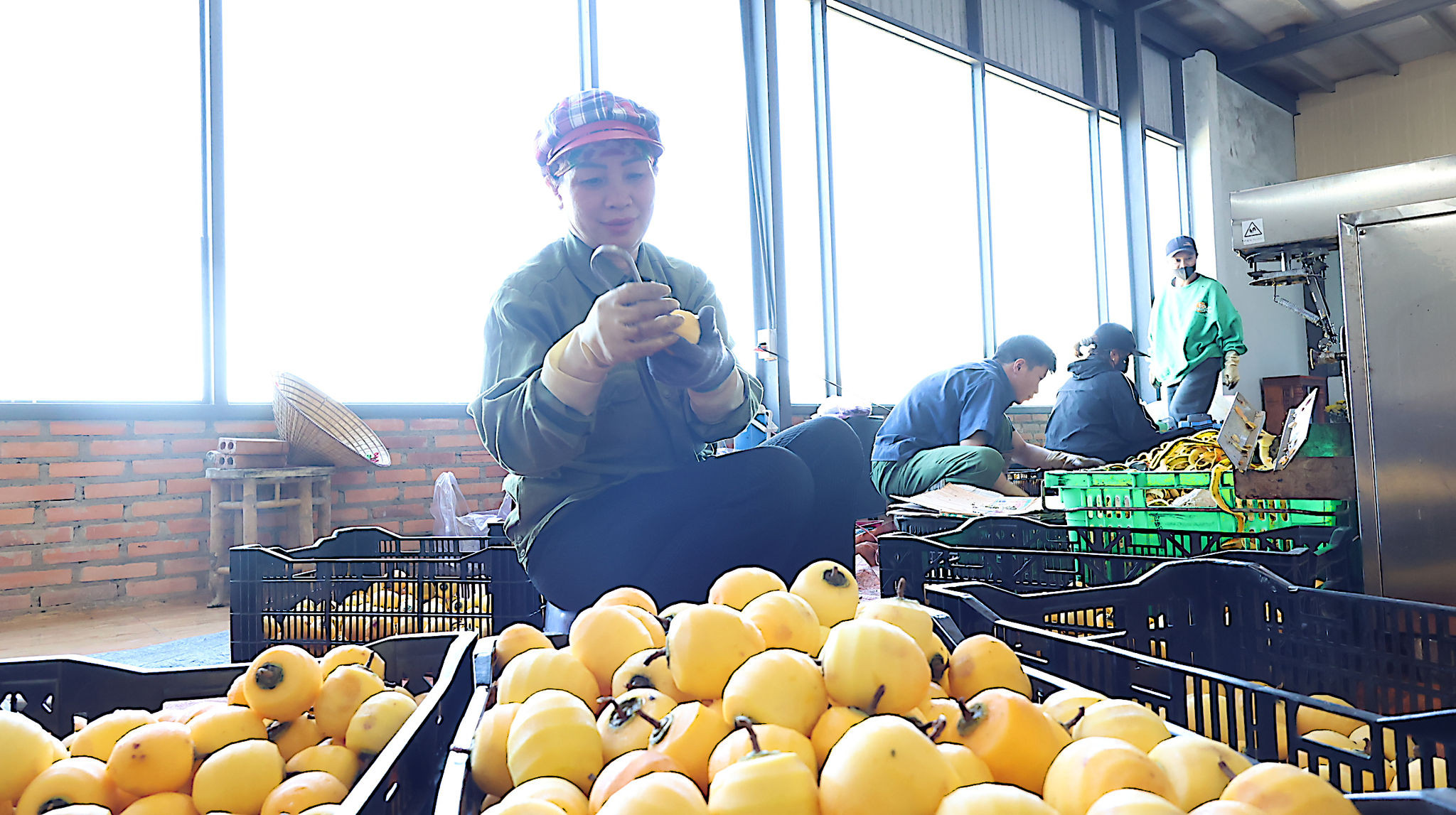
The process, however, is demanding. Persimmons must be harvested when they have just turned yellow and reached a high sugar content, while retaining a T-shaped stem. They are then peeled, disinfected and hung in controlled-humidity greenhouses for three to four weeks.
For small farming households, it was initially difficult to both meet cultivation standards and afford investments in greenhouses and equipment while also finding stable buyers.
Faced with these challenges, Dinh Thi Kim Lien and members of the local Women's Union in Cau Dat mobilized resources to establish Truong Gia Phat Cooperative in 2017. Their goal was to master processing techniques together, purchase persimmons from local growers and create a more sustainable market for their hometown specialty.
Lien, now Deputy Director of Truong Gia Phat Cooperative, said the cooperative signs purchasing contracts with nearby farmers who follow clean cultivation practices to secure raw materials.
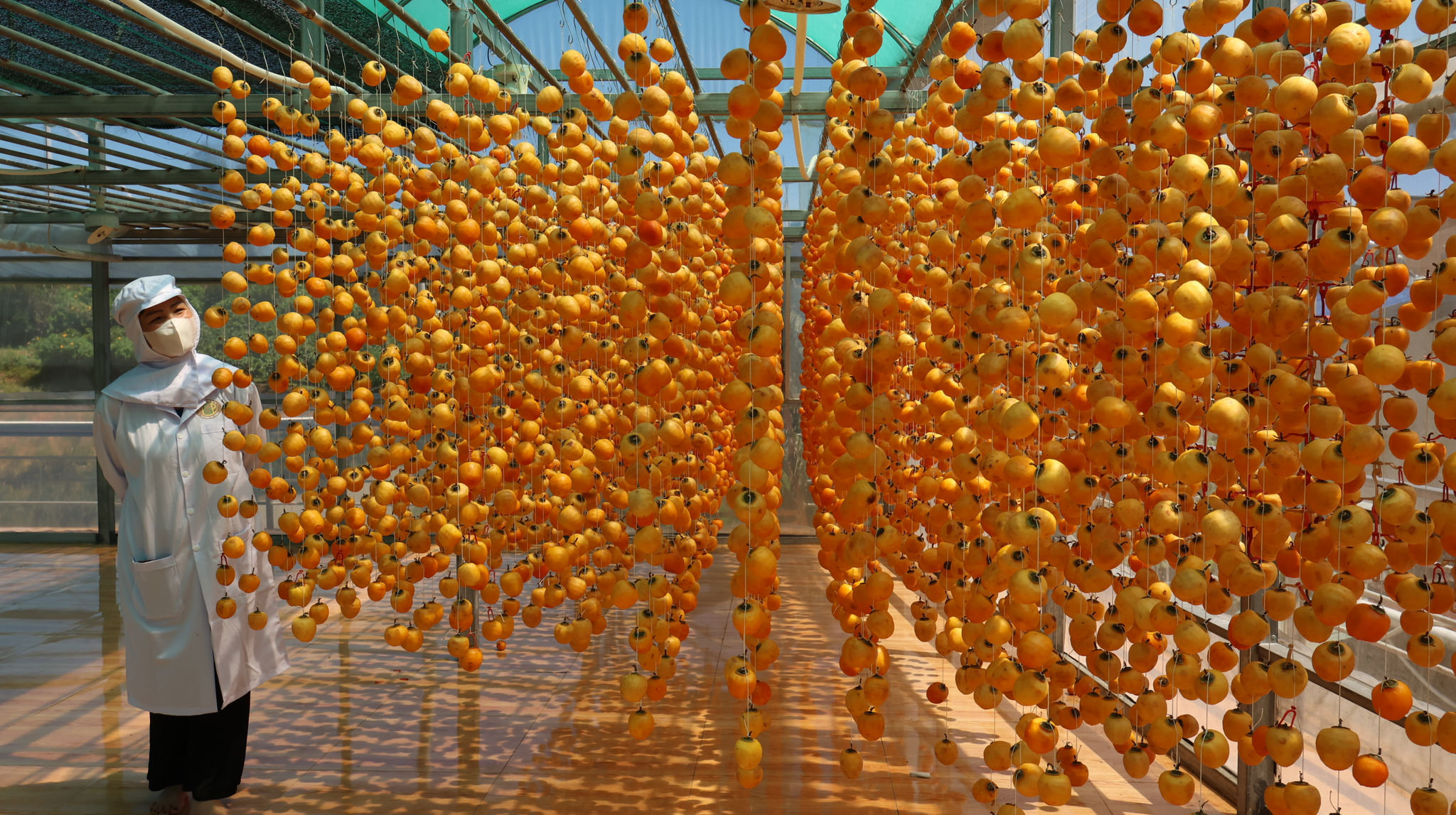
From August through January of the following year, workers carefully peel the fruit, hang it on strings and, after about a week of drying, periodically massage each persimmon so it softens evenly and naturally releases its sugars.
For soft-dried persimmons, traditional charcoal ovens have also been replaced with modern gas and thermal drying systems to improve hygiene and product quality.
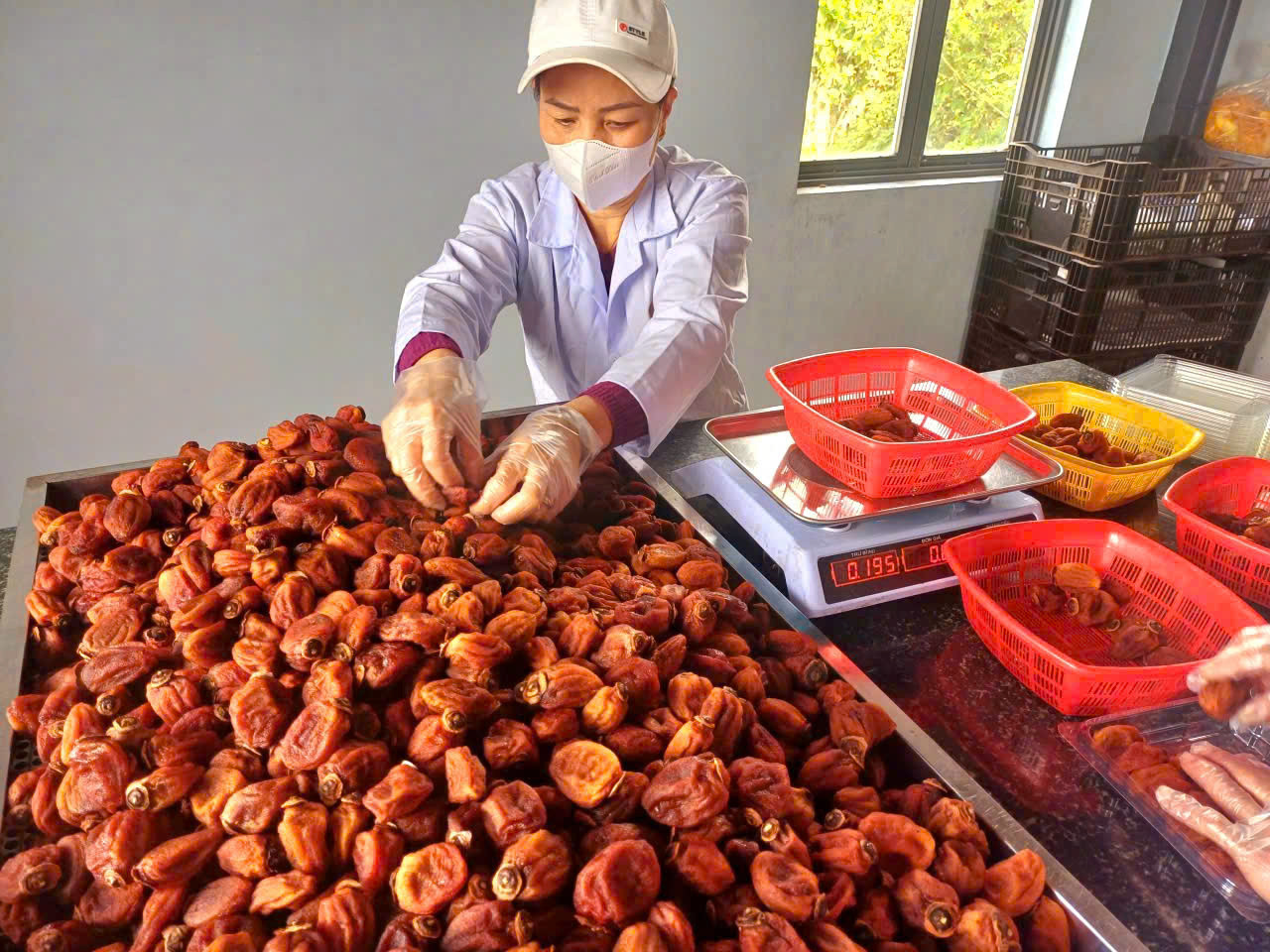
It takes an average of five to eight kilograms of fresh persimmons to produce one kilogram of wind-dried fruit, which sells for VND 200,000-500,000 per kilogram, making wind-dried persimmons worth 10 to 25 times as much as fresh persimmons.
Each year, the cooperative supplies about two to three tons of wind-dried persimmons and four tons of soft-dried persimmons. It has also secured processing contracts with Japanese partners.
The wider impact of supply-chain partnerships
The cooperative model and focus on standardized quality have spread, encouraging more systematic agricultural production.
Dat Lang Cau Dat Cooperative has also been a pioneer, linking with farming households to establish nearly 60 hectares of egg-shaped persimmons. Farmers across scattered orchards now share a common technical support system, follow standardized harvesting procedures, use coordinated packaging and traceability labels, and market the cooperative's wind-dried persimmons nationwide under a three-star OCOP certification.
The success of these cooperatives has encouraged farmers elsewhere to learn and adopt similar models.
Traveling along National Highway 20 from Trai Mat to Cau Dat at this time of year, it is common to see households investing in greenhouses and learning wind-drying techniques to increase the value of their crops and gain greater control over sales directly from their farms.
Local perspectives on persimmons have also expanded beyond the value of the fruit itself.
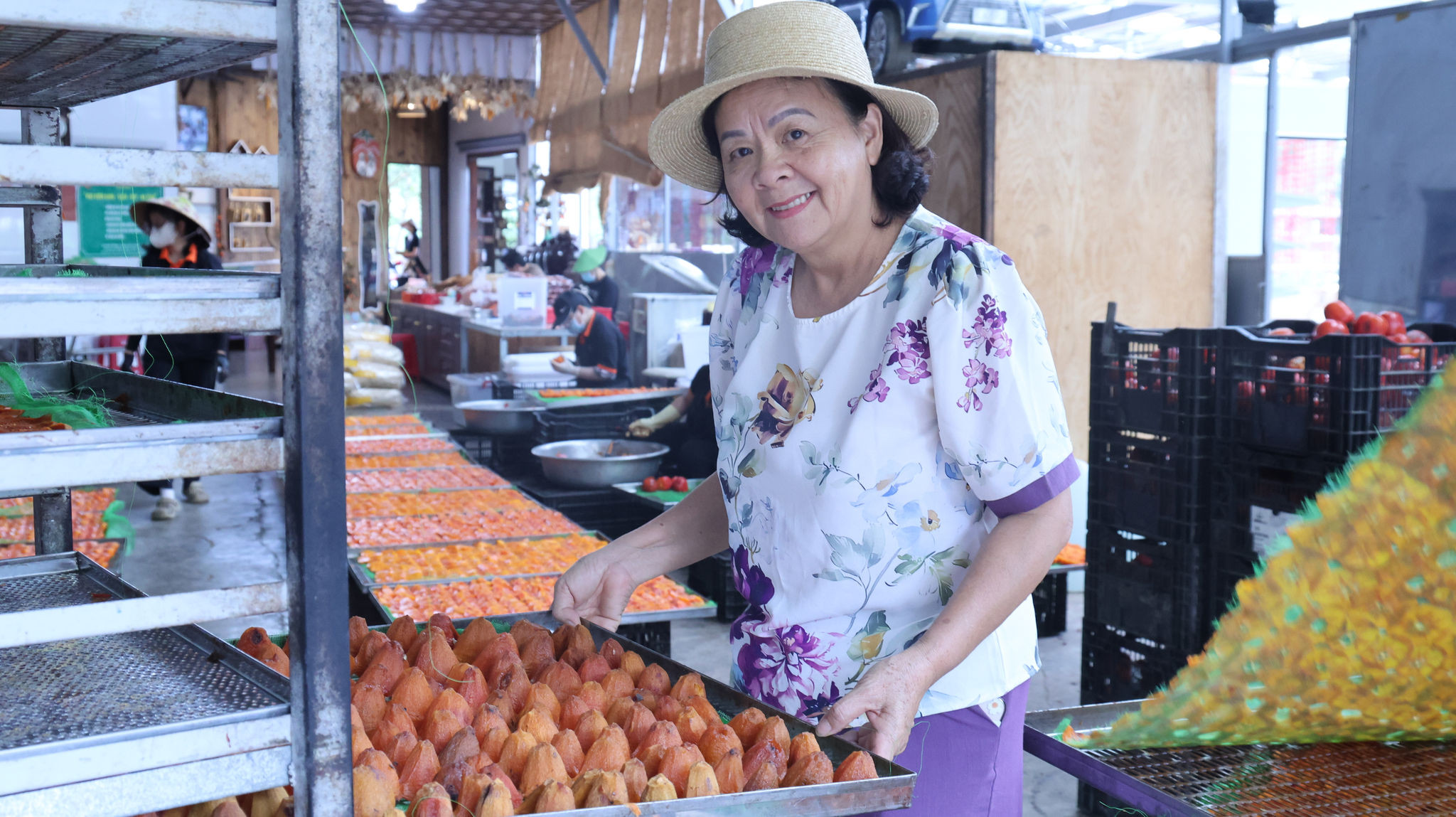
On Khe Sanh Street in Xuan Huong - Da Lat Ward, Dang Thi Thu Van's family has grown persimmons for three generations. Each year, the family business purchases several dozen tons of fresh persimmons from local orchards and produces a wide range of products, including wind-dried and soft-dried persimmons, crisp persimmons, persimmon jam and persimmon wine.
Despite her age, Van still spends each day guiding workers in packaging the products.
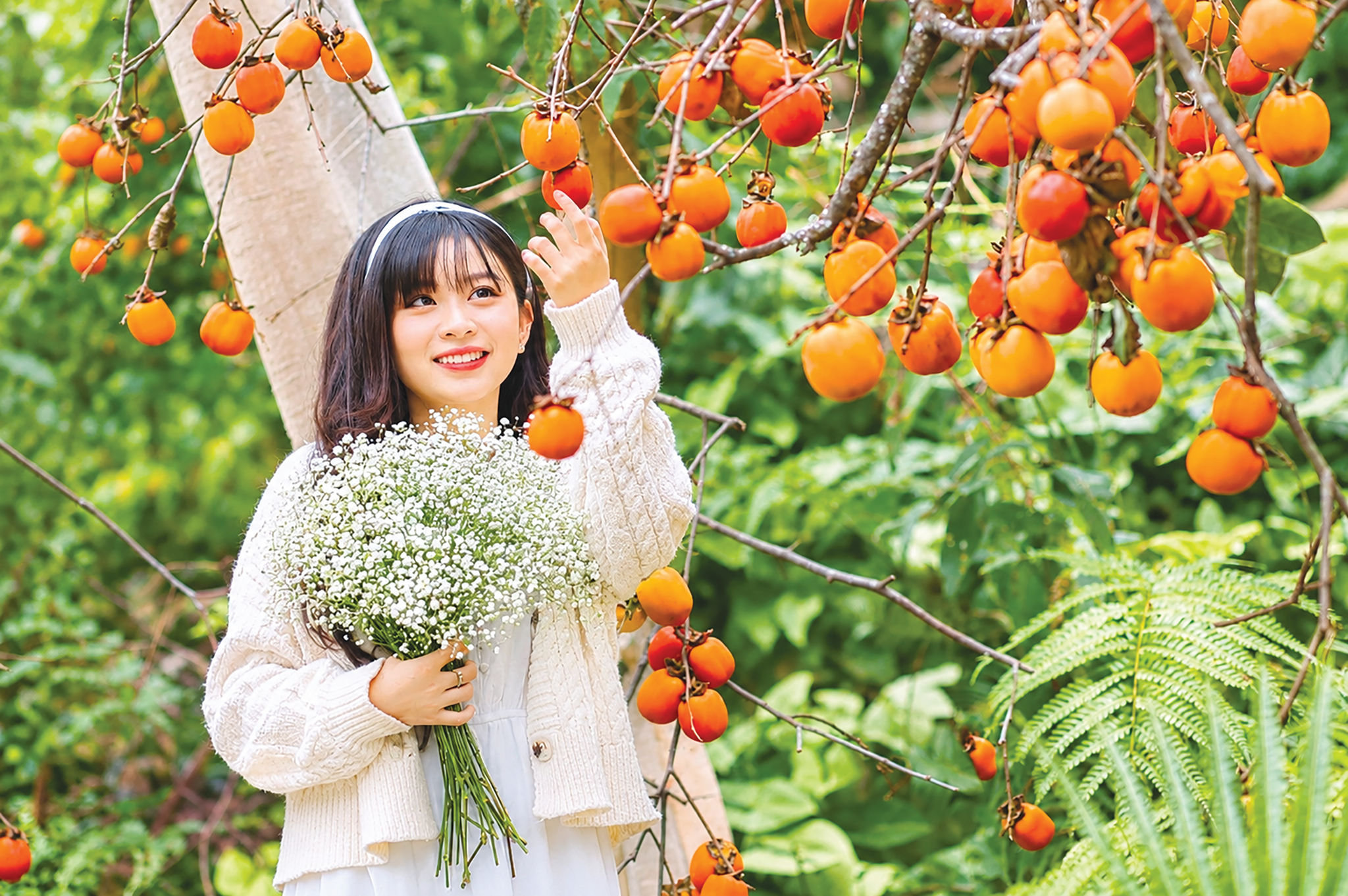
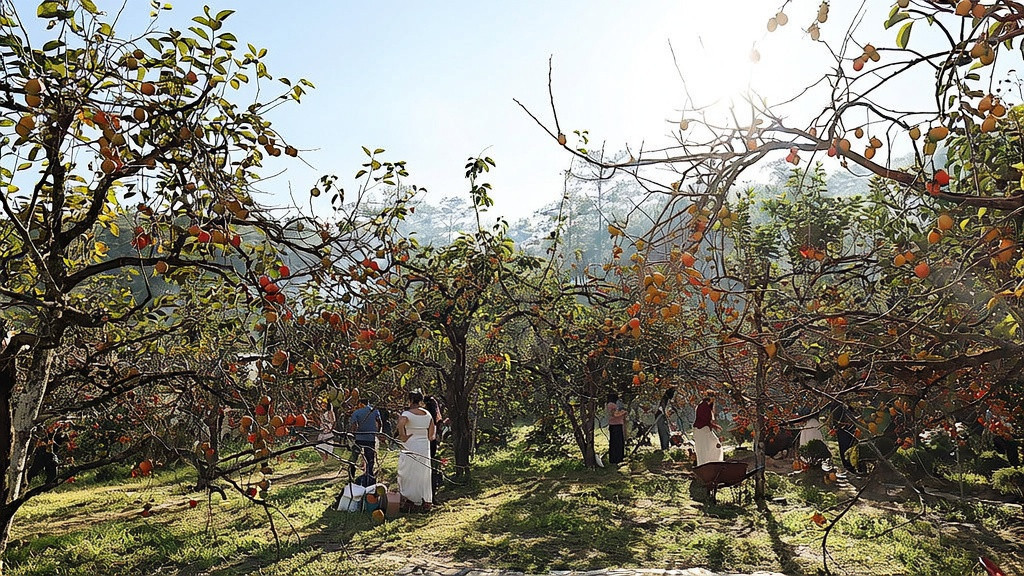
More notably, she and her children leave the fruit on an entire one-hectare orchard surrounding their home to ripen bright red on the trees, creating a scenic landscape and opening the orchard to visitors free of charge.
Tourists come to enjoy the autumn colors beneath the persimmon trees and often leave with boxes of processed local specialties as gifts.
Efforts to raise the value of Da Lat's persimmon specialty have helped growers move beyond the uncertainty of unpredictable harvest seasons.
Through cooperative partnerships, initiative and a willingness to learn, farmers have preserved the distinctive autumn colors of the Lam Vien Plateau while building a more sustainable source of income.